Category: Behavioral Economics

  • Why is Self-Serving Bias Good?

    Why is Self-Serving Bias Good?

    Self-serving bias is the tendency for people to attribute their successes to their own abilities and efforts, while attributing their failures to external factors. This bias can lead people to overestimate their abilities and underestimate the role of chance in their successes. It can also lead to overconfidence and poor decision-making.

    Most of us have a pretty strong tendency to see ourselves in a positive light. This is known as the self-serving bias, and it can lead us to make some pretty bad decisions – especially when it comes to risk. The self-serving bias can cause us to underestimate how likely we are to experience negative outcomes, and as a result, we may take on more risk than we should.

    This can lead to all sorts of problems down the road, from financial troubles to health issues. It’s important to be aware of the self-serving bias so that you can make more informed decisions about risk. If you find yourself overestimating your chances of success or underestimating the potential for failure, it’s time to take a step back and reassess the situation.

    Self-Serving Bias Example

    Self-serving bias is the tendency to attribute positive outcomes to our own abilities and efforts, and negative outcomes to external factors. For example, if we do well on a test we may attribute it to our intelligence or hard work, but if we do poorly we may blame the test itself or say that the questions were unfair. This bias can lead us to overestimate our abilities and accomplishments, and underestimate the role of luck or chance in our successes.

    It can also make us resistant to change, as we may believe that any new system or process is inferior to what we are already doing. While self-serving bias is often seen as a negative trait, it can also have some positive effects. For instance, it may motivate us to keep working hard even when things are going well, as we don’t want to lose our edge.

    It can also help us recover from setbacks more quickly, as we don’t dwell on them as much. Overall, self-serving bias is something that everyone experiences to some degree. Recognizing it in ourselves can help us be more humble and open-minded, while still maintaining confidence in our abilities.
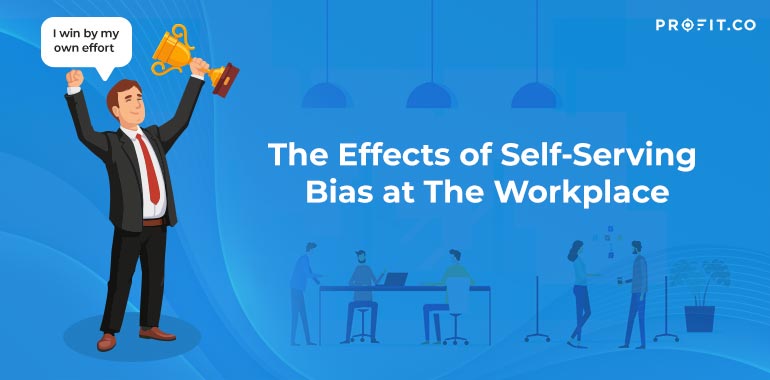
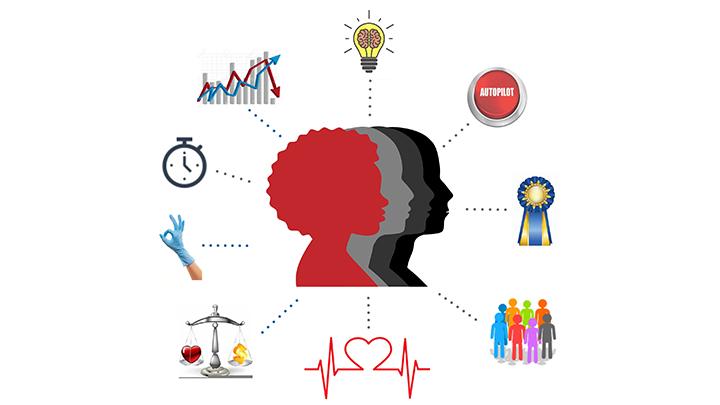
    Self-Serving Bias

    Credit: www.profit.co

    Example of a Self-Serving Bias

    A self-serving bias is an egocentric tendency to attribute success to our own abilities and efforts – while blaming failures on external factors. This cognitive distortion allows us to maintain a positive self-image, even in the face of setbacks. For example, imagine you’ve just been passed over for a promotion at work.

    A self-serving bias would lead you to attribute this outcome to your boss’s personal dislike for you, rather than admitting that there may have been others more qualified than you. Similarly, if you win a game of tennis, you’re likely to attribute your victory to your skill as a player – rather than giving credit to chance or luck. While there’s nothing wrong with feeling good about ourselves when things go well, self-serving biases can lead us astray when we make important decisions.

    For instance, overconfidence in our abilities can result in taking on too much risk or failing to prepare adequately for an important task. On the flip side, attributing failure exclusively to external factors can prevent us from learning from our mistakes and improving our future performance. Overall, it’s important to be aware of the role self-serving biases play in our lives so that we can make more informed decisions and avoid negative consequences down the road.

    What is Self-Serving Bias in Ap Psychology?

    Self-serving bias is the tendency for people to attribute their successes to personal factors while attributing their failures to external factors. This bias allows people to maintain a positive self-image and avoid feelings of guilt or shame. The self-serving bias is a major contributor to the development of illusions of superiority, which can lead to overconfidence and poor decision making.

    It also contributes to the maintenance of stereotypes, as people are more likely to remember information that confirms their existing beliefs. There are several different explanations for the existence of the self-serving bias. One theory is that it is an evolutionary adaptation that has helped humans survive and reproduce.

    Another possibility is that it is simply a result of the way our brains process information; we tend to pay more attention to information that supports our existing beliefs and ignore information that contradicts them. Whatever its cause, the self-serving bias has been shown to have a powerful influence on how we see ourselves and others. It’s important to be aware of this bias so that we can try to correct for it when necessary.

    Why is Self-Serving Bias Good?

    Self-serving bias is the tendency for people to attribute their successes to personal factors, while attributing failures to outside forces. This bias can lead people to overestimate their own abilities and underestimate the role of luck in their successes. While self-serving bias can have some negative consequences, it also has some positive ones.

    For example, self-serving bias can lead people to persist in the face of setbacks and to take risks that they might otherwise avoid. It can also motivate people to work hard and strive for success. Overall, self-serving bias tends to make people more optimistic and resilient.

    There are a few reasons why self-serving bias is generally considered a good thing. First, it helps people recover from failure by encouraging them to view setbacks as temporary and surmountable. Second, it leads people to take risks that are necessary for innovation and growth.

    And finally, it boosts motivation by making success seem attainable and worth striving for.

    What is an Example of Self-Serving Bias Quizlet?

    Self-serving bias is the tendency for people to attribute their successes to personal factors while attributing their failures to external factors. For example, if you do well on a test, you might attribute it to your intelligence or hard work, but if you do poorly, you might blame the test itself or say that the questions were unfair. This bias can lead people to overestimate their own abilities and underestimate the role of chance in their successes.

    It can also make them more likely to take credit for other people’s achievements and downplay their own role in others’ failures. Self-serving bias is common in everyday life and plays a role in many important decisions, such as whether to accept responsibility for a mistake or pursue a risky venture. Although it can have positive effects, such as increasing motivation and self-confidence, it can also lead to overconfidence and poor decision-making.

    Conclusion

    When it comes to making decisions, we all have a tendency to think that we are more accurate than we actually are. This is known as the self-serving bias and it can lead us to make some pretty poor choices. The self-serving bias is a cognitive bias that causes us to overestimate our own abilities and achievements while at the same time underestimating our failures and shortcomings.

    This bias can lead us to believe that we are better drivers than we actually are, for example, or that we are better at investing than we really are. The self-serving bias is a form of confirmation bias, which is the tendency to seek out information that confirms our beliefs while ignoring information that contradicts them. The self-serving bias allows us to maintain a positive view of ourselves even in the face of evidence to the contrary.
    There are several ways to overcome the self-serving bias. One is to simply be aware of it and its effects on your thinking. Another is to try to look at both sides of any issue before making a decision.

    And finally, you can ask others for their opinions on an issue before making up your own mind.
  • Status Quo Bias | All you need to consider

    Status Quo Bias | All you need to consider

    The status quo bias is a cognitive bias that refers to our tendency to stick with the current situation or status quo. This can be due to a variety of factors, such as loss aversion (where we prefer avoiding losses over acquiring gains) or simply because it’s comfortable and easy to stay with what we know. The status quo bias can have a significant impact on our decision-making, leading us to make choices that may not be in our best interests.

    We’ve all heard of the status quo bias before – it’s that innate human tendency to want things to stay the same. We like familiarity and we’re creatures of habit, so it’s no wonder that we often resist change. But what exactly is the status quo bias?

    And why does it exist? Simply put, the status quo bias is our preference for things to remain unchanged. We don’t like feeling out of sorts or uncomfortable, so we often stick with what we know – even if it’s not necessarily in our best interests.

    The status quo bias can lead us to make sub-optimal decisions in both our personal and professional lives. For example, you might stay in a job you hate because it’s familiar, even though there are other options available to you. Or you might keep using an outdated piece of software because you’re used to it, even though there are newer and better versions out there.

    Inertia is a big part of the reason why we exhibit the status quo bias – it takes effort (and sometimes courage) to make changes in our lives, so we often end up sticking with what we have. But this isn’t always a bad thing – after all, if something ain’t broke, there’s no need to fix it! The key is to be aware of thestatus quo bias when making decisions, so that you can weigh up whether or not change is really necessary.

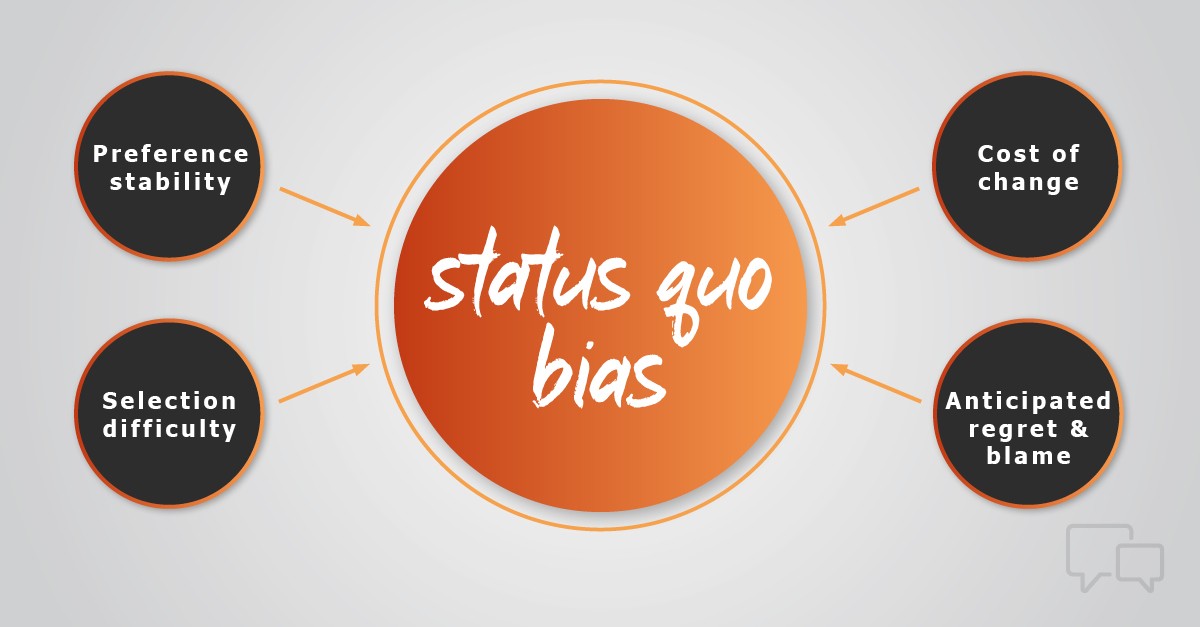
    Status Quo Bias

    Credit: online.wharton.upenn.edu

    What is the Meaning of Status Quo Bias?

    Status quo bias is a cognitive bias that dictates that we humans are more likely to stick with what we know, even if there might be a better option available. This tendency to prefer the familiar over the unknown can lead us to make sub-optimal decisions in many different areas of our lives. For example, imagine you’re considering whether or not to switch jobs.

    Even if the new job would offer higher pay and better benefits, you might still stay with your current employer because changing jobs can be scary and uncertain. The status quo bias leads us to value things like security and comfort over potential gain, even when making logical decisions. Of course, there are times when sticking with the status quo makes perfect sense.

    If something isn’t broken, there’s no need to fix it. But when it comes to important life choices, it’s important to be aware of this natural human tendency so that we can override it when necessary and make the best decision for ourselves.

    What is an Example of Status Quo Bias?

    Status quo bias is a cognitive bias that refers to our tendency to stick with the current situation, even if there might be a better option available. This bias can lead us to make sub-optimal decisions, because we are reluctant to change what we’re already doing.

    There are many examples of status quo bias in action.

    One common example is sunk cost fallacy, which occurs when people continue investing in something (time, money, etc.) even though it’s no longer rational to do so because they feel like they have too much invested already to give up now. Another example is confirmation bias, which is when people seek out information that confirms their existing beliefs instead of considering evidence that might disprove them.

    People often fall victim to status quo bias without even realizing it. It’s important to be aware of this cognitive biases so that you can avoid making suboptimal decisions due to resistance to change.

    Another example, let’s say you’re considering switching jobs.

    Even if another job might offer better pay and benefits, you may be hesitant to make the change because it would require adapting to a new work environment. The status quo bias would lead you to stay in your current job, even though it may not be the best option for you. This bias can also impact our decision-making in other areas of life, such as when choosing which products to buy or which investments to make.

    We may stick with what we know and are comfortable with, even if there are superior options available. Overcoming the status quo bias can be difficult, but it’s important to consider all of your options before making any decisions. If you’re struggling to break out of this cognitive trap, seek help from a friend or professional who can offer an objective perspective.

    Another example of status quo is when a company does not change its policies or procedures, even though other companies in the same industry have made changes. The company may feel that it is unnecessary to make changes, or that the costs of making changes would be too high. This can lead to the company falling behind its competitors and eventually losing market share.

    How Does Status Quo Bias Work?

    Status quo bias is the tendency to stick with what we know, even if there are potential benefits to change. This bias can impact our decision-making in both small and large ways. For example, you may be hesitant to switch to a new toothpaste brand, even if it’s cheaper and works better than your current one, simply because it’s what you’re used to.

    On a larger scale, status quo bias can lead us to stay in jobs we hate, relationships that are toxic or unhealthy lifestyles because we’re afraid of change. Change can be scary, but sometimes it’s necessary in order to improve our lives. If you find yourself struggling with status quo bias, try thinking about the potential benefits of change.

    What do you have to gain by making a switch? Would the new option really be so bad? In many cases, the answer is no – so don’t let fear hold you back from making positive changes in your life!

    Conclusion

    The status quo bias is a cognitive bias that dictates that people are more likely to stick with the current situation than change it. This often leads to suboptimal decision-making, as people are reluctant to leave their comfort zone. The status quo bias can be overcome by carefully considering all options and examining the pros and cons of each before making a decision.

  • Sunk Cost Fallacy | All you need to know

    Sunk cost fallacy is a cognitive bias that dictates our decision-making. It tells us that we are more likely to continue investing in something as long as we have invested so much in the past, regardless of whether or not it is rational to do so. The sunk cost fallacy can lead us to make bad decisions because we are unwilling to cut our losses.

    The sunk cost fallacy is a cognitive bias that leads us to believe that we have already invested too much in something to give it up now. This can lead us to make irrational decisions, such as continuing to invest time or money in a failing project, because we feel like we can’t afford to waste what we’ve already put in. This bias is especially dangerous when it comes to our personal relationships.

    We may stay in a job or relationship longer than we should because we feel like we’ve invested so much already and can’t afford to start over. But the truth is, if something isn’t working out, it’s better to cut your losses and move on. If you find yourself falling into the sunk cost fallacy, try to reframe your thinking.

    Remind yourself that the past is gone and you can’t get it back. Focus on what you stand to gain by making a different decision, rather than what you might lose. And most importantly, don’t be afraid to start over.

    Sunk Cost Fallacy Relationships

    When it comes to sunk cost fallacy in relationships, this occurs when someone continues to invest time and resources into a relationship even though it’s not working out. This can be because they feel like they’ve already put so much into the relationship and don’t want to give up, or because they think things will eventually get better. However, continuing to invest in a failing relationship is usually not productive and can actually make things worse.

    It’s important to be able to recognise when a relationship is no longer working and take steps to end it instead of continuing to try and make things work. If you find yourself in a situation where you’re continually putting more into a relationship than you’re getting back, it may be time to let go.

    Sunk Cost Fallacy

    Credit: www.youtube.com

    What is an Example of Sunk Cost Fallacy?

    The sunk cost fallacy is the tendency to continue investing in something as long as you have invested so much in the past, even if it is no longer rational to do so. For example, someone might stay in a bad relationship because they have invested so much time and energy into it, even though it is clear that it is not working out. Or, someone might keep going to a job they hate because they have already put so many years into it.

    The sunk cost fallacy can lead us to make irrational decisions that we would not make if we were thinking about the situation more objectively.

    What is Sunk Cost Fallacy in Relationships?

    Sunk cost fallacy is the belief that we have already invested so much in a relationship, whether it be time, energy, or emotion, that it would be foolish to walk away from it. This can often lead us to stay in unhealthy or unhappy relationships far longer than we should. The sunk cost fallacy can also prevent us from taking risks or trying new things in our relationships.

    After all, if we’ve already invested so much in this one relationship, why take a chance on starting something new? The sunk cost fallacy is rooted in fear and insecurity. We worry that if we walk away from what we have now, we’ll never find anything better.

    Or worse, we might end up alone. But the truth is, no matter how long we’ve been in a relationship, it’s never too late to start over again. If you’re not happy with where your relationship is at right now, don’t be afraid to make a change.

    Life is too short to stay stuck in a rut out of fear of the unknown.

    What is Sunk Cost in Simple Words?

    Sunk cost is a term used in economics to describe a cost that has already been incurred and cannot be recovered. In other words, it is a sunk expense. This concept is important because it can influence decision-making.

    For example, imagine you are considering whether or not to attend a concert. You have already bought the ticket, so the cost of attending the concert is fixed (or sunk). Whether or not you go to the concert now depends on how much you value the experience.

    If the opportunity cost of going to the concert (the value of your time) exceeds the price of the ticket, then you might choose not to go. However, if attending the concert would be more enjoyable than any alternative use of your time, then you would probably choose to go. In business, sunk costs can be significant and can impact important decisions such as whether or not to continue with a project.

    For example, imagine a company has invested $1 million in developing a new product. The company has spent this money and cannot get it back regardless of what happens next. The decision about whether or not to continue with the project now depends on future costs and revenues associated with commercializing the product.

    If these future cash flows are expected to exceed $1 million, then it makes sense for the company to continue with the project (assuming all else is equal). However, if they are expecting future cash flows to fall short of $1 million, then discontinuing the project may be preferable since it will minimize losses. In summary, sunk costs are expenses that have already been incurred and cannot be recovered regardless of what happens next.

    What is the Sunk Cost Dilemma?

    The sunk cost dilemma is a decision-making problem in which an individual or organization continues to invest resources (time, money, etc.) into something because they have already invested so much, even though it may not be the best decision to do so. The sunk cost fallacy is when people make decisions based on these sunk costs instead of on what would actually be the best thing to do. This can lead to sub-optimal decision-making and can cause individuals or organizations to waste resources that could be better used elsewhere.

    It’s important to be aware of the sunk cost dilemma and avoid falling into the trap of making sub-optimal decisions because of it.

    Conclusion

    The sunk cost fallacy is a cognitive bias that leads us to believe that we have invested so much in something that we must see it through to the end, regardless of whether or not it is actually in our best interest. This can lead to suboptimal decision-making and even losses, as we continue to invest time, energy, and resources into something that may no longer be worth pursuing. The sunk cost fallacy stems from our aversion to loss, which causes us to value what we have already invested in more highly than what we would gain by walking away.

    While it may be difficult to let go of something that we have put so much into, it is important to remember that the past cannot be changed and only the future matters when making decisions.

  • Behavioral Economics | The new Economics

    Behavioral Economics | The new Economics

    Behavioral economics is the study of economic decisions and behavior. It incorporates insights from psychology, sociology, and other disciplines to explain why people make choices that are not always in their best interests. Behavioral economists also study how market institutions can influence people’s choices, and how government policies can affect economic outcomes.

    Behavioral economics is the study of how people make economic decisions. It combines insights from psychology, sociology, and anthropology to understand why people behave the way they do in markets. Traditional economics assumes that people are rational actors who make choices based on their own self-interest.

    But behavioral economics shows that people are often irrational, and their choices are influenced by a variety of factors, including social norms, emotions, and cognitive biases. Behavioral economics can help us understand why people make suboptimal choices, and how we can design better policies to improve welfare. For example, by understanding why people save too little for retirement, we can develop policies to encourage them to save more.

    Or by understanding why people buy unhealthy foods even when they know they shouldn’t, we can develop interventions to help them make better choices. If you’re interested in learning more about behavioral economics, I highly recommend reading “Nudge” by Richard Thaler and Cass Sunstein. It’s a great introduction to the field, and it will change the way you think about human behavior.

    Behavioral Economics Books

    If you want to learn about behavioral economics, there are a few great books out there that can get you started. Here are three of our favorites:

    1. Nudge: Improving Decisions About Health, Wealth, and Happiness by Richard H. Thaler and Cass R. Sunstein

    This book offers a great introduction to the world of behavioral economics. It covers topics like how we make decisions, why we sometimes make bad choices, and what we can do to nudge ourselves towards better outcomes. If you’re interested in learning more about how behavioral economics can help us improve our lives, this is a great place to start.

    2. Predictably Irrational: The Hidden Forces That Shape Our Decisions by Dan Ariely In this book, Dan Ariely takes a detailed look at some of the ways that our irrationality can lead us astray. He explores topics like why we often choose short-term pleasure over long-term gain, why we procrastinate even when we know it’s not in our best interest, and much more.

    If you want to understand the psychological forces that influence our decision-making, this is an essential read.

    3. The Wisdom of Crowds by James Surowiecki This book explores the power of collective intelligence – or “the wisdom of crowds.”

    It shows how groups of people are often smarter than any one individual when it comes to solving problems or making decisions.

    Behavioral Economics

    Credit: www.cesifo.org

    What is an Example of Behavioral Economics?

    Behavioral economics is a field of economics that studies the effects of psychological, social, cognitive, and emotional factors on people’s economic decisions. One example of behavioral economics is the sunk cost fallacy. This is when people continue to invest in something as long as they have already invested a lot into it, even if it is not rational to do so. This can lead to bad decision-making and wasted resources.

    What Does a Behavioral Economist Do?

    Behavioral economics is a relatively new field that combines psychological insights with economic analysis to understand why people make the decisions they do. Behavioral economists are interested in understanding how people actually make decisions, as opposed to how they should make them according to traditional economic theory. Traditional economic theory assumes that people are rational actors who always seek to maximize their own utility.

    However, behavioral economists have shown that this isn’t always the case. People often make suboptimal choices because of cognitive biases or emotional factors. By taking these factors into account, behavioral economists can develop better models of how people actually make decisions.

    Behavioral economics has been used to improve a wide range of policies, from welfare programs to financial regulations. It has also been used to nudge people towards making better choices for themselves, such as saving more for retirement or choosing healthier foods. If you’re interested in understanding why people make the choices they do, then a career in behavioral economics might be for you.

    What Do Behavioral Economics Believe?

    Behavioral economics is a relatively new field that combines psychology and economics. It studies how people actually make decisions, as opposed to how they should make decisions according to economic theory. There are a number of key ideas in behavioral economics.

    One is that people are not always rational. They may make choices based on emotion or mental shortcuts (heuristics). Another key idea is that people care about more than just money.

    They also care about fairness, social norms, and other factors. Behavioral economists have made a number of important contributions to our understanding of decision-making. For example, they have shown that even small changes in the way choices are framed can have a big impact on what people choose.

    They have also shown that people are often bad at predicting their own future preferences (e.g., when it comes to retirement savings). Overall, behavioral economics provides valuable insights into how people really make decisions. This can be helpful for both individuals and policy-makers who want to design better policies and improve outcomes.

    What is the Goal of Behavioral Economics?

    Behavioral economics is the study of how people make economic decisions. It combines elements of psychology and economics to understand why people sometimes make choices that are not in their best interest, and how public policy can influence these choices. The goal of behavioral economics is to improve our understanding of how people make economic decisions, and to use this knowledge to design better policies that will help people improve their lives.

    For example, behavioral economists have found that people often underestimate the future costs of credit card debt, which can lead them into financial trouble. They have also studied how retirement savings plans can be designed to encourage people to save more for their retirement.

    Conclusion

    Behavioral economics is the study of how people make decisions. It includes both cognitive psychology and neuroscience. The goal of behavioral economics is to understand why people make the choices they do, and to use that knowledge to predict and influence their behavior.

    Behavioral economics has been used to explain a variety of phenomena, including why people save money, why they smoke cigarettes, and why they choose certain jobs. It has also been used to design policies that can encourage or discourage certain behaviors. For example, behavioral economists have suggested ways to increase savings rates, reduce smoking, and promote healthy eating.

  • What Does Minimum Viable Product Mean?

    What Does Minimum Viable Product Mean?

    The phrase “minimum viable product” has become popular in recent years as a way to describe the least amount of work that can be done to create a new product or service. The idea is that by starting with a small, basic version of the product, you can learn from customer feedback and make changes quickly without incurring a lot of costs. This approach can be contrasted with the more traditional “waterfall” method of development, where all aspects of the product are designed and built before it is released to customers.

    The term “minimum viable product” (MVP) is a popular one in the startup world. But what does it actually mean? Simply put, an MVP is the version of a product with the minimum amount of features necessary to get it out into the market and start collecting feedback from users.

    The goal is to learn as much as possible about your customers and their needs so that you can iterate and improve upon your product over time. Building an MVP doesn’t mean skimping on quality or rushing things out the door half-finished – quite the opposite, in fact. An MVP should be thoughtfully designed and carefully executed in order to provide the best possible user experience.

    After all, if you’re hoping to learn from your users, you need to give them something worth using! Of course, even the best-laid plans can change once an MVP is out in the wild. That’s why it’s important to always be prepared to pivot based on user feedback.

    After all, that’s what makes an MVP so valuable – it’s a constant learning tool that helps you build a better product over time.

    Key Principles of an MVP Business

    The term MVP, in essence, it refers to the bare minimum that a product or service needs to have in order to be viable in the market.

    This can be applied to new businesses or products that are just starting out. The goal is to get something out there quickly and efficiently in order to test the waters and gauge interest. From there, further development can be done based on feedback and demand.

    There are a few key things to keep in mind when pursuing an MVP strategy:

    1) Keep it simple – don’t try to do too much at once. Focus on the core functionality and leave everything else for later. The first step in creating an MVP is to simplify your product down to its most essential features. This means removing any unnecessary bells and whistles that might distract from the core value proposition. The goal is to create something that is as simple as possible while still providing value to users.

    2) Don’t overbuild – again, you want to focus on simplicity and efficiency. There’s no need to go overboard with features and bells & whistles if they’re not going to be used or needed right away. Once you have simplified your product, it’s time to focus on what makes it unique and valuable to users. What problem does it solve? What need does it fill? Answering these questions will help you zero in on the core value proposition of your product.

    3) Be prepared for change – things will inevitably change as you get feedback from users and learn more about the market landscape. Be flexible and ready to pivot as needed.

    An MVP is not meant to be perfect; it’s meant to be a work in progress.
    That’s why it’s important to get feedback from users as early as possible. This feedback will help you fine-tune the product and make sure it’s headed in the right direction before investing too much time and resources into development.

    4) iterate based on user feedback.

    3 Critical Characteristics for Your MVP

    The three critical characteristics for your minimum viable product are:

    1) it must have a well-defined purpose that meets a real need in the market;

    2) it must be able to be quickly and easily developed and deployed;

    3) it must be able to generate enough feedback from early users to help you validate or invalidate your hypotheses about the product.

    What is Meant by Minimal Viable Product?

    The term “minimal viable product” was first coined by Eric Ries, in his book The Lean Startup. A minimal viable product is a version of a product with just enough features to be usable by early adopters. The goal is to get feedback from these users as quickly as possible, so that the product can be improved and iterated upon.

    One of the key benefits of using a minimal viable product approach is that it allows startups to reduce the amount of risk and uncertainty associated with their products. By starting with a small, simple version of the product, they can gain valuable insights into what customers actually want and need, without sinking too much time and money into development. Another advantage of MVPs is that they force startups to focus on the most important features of their products.

    This helps them avoid feature creep, which can often lead to bloated and unusable products. If you’re thinking about developing a new product, consider starting with a minimal viable product first. It could help you save time, money, and effort in the long run!

    Example of a Minimum Viable Product?

    A minimum viable product (MVP) is a product with just enough features to be usable by early adopters and to provide feedback for future development. The MVP is the smallest version of a product that can be used to achieve the desired outcome. The main goal of an MVP is to test key hypotheses and assumptions about a products feasibility, desirability, and viability.

    A second goal is often to generate feedback from early adopters about what features they would like to see in future versions of the product. Some startups view the MVP as a strategy rather than just a product; This means that their focus is on building something quickly that provides value to customers and allows them to get feedback as soon as possible. An example of an MVP could be a basic website or landing page with only essential information and functionality, such as contact information and an About page.

    This would allow startups to get their business online quickly and start gathering customer feedback right away. Another example could be releasing a new app with only core features implemented instead of waiting until everything is perfect before launch; this way you can gather user data and feedback earlier on in the development process.

    What are the 3 Elements of Mvp?

    The three elements of MVP are: 1) A minimum viable product 2) A development process 3) An entrepreneurial team.

    1) A minimum viable product is a product that has the bare minimum features necessary to be launched. This is important because it allows you to get your product out there as quickly as possible and start gathering feedback from users. It also helps you keep your costs down, since you’re not building unnecessary features.

    2) The development process is important because it helps you iterate on your MVP quickly and efficiently. You need to be able to rapidly prototype new features and test them with users to see if they’re actually valuable.

    Without a good development process, it’s easy to get stuck in “feature creep” where you keep adding new features without really knowing if they’re helpful or not.

    3) An entrepreneurial team is crucial for an MVP because they need to be able to execute quickly and efficiently. They also need to be passionate about the product and believe in its vision.

    Without a strong team, it’ll be very difficult to turn an MVP into a successful business.

    Purposes of a Minimum Viable Product

    The purpose of a minimum viable product, or MVP, is to test a new product idea with the least amount of resources and time necessary. An MVP helps entrepreneurs validate that their product idea is worth pursuing and that there is a market for it. It also allows them to gather feedback from early adopters to help improve the product before launching it to the general public.

    Creating an MVP doesn’t mean releasing a half-baked product; rather, it’s about creating a version of your product that has just enough features to be usable by early adopters and get valuable feedback from them. For example, if you’re building a new social media platform, your MVP might only include basic features like profile creation and messaging. Once you validate that there’s interest in your platform and gather feedback on what users want, you can then add more features in subsequent releases.

    Building an MVP can be a great way to save time and money while still testing your product idea with real users. It allows you to get feedback early on so that you can make changes before investing too much resources into development. If you’re considering launching a new product, think about how you can create an MVP first and use it as a vehicle for validation.

    There are several benefits of pursuing an MVP strategy:

    1) It allows you to test your assumptions about your product with real users before investing significant resources into its development. This can help you avoid building something that no one actually wants or needs.

    2) It helps you gather feedback from users early on in the development process, which can save you time and money down the road.

    3) It enables you to pivot quickly if your original idea isn’t working out, instead of sinking more money into a lost cause.

    Conclusion

    A minimum viable product (MVP) is a product with just enough features to be usable by early adopters. The idea behind an MVP is to get feedback from these early users as soon as possible so that the product can be improved before it is released to the wider public. An MVP doesn’t have to be a fully-fledged product; it can be a prototype or even just an idea.

    An MVP does not have to be perfect, but it does need to be good enough to provide value to users and generate feedback for further development. By starting small and building upon success, businesses can save time and money while developing better products.

    It means developing a product with just enough features to be usable by early adopters, in order to get feedback and improve the product before release.

  • Challenges of Blue Economy in Bangladesh

    Challenges of Blue Economy in Bangladesh

    The blue economy is an emerging field of study that looks at the sustainable use of ocean resources. Bangladesh is a country with a long coastline and a large fishing industry, so it is well placed to benefit from this new area of research. However, there are also many challenges to be overcome if the blue economy is to be successful in Bangladesh.


    Another challenge is the limited capacity of the government and private sector to implement blue economy initiatives. This means that progress has been slow so far. Despite these challenges, there are many opportunities for Bangladesh to develop its blue economy.

    Blue Economy in Bangladesh

    The blue economy is important for Bangladesh as it is a country with a long coastline and a large number of coastal communities who depend on the sea for their livelihoods.

    The blue economy offers an opportunity for Bangladesh to reduce poverty and improve the standard of living of its people. In order to realize the potential of the blue economy, Bangladesh needs to invest in maritime infrastructure, develop its fisheries sector and promote aquaculture.
    The country’s location gives it access to some of the busiest shipping routes in the world, which could be used for trade or tourism. There is also great potential for renewable energy generation from waves and tides. If these opportunities can be harnessed, Bangladesh could become a leader in sustainable ocean development.

    The blue economy is an emerging concept that offers a new way of thinking about the relationship between people and the ocean. It is based on the recognition that the ocean is a critical source of economic and social value, and that our use of it must be sustainable if we are to ensure its health and productivity for future generations. However, while the blue economy has great potential, there are also significant challenges that need to be addressed if it is to be successful in Bangladesh.

    One of the biggest challenges is lack of awareness and understanding of what the blue economy is and how it can benefit Bangladesh. There is also a lack of data and information on the state of Bangladesh’s oceans, which makes it difficult to develop effective policies and programmes. Additionally, there are weak institutions and capacity within government agencies responsible for managing ocean resources.

    Finally, poverty remains a major challenge in Bangladesh, this means that many people are reliant on fishing and other activities from the sea for their livelihoods, making them vulnerable to changes in fish stocks or prices. Despite these challenges, there is reason to be optimistic about Bangladesh’s blue economy potential.

    The country has a long history of successful marine fisheries management, including co-management arrangements between fishers’ organisations and government agencies. There is also growing recognition within government of the importance of sustaining healthy oceans for future generations. With continued effort and commitment from all stakeholders, Bangladesh can realise its vast blue economy potential and ensure a bright future for its coastal communities.

    What are the Challenges of the Blue Economy of Bangladesh?

    The blue economy is a term that has been used to describe the sustainable use of ocean resources for economic growth, improved livelihoods, and jobs while ensuring the health of the ocean ecosystem. The blue economy is based on three pillars: environmental sustainability, social inclusion, and economic prosperity. However, there are many challenges associated with the blue economy.

    -Lack of data and information:

    One of the biggest challenges is the lack of data on the Bangladeshi coastline and ocean resources. This makes it difficult to form comprehensive plans for their sustainable use. There is also a need for more investment in infrastructure, such as ports and storage facilities, to support the blue economy.

    -Weak institutions and governance:

    There is a lack of coordinated decision-making on ocean issues among government agencies, academia, civil society organizations and the private sector. There is also a lack of capacity within government institutions to effectively manage ocean resources.

    -Lack of investment:

    One challenge is funding, as many projects require significant investment upfront.There is a lack of investment in research & development for new technologies or innovative approaches needed for sustainable blue economy activities. In addition, there is a need for more investments in infrastructure (e.g., ports) and human resources (e.g., training).

    -Environmental concerns:

    Unsustainable fishing practices (e.g., bottom trawling), pollution from shipbreaking yards and coastal aquaculture farms are adversely affecting Bangladesh’s marine environment.

    Climate change is a major threat to both marine ecosystems and coastal communities that depend on them. As oceans warm and acidify due to increasing atmospheric CO2 levels, corals will bleach and die, fish will migrate to cooler waters poleward or into deeper depths where they are less accessible to fishermen,, and extreme weather events will become more frequent and intense causing damage to infrastructures such as ports and docks. These impacts threaten food security as well as local economies that rely on tourism revenue from healthy coral reefs.

    Another disadvantage of the blue economy is its potential to exacerbate environmental problems. For example, ocean acidification is one of the most serious threats facing marine life today. Unfortunately, some activities associated with the blue economy, such as carbon dioxide emissions from ships and offshore drilling, can contribute to acidification.

    Access to affordable seafood:

    Another challenge is ensuring for all. Currently, the global seafood market is worth $140 billion annually but only 10% of this value reaches small-scale fishers who make up the majority of those working in fisheries. This imbalance results in these fishers not being able to earn a decent living from their catch, which can lead to poverty and social exclusion.

    The Small are at risk:

    One of the biggest disadvantages of the blue economy is its impact on small-scale fisheries. Small-scale fisheries are an important source of food and income for many coastal communities around the world.
    However, they are often overshadowed by large-scale commercial fisheries in terms of both catches and revenues. The blue economy puts additional pressure on small-scale fisheries by promoting ocean aquaculture and large-scale marine protected areas (MPAs). These initiatives can lead to the lacement of small-scale fishers as they compete for space and resources with larger operations.

    Weak Management


    Additionally, overfishing remains a major problem in many parts of the world despite efforts to promote sustainable fishing practices through the blue economy framework. This is due to a number o factors including illegal fishing, weak enforcement mechanisms, and lack of political will to implement effective management measures.

    Lack of Awareness

    There is also a lack of awareness about the concept among decision-makers and policymakers, which can make it difficult to implement change. Additionally, there can be conflicts between different users of ocean resources, such as fishermen and conservationists. Overall, there are both opportunities and challenges associated with developing a blue economy.

    Another is sustainable fisheries, which can provide jobs and food security while also ensuring that fish stocks are not depleted. However, there are also challenges associated with implementing the blue economy.

    Despite these disadvantages, there is still great potential for the blue economy to promote sustainable development and improve human well-being if it is properly managed.

    What are the Blue Economy Assets of Bangladesh?

    Bangladesh is blessed with a huge coastline, which gives the country an advantage in exploiting the blue economy assets. The country has a long history of fishing and seafood production. In recent years, Bangladesh has made significant progress in aquaculture and shrimp farming.

    The government is now taking steps to develop other sectors of the blue economy, such as marine transportation, renewable energy, and tourism. The development of the blue economy is crucial for Bangladesh, as it will create new jobs and generate additional income for the country. It will also help to protect the environment and conserve natural resources.

    How Can We Improve the Blue Economy?

    There is no one-size-fits-all answer to improving the blue economy, as the steps that need to be taken will vary depending on the specific context and situation. However, some general recommendations for improvement include:

    1. Investing in blue growth research and development: In order to identify new opportunities for growth and innovation within the blue economy, it is important to invest in research and development (R&D).

    This includes both basic and applied research, as well as product development.

    2. Supporting entrepreneurship within the blue economy: Encouraging entrepreneurship and supporting small businesses within the blue economy can help to drive innovation and growth. This might involve \providing access to financing, mentorship programs, incubators/accelerators, etc.

    3. Improving data collection and analysis: Better data collection and analysis is needed in order to develop a more complete understanding of the different sectors within the blue economy, their interlinkages, and their potential for growth. This will enable more informed decision-making when it comes to policymaking and investment decisions.

    4. Enhancing cooperation between different stakeholders: Improved cooperation between government agencies, businesses, academia, NGOs, etc., is essential for unlocking the full potential of the blue economy.

    Different stakeholders need to work together more effectively in order to identify synergies and create an enabling environment for sustainable blue economic growth.

    What is the Potential of a Blue Economy?

    The potential of a blue economy is vast. A blue economy is an economy that is based on the sustainable use of ocean resources. It encompasses all economic activities that relate to the oceans, including maritime transportation, fisheries, aquaculture, tourism, biotechnology, and energy production.

    The United Nations Environment Programme (UNEP) defines the blue economy as “the sustainable use of ocean resources for economic growth, improved livelihoods and jobs, while preserving the health of ocean ecosystem”. In other words, it’s about using the oceans in a way that doesn’t damage or deplete them – and in fact leaves them healthier than before. A healthy ocean is vital for our planet.

    It provides 70% of the oxygen we breathe; it regulates our climate; it is a major source of food and medicines; and it supports a huge range of plant and animal life – including humans. So protecting and enhancing the health of our oceans is not only good for the environment but also makes good business sense. There are many ways to do this – from reducing pollution and overfishing to investing in renewable energy sources such as offshore wind farms.

    And there are already some success stories out there to show what can be done.

    Prospects And Challenges of Blue Economy in Bangladesh

    The blue economy is a term that has been used to describe the sustainable use of ocean resources for economic growth, improved livelihoods and jobs, and ocean conservation. The blue economy is an emerging concept and its definition is still evolving. It encompasses the full range of activities in the ocean – from fisheries to tourism to offshore energy production – and emphasizes the need for an integrated approach to managing these different uses in a way that achieves economic development while protecting our oceans.

    Bangladesh is a coastal country with a long maritime tradition. Fishing has always been an important part of our economy and culture, and today Bangladeshis are among the world’s leading fish producers. Our coastline also provides opportunities for other economic activities like tourism and shipping.

    And as we look to the future, we see potential for further development of our “blue economy” through responsible management of our ocean resources. However, there are also challenges associated with this potential development. Our coastlines are vulnerable to climate change and sea level rise, which threaten both our environment and our economy.

    We have established marine protected areas (MPAs) around St Martin’s Island and Cox’s Bazar – two areas that are important for both tourism and fisheries. We have also implemented regulations on fishing gear and banned trawling in certain areas in order to reduce bycatch (the unintentional capture of non-target species). And we are working with international partners on research projects that will help us better understand our oceans and how best to manage them into the future.

    Conclusion

    The Blue Economy is the sustainable use of ocean resources for economic growth, improved livelihoods and jobs, and ocean ecosystem health. The blue economy includes activities such as fisheries, aquaculture, shipping, tourism, biotechnology, energy production from offshore wind and wave power, minerals extraction, carbon capture and storage in the deep sea bed, and other emerging areas such as marine genomics. While the blue economy has great potential to contribute to sustainable development and poverty alleviation in Bangladesh, there are a number of challenges that need to be addressed.