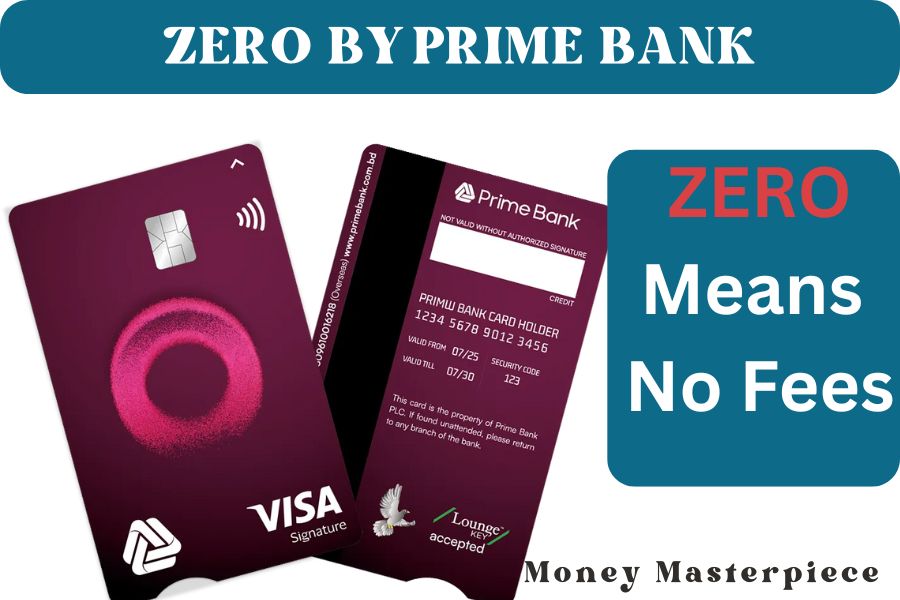
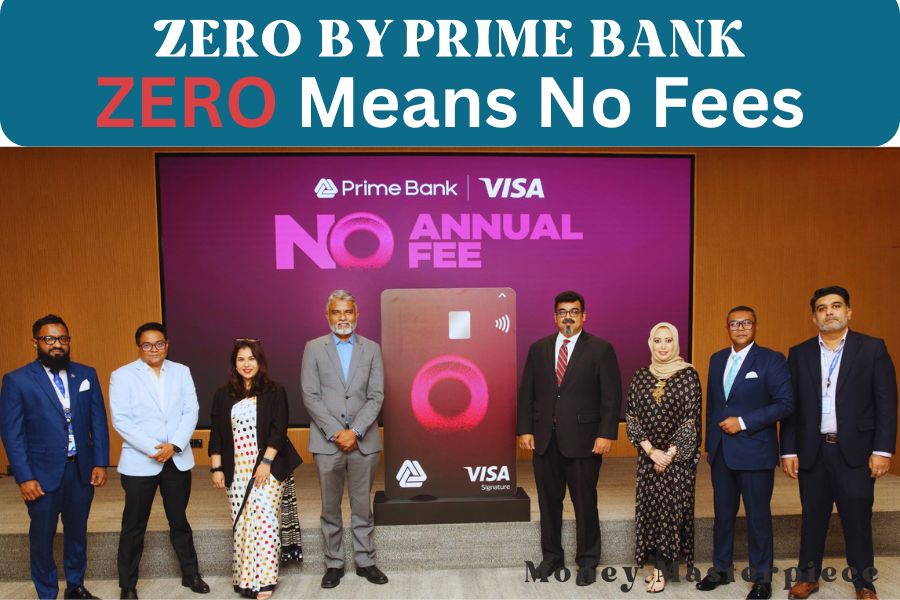
Prime Bank PLC has launched Zero by Prime, a Visa Signature credit card that redefines how customers experience banking in Bangladesh. As the country’s first truly fee-free credit card, it combines premium lifestyle benefits with total financial transparency. Zero by Prime isn’t just another card—it’s a bold move toward customer-first innovation in retail banking.
Why Zero by Prime Stands Out
Zero Means Zero Fees
Traditional credit cards often come with scheduled and hidden costs. Zero by Prime eliminates them all. This structure ensures customers enjoy the full value of their card without worrying about unexpected charges.
One of the most compelling aspects of ZERO BY PRIME BANK is its commitment to eliminating common credit card fees. You won’t have to worry about extra charges eating into your finances, as this card comes with a remarkable list of “zero fees”:
• No Issuing Fee: Get started with no upfront cost; your card is issued completely free.
• No Annual Fee: Enjoy lifelong benefits without paying any yearly maintenance charges.
• No Over Limit Fee: You can enjoy up to 50 days interest-free with no over-limit fees.
• No Mobile Wallet Transfer Fee: Transfer funds to your mobile wallet without any extra charge.
• No EMI Processing Fee: Convert purchases into 0% EMI plans without any processing costs.
• No SMS Alert Fee: Stay updated with real-time alerts at no additional cost.
• No PIN Replacement Fee: Need a new PIN? Get it for free.
• No Statement Retrieval Fee: Access your statements anytime you need them, without paying a fee.
With ZERO BY PRIME BANK, there are no hidden charges, ensuring you pay absolutely nothing in maintenance fees year after year
Built for Accessibility
One of the standout features is its blind notch design, allowing visually impaired customers to identify and use their cards independently. This small but meaningful addition reflects Prime Bank’s commitment to inclusion and user-friendly innovation.
Zero Prime Benefits
Beyond its zero-fee structure, ZERO BY PRIME BANK is loaded with premium benefits designed to enhance your lifestyle and financial flexibility:
• Worldwide Acceptance: The card offers worldwide ATM, POS, and E-commerce acceptance, allowing you to use it anywhere—whether shopping online, paying in-store, or withdrawing cash globally and locally.
• 0% EMI Facility: This allows you to convert your purchases into easy monthly installments without paying any interest. This makes big or unexpected expenses more manageable by spreading the cost over several months, reducing financial pressure. These EMI plans come with flexible tenures (3, 6, 9, or 12 months) and are available at thousands of partner merchants. They are activated instantly at checkout with no processing fees and no surprise interest. While the card also offers an Easy Pay Plan (EPP) for larger purchases with half the usual interest, the 0% EMI facility stands out for eliminating interest costs entirely.
• Built-in Insurance Coverage: The card provides financial protection against unforeseen events, ensuring peace of mind during emergencies or accidents.
• International Airport Lounge Access: Enjoy the privilege to relax, refresh, and enjoy premium facilities at exclusive lounges worldwide, making your travel experience more comfortable and stress-free (a charge is applicable for this service).
• Reward Points: Turn your daily expenses into valuable rewards! You earn 1 Reward Point for every BDT 50 spent, which can be redeemed later.
• Convenient Bill Payment Options: Easily pay your card bill directly from your card.
• Smart Services through MyPrime App: Manage your card effortlessly, track expenses, and access exclusive features with the MyPrime app.
• 24/7 Contact Center Support: Get assistance anytime with round-the-clock customer service.
• Security, Comfort, and Rewards: Whether you’re shopping or traveling, ZERO BY PRIME BANK is your ultimate companion, making every purchase seamless, rewarding, and convenient
Premium Benefits at a Glance
Feature
Details
Worldwide Acceptance
Use globally at ATMs, POS terminals, and online platforms.
0% EMI Facility
Convert purchases into installments (3, 6, 9, or 12 months) with no fees.
Insurance Coverage
Built-in protection against unforeseen financial risks.
Airport Lounge Access
Relax at premium lounges worldwide (with applicable charges).
Reward Points
Earn 1 point per BDT 50 spent, redeemable for future purchases.
Smart Utilities
Bill payments and management through the MyPrime app.
24/7 Customer Support
Round-the-clock assistance ensures peace of mind anytime.
Strategic Significance
Reinventing Cost Structures
By removing all traditional credit card fees, Prime Bank has challenged the status quo. This transparent structure lowers the entry barrier to premium credit facilities and sets a new benchmark in consumer banking.
Competitive Edge
In a crowded market, Zero by Prime differentiates itself by blending luxury with affordability. It appeals to both aspirational customers seeking lifestyle benefits and everyday users who value cost transparency.
Financial Inclusion
The accessible design, fee-free model, and inclusive features reflect Prime Bank’s broader mission—making financial tools available and practical for all segments of society.
Industry Reception
The launch event was spearheaded by Nazeem A. Choudhury, Deputy Managing Director of Consumer Banking at Prime Bank, alongside Sabbir Ahmed, Country Manager for Visa. Both emphasized how the card reflects a shift toward convenience, transparency, and premium value in Bangladesh’s financial sector.
Industry analysts note that Zero by Prime positions Prime Bank as a customer-first innovator, while setting a new competitive standard that could pressure other banks to follow suit.
Who Should Consider Zero by Prime?
Frequent travelers seeking lounge access and global usability.
Young professionals who want transparent, fee-free banking.
Everyday shoppers looking to earn rewards from daily expenses.
Financially cautious users who value control without surprise costs.
Visually impaired customers who need an accessible, thoughtful product.
Market Impact and Future Outlook
Zero by Prime could reshape expectations in Bangladesh’s credit card industry. As adoption grows:
Consumers will expect greater transparency from banks.
Competitors may be forced to reevaluate hidden charges.
Regulators could look at Zero’s model as a benchmark for fair consumer practices.
This launch signals that Prime Bank is not only responding to customer pain points but also pushing the market toward a new era of customer-centric banking.
ZERO BY PRIME BANK is designed to give you control over your finances with no fees and full rewards. It’s an ultimate companion for both online and in-store shopping, ensuring every purchase is seamless, rewarding, and convenient. Apply for your ZERO BY PRIME BANK Credit Card today and start your premium journey with absolutely zero cost
Final Thoughts
Zero by Prime is more than just a credit card—it’s a statement. By combining zero fees, premium benefits, and inclusive design, Prime Bank has created a product that balances lifestyle and accessibility with financial responsibility.
For consumers, it offers a chance to enjoy a premium banking experience without hidden costs. For the industry, it challenges outdated norms and sets a bold precedent for transparency, innovation, and trust.
A debit card is a plastic payment card that lets you make transactions directly from your bank account. It is an easy and convenient method of payment for everyday purchasesand bills.
With a debit card, you don’t need to carry cash in your wallet or worry about writing checks. Instead, you can simply swipe the card at a point-of-sale terminal or use it to withdraw cash from an atm. These cards are typically linked to a checking account and can be used to make purchases at merchants around the world. Using a debit card is often more secure than carrying cash, as transactions can be easily tracked and monitored by the bank. Some debit cards also offer rewards programs or cashback incentives, making them an attractive option for frequent users. Overall, a debit card is a simple and practical way to manage your money and make everyday purchases.
Definition And Function Of A Debit Card
A debit card is a financial card issued by a bank, which enables the cardholder to access the funds in their bank account. Unlike a credit card, a debit card does not require the holder to borrow money from the bank; instead, it allows them to spend the money that is already in their account.
In this section, we’re going to define a debit card and describe how it works, as well as outline the differences between debit cards and credit cards.
Explanation Of A Debit Card And How It Works
A debit card is a payment card that is linked to your bank account. When you use it to make a transaction, the funds are deducted directly from your account. Debit card transactions are processed through the same payment networks as credit cards, including visa, mastercard, and american express.
When you make a purchase with your debit card, you enter your personal identification number (pin) into a card reader or sign for the purchase.
The merchant will then request authorization from your bank
The bank verifies that you have enough funds available in your account to complete the transaction.
If there are sufficient funds available, the purchase amount is transferred from your account to the merchant’s account.
If there are not enough funds available, the transaction will be declined.
You can use a debit card at ATMs to withdraw cash or check your account balance.
Differences Between A Debit Card And A Credit Card
Although debit and credit cards look similar, there are some significant differences:
Credit cards enable you to borrow money from a lender, with the promise to repay it with interest.
Debit cards only allow you to spend funds that you have deposited in your bank account.
Interest is not charged on debit card transactions, making it less expensive than credit cards.
Credit cards offer rewards and cashback programs, while debit cards generally have fewer rewards programs.
Credit cards can help improve your credit score, while debit cards do not affect it.
Fraud protection is similar for both credit and debit cards, but credit cards offer more protection against unauthorized purchases.
A debit card functions as a convenient way to access the funds in your bank account. Unlike credit cards, it allows you to spend only what you have in your account without paying interest, making it a budget-friendly option. While credit cards may offer rewards and can help build your credit score, debit cards provide an easy and efficient way to manage your money without incurring debt.
How To Get A Debit Card
Debit cards are an essential tool to manage your finances. Not only can you make purchases anywhere, but they also help you control your spending by only allowing you to spend what you have in your account. But how do you obtain a debit card?
In this section, we’ll explore the steps necessary to apply for and obtain a debit card.
How To Apply For And Obtain A Debit Card
Before you can obtain a debit card, you need to apply for one.
Choose a bank or credit union: you need to have an account with a bank or credit union before applying for a debit card. Consider factors such as fees, atm availability, and online banking options when selecting an institution.
Determine eligibility: financial institutions have varying eligibility requirements for obtaining a debit card. In general, you’ll need proof of identity, like a government-issued id, and an existing account.
Complete an application: once you’ve chosen a financial institution and confirmed eligibility, you’ll need to fill out an application. The application typically asks for personal information, such as your name, address, and social security number.
Wait for approval: after submitting your application, the bank or credit union will review it and notify you if approved. If approved, they’ll likely mail your debit card to you in a few business days.
Here are some additional points to keep in mind when obtaining a debit card:
Activate your card: once you receive your debit card, you’ll need to activate it before you can start using it. The institution will provide instructions for activation.
Choose a pin: your debit card will come with a personal identification number (pin) that you’ll need to use to make purchases and withdraw cash. Make sure to choose a secure pin and never share it with anyone.
Monitor your spending: with a debit card, it’s easy to overspend if you’re not careful. Keep track of your purchases and regularly check your account balance to ensure you’re staying within your budget.
By following these steps, you can apply for and obtain a debit card that will help you manage your finances and control your spending.
What is a Debit Card and How Does it Work?
https://www.youtube.com/watch?v=At5rNIGwTlw
Types Of Debit Cards
Debit cards have become a popular alternative to carrying cash or using credit cards. They allow you to make purchases using the funds available in your bank account without the risks of debt or the need to carry large sums of money.
However, not all debit cards are the same, and it’s important to know the differences between them. In this section, we’ll explore the various types of debit cards, the comparison between debit cards from different issuers, and the differences between standard and premium debit cards.
Debit cards come in different types and offer various benefits, depending on the issuing bank.
Standard debit cards: basic cards that offer limited benefits and features.
Premium debit cards: high-end cards that provide additional benefits, such as travel insurance, free atm usage, or cashback on purchases.
Prepaid debit cards: cards that require you to load money onto the card before use. These cards are ideal for people who don’t have a bank account or have a poor credit history.
Comparison Between Debit Cards From Different Issuers
When choosing a debit card, it’s important to compare the offerings from different issuers.
Fees and charges: some banks charge monthly or annual fees for their debit cards. Additionally, there may be charges for atm usage or foreign exchange transactions.
Rewards and benefits: different debit cards offer different rewards and benefits, such as cashback, loyalty points, or travel insurance. Make sure to choose a card that aligns with your spending habits and lifestyle.
Security features: look for additional security features, such as two-factor authentication or chip-and-pin technology, to protect yourself from fraud and unauthorized transactions.
International acceptance: if you travel frequently or do business overseas, consider getting a debit card that’s accepted internationally.
Differences Between Standard And Premium Debit Cards
Premium debit cards offer additional benefits and features compared to standard debit cards.
Fees and charges: premium debit cards often come with higher fees or minimum balance requirements compared to standard debit cards.
Rewards and benefits: premium debit cards typically offer more rewards and benefits than standard debit cards, such as travel insurance, free atm usage, or cashback on purchases.
Bonuses: some premium debit cards offer sign-up bonuses or cash rewards for meeting spending requirements.
Customer service: premium debit cardholders often enjoy priority customer service and dedicated account managers.
Debit cards offer a convenient and safe way of making payments without the risk of debt or the need to carry cash. When choosing a debit card, it’s important to compare the offerings from different issuers and consider the benefits and features that align with your lifestyle and spending habits.
Whether you choose a standard or premium debit card, make sure to select a card with the right combination of rewards, fees, and security to suit your needs.
Advantages Of Using Debit Cards
Debit cards have become a popular choice for people worldwide because of their ease of use and financial benefits. Unlike credit cards, debit cards allow you to spend only within your account limit, making them a safer and more controlled approach to spending.
Here are some key advantages of using debit cards that make them a preferred payment option.
Convenience And Ease Of Use
Debit cards offer unmatched convenience when it comes to making purchases. You can use them for in-store or online shopping, paying bills, withdrawing cash, and more. Unlike cash, you don’t have to worry about carrying loose change or having enough bills on hand.
Just swipe or tap your card at the point of sale, and you’re good to go. Additionally, most banks provide a mobile app to monitor transactions, set up alerts, and freeze your card if stolen or lost.
Potential Financial Savings
Using a debit card can help you save money in different ways. Firstly, there’s no interest rate charged on a debit card because you’re spending your funds. Secondly, some merchants offer discounts or special deals if you pay by debit card rather than credit.
Moreover, you will not have to pay any annual fees on a debit card compared to a credit card. Lastly, you can avoid costly fees when using an atm by choosing those of your bank network, which makes debit cards a budget-friendly option.
Increased Security Compared To Cash
Debit cards offer improved safety compared to carrying cash since if it gets lost or stolen, the loss is still recoverable. Most banks offer zero-liability policies, which means that you will not bear any liability for fraudulent charges with your debit card if reported immediately.
When you present a debit card, you won’t have to disclose sensitive information like your name or account number as with a check. Also, with the availability of chip technology, debit cards have greater fraud protection features than cash.
To sum up, using a debit card can provide significant advantages because of the convenience they offer, potential financial savings, and increased security compared to cash or credit cards. With these benefits, it’s no wonder why people are ditching cash in favor of debit cards to make their transactions.
Disadvantages Of Using Debit Cards
Debit cards have gained immense popularity in recent years due to their convenience, accessibility and ease of use. However, there are several disadvantages of using debit cards that we should be aware of. In this section, we will discuss the potential risks associated with debit card usage.
Risk Of Fraud And Hacking
One major disadvantage of using debit cards is the risk of fraud and hacking. Hackers can steal personal and financial information through various means such as phishing, skimming, or hacking into the merchant’s network.
Debit card fraud can result in direct loss of funds from your account.
If someone uses your debit card without your permission, you may have to go through a tedious process to get your money back.
Some banks may have specific time limits within which you must report fraudulent activity, or else you may not be able to recover your funds.
Overdraft And Other Fees
Another disadvantage of using a debit card is overdraft and other fees.
Overdraft fees occur when you make a purchase that exceeds your account balance, and your bank covers the difference for you.
Some banks charge a high overdraft fee, which can add up quickly if it happens frequently.
Other fees, such as atm fees, foreign transaction fees, and maintenance fees, can also add up over time, making debit card usage more costly than you might expect.
No Credit-Building Opportunities
Lastly, debit cards do not provide any credit-building opportunities.
Unlike credit cards, which report your spending to credit bureaus and can help you build credit, debit card usage does not have any impact on your credit score.
If you are looking to build credit, using a credit card responsibly and paying your bills on time is a better option than using a debit card exclusively.
While debit cards offer a lot of convenience and accessibility, they also carry several disadvantages. As long as you are aware of the potential risks and take necessary precautions, using a debit card can still be a convenient option for day-to-day expenses.
Tips For Using Debit Cards Responsibly
Debit cards have revolutionized banking, making it easier and more convenient for people to manage their money. Unlike credit cards, debit cards allow you to spend only the amount you have available in your account, preventing overspending and debt accumulation.
However, it’s important to use debit cards responsibly to avoid financial problems. In this section, we’ll discuss some tips for using debit cards responsibly.
Establishing A Budget
One of the best ways to use a debit card responsibly is by establishing a budget. A budget helps you allocate your funds properly, ensuring that you’re living within your means and saving money for future use.
Assessing your income and expenses: this helps you understand how much money you have left after paying your bills each month.
Prioritizing your expenses: identify your needs vs. Wants and allocate funds accordingly.
Keeping track of your spending: it’s essential to keep a record of all your debit card transactions to ensure you stay within your budget.
Monitoring Transactions
Monitoring your debit card transactions is vital to ensure that you’re not being overcharged or experiencing fraudulent activity.
Checking your account regularly: ensure you’re checking your account frequently to detect any unfamiliar transactions.
Reporting any unauthorized transactions: reach out to your bank immediately if you notice any suspicious activities.
Using alerts and notifications: set up alerts and notifications for account activity to stay on top of things.
Keeping The Card Secure
It is important to keep your debit card secured and safe:
Protecting your personal identification number (pin): never disclose your pin, and be sure to cover the keypad when entering your pin.
Signing up for fraud protection services: some financial institutions offer fraud protection services to help safeguard your debit card from unauthorized transactions.
Keeping contact information updated: make sure your financial institution has your current contact information so they can reach out to you in case of suspicious activities.
By following these tips, you can use your debit card effectively and responsibly, ensuring that you don’t fall into financial pitfalls. Be sure to establish a budget, monitor your transactions, and keep your debit card secure to enjoy its benefits and peace of mind.
Frequently Asked Questions On What Is A Debit Card?
1. What Is A Debit Card?
A debit card is a payment card that allows you to make purchases by deducting funds directly from your checking account.
2. How Does A Debit Card Work?
When you make a purchase with your debit card, the funds are immediately deducted from your checking account.
3. Are Debit Cards And Credit Cards The Same?
No, debit cards and credit cards are different. Debit cards withdraw funds from your own bank account, while credit cards borrow funds to be paid back later with interest.
4. What Are The Advantages Of Using A Debit Card?
Advantages of using a debit card includes avoiding interest and debt, and being able to easily track spending.
5. What Are The Disadvantages Of Using A Debit Card?
Disadvantages of using a debit card includes no rewards or benefits, and limited protection against fraud compared to credit cards.
6. How Do I Apply For A Debit Card?
You can apply for a debit card at your local bank branch or online through your bank’s website.
7. How Do I Use A Debit Card At An Atm?
To use your debit card at an atm, insert the card, enter your pin, and choose the transaction type you want to make.
8. Can I Use My Debit Card To Withdraw Cash?
Yes, you can use your debit card to withdraw cash from an atm or at the point of sale when you make a purchase.
9. Can I Use My Debit Card For Online Shopping?
Yes, most online retailers accept debit cards as a form of payment.
10. What Should I Do If My Debit Card Is Lost Or Stolen?
You should immediately contact your bank to report the loss or theft of your debit card to prevent unauthorized use.
Conclusion
As we conclude on this informative blog post on debit cards, it’s clear that these cards have brought a revolution in the way we transact money. The convenience of carrying a debit card instead of cash is one of the primary reasons people prefer this payment option.
Also, their acceptance is widespread, making them accessible and convenient regardless of your location. It’s essential to know the type of debit card you have and the associated fees, as they vary regarding the issuing bank. To ensure the safety and security of your funds, it’s crucial to be vigilant with your debit card by frequently monitoring your balances and reporting any fraudulent activities.
Overall, debit cards are an excellent option for anyone looking for a convenient, reliable, and secure way to transact money, making them a popular choice for individuals and businesses alike.
With just a swiping of your credit card, you pay a handsome bill of thousands to lacs worldwide instantly without any penny with you. Your credit cards make it possible. However, such wide-accepted safe transaction has not been successful overnight. There goes a long history of credit cards to come today’s perfection.
Bangladesh is not lagging behind in the era of credit cards, the Cashless Bangladesh movement has fueled it too. Let’s find credit cards in Bangladesh in short.
Key Takeaways: Credit Cards in Bangladesh
Market Growth: The credit card sector has expanded significantly, with over 2.8 million cards now in circulation and monthly transactions exceeding 3,500 crore BDT.
Interest Rate Landscape: Most major banks maintain a monthly interest rate amounting around 25-30% per year.
Dual-Currency Dominance: Dual-currency cards are now a standard necessity for managing global subscriptions and foreign travel, subject to the annual $12,000 travel quota limit.
Fee Waiver Culture: Most institutions offer annual fee waivers based on usage, typically requiring between 12 to 24 transactions per year to void the cost.
Lifestyle Perks: Competition among issuers is driven by Buy-One-Get-One dining offers at 5-star hotels and unlimited airport lounge access through networks like Priority Pass or local SkyLounges.
History of Credit Cards
Credit cards have a long history to reach today’s destination. We will present the whole story and history in some short details to give you an overview.
Pre-history of Credit Cards
The history begins with the idea of credit cards in science by Edward Bellamy in his book Looking Backward, first published in 1888. The credit card was cited 11 times in the book!
Then, Charge/Courtesy cards in the 1920s and Charga Plate in 1934 made the ideas of the cards more realistic and implementable.
Modern Card History
The tribute for credit cards goes to Frank McNamara, who devised the idea of dining now, pay later concept. There is a story that he went for dinner in a restaurant in New York City but forgot to carry his wallet. When the bill arrived, he was embarrassed and thought of the idea of ways to pay later. The game started in 1949.
In 1950, he and his friend Ralph Schneider started Dinners Club primarily with 27 restaurants and 200 members. They charged $3 yearly from members and 7% from the merchants. The concept was so successful that it increased to 20000 members in the first year. The success spread the card out of the USA to Canada, France by 1953.
Around the same time, Alfred Bloomingdale started Sign and Dine cards in Los Angeles. Hearing the story of Diners Club, he contacted and discussed with Frank and Ralph and consolidated their card business.
Bank of America introduced cards in 1958, and the cards soon spread all over the world.
Few World Statistics
First credit card issuer bank is Bank of America
Walter Cavanagh won the Guinness Book of World Records with 1,497 cards, a credit line of $1.7 mill.
Around 2.8 billion cards are issued
Canada has the highest % of card users(82.58%)
VISA is the highest number of the card issuer, followed by Mastercard, Discover, and American Express.
Few Insights in American Aspects
79% of Consumers have at least one credit/charge card
Visa is the most used card, followed by Mastercard.
Discover and Amex are the third and fourth in the queue of service providers.
History of Credit Cards in Bangladesh
Credit cards have become a must-have possession for the last couple of years in Bangladesh. Almost all the banks and financial institutions are vying severely to give a card with lots of sweet talks and offers. People from all walks of life, especially jobholders, are the main targets of these card issuers. Cards are distributed and activated with many colorful aspirations, but life gets caught with the debts and loans after a few months.
Credit cards in Bangladesh
Formal orientation of credit cards in Bangladesh happened with Standard Chartered Bank in January 1, 1997. SCB was then with the name ANZ Grindlays Bank. At first, the VISA and Mastercards were in BDT. National Bank Limited in 1997 initiated the dual currency cards. And now? There is hardly any banks/NBFIs that do not issue credit cards.
You need not take me wrong that I am discouraging with the drawbacks of any credit card. But, it’s not like that. Today, I will share both pros and cons of a credit card but be sure that I will focus mainly on the wrong aspects to keep your life easy, comfortable, and debt-free for long. Taking benefits of the modern tools has never been bad, but if the benefits can not outweigh your problems, I must suggest not approaching that sweet topic.
Few statistics in Bangladesh
Bangladesh’s credit card infrastructure appears to be thriving as the monthly domestic transactions is more than Tk 3,500 crore.
The number of ATM/CDM/CRM is more than 13,000.
As of January 2026, the number of Credit cards issued was around 28,00,000.
Department stores such as Shwapno, Meena Bazar, Unimart capture nearly half of all domestic credit card spending
Credit Card Products in Bangladesh
Each bank?NBFI is different in its card names and features. Some of the names of cards are as the list goes:
The evolution of credit cards presents the history of problem solutions. Cards were born to drive away holders’ limitations and shortcomings. Let’s explore the advantages of credit cards in the perspective of Bangladesh.
Less physical theft
Carrying a handsome amount of cash is risky of theft and robbery. Your cards can save you from them. You are taking only a plastic card to avoid the scenario as the cards are not readily usable as cash. In addition, cards are password and authentication protected, so thieves are not very interested in stealing them.
Reward points
It is bizarre but true that buying in cash hardly provides rewards nowadays. But, with some specialty cards, you can lot of offers, rewards, and concessions. So, have some ideal cards and avail the bonuses and discount offers on almost all outlets. Accumulating reward points will give you options of encashment or availing of free purchases.
Safety
Cards are issued and maintained by the reputed and most prominent organizations. They are worldwide entities concerned a lot about security and reputation, and your safety is their concern. With cards, you are not only safe from physical theft; the issuers will handle online scams if you follow timely steps. In addition, the platform and the reputation will ensure you more cybersecurity than cash transactions.
Comfortable
Carrying a card is much more comfortable than having a good amount of cash notes. In terms of space, comfort, and ease, cards outweigh the facilities of cash.
Transportable
Cards are easy to transport and carry compared to cash. A plastic card will facilitate you with a few lacs of cash equivalent. You are carrying a plastic card that can provide all the cash requirements readily. Taking bundles of cash has become obsolete with the arrival of cards.
Digital
In the digital world era, cards are the perfect partner in your digital journey and lifestyle. With credit cards, you can harvest the true potentials of digitization. Your life gets more virtual than ever with the virtue of a card. Payments, receipts, transfers are all made with some taps of fingers.
Versatile
Credit cards offer you a true sense of versatility. Previously cards were well known for facilitating credit purchases. The time has changed a lot to provide booking, ticketing of bus, train, theatre, cinemas, mobile recharge, fund transfers and many more. Nothing that involves money is out of the purview of cards nowadays.
Remote payment
Suppose you will pay another city/country. Can cash help you comfortably? Cards may be the right choice here. You can pay anyone, anywhere.
Prepayment
Suppose you will visit another city/country next month and need to pay for your hotel bills in advance. Cards are the perfect tool to make your advance bills in seconds from your home.
Status
Having a credit card is no longer limited to status; it is getting to necessity. Still, it has always been a symbol of status. To maintain the friend circle and society’s class, you may need to own one or more cards to use on different occasions and locations.
Lounge
If you are to use airports now and then for official/business/personal tours, you must feel the necessity to avail the lounge facilities offered to credit card holders. For a safe and honorable stay at lounges without any extra charges(in most cases), you will require to have a card. So, credit cards are not only for transactions; they are sometimes for relaxation.
Foreign payments
Those who pay for various bills and subscriptions in foreign currencies can feel the relaxation with cards. Dual-currency cards can make your foreign payments hassle-free. You need not visit any bank branch or money changer to make the payment.
The Quickest
Credit cards are the quickest payment solution for your busy life. You need not waste your valuable time in counting, checking cash. All you need is to authenticate the transactions. Besides, you need not visit the banks and grocery outlets. You can make everything from home. You can pay with cards and take home delivery.
Emergency fund
Credit card debt may be a good source of emergency funds. You may withdraw with card checks or cards and even can transfer to MFSs without any extra charge. So, when you require urgent funds, your cards are just saviors.
Grace period
You may purchase on credit cards at home and abroad as there is a grace period of around 45-50 days maximum based on the billing cycle. For example, suppose your bill generate on the 4th, and the last payment date is the 20th. If you make a transaction on the 5th, you will get a grace period of 45 days. If you transact on the 4th, your grace period comes down to 15 days.
Smart
With digitization at its peak, smart payments and transactions are getting priority. Credit cards ensure smart payments at ease. Cards may be one of the most used ways available near you.
Supplementary Card
Another great feature you can enjoy is the supplementary card. You can avail supplementary cards for your family members who do not fulfill the conditions to get a card by themselves. Receiving a supplementary card is very easy, contact the issuer card division or your known representative to avail one.
Insurance Coverage
Some card issuers provide insurance benefits for credit card users get insurance benefits in case of an accident, permanent total disability, and death. Usually, dues are waived and some prefixed amount is given to the cardholder /nominees.
Disadvantages of Credit Cards
Excessive and unnecessary expenses
As you do not have to carry cash, you can expense any amount. But, again, as you are not paying now, you consume even for unnecessary and less urgent items. Carrying cash puts a limit, but cards encourage consumption with offers and reward points.
Falling in debt trap
Most of the credit cardholders fall into debt over time with unnecessary consumption. The first few months are easy to manage with help from the near and dear ones, but situations get tougher and unmanageable over time. Then, debts start piling, and you may be a victim of the loans.
High-interest rate
Credit cards are payment solutions, not fund sources. If you finance from cards by not paying your dues, you must bear an unbearable interest rate. The effective rate and charges now is around 30% in Bangladesh,(The declared interest rate from March 2026, as per Bangladesh Bank is 25%) though banks’ lending rate is under 15%.
Lots of fees
Using credit cards becomes sour when you miss the last date of payment. You are charged a heavy extra in the name of late payment fees. In addition, the interest gets higher if you are to make any amount for delayed payments.
Pressure in date management
If you are several cardholders, you will feel the hard pressure of managing the dates to make the bill payments in time.
Inaccessibility
Another ignored sad story may be the inaccessibility or unavailability of services. Suppose you are out of home with your card and found that the services will not be available for scheduled maintenance; life will become a burden as you have no cash as a digital life lover. However, card issuers send messages/emails before causing any maintenance. So, be careful to avoid such wrong timings.
Not allowing own account.
Withdrawal of funds from card checks is cheap, but the problem is that you can not place the check in your account. Instead, you have to deposit it in another person’s account. It creates some complexities.
Extra Charges
Things are not always rosy for credit cardholders in Bangladesh. Some retailers may want to charge you 1%-2% extra if you pay in cards. If you have ever visited and tried to pay with credit cards in IDB for electric items, you must have faced such a weird situation, I believe.
Origins of credit card traps
Too many cards
The trap and burden of credit cards start when you are opting for multiple cards. Having several cards may not harm you until you pay the dues of one card with another card’s funds.
Too much limit
A man, by nature, is not self-regulated. Some regulations and limitations make him abide by the existing policies. When you have access to a considerable amount, you are expected to spend more in most cases. Try to keep your limit as minimum as possible to keep out of spending addiction.
Using cash withdrawal facilities
You will hardly fall prey to the debt burden if you are not taking cash facilities from credit cards. Taking funds makes you more prone to fail in non-payments on due dates. Credit card funds are expensive, and when you are using this facility, you will have to pay a lot as an interest charge.
Missing full payments
It is crucial to pay your monthly bills in full. Usually, interest is heavily charged until you complete full payment. Paying the minimum amount is not enough to avoid an interest charge. If you pay partially, interest is charged on full dues.
Waiting the last minutes and forgetting the last dates
Many cardholders wait for the last date to pay for cards and sometimes miss the deadline due to being busy, sick, or having other issues. As a result, some of you may forget to pay at last. If you have several cards, it is natural that few dates will be out of your memory. When you miss the deadline, you are to pay a high charge.
Carrying always with you
If you desire to be out of the credit card trap, you should not always carry your cards with you. Instead, when you are going shopping or for other purposes, take the card with you. This method will help you avoid unnecessary expenses.
Best Credit Cards in Bangladesh
Best cards with lower interest rates and charges
Dutch Bangla Bank Limited cards
Prime Bank Limited Cards
Best cards with lounge facilities
EBL cards
City Bank Amex Cards
BRAC Bank Cards
SCB Cards
Best cards from International issuers
SCB cards
FAQs
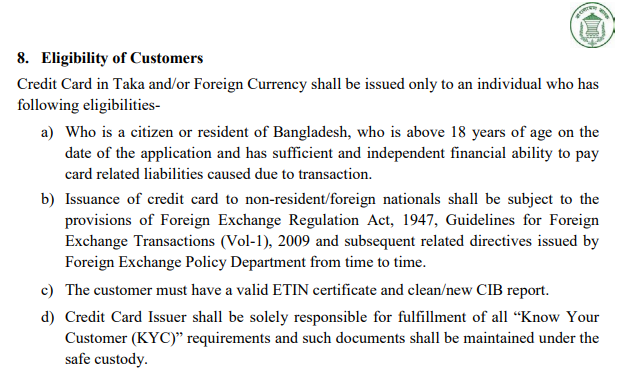
What are the requirements for a credit card in Bangladesh?
Basic Documents
Application form
Copy of valid N Identity Card/Machine Readable Passport
Copy of valid passport for dual/international card
Copy of E-TIN Certificate
Two copies of photographs
CIB Enquiry & CIB Undertaking forms
Supplementary Card
Copy of National ID Card/Passport/Birth Registration Certificate for a supplementary cardholder.
For Salaried Persons
Salary Certificate/ Pay Slip
Latest 3 months’ bank statement
Based on your profession, the documents required may vary from bank to bank. so, please collect the documents list from the representative while applying.
What are credit card CVV and expiration dates? How long is a CVV number?
Card verification value (CVV) is a security and identity feature. It reduces theft and fraud. Card verification code (CVC) or card security code (CSC) also refers to the same issue. For online payments/transactions, you will require to confirm the CVV and expiration dates. CVV is usually 3/4 numbers.
Do you have to pay for a credit card?
There are yearly and SMS charges you are to pay for a credit card. However, you may have some offers and conditions to avoid the charges, especially the yearly charge with some specified transactions.
What are the best dual-currency cards for freelancers?
Bank Asia SHADHIN Mastercard and EBL Aqua card are easy to get and convenient dual-currency cards specially designed for freelancers.
Is MasterCard available in Bangladesh?
Mastercard Debit and Credit cards are widely available and usable in Bangladesh. You can use almost all POSs and ATMs over the country.
Is VISA Card available in Bangladesh?
VISA is one of the most issued cards in Bangladesh, backed by most of banks and non-bank financial institutions. You can avail of and use them on almost all ATMs, POSs, and online platforms.
How can I pay my VISA card bill online in Bangladesh?
Paying your VISA card bill is more comfortable and flexible than you think. You may pay with dropboxes(particular banks), visiting bank branches, online banking or apps, Mobile Financial Services, and many more ways.
How can I pay my Mastercard bill online in Bangladesh?
You can pay for MasterCard by bank branches, dropboxes, online platforms. However, Bkash is not providing services for these card payments though it supports VISA and Amex bill payments.
Is a credit card company/network and issuer same?
May be the same as Amex and Discover or different as Visa and Mastercard.
Checklist for a credit card selection?
Getting a credit card is very easy in Bangladesh. But before taking any card, be aware of the following checklist:
Annual fee
Interest Rate
Late Fee
Credit Limit
Wide Acceptability
Necessity
Loyalty/Reward points
Lounge Facilities
Payment options
Fund Transfer
Grace Period
Security Deposits
EMI coverage
Final Notes
Over the years credit cards have been usually the boons all over the world. However, there are many instances that people have submerged in debts with the misuse of cards. If you look before leaping. The use of cards (credit cards, priority, shopping cards, and debit cards ) in Bangladesh may make your lifestyle comfortable and worth living. Avoid the debt trap and enjoy the virtues of innovation. Find details on Credit Card Operations Policy.