The boiling frog syndrome plays a very decisive role not only in biology and natural ecosystem but also in the business, finance and investment. The final investors are human beings and thus the behavioral finance, specially the biases are getting important decision-making factors in the present investment world.
The boiling frog syndrome
The boiling frog syndrome shows how accepting and compromising minor changes may cause catastrophic death. It metaphorically presents the fatal death of a frog but human life or investment is set to suffer if not proactive timely. In our personal and social life, we are taught to adopt situations with little discomfort. We are ready to take some pains to keep as the things are. Compromising mentality is a positive trait in the society too. However, there are situations we need to take proactive steps to avoid greater losses of health or wealth. The boiling frog syndrome warns us from smaller negative changes before turning to the catastrophes.
The boiling frog syndrome explained:
The boiling frog theory is a metaphor describing the failure to react small problems may increase in severity and reach catastrophic consequences.
The boiling frog concept is that if you place a frog in already boiled water, it will jump out but if you place in normal water and gradually heat to boiling water, it will try a little and consequently face death.
The concept is a metaphor presented with a frog but applies to everywhere. It is a story to warn the human community about being cautious to small changes that might bring life-taking consequences. It says that if you put a frog suddenly in any pot with boiling water, it will jump out of the pot if within the capacity.
The reason is that as the sudden boiling water is a threat for its life, it will react promptly with all possible capacity. However, if you put the frog in a pot with normal water, the frog will not feel insecure to jump out as the life is not at stake. Then when you and keep heating gradually, it will feel a bit uncomfortable and try to accommodate the minor changes rather getting out.
If the heating continues, frog tries to accept and compromise. It also tries to get out but not with all power. Then, at one point, the heat turns the warm water to boiling water and the frog tries to get out but fails as it has been week enough to utilize full potential. Thus, the frog suffers a sad death in boiling water that could be avoided when the water started getting hot.
Examples of the boiling frog syndrome
Frog is an element in the metaphor but the theory applies to almost all walks of life including society, person life, investments etc. Let us find some practical aspects and examples that support the boiling frog syndrome.
The boiling frog syndrome in personal life:
We deal with many disturbing and negative people hoping that they will be alright some day and the effects are not so severe. Over the time, they get so much harmful that may hamper our normal life.
We may be dissatisfied with the salary or environment of the office and adopt as the severity is low. We do not look for opportunities when there are scopes. After few years, we will have hardly any scope to leave the job for versatile reasons but the life gets unbearable with the environment.
Our marriage life may suffer from complexities that we compromise and ignore. There comes time when we can not get separated or keep compromising. Life seems hell but we have hardly any way out.
The boiling frog syndrome in personal life
we may have some assets or securities that have not future potential. The price goes down slowly and we do not offload. At a point of time, the price goes so down that we face a brutal loss. We could avoid if proactively sold. As the price did not get down suddenly, we ignored the problem.
We may trade with someone in credit. There might be some gradual accumulation over time. At one time,
The boiling frog syndrome in action
1960 for sympathy towards the Soviet Union during the Cold War;
1980 collapse of civilization anticipated by survivalists;
1990s inaction to climate change, abusive relationships and slow erosion of civil liberties.
1996 novel The Story of B, environmentalist author Daniel Quinn wrote a chapter on the boiling frog
1997 Pierce Brosnan’s character Harry Dalton in the Dante’s Peak warning volcano’s reawakening
2006 Al Gore used a version of the story in a New York Times op ed,in his presentations and the movie An Inconvenient Truth about global warming.
2010 writer/director Jon Cooksey in the title of his comedic documentary How to Boil a Frog.
2003 Law professor and legal commentator Eugene Volokh mentioned that regardless of the frogs in reality, the story is useful as a metaphor, as to the metaphor of an ostrich with its head
2009 Economics Nobel laureate and New York Times op-ed writer Paul Krugman used the story as a metaphor in July column, mentioning that real frogs behave otherwise.
2006 Journalist James Fallows suggests to stop retelling the story, as it as a “stupid canard” and a “myth”. However, after Krugman’s column he was a bit soft.
Is the boiling frog syndrome true?
The boiling frog syndrome is better to take as a metaphor, not literally true. The story about the frog has been ruled out by many and suggested as conceptually accepted.
Behavioral finance holds that financial decisions are not always data or information-driven, sometimes psychology and behavioral biases affect financial decisions greatly.
Behavioral Finance
Behavioral finance studies the psychology of financial decision-making and assumes that most people know that emotions affect investment decisions.
Behavioral Finance Biases
Behavioral finance biases are the emotional influences on financial decision-making in addition or opposed to logical and data-driven factors.
Behavioral finance takes the insights of psychological research and applies them to financial decision-making. There are lots of classifications of the biases under behavioral finance. Some of the most common and decisive biases are explained below:
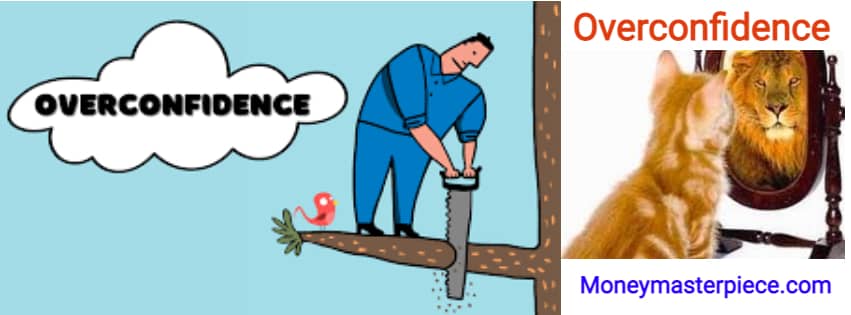
Bias #1 Overconfidence Bias
This is an emotional bias, where investors have an inflated faith in their own judgment, decision-making, and analytical abilities. Examples: 1). Investors overconfidently trade their accounts too frequently. 2). Investors ignore diversification concentrated stock positions. 3). Investors refuse to save or invest, and even ignore developing their investment plans.
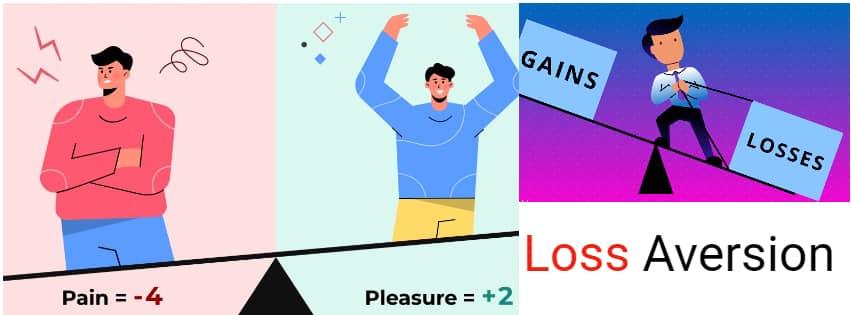
Bias #2: Loss Aversion Bias
Investors focus more on loss mitigation than making a profit. Holding losing their investment position for a longer period in the expectation that they get back to even, regardless of the poor future prospects for security. The bias also prompts the investors to sell very lucratively with lower appreciation. Opportunity costs are ignored most of the time for this bias.
Example: BDT 1.00 bears more pain than the gain derived from a profit of BDT 1. Profitable securities are sold quickly and losing securities are held for a longer time.
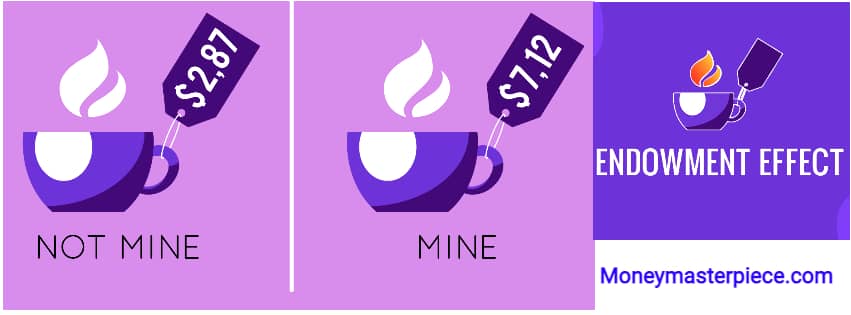
Bias #3 Endowment Bias
Endowment Bias is an emotional bias where investors value their own security or asset more. The ownership may come from purchase or inheritance. Such overvaluation may underweight the others’ assets and thus fails to benefit from opportunity cost.
Examples: 1) Investors tend to hold on to what they own. 2) They do not want to sell because of:
Inheritance,
Commissions, and
Purchased assets/securities.
Bias #4 Anchoring and Adjustment Bias
This is an information bias using a default number as benchmark/anchor. The pre-existing or first piece of information affects as anchor in both limited and overloaded information.
Example of anchoring and adjustment bias:
(i) Stock market of Bangladesh set an anchor index of 7,000 a few months back and now it is set for 8,000 index points as the BSEC sets some policy issues to 8,000.
(ii) If a stock price sells for 100 and slips for reasonable grounds, many will not offload below 100 despite the strong probability of not returning to that price. The reason is that they anchor the price at $100 and are not ready to accept lower than $100.
(iii) 52-week high/low stock price is another example of anchoring bias. 52-week high stock price works as resistant and leads to undervalue stocks whereas 52-week low stock price works as supports and induce purchases.
(iv) Sometimes, companies opt for stock splits to avoid the 52-week high stock price bias. When stock price approaches 52-week high, resistance comes and undervaluation occurs. Even reasonable grounds fail to break the resistance backed by 52-week high stock price bias. Some companies go for stock splits to break the resistance and downward direction.
(v) We analyze stock price technically or fundamentally but the stock price available in the market works as an anchor.
Bias #5 Outcome Bias
This is a cognitive and information processing bias for which the investors decide on the basis of ends or outcome not means or process that led to that result.
Example of outcome bias: We may select an investment manager focusing on his/her performance(track records for a few years) rather than the process that leads to that performance. Such bias takes higher risks as the decision has not been with proper analysis of fundamental and technical aspects.
Bias #6 Mental Accounting Bias
Mental Accounting bias happens when people categorize assets to different mental accounts and value them differently. The same amount of money does not have different values but Mental Accounting bias values differently.
This tendency of mental buckets also causes us to focus on the individual buckets rather than thinking of the entire wealth position.
Examples of Mental Accounting Bias : 1). People spend more money with credit cards than cash. 2). Employee investors overweight equities in their portfolios for their own company stock. 3). Retirement funds are planned for as long-term investments. (Positive effect though)
Bias #7 Snake Bite Effect
The snake bite effect happens if people take very conservative decisions based on past bad experiences and regrets for the poor returns.
Example: If someone avoids stocks for a past fall and consequently invests in government bonds heavily for conservatism. He/she may get upset for lower returns than the stock market.
Bias #8 Illusion of Control
Investors with the illusion of control bias believe they can control investment outcomes but actually, they cannot. It is in most cases true that we can not control our investment outcomes fully whether we admit it or not. The investors have a dependence on a third party or ecosystem but are in the illusion to admit the influence.
Examples: 1). More frequent trade than usual for the illusion of control bias. 2). It often leads to over-concentrated investment portfolios in a single sector. 3). Some correct trades/deals make people overconfident.
Bias #9 Availability Bias
Availability bias impacts the decisions of investors with the familiarity of the outcome in their life. They perceive easily recalled possibilities as the best choices. Examples: 1). A technology company employee guesses tech companies are the best investments. 2). An investor may avoid companies as he can not remember the name easily. 3). Investors tend to invest in best-advertised companies/mutual funds.
4). Investors are eager to invest in or withdraw investment from companies with recent news.
Bias #10 Self-Attribution Bias
Self-Attribution Bias states that investors to credit their success to talent and skill and blame their failures on situations beyond their control or luck. Examples: 1). Sometimes investors do well simply because of a strong bull market. Hence the saying, “never confuse brains for a bull market.” 2). Investors may take too much risk and trade their accounts excessively. 3). Investors create over-concentrated portfolios due to this bias. 4). This bias discourages investors to learn from past errors.
Bias #11 Recency Bias
Recency Bias lets the investors prioritize more on recent events than those in the distance events. Examples: 1). Investors only look at the recent 1-, 2-, and 3-year track record when evaluating investment or manager. 2). Investors will focus on the investment class in favor today. 3). Often investors focus on price and not valuation and can falsely extrapolate future returns.
4). Investors are eager to invest in or withdraw investment from companies with recent news.
Bias #12 Cognitive Dissonance Bias
Investors ignore newly acquired information if it conflicts with previous views due to cognitive dissonance bias. Some people avoid relevant information to keep aside psychological conflicts. Examples: 1). Refusal to take the tax benefit
2). Ignoring reallocation to a better investment 3). Not admitting a mistake. 3). “It’s different this time” is the answer when something goes wrong.
Bias #13 Self-control bias
Self-control bias states that people may not act to ensure their best long-term interest because of their lack of self-control.
Examples:
People prefer lavish life in the present, rather than savings.
People do not invest in equities or take part in the benefits of dollar-cost averaging.
People do more shopping with credit cards.
Consuming lion’s share of income for present lifestyle.
Less priority on retirement planning and saving.
Bias #14 Confirmation Bias
Confirmation Bias encourages people to emphasize ideas that confirm their own beliefs while ignoring ideas contradicting beliefs. Example: The fall of world-famous companies provides examples of how officials suffered for their own company concentration.
Bias #15 Hindsight Bias
Hindsight Bias is the overestimation of one’s prediction power more perfectly than reality.
Examples:
After the market crash in Bangladesh in 1996 and 2010, few people claimed that they could sense the probable stock market collapse. Such people get the confidence that they can predict the future correctly.
Bias #16 Representativeness Bias
Representativeness Bias shows that people categorize assets/investment classes based upon relevant past experiences. Such classifications can often produce incorrect understandings. Example: 1). Interested in IPOs is thought sure profitable but there might be loss too.
2). Assuming that the past performance of an investment is an indication of its future performance.
#17 Paradox of Choice
The paradox of Choice states that information overload creates lower performance, productivity, and satisfaction. Too much analysis makes paralysis of decision making. When there are too many options, people face difficulty in making financial decisions.
The Paradox of Choice is a book written by Barry Schwartz that explains though conventional view tells us that more choice leads to more freedom and more happiness, research shows the opposite Examples: 1). 50 studies show a positive connection between choice and anxiety. 2). A study showed that if 10 mutual funds are added to a retirement plan, participation drops by 2% more.
Bias #18 Affinity Bias
It is an emotional bias where investors purchase or sell a security based on values or a sense of attachment rather than economic consideration.
For example, investors may invest in:
Securities of countries and regions
Securities of companies they shop at
Eco-friendly company stocks
Bias #19 Framing Bias
Framing Bias shows that the narrow frame presents overreactions whereas the broad frame presents a lower reaction of investors on loss.
The phrasing/framing and the way information is presented draw the attention of investors in addition to the information itself.
Bias #20 Herd Mentality Bias
Herd Mentality Bias occurs when investors copy and follow the groups for investment decisions instead of their research, analysis, and evaluation.
Such bias severely affects panicked investors and leads to a market crash.
Conclusive Words
Behavioral finance is somewhat a new concept in the investment and finance sector. However, it has been a very influential and impactful aspect in the present era of the competitive business world. We have discussed 20 Behavioral finance biases to make your financial and investment decisions profitable.