Category: Net Worth

  • All About Matiul Islam: Iconic Bangladeshi in Finance

    Matiul Islam was a towering figure whose creative and visionary approach was instrumental in shaping the foundation and subsequent expansion of Bangladesh’s financial architecture. As the nation’s first finance secretary, he was critical in recovering the country’s war-torn economy, and later transitioned into a pioneering entrepreneur, driving the development of the modern private financial sector. His passing on November 20, 2025, at the age of 95, cast a shadow over Bangladesh’s financial community.

    A devoted economist, administrator, writer, and entrepreneur, Mohammed Matiul Islam’s six decades of work in accounting, finance, and international development left an indelible legacy.


    The Foundation: Education and Early Career

    Born on January 24, 1930, Matiul Islam grew up in British India and in 1946 went to Calcutta for higher studies. With the partition of India in 1947, he moved to Chittagong.

    His career was built on an exceptional academic record. He achieved a B.Com with first-class first honors from the University of Dhaka (DU) and later earned a Master’s degree in Public Administration from Harvard University. He was also a fellow of the Institute of Chartered Accountants of Bangladesh (ICAB).

    He came out successful in the central superior service examination. His distinguished career officially began with joining the Civil Service Academy in Lahore in 1952.

    Mr. Islam is known for serving as the first Finance Secretary of Bangladesh, as well as being Bangladesh’s representative to the World Bank and later with the United Nations.


    Rebuilding a Nation: Bangladesh’s First Finance Secretary

    Following Bangladesh’s independence in 1971, Matiul Islam was called upon to take on the crucial and challenging role of the country’s first Finance Secretary, appointed by January 17, 1972. Working closely with Tajuddin Ahmad, the country’s first finance and planning minister, Islam was tasked with rebuilding the nation’s war-torn banking system.

    His responsibilities were immense, including rebuilding a shattered financial system and implementing the nationalization of the banking sector.

    During this foundational period, he traveled with Sheikh Mujib and other heads of government to establish key international relationships:

    • In February 1972, he traveled to Calcutta for talks with Indira Gandhi and the Indian Foreign minister.
    • In March 1972, he journeyed to Moscow where talks with Soviet Premier Brezhnev and Prime Minister Alexei Kosygin yielded an agreement for the Soviets to build a power plant in Ghorashal and assist in clearing mines and wreckage from Chittagong Harbour.
    • Later that year, after visits to Washington D.C. and London, the groundwork for a relationship with the IMF and World Bank was established, and the country achieved US$400 million in foreign currency reserves by September 1972.

    Global Influence: Diplomat and Development Expert

    Matiul Islam’s impact extended far beyond Dhaka into the international financial arena, serving as a Bangladeshi diplomat and envoy to key global organizations.

    The World Bank

    In October 1973, Islam joined the World Bank. As Bangladesh’s representative, he spearheaded the country’s entry into the World Bank, International Monetary Fund (IMF), and Asian Development Bank (ADB).

    He served as the Alternate Executive Director for Bangladesh, working in coordination with India and Sri Lanka. When S.R. Sen, the Executive Director, passed away, Islam took over his duties, managing Bangladesh’s contributions to the IBRD, IDA, and IFC.

    His tenure, which lasted until July 1977, was marked by vocal campaigns for the equal treatment of even the poorest nations. Notably, he campaigned against a proposed U.S. Government Accountability Office audit of the World Bank, asserting that all members were equal, and if the U.S. audited the bank, every other country should have that opportunity. He collaborated closely with Robert McNamara, then President of the World Bank, to promote aid and assistance in debt restructuring, while simultaneously working to eliminate barriers to foreign investment to enhance Bangladesh’s appeal to investors.

    Secretary of Industry and UNIDO

    Following his tenure at the World Bank, Islam returned to the Government of Bangladesh in July 1977 as Secretary of Industry. His primary focus in this role was the development of Bangladesh’s private sector.

    His most significant achievement as Industry Secretary was partnering with Dubai Bank, Limited to establish the Arab-Bangladesh Bank (now AB Bank) on December 31, 1981. He later served as the founding chairman of AB Bank Limited.

    Seeking stability away from the central government following Ziaur Rahman’s assassination in 1981, Islam was offered a position at the United Nations Industrial Development Organization (UNIDO).

    He spent twelve years at UNIDO, serving six years in Vienna and six years in Delhi.

    • In Vienna, he was a Senior Industrial Development Field Adviser and served as a liaison between UNIDO and the World Bank, matching World Bank projects in need of consultant services with specialized UNIDO personnel.
    • In 1987, he transferred to Delhi, working as the UNIDO director for India and Bhutan, where he helped secure foreign direct investment and led matchmaking efforts to pair investors with local companies at no cost to India and Bhutan.

    Architect of the Private Financial Sector

    After retiring from government/NGO service in 1993, Matiul Islam turned his focus fully to entrepreneurship, becoming a pioneering figure in developing the country’s private financial sector. He went on to start four companies.

    He was instrumental in establishing several key non-bank financial institutions (NBFIs) in Bangladesh:

    • In 1996, he founded International Leasing and Financial Services (ILLFS).
    • In 1998, he followed this by founding National Housing Finance and Investment (NHFIL).
    • In 2000, he founded his primary business venture, the Industrial and Infrastructure Development Finance Company Limited (IIDFC), a non-banking financial institution (NBFI) operating under the Financial Institutions Act of 1993. As of 2015, IIDFC amassed 16.7 billion BDT (US$200 million) in assets, and Islam continued to serve as its chairman.

    Additionally, in 2003, he played a key role in founding the Credit Rating Agency of Bangladesh (CRAB) by partnering with the Indian Credit Rating Agency (ICRA), and he most recently served as the vice-chairman of CRAB.

    In his later years, he documented his extensive experience, publishing his second memoir, Recollections of a Civil Servant-Turned Banker (2019).


    Lifetime Achievement and Recognition

    Matiul Islam’s significant contributions to financial governance and public life were recognized with prestigious awards:

    • In 2010, his company, IIDFC, received the HSBC-The Daily Star Climate Award for Climate Change Mitigation for financing Bangladesh’s first green brick project, which introduced a technology using 50% less energy to manufacture bricks.
    • In 2011, he won The DHL-Daily Star Lifetime Achievement Award for his collective accomplishments over six decades in finance, accounting, and international development.
    • In 2021, the Institute of Chartered Accountants of Bangladesh (ICAB) honored him with a Lifetime Achievement Award.

    Death
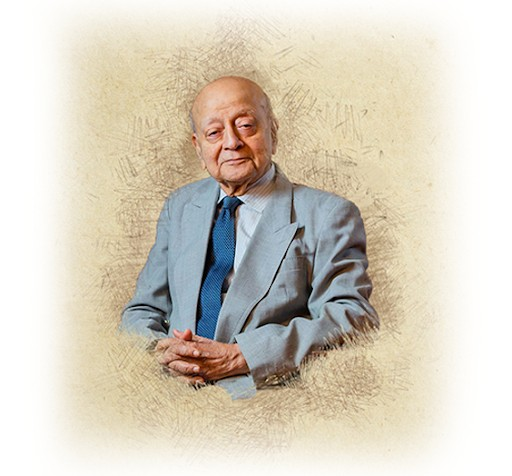
    Mr. Islam left the world at the age of 95 on 20 November 2025 leaving his wife- Zohra, two daughters, five grandchildren, and one great-granddaughter..

    Last Lines

    Matiul Islam, who was described by his family as possessing great wisdom and a quiet but powerful influence, passed away on November 20, 2025. His vision and dedication ensured that the financial ecosystem of Bangladesh was not just reconstructed but systematically designed for future growth, cementing his legacy as a true pioneer.
  • Learning from Failures: Coca-Cola, Netflix, and Amazon

    In business, failure is often treated as a dirty word. It is seen as a mark of poor judgment, lack of preparation, or weak execution. Careers stall because of it, reputations suffer from it, and companies spend enormous energy trying to avoid it. Yet, paradoxically, failure is also a critical driver of innovation. Without it, no new ground is broken, and no bold experiments take root.

    The world’s most forward-thinking companies—Coca-Cola, Netflix, and Amazon—understand this paradox. They recognize that in a volatile, hyper-competitive economy, success is inseparable from the willingness to risk mistakes. What sets them apart is not a lack of failure, but their ability to learn from it, move past it, and even celebrate it.


    Coca-Cola: Breaking Free from the Shadow of “New Coke”

    Coca-Cola is no stranger to failure. The launch of “New Coke” in 1985 is still remembered as one of the most notorious product missteps in corporate history. Intended to replace the original formula, the new version sparked public outrage and was quickly withdrawn. For decades afterward, that failure cast a long shadow over Coca-Cola’s culture. Managers became risk-averse, hesitant to propose bold ideas.

    When James Quincey became CEO in 2017, he recognized this paralyzing effect. His message was direct: “If we’re not making mistakes, we’re not trying hard enough.”

    • Reframing failure as progress: Quincey’s leadership was about removing fear from the decision-making process. Failure was reframed not as incompetence, but as evidence of ambition.
    • Encouraging experimentation: Coca-Cola began to test new products, flavors, and packaging more aggressively, accepting that not all would succeed.
    • Lesson for leaders: Cultural scars from past failures can limit growth for decades. Leaders must reset the narrative, turning mistakes into sources of resilience rather than fear.

    Netflix: Why Too Much Success Signals Trouble

    For most companies, having too many hits would be a dream. For Netflix, it was a warning sign. Reed Hastings, Netflix’s CEO, admitted that their cancellation rate for new shows was too low. “Our hit ratio is too high right now,” he explained. The logic was simple: if everything works, then the company isn’t experimenting enough.

    • Encouraging creative risk: Netflix deliberately commissions riskier projects, embracing “crazy ideas” that may fail but could also redefine categories.
    • Failing fast and cheap: By canceling shows early when they underperform, Netflix limits costs while freeing up resources for bolder bets.
    • Global experimentation: The company invests in diverse markets (e.g., Korean dramas, Spanish thrillers), knowing some will fail while others become global phenomena (Squid Game, Money Heist).
    • Lesson for leaders: A perfect success rate often hides stagnation. Failure signals that boundaries are being tested and innovation is alive.

    Amazon: The Economics of Bold Bets

    Few companies embody a tolerance for failure like Amazon. Jeff Bezos has long argued that bold experiments are inherently risky and bound to fail—yet essential for growth. In his words: “If you’re going to take bold bets, they’re going to be experiments… experiments are by their very nature prone to failure. But a few big successes compensate for dozens and dozens of things that didn’t work.”

    • Big failures, bigger wins: Amazon’s Fire Phone failed spectacularly, but Amazon Web Services (AWS) became a multi-billion-dollar empire. Prime subscriptions also reshaped consumer loyalty despite initial skepticism.
    • The portfolio mindset: By spreading risk across multiple experiments, Amazon increases its odds of creating breakthrough products.
    • Failure as a teacher: Each failure generates insights that inform the next experiment, turning wasted capital into intellectual capital.
    • Lesson for leaders: One runaway success can outweigh years of smaller losses. Risk-tolerant portfolios beat “safe” strategies in fast-changing markets.

    Why Most Organizations Struggle to Embrace Failure

    Despite these examples, most companies fail to build cultures that value mistakes. Why? Psychology and organizational design work against risk-taking:

    1. Omission Bias
      People often choose inaction over action because failure from doing nothing feels less blameworthy.
    2. Loss Aversion
      Behavioral economists show that losses hurt about twice as much as equivalent gains please us. This makes risk-taking emotionally unattractive.
    3. Career Risk
      Employees fear that one failed project will damage reputations and promotion prospects, leading to a culture of caution.

    These forces explain why innovation rhetoric is often louder than actual innovative action.


    Case Studies Beyond the Big Three

    Domino’s Pizza: Redefining “Failure Is an Option”

    Under CEO Patrick Doyle, Domino’s went through a dramatic turnaround. Its 2009 campaign admitted that customers disliked its pizza and promised radical changes. Doyle often reminded employees: “Failure is an option.” This cultural shift energized teams to innovate on menu items, technology, and delivery. By embracing failure, Domino’s became a digital leader and boosted its global market share.

    Smith College: Teaching Students to Fail Well

    In academia, Smith College created a program called “Failing Well.” Students even received symbolic “Certificates of Failure,” teaching them resilience and risk-taking. The program reframed mistakes as stepping stones rather than dead ends—an approach businesses can mirror in talent development and training.


    How Leaders Can Build a Failure-Positive Culture

    1. Redefine Failure

    Position mistakes as evidence of effort. If everything works, innovation is too safe.

    2. Normalize Learning Loops

    Encourage teams to reflect after every project—whether successful or not—and document lessons.

    3. Reward Intelligent Risk

    Differentiate between reckless mistakes and well-reasoned experiments that simply didn’t pan out. Reward the latter.

    4. Lead by Example

    Executives should openly share their own failures and the lessons drawn. Vulnerability builds trust.

    5. Manage the Portfolio

    Adopt Amazon’s model: balance many small, affordable risks with a few bold bets that could transform the business.


    Practical Framework: The Three Types of Failure

    Not all failures are created equal. Leaders should distinguish between them:

    Type of FailureDescriptionValueResponse
    Preventable FailureMistakes in routine, well-understood processesLowRoot cause analysis; eliminate quickly
    Complexity-Related FailureIssues in novel or uncertain contextsMediumLearn patterns, refine processes
    Intelligent FailureBold experiments designed to test hypothesesHighCelebrate, learn, and scale insights

    Only the last category—intelligent failure—is the one leaders should actively encourage.


    Why Learning from Failure Matters More Than Ever

    • Pace of Change: Industries evolve too quickly for rigid plans. Experimentation is survival.
    • Customer Expectations: Digital-native consumers demand constant innovation and personalization.
    • Competition and Disruption: The risk of being too safe is greater than the risk of failing.

    In today’s markets, not failing may be the most dangerous strategy of all.


    Conclusion: Turning Setbacks into Strengths

    Coca-Cola, Netflix, and Amazon demonstrate that failure is not the enemy of progress—it is a condition for it. Their leaders have redefined failure as evidence of ambition, created cultures where mistakes generate learning, and treated risk as a currency of innovation.

    For business leaders, the message is urgent: stop fearing failure, start managing it. Build systems that reward intelligent risk-taking, and create a culture where people feel safe to try. Because in the end, the companies that learn fastest from failure are the ones that win longest in the market.

  • Device Mama: From Secondhand to Trusted Brand

    In Bangladesh’s rapidly growing digital economy, trust is no longer an optional value—it’s the foundation. And Device Mama, a brand born out of necessity, has emerged as a pioneer of this new trust-first economy, turning a fragmented and often mistrusted secondhand electronics market into a transparent, customer-centered business.

    A New Market Built on Old Machines

    Founded in 2016 under Exchange Kori Limited, Device Mama began with a simple challenge: how to responsibly and profitably manage a growing inventory of used laptops exchanged through other company programs. What started as an offshoot has now evolved into one of Bangladesh’s most recognized names in refurbished laptops and desktops, creating new opportunities for access, savings, and sustainability.

    It targets the sweet spot of affordability and quality, selling laptops between 10,000 and 50,000 BDT. Each unit is upgraded to modern performance standards (minimum 8GB RAM, SSD storage), thoroughly tested, and backed with industry-best warranties.

    In a country where new laptops are unaffordable for many, Device Mama’s value proposition is clear: upgraded, performance-tested machines with warranties, at half the cost of new ones. But what truly sets the company apart is not price—it’s trust.

    Redefining Refurbished Through Standards and Service

    Device Mama doesn’t just resell used electronics—it rebuilds them. Every device undergoes:

    • Standard upgrades like SSD installations and 8GB RAM
    • Replacement of vital parts such as batteries and keyboards
    • Strict cosmetic refurbishment, including screen and body polishing
    • Rigorous testing to eliminate unreliable or over-repaired devices

    All laptops meet a consistent quality benchmark—an experience that rivals new devices in both performance and reliability.

    Most importantly, every sale includes a 50-day, no-questions-asked replacement guarantee—a radical departure from industry norms, where warranties are rare or full of exclusions. Even accessories like bags and adapters are covered. Device Mama guarantees not just functionality, but peace of mind.

    The No-Advance Revolution

    In a market riddled with online fraud, Device Mama introduced a bold policy: customers can inspect the product before paying. No advance required. This approach neutralized the largest barrier in e-commerce for used electronics—fear of being scammed.

    For deliveries in cities or district towns, the customer pays only after confirming satisfaction. Even in rural deliveries, where some upfront payment is necessary, Device Mama keeps the advance lower than the courier cost. By absorbing the risk, they’ve built what others couldn’t: trust at scale.

    Going Beyond Dhaka: A Rural Tech Uprising

    What many overlooked, Device Mama embraced: rural Bangladesh is not digitally disconnected—it’s underserved. From upazila training centers to freelancers in village towns, demand for affordable, reliable laptops is surging.

    More than 50% of Device Mama’s orders now come from outside Dhaka. And in response, the company is establishing district-level distribution hubs, starting with Sunamganj, Munshiganj, and Tangail. These centers will stock devices locally, improving service speed and support in remote areas.

    Trusted by Corporates Too

    Once viewed as a solution only for students and freelancers, Device Mama’s refurbished tech is now embraced by corporate Bangladesh. Nearly one-third of their clients are businesses and organizations looking to reduce costs without compromising productivity. Device Mama now serves:

    • Corporates (30% of customer base), including Save the Children and Runner Group
    • Rural training centers and educational institutions
    • SMEs seeking cost-effective computing solutions
    • With nearly 50,000 devices processed and 1,000 monthly customers, its reach extends well beyond Dhaka. The rural market, once thought too risky, is now a growth engine thanks to the no-risk payment policy.

    Their tailored approach—offering IT audits, on-site support, and device matching by role—has won the confidence of companies that traditionally avoided the secondhand market. For many, Device Mama has become not just a vendor, but a tech partner.

    Building the Infrastructure of Trust

    Device Mama’s growth isn’t just about sales—it’s about building a brand architecture rooted in consistency, transparency, and care:

    • Physical stores in Dhaka (Tejgaon, Mirpur), with plans for expansion
    • Online operations with safe delivery across the country
    • Dedicated service personnel, separate from Exchange Kori’s other divisions
    • A long-term vision: to capture 5% of the monthly PC market in Bangladesh by 2030

    With each policy and customer interaction, Device Mama is doing what few secondhand sellers attempt—institutionalizing trust in a notoriously unregulated category.

    Shifting Perceptions and Markets

    Device Mama is also fighting outdated narratives. In Bangladesh, “used” often implied low quality. By focusing on education-first content, the brand is helping customers understand specs, performance benchmarks, and real-world needs—replacing myth with clarity.

    In the process, Device Mama is redefining what it means to “own” a computer. It’s no longer about buying new. It’s about buying smart.

    Environmental Impact Meets Economic Logic

    Refurbishing is not just good business—it’s also better for the planet. By extending the lifespan of laptops by 4–6 years, Device Mama is contributing to e-waste reduction at a national level. For a country with rising digital needs and limited tech recycling infrastructure, this is a game-changing shift.

    A Model for Emerging Markets

    Device Mama’s success carries lessons for other developing economies:

    • Trust is more powerful than discounts
    • Clear policies beat flashy marketing
    • Rural markets are ready—if served right
    • Used tech, when standardized, can outperform new

    In short, they’ve turned a risk-averse market into a trust-first movement, transforming secondhand devices into first-choice options.


    Final Word: A Brand That Rebuilt the Market

    Device Mama isn’t just fixing laptops—it’s fixing the broken relationship between consumers and secondhand technology. In doing so, it’s proving that trust, not tech, is the real disruption.

    What began as a side project inside a larger company is now pioneering a new kind of digital inclusion in Bangladesh—where performance is guaranteed, and everyone, everywhere, deserves a second shot at the future.

  • Mohammad Rashed Ali Bhuiyan: Superstar behind Star Tech


    In Bangladesh’s ever-evolving tech industry, one name stands out for redefining how technology reaches the masses—Mohammad Rashed Ali Bhuiyan, Co-Founder and Chairman of Star Tech. From humble beginnings to establishing one of the country’s largest and most respected tech companies, Rashed’s journey is not only inspiring but also a blueprint for sustainable, people-centric entrepreneurship in Bangladesh.

    This blog explores his background, leadership values, company-building philosophy, and the legacy he is shaping in Bangladesh’s tech and retail space.


    Early Life and Humble Beginnings

    Mohammad Rashed Ali Bhuiyan, the Co-Founder and Chairman of Star Tech, is widely regarded as one of the pivotal figures shaping Bangladesh’s consumer technology landscape. His story is one of quiet perseverance, early exposure to the IT industry, and an entrepreneurial leap that would eventually lead to the founding of one of Bangladesh’s most prominent technology retail and solutions companies.


    Early Life Rooted in Adaptability

    Although Rashed was born in Jessore, his ancestral roots trace back to Feni, a district from which many of his lifelong values and community ties would stem. His father served as a government officer, which meant frequent relocations for the family. As a result, his early memories of Jessore are fleeting, overshadowed by a life spent adapting to new towns and schools across Bangladesh.

    Rashed began his education in his home village and studied there until the sixth grade. In the seventh grade, he moved to Dhaka, where he attended Dhaka New Model High School and completed his SSC in 1995. However, circumstances led him back to Comilla, where he pursued his higher secondary education at Comilla Government College. He later graduated with honors and a master’s degree from Victoria College, completing his academic journey in 2002.


    Early Exposure to the IT Industry

    What sets Rashed apart is how early he became immersed in the technology field, thanks to family ties and his proactive nature. Even as a student, he was already working in various professional roles—gaining valuable experience that would later serve as the backbone of his entrepreneurial endeavors.

    After completing his HSC, Rashed began an internship at a retail shop in the IDB complex, owned by his maternal uncle, who was the Chairman of Global Private Limited. This internship was Rashed’s first step into the tech retail world. Alongside this role, he also worked with UNICEF, initially as a surveyor and later advancing to the role of supervisor—a testament to his leadership potential and work ethic even at a young age.


    Professional Growth During University Years

    With strong encouragement from his family, Rashed continued working in the IT sector throughout his university years. He joined Nets Private Limited, another IDB-based company run by a maternal uncle, where he remained employed during his entire student life.

    Unlike many who separate academic and professional lives, Rashed balanced both worlds seamlessly. He would take time off during exams but remain fully engaged in the business for the rest of the year. This early dual commitment gave him a unique advantage—hands-on technical and business exposure long before completing formal education.


    From Employee to Entrepreneur: The Birth of Star Tech

    Following the completion of his master’s degree and years of working experience, Rashed began to reimagine his future. He realized that rather than continuing as an employee, he had the vision and readiness to build something of his own.

    At this point, conversations began among a group of like-minded peers—each with experience in different segments of the IT sector. This group included:

    • The current Managing Director of Star Tech Limited, already active in the IT field
    • Mazharul Alam, the MD of Distribution Hub Limited
    • Mahbub Alam Rakib, MD of Star Tech Engineering Limited

    In 2007, the four of them decided to move forward with their vision. Together, they established Star Tech as a proprietorship business in the Elephant Road Multiplan Center—then an up-and-coming tech hub in Dhaka. With little capital but immense determination, they opened their first outlet in a small space, aiming to offer not just tech products but expert consultation, support, and an entirely new customer experience.

    People-First Philosophy

    As Chairman, Mohammad Rashed Ali Bhuiyan has built Star Tech around four core principles that define his leadership:

    1. Experience: Rashed believes that success is rooted in deep, hands-on understanding of the business. He leads by example, often engaging with day-to-day operations and customer interactions.
    2. Hard Work: His tireless work ethic has influenced the entire organization. Star Tech’s rapid growth can be credited to its culture of diligence and execution.
    3. Honesty: From supplier relations to customer service, transparency and trust are non-negotiable values for Rashed. These principles have earned Star Tech a reputation for reliability in a crowded market.
    4. Commitment: He emphasizes keeping promises—whether to clients, partners, or employees. “If you break your promise, you lose your business,” he often says.

    Transforming Workplace Culture in Bangladesh

    One of Rashed’s most notable achievements is transforming corporate culture in an industry that often prioritizes profits over people.

    Open Communication

    In contrast to traditional top-down structures, Rashed promotes direct communication across all levels of the organization. Over 1,200 employees are encouraged to message or meet him directly—an unheard-of practice in many South Asian corporations.

    Flexibility and Trust

    Rashed designed Star Tech’s workplace to focus on results, not clock-ins. Employees are trusted to manage their time and take breaks as needed. This culture of autonomy drives loyalty and high performance.

    Comfort and Dignity

    The work environment includes:

    • Clean, gender-sensitive washrooms
    • Rest areas and kitchens
    • Common rooms for women
    • Onsite meals and tea corners
    • Flexible hours and supportive leave policies

    He believes a workplace should feel like home, and Star Tech is a living example of that belief.

    Comprehensive Employee Benefits

    Rashed has implemented:

    • Free life insurance
    • Affordable health insurance
    • Nutritious meals
    • Mental health counseling
    • Ongoing training and upskilling opportunities

    These are not just perks—they are expressions of a deeper philosophy that companies must care for the whole human being, not just the worker.


    Leadership Through Respect and Sacrifice

    Star Tech’s governance model is shaped by Rashed’s belief in respectful, collaborative leadership. Despite being the Chairman, he works with his partners in a culture of mutual respect and shared decision-making.

    Most of Star Tech’s co-founders are from the same region—Feni and Chandpur—but their unity is based on values, not just geography. Disagreements are handled through dialogue, and decisions are made democratically. As Rashed puts it, “If someone only wants to talk and not listen, that’s a problem for any partnership.”

    This humility and willingness to compromise have kept the partnership strong for nearly two decades—an exceptional feat in the world of business.


    Star Tech’s Growth Under His Leadership

    From a small retail store, Star Tech has grown into a national tech powerhouse, serving a wide range of clients across Bangladesh. Under Rashed’s chairmanship, the company has expanded into three main Strategic Business Units:

    1. Retail & E-Commerce (Star Tech Limited): Selling the latest tech products—from laptops and desktops to wearables and gaming gear—online and in 20+ physical outlets.
    2. Distribution (Distribution Hub Limited): Distributing over 20 global brands through a robust supply chain.
    3. Corporate & Government Solutions (Star Tech Engineering Limited): Handling specialized IT projects, government tenders, and enterprise solutions.

    This diversified structure allows Star Tech to serve individuals, businesses, and institutions across all tech categories.


    Vision for the Future

    Rashed envisions a digitally inclusive Bangladesh, where high-quality tech products and services are available to everyone—urban and rural alike.

    Star Tech is working to expand its retail network to every division and district in the country. Beyond expansion, Rashed also emphasizes the need for training, capacity-building, and government support to help Bangladeshi companies thrive amidst increasing foreign competition.

    His long-term dream is for Bangladesh to not just consume technology but to produce and innovate, creating a self-reliant tech economy.


    Advice to Entrepreneurs

    For aspiring business owners, Rashed offers time-tested advice:

    • Get work experience before launching your business
    • Learn the business hands-on—don’t just rely on theory
    • Be honest, hardworking, and committed
    • Always keep your promises to customers and partners
    • Build a strong team culture—you can’t grow alone

    Notably, several former employees of Star Tech have gone on to launch their own successful IT ventures—proof that the company is also a breeding ground for future entrepreneurs.


    A Personal Philosophy

    Outside of business, Rashed carries a refreshing perspective on life. He believes in living in the moment, being grateful, and enjoying life without constantly chasing the future.

    “We’re always running after dreams, but life is meant to be enjoyed,” he says. “Be thankful for where you are. Gratitude brings more blessings.”

    This attitude informs his leadership as well—it’s about creating success without sacrificing the joy of living.


    Legacy in the Making

    Mohammad Rashed Ali Bhuiyan is not just a successful entrepreneur—he is a cultural changemaker in Bangladesh’s business landscape. Through Star Tech, he has shown that empathy, discipline, and vision can drive growth without compromising ethics or employee well-being.

    As Chairman, he continues to guide Star Tech toward broader horizons while remaining deeply grounded in the values that started it all. His story is proof that great businesses are not just built on products—they are built on people, purpose, and principles.

  • Sylvana Quader Sinha: Transforming Healthcare in Bangladesh

    In the heart of Dhaka, amid a healthcare system often plagued by inefficiencies, long waiting times, and patient distrust, a quiet revolution has been underway—led by a woman who dared to reimagine the healthcare experience in Bangladesh. Sylvana Quader Sinha, the founder, Managing Director, and CEO of Praava Health, embodies the rare combination of global perspective, professional rigor, and personal conviction.

    Early Life and Global Influences

    Born and raised in Virginia, USA, Sylvana grew up with deep roots in Bangladesh. Her family origins in Bangladesh, coupled with frequent visits during her childhood, planted early seeds of awareness about the disparity in healthcare and quality of life. From a young age, she was struck by the extremes of poverty she witnessed in Bangladesh—despite its vibrant culture and resilience—and these early observations would go on to shape her worldview.

    Her academic journey began with a degree in Philosophy and Economics from Wellesley College in Massachusetts, followed by a dual graduate path—a Juris Doctor from Columbia Law School and a Master’s in International Development from Harvard University’s Kennedy School of Government. These experiences equipped her with a powerful foundation in law, policy, and global development.

    A Career of Impact: From Diplomacy to Development

    Sylvana’s early career was steeped in global engagement. She worked at prestigious institutions like The World Bank and in international law, gaining firsthand exposure to the intersections of policy, law, and human development. Her commitment to making a difference led her to join then-Senator Barack Obama’s foreign policy team during his historic campaign—an experience that brought her close to some of the brightest minds in American diplomacy.

    Yet, rather than staying in Washington after Obama’s victory, Sylvana made an unconventional move: she relocated to Afghanistan. There, she worked with the World Bank, the U.S. Institute of Peace, and other organizations, applying her expertise to development efforts in one of the world’s most fragile states. But despite the impact of her work, she began to feel a pull toward something more direct, more personal.

    A Personal Crisis Becomes a Catalyst

    The turning point in Sylvana’s life came in 2010 when her mother underwent a routine operation at a leading hospital in Dhaka. The procedure, expected to be simple, turned into a near-tragedy due to complications and misdiagnosis. A cancer diagnosis was later refuted abroad. This harrowing experience exposed her, in the most personal way, to the limitations and dangers of a fragmented healthcare system. She realized that if such errors could happen to someone with access to top-tier care, what was happening to everyday patients?

    It was a wake-up call. She began to contemplate how she could create meaningful, systemic change in the Bangladeshi healthcare landscape.

    Founding Praava Health: A New Vision for Care

    In 2014, Sylvana made a bold decision: to return to Bangladesh and build a healthcare company from the ground up. With no prior experience in running a medical business, she began by listening. She spoke to doctors, patients, policymakers, and healthcare entrepreneurs around the world. The stories she heard revealed two core problems: a deep lack of trust between patients and providers, and unreliable diagnostic services.

    By 2016, she hired her first employee and began building what would become Praava Health—a company based on a simple but powerful idea: that patients deserve to be treated with empathy, dignity, and accuracy.

    After raising angel investments through her international network and building a core team, Praava opened its doors in 2017. What started with a small staff grew rapidly, with over 100 employees joining for the ribbon-cutting at the company’s first flagship center in Banani.

    What Makes Praava Different

    Praava Health is a pioneer in many ways. It’s the first healthcare company in Bangladesh to introduce a fully integrated hospital information system, giving patients access to their health data through a mobile app. This digital-first approach allows patients to schedule appointments, view test results, and communicate with doctors from anywhere.

    Its six laboratories follow international standards, offering over 250 unique diagnostic tests. Praava also built Bangladesh’s first PCR lab for molecular cancer diagnostics, a breakthrough in early detection and personalized cancer care.

    But perhaps its most revolutionary feature is its values-based membership model. Instead of profiting when patients fall ill, Praava’s model is based on keeping people healthy. Members pay a flat annual fee and receive regular care and wellness services—an approach aligned with global trends in preventive care.

    A Culture of Ownership and Learning

    Under Sylvana’s leadership, Praava fosters a flat, collaborative culture that encourages shared ownership. Every employee—from doctors to administrative staff—plays a role in the patient’s journey. Weekly team meetings, cross-functional learning sessions, and even employee-led health camps reflect a deeply human, service-driven ethos.

    Sylvana herself leads hospitality training and encourages a culture of continuous learning. Her belief in empowering others is visible in how Praava operates: not just as a business, but as a movement toward rehumanizing healthcare.

    Challenges, Resilience, and Growth

    Building Praava hasn’t been without obstacles. Introducing a new healthcare brand in a trust-deficit market like Bangladesh is immensely challenging. Yet, word-of-mouth has been the company’s most effective growth driver. Patients who experience compassionate, reliable care become ambassadors. Corporate partnerships and an evolving digital presence are also helping drive momentum.

    Praava now serves thousands of patients and continues to expand. With a hub-and-spoke model, Sylvana envisions dozens of centers across the country in the coming years, bringing quality care closer to home for millions.

    Life, Leadership, and Legacy

    To Sylvana, leadership is about values and vision. She often quotes Hafiz—“Stay close to anything that makes you feel alive”—as a guiding philosophy. The desire to create meaning, build connection, and serve others lies at the core of her journey.

    Her advice to aspiring founders? “You just keep going. That’s all you can do.” She acknowledges the emotional and mental toll of entrepreneurship, but remains grounded through regular exercise, relationships, and an unwavering belief in her mission.

    Her business model and entrepreneural journey are studied and covered at home and abroad.

    Final Thoughts

    Sylvana Quader Sinha is more than a founder. She is a changemaker—one who returned to her roots with a vision to heal, to rebuild trust, and to inspire a new model of healthcare. In a country where systems often fail the people they serve, Praava Health stands as a testament to what happens when innovation, empathy, and grit come together.

    Sylvana’s story is still unfolding, and the impact of her work is only beginning to ripple through Bangladesh’s healthcare ecosystem. But already, she has proven that one person—driven by purpose and grounded in service—can indeed change the system.

  • Journey of Kihak Sung in Bangladesh

    When Kihak Sung, a young South Korean entrepreneur, first landed in Chattogram in 1979, Bangladesh was far from an ideal business destination. The infrastructure was inadequate, foreign investment was heavily restricted, and political instability loomed large. But what the country lacked in systems, it made up for in opportunity. Bangladesh’s quota-free access to European markets made it an attractive alternative for Korean exporters burdened by trade restrictions in the developed world.

    While many Korean companies were considering India, Sri Lanka, or Pakistan, Kihak Sung made a bold choice—he picked Bangladesh.

    The Humble Beginning: Youngone in 1980

    In May 1980, Sung partnered with local businessmen and established Youngone Bangladesh Limited. The venture began with modest resources—a small factory, just 250 workers, and a favorable first order from a Swedish buyer. Materials were hauled by hand carts from the port, forming kilometer-long queues. But despite the initial hardships, the operation flourished.

    By 1984, Youngone was exporting $18 million worth of garments, proving that Sung’s bet on Bangladesh was more than just a gamble—it was the start of a new industrial chapter.

    Rising Against the Odds

    The early years weren’t without struggle. Political protests outside the factory, labor disputes within, and a challenging partnership dynamic led Kihak Sung to buy back the shares of his Bangladeshi partners in 1986. That same year, he relocated operations to the newly built Chittagong Export Processing Zone (CEPZ), seeking better infrastructure and stability.

    Despite a slow start, Youngone steadily expanded in the CEPZ. The company rented multiple factory spaces and grew its capacity. An IPO in Korea in 1988 improved cash flow, enabling further investment—including a sprawling 100,000 sq ft factory by 1990.

    But then disaster struck.

    Surviving the Storm: 1991 Cyclone

    In April 1991, a super cyclone ravaged the coastal areas of Chittagong, killing over 138,000 people and devastating Youngone’s facilities. Floodwater covered the factories; mud and debris rendered them unusable. Sung stayed behind to help salvage the operation. What he witnessed during that time changed his perspective.

    “The workers wanted their jobs and were determined to keep us in Bangladesh. When I left after the recovery, they cried,” Sung recalled in an interview.

    This emotional connection solidified Sung’s long-term commitment to Bangladesh. Orders poured in from buyers who admired Youngone’s resilience, and the company began to thrive like never before.

    Vision for the Future: The Birth of Kepz

    As Youngone expanded, CEPZ’s limitations became apparent. It couldn’t keep up with the scale and speed of Sung’s ambitions. The idea of a private Export Processing Zone took root during a JICA (Japan International Cooperation Agency) programme in the mid-90s, which proposed a new furniture EPZ in Anwara.

    Encouraged by the Korean ambassador and inspired by the opportunity, Sung decided to take the lead.

    What he found in Anwara was far from ideal—arid, sandy land often referred to as “Texas” by locals due to its dry, barren landscape. Water was scarce, and during the monsoons, the area flooded. But Sung saw beyond the obstacles.

    By 1999, the government had acquired 2,500 acres of land for the Korean Export Processing Zone (Kepz). However, bureaucratic red tape slowed progress. Despite investing over Tk 100 crore, Youngone had to wait years for licenses, environmental clearance, and land mutation documents. But Sung remained undeterred.

    Kepz: A Model Industrial Zone

    In 2008, construction finally began. By 2011, the first factories became operational. Kepz introduced innovative water conservation methods, including rainwater harvesting and massive artificial water bodies capable of storing 500 million gallons annually. This not only provided sustainable water for operations but also protected surrounding villages from seasonal flooding.

    Today, Kepz stands as a testament to Sung’s commitment to green, productive industry. With 50% of the land preserved for greenery, Kepz is envisioned as more than just a factory zone—it is a vibrant urban ecosystem built for healthy living and sustainable work.

    “I cannot go away with Kepz,” Sung said. “I want to make it one of the best places to live and work.”

    A Lasting Legacy

    Today, Youngone Corporation employs around 90,000 people globally—72,000 of them in Bangladesh. The company is listed on the Seoul Stock Market, generating $2.5 to $3 billion in annual revenue, one-third of which comes from its Bangladesh operations.

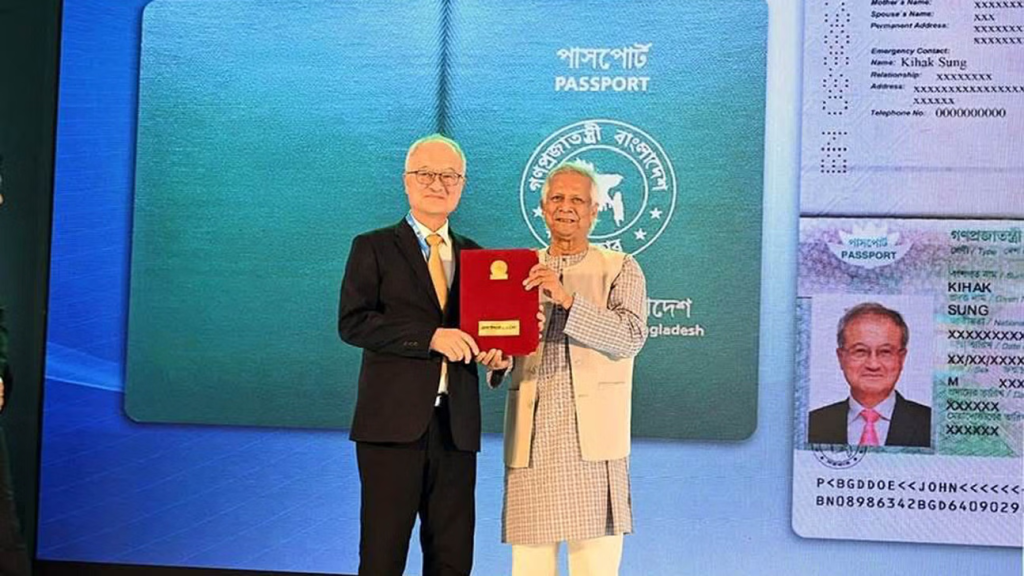
    Beyond business, Kihak Sung’s contributions were recognized at the Bangladesh Investment Summit 2025, where he was awarded honorary citizenship by Chief Adviser Dr. Muhammad Yunus—a fitting tribute to a man who gave decades of his life to build what few dared to imagine.

    Honorary citizenship of Bangladesh

    Kihak Sung, Chairman of Youngone Corporation and a trailblazer in Bangladesh’s readymade garments (RMG) and textile sectors, was awarded honorary citizenship on April 9, 2025, in recognition of his exceptional contributions to the nation’s economy and industrial growth.

    The honorary citizenship document was formally presented by Chief Adviser Professor Muhammad Yunus during the Bangladesh Investment Summit 2025, held at the InterContinental Hotel in Dhaka.

    Sung was among five distinguished individuals and organizations honored for their impactful roles in shaping Bangladesh’s development trajectory. Reflecting on the recognition, Sung expressed heartfelt appreciation: “I am truly honoured to receive this honorary citizenship.”

    Born in 1947 in Seoul, Sung earned his degree in international economics from Seoul National University before entering the world of global trade through Seoul Trading. This early exposure to international markets paved the way for his entrepreneurial journey and ultimately, his long-standing partnership with Bangladesh.

    Last Lines


    Kihak Sung’s story is not just about business success—it’s a story of resilience, foresight, and unwavering belief in people. It reminds us that transformative change often begins with a bold idea, nurtured through years of grit, guided by vision, and carried out with heart.

    Bangladesh’s garment industry might have many heroes—but in the chronicles of industrial progress, Kihak Sung’s name will forever shine as a pioneer who turned dreams into factories, and factories into futures.