Public Financial Management (PFM) is the backbone of effective governance, ensuring transparent and efficient use of taxpayer money. In Bangladesh, the landscape of PFM is undergoing a significant transformation, driven by technological advancements and a renewed focus on accountability. A recent compilation of lectures by Mohammad Muslim Chowdhury, the Comptroller and Auditor General (CAG) of Bangladesh, offers invaluable insights into the evolving architecture of PFM, its historical context, and the challenges and opportunities ahead.
The core message emphasizes the urgent need for public managers to reorient their skill-sets to leverage technological interventions that have revolutionized manual tasks within PFM, paving the way for innovation and value addition. This shift is not about job displacement but about enhancing efficiency and allowing human judgment to focus on higher-value areas.
The Four Pillars of PFM
The lectures conceptualize PFM through a framework of four interconnected panels, each with distinct responsibilities that are nevertheless interdependent, especially the first three in processing daily transactions:
Executive (Budget Holder) Panel: This panel comprises any person or organization (including the Judiciary and Parliament) that spends the budget to render public services. Key figures include the Principal Accounting Officer (PAO), who is accountable to Parliament for the regularity and propriety of expenditure, and various Controlling Officers (COs) at different hierarchical levels. Their responsibilities are guided by crucial legal documents such as the Constitution, Rules of Business, General Financial Rules (GFR), Public Procurement Act (PPA), and Public Procurement Rules (PPR). A significant emerging issue highlighted is the erroneous mixing of policy and implementation functions within ministries, often leading to deviations from legal frameworks like the Upazila Parishad Act, where central government subordinate offices operate at the Upazila level instead of being placed under local governments.
Pay and Accounts Panel: Led by the Controller General of Accounts (CGA), this panel is responsible for pre-audit before payments and comprehensive accounting after payments. Historically, the Accountant General (AG) was not directly involved in payment processes across the subcontinent before 1983, with the treasury system handling payments and initial accounts. The conversion of district treasuries into District Accounts Offices (DAFOs) and Upazila Accounts Offices (UAOs) after 1983 centralized the initial accounts preparation under the AG’s function, significantly improving the system by placing payment, accounting, and supervisory control under the same authority. This panel now utilizes the Integrated Budget and Accounting System (iBAS++) modules for streamlined operations.
Treasury (Bank) Panel: This panel, represented primarily by Bangladesh Bank and its agents (like Sonali Bank historically), manages the government’s cash, receipts, and disbursements. The evolution from non-bank treasuries to bank treasuries, and now the reduced reliance on agent banks due to Electronic Fund Transfer (EFT), Magnetic Ink Character Recognition (MICR) Cheques, and A-Challan, has made the system more efficient. The Treasury Single Account (TSA), maintained with the central bank, serves as the single bank account for the entire budgetary central government, improving cash management and reducing borrowing costs by minimizing idle funds.
Statutory Audit Panel: As the external audit body, the Office of the Comptroller and Auditor General (CAG) is tasked with independent audit of government accounts and transactions, reporting results to Parliament. The CAG is recognized as a Constitutional Monocratic Body, whose appointment, jurisdiction, privileges, and removal are protected by the Constitution. This panel performs compliance audit (regulatory and propriety), financial audit (correctness and reliability of accounts), and performance audit (economy, efficiency, and effectiveness). The ultimate goal is to shift from mundane, manual “ticking and checking” to system-based, holistic audit that focuses on strategic issues and overall PFM effectiveness.
Legal and Constitutional Underpinnings of PFM
Bangladesh’s PFM is deeply rooted in its Constitution. All executive and financial powers originate from the President, who then delegates them to various government functionaries through mechanisms like the Rules of Business. Key financial procedures are enshrined in Chapter II, Part-V of the Constitution, which defines terms like the Annual Financial Statement (AFS) (the budget statement) and distinguishes between Money Bills and other financial legislation.
The Constitution mandates two primary funds: the Consolidated Fund (CF) and the Public Account of the Republic (PAR). The CF receives all government revenues, loans raised, and loan repayments, from which expenditures are made only after parliamentary approval through the Appropriation Act. The PAR, on the other hand, holds moneys for which the government acts as a custodian or trustee, such as provident funds and savings certificates. Crucially, withdrawals from PAR do not require parliamentary voting.
A significant challenge highlighted is the unplanned borrowing through savings certificates under PAR, which often exceeds planned borrowing for budget deficits. This not only inflates borrowing costs due to high fixed interest rates but also violates principles of prudent public finance, as funds intended for small savers are used for general budget financing. Audit reports are urged to highlight such policy mismatches.
The Technological Revolution and IFMIS
The advent of iBAS++ is at the heart of PFM redesign. This integrated system features Budget Preparation, Budget Execution, and Accounting modules. The goal is to facilitate centralized payment systems and real-time record-keeping, enhancing accountability and efficiency. Innovations like A-Challan, a web-portal system, allow tax and non-tax revenues to be deposited through any bank branch, directly crediting the TSA daily, eliminating time lags in revenue recognition and improving cash management. Similarly, EFT and MICR cheques are revolutionizing payments, enabling direct credit to beneficiaries’ accounts and eventually replacing physical cheques, which will significantly reduce reconciliation efforts and audit costs.
A major reform area is pension payment. The development of centralized employee and pensioner databases linked with National IDs has enabled better tracking, reduced anomalies (like “ghost pensioners”), and facilitated electronic payments via EFT or Mobile Financial Services (MFS) directly to beneficiaries’ chosen accounts, minimizing manual processes and harassment for pensioners. This centralization of record-keeping, even with decentralized service delivery, aims to restore the integrity of accounts and improve audit efficiency.
Fiscal Prudence and Debt Management
Sound fiscal management requires a clear borrowing plan tied to cash flow forecasts. The government’s borrowing instruments include Treasury Bills (tenor less than 1 year) and Treasury Bonds (tenor more than 1 year), primarily used for deficit financing. A crucial principle is the “golden rule” of public finance: capital expenditure should ideally be financed by long-term debt (bonds) to match asset and liability tenors, avoiding asset-liability mismatch. The practice of financing long-term investments with short-term treasury bills is problematic and should be flagged by auditors.
The Ways and Means Advance (WMA) from Bangladesh Bank is a temporary borrowing facility to cover day-to-day cash mismatches, not budget deficits. Auditors are urged to ensure WMA protocols are observed and that borrowing is planned and not automatic, as was the case before 2010. The current challenge of cancelled treasury bill/bond auctions due to surplus cash from excessive savings certificate sales highlights a policy mismatch and unplanned borrowing.
Institutional Landscape and Governance
The government comprises policy units (Ministries/Divisions) and implementation units (Departments/Directorates, Subordinate Offices). There is a continuous effort to clarify their roles and ensure adherence to mandated functions.
Beyond the central government’s budgetary sector, the General Government Sector includes Statutory Public Authorities (SPAs) / Autonomous Bodies and Local Government Institutions (LGIs). These entities often have their own funds and corporate governance structures, distinguishing them from traditional government departments. While they receive grants-in-aid (tax-financed, non-marketable services), their expenditures are not fully reflected in the central government’s Finance and Appropriation Accounts. The future vision is for these entities to also adopt iBAS++ and BACS, allowing for consolidated financial statements for the entire General Government, enhancing transparency and comprehensive reporting.
A key issue with LGIs is the practice of receiving grants-in-aid via cheques upfront, leading to unspent funds lying outside the TSA and increasing central government borrowing costs. The proposed remedy is to revert to the Personal Ledger (PL) system, where LGIs would access funds from the TSA only upon incurring expenditure, similar to historical practices.
A Vision for the Future
The journey of PFM reform in Bangladesh is dynamic and continuous. The ultimate goal is to achieve centralized accounting with decentralized service points, allowing for real-time insights into government finances. This involves leveraging advanced technologies, continually refining the Budgeting and Accounting Classification System (BACS), and broadening its scope to encompass the entire public sector, eventually moving towards accrual-based accounting to provide a comprehensive view of assets and liabilities. This will not only make the PFM system robust and reliable but also enable audit to focus on higher-level strategic issues, adding significant value to public service delivery and accountability. The CAG emphasizes that this transformative journey requires sustained effort, professional development, and a proactive approach from all involved in public service.
Financial literacy is important because it enables individuals to make informed financial decisions, plan for their future, and secure their financial well-being. Understanding personal finance and acquiring the necessary skills to manage money effectively can have lifelong benefits, including increased savings, reduced debt, and improved financial stability.
People with financial literacy are better equipped to navigate complex financial systems, make informed decisions about investments, and protect themselves from scams and fraud. Additionally, financial literacy plays a crucial role in economic growth and stability, as a financially literate population is better equipped to manage financial risks and opportunities.
In this article, we will explore the importance of financial literacy and delve into key strategies for improving financial knowledge, skills, and habits.
Why Is Financial Literacy Important?
In section, we’ll explore the importance of financial literacy, its impact on personal and professional life, and practical steps you can take to improve your financial literacy skills. Whether you’re a young adult just starting out or a seasoned professional, understanding how to manage your money is essential for achieving financial stability and long-term success.
Empowerment To Control Personal Finances
Financial literacy empowers individuals to monitor their personal finances, make informed financial decisions, and take control of their financial future. Some key benefits of financial literacy include:
Understanding of basic financial concepts such as budgeting, saving, and investing
Ability to set financial goals and develop strategies to achieve them
Awareness of different types of financial products and services available, such as loans, credit cards, and insurance
Increased confidence when dealing with financial matters
Improved Decision-Making Skills
Being financially literate allows people to make better-informed decisions about their finances. Understanding the potential costs and risks associated with different financial options can lead to better decision-making in areas such as:
Choosing between different investment options
Deciding whether to take out a loan or use savings to make a purchase
Evaluating the long-term effects of financial decisions
Navigating complex financial situations such as divorce or bankruptcy
Increased Ability To Save And Invest
Financial literacy can lead to an increased ability to save and invest money wisely. Some of the ways that financial literacy can help people save and invest more effectively include:
Developing a budget to understand income and spending patterns
Knowing how to maximize returns on savings through interest-bearing accounts or investments
Understanding the risks and rewards associated with different types of investments, such as stocks, bonds, and mutual funds
Using investment strategies to meet specific goals over the long term
Improved Credit Scores And Creditworthiness
Financial literacy can help people improve their credit scores, which is essential for accessing credit at favorable rates. Understanding credit reports, credit scores, and creditworthiness can lead to better credit management. Key benefits of financial literacy in this area include:
Understanding the factors that determine credit scores
Knowing how to maintain a good credit score and improve a bad one
Understanding the impact of late payments, defaults, and other negative credit events
Knowing how to protect against identity theft and other types of financial fraud
Better Equipped To Manage Debt
Financial literacy can help people make better decisions when it comes to managing debt. Understanding how different types of debt work, such as credit cards, personal loans, and mortgages, can help people avoid getting into debt in the first place.
Some key benefits of financial literacy in this area include:
Knowing how to minimize debt
Understanding how to manage debt responsibly
Understanding the consequences of too much debt
Knowing how to avoid predatory lending practices
Possibility For Financial Stability And Security
financial literacy can lead to financial stability and security in the long term. People who are financially literate tend to enjoy greater peace of mind and financial security. Some key benefits of financial literacy in this area include:
Feeling confident and secure in their financial decisions
Having the resources to handle unexpected expenses
Being prepared for retirement
Being able to balance long-term financial goals with short-term needs
Consequences Of Ignoring Financial Literacy
Financial literacy is a crucial aspect of managing your personal finances. Failing to understand and apply financial knowledge and skills can result in various severe consequences. Here are some of the potential consequences of ignoring financial literacy:
High Levels Of Debt
Lack of financial literacy can lead to high levels of debt, which can significantly impact your financial health. Without adequate knowledge of spending, budgeting, and savings, you may struggle with managing your finances effectively, leading to debt accumulation over time.
High levels of debt can reduce your credit score, limit your financial opportunities and negatively impact your mental health.
Some key points to consider regarding high levels of debt include:
Borrowing more money than you can afford to pay back can lead to a debt trap that is difficult to escape.
High-interest rates on credit cards and loans can lead to higher debt amounts and slower repayment.
Late payments and missed payments can damage your credit score, making it even harder to access loans and financial opportunities.
Financial Insecurity
Lack of financial literacy can lead to financial insecurity, which can significantly impact your financial health and overall wellbeing. Financial insecurity arises when you do not have enough money to cover your essential expenses or in case of any emergency.
This can increase your stress levels and significantly impact your mental health.
Some key points to consider regarding financial insecurity include:
Living paycheck to paycheck can leave you vulnerable to financial setbacks in case of an emergency or sudden life event.
Failing to budget for essential expenses such as rent, utilities, and groceries can lead to bills piling up, and you may struggle to pay them back.
Lack of significant savings can leave you financially vulnerable in case of emergencies such as health issues or job loss.
Difficulty Obtaining Loans
Without adequate financial literacy, you may find it challenging to access loans, especially if your credit score is low. Lenders rely on your credit score as a measure of your financial health to decide whether or not to offer you a loan.
Some key points to consider regarding difficulty obtaining loans include:
A low credit score can limit the amount of money you can borrow, or you may not be eligible for a loan at all.
Lenders may charge you higher interest rates if they perceive you as a high-risk borrower.
Lending institutions may require collateral, making it hard for some people to access financial support.
Unnecessary Financial Stress
Financial stress is one of the most common consequences of ignoring financial literacy. Failure to understand money can cause you to make poor financial decisions, leading to unnecessary financial stress.
Some key points to consider regarding unnecessary financial stress include:
Worrying about how you will pay for your bills or how much money you have left to spend can significantly impact your overall well-being.
Financial stress can lead to poor decision-making, which can worsen your financial situation in the long run.
Stress can cause or exacerbate mental health issues such as depression and anxiety.
Missed Opportunities For Savings And Investments
Without adequate financial literacy, you may miss out on opportunities to save or invest. Any missed opportunities can have a significant impact on your long-term financial health.
Some key points to consider regarding missed opportunities for savings and investments include:
Failing to start a retirement account early enough can leave you financially insecure in your later years.
Failing to invest your money can lead to missed opportunities for compounding, which can have a significant impact on your long-term financial health.
Without adequate knowledge of tax implications in investments, you may miss out on tax savings.
Financial literacy is crucial for managing your personal finances effectively. Failure to understand finances can lead to various severe consequences, including financial insecurity, high levels of debt, difficulty obtaining loans, missed opportunities for savings and investments, and unnecessary financial stress.
Don’t hesitate to seek out resources to increase your financial knowledge and start improving your financial literacy today.
Challenges That Prevent Financial Literacy
While financial literacy is vital to our economic wellbeing, it remains a perplexing issue. Various factors come into play and hinder people from achieving financial literacy. Here are some of the challenges that prevent financial literacy.
Lack Of Resources And Education
One of the most significant challenges to achieving financial literacy is the scarcity of resources and education. Those from lower-income backgrounds often lack access to adequate financial education and resources, such as financial advisors or software, to learn about the complex financial system.
There is limited access to financial education.
Lack of financial literacy resources such as advisors or software.
The Complexity Of Financial Systems
Financial systems are complicated, and it is easy for individuals without a background in finance to feel overwhelmed. In addition, there is a lack of cognitive ability to understand complex financial terms and processes.
Financial systems are too complicated.
Difficulty in understanding financial terms and processes.
Cultural Barriers
Cultural differences can have a significant impact on financial literacy rates. Certain cultures may not view financial literacy as essential or may have a different understanding of the value of money than others. Cultural values and beliefs can, therefore, be a significant factor in determining a community’s financial literacy levels.
Different cultures have differing views on financial literacy.
Cultural values can impact financial literacy levels.
Generational Patterns And Family Influence
Financial habits often run in families, and many people learn their financial behaviors from their parents. These patterns and behaviors can leave a profound impact on their financial literacy levels.
Financial behaviors can run in families.
Family influence on financial literacy levels.
Psychological Biases And Impulsivity
Behavioral psychologists suggest that our emotions, biases, and impulsivity can affect our financial decisions. Psychological factors, such as impulsiveness, lack of self-control, and gambling tendencies, can negatively impact financial literacy rates.
Psychological biases can negatively affect financial literacy.
Impulsive behavior can lead to unfavorable financial decisions.
Financial literacy is essential for everyone, regardless of age, social status, culture, or gender. By understanding the challenges and factors hindering financial literacy, individuals and communities can work to improve financial literacy rates and promote economic wellbeing.
How To Develop Financial Literacy Skills
Importance Of Developing Financial Literacy Skills
Being financially literate means having the knowledge to make informed decisions about your finances. It is an essential life skill that helps you manage your finances, make wise investments, avoid debt, and achieve your financial goals. In this section, we will explore how to become financially literate and the various ways to develop financial literacy skills.
Education And Financial Literacy Programs
One of the best ways to develop financial literacy skills is through education. Enrolling in financial literacy programs can provide you with the necessary knowledge and skills to manage your finances better. Here are some points to consider:
Participating in financial literacy programs will give you a solid understanding of financial concepts such as budgeting, saving, investing, and debt management.
You can attend financial courses in community colleges, universities, or online programs.
It is essential to choose a course that suits your needs and goals, whether it is for personal finance or investment purposes.
Government Initiatives And Policies
The government plays a vital role in promoting financial literacy. Here are some government initiatives and policies that can help you develop financial literacy skills:
The government offers financial education programs such as seminars, workshops, and online courses for free or at a low cost.
The financial consumer agency of canada (fcac) is a reliable source of information on financial literacy programs and resources in canada.
The fcac also provides a financial literacy program for newcomers to canada, with resources available in multiple languages.
Corporate Responsibility And Financial Transparency
Corporate responsibility and financial transparency are becoming increasingly important to consumers and investors alike. Here are some ways corporations can promote financial literacy:
Corporations can provide financial education and resources to their employees as part of their benefit package.
Companies can promote financial transparency by disclosing their financial information, including their income statements, balance sheets, and cash flow statements.
Encouraging financial literacy can increase employee satisfaction, reduce financial stress and improve overall workplace efficiency.
Personal Initiative And Self-Education
Personal initiative and self-education is an essential part of developing financial literacy skills. Here are some points to consider:
You can read books, watch videos, listen to podcasts, and follow financial experts on social media to improve your financial literacy skills.
Online tools such as budgeting apps, retirement calculators, and investment-picking tools can help you manage your finances better.
It is essential to create a financial plan and set financial goals to maintain motivation and track your progress.
Importance Of Setting Goals And Developing Financial Plans
Setting financial goals and developing a financial plan is essential to achieve financial success. Here are some benefits:
Goals help keep you motivated and focused.
A financial plan helps you assess and manage your income, expenses, and different financial aspects of your life.
A financial plan provides a clearer picture of your financial situation, identifies areas for improvement, and helps you make better financial decisions.
Developing financial literacy skills can help you achieve financial success and economic security. There are various ways you can improve your financial literacy skills, including education, corporate responsibility, and self-education. It is essential to set financial goals and develop a financial plan to track your progress effectively.
Barriers To Accessing Financial Literacy Resources
Gaining knowledge and information about financial literacy is crucial in today’s world. It allows individuals to make informed decisions concerning their finances, which in turn leads to financial well-being. However, even though financial literacy resources are available, many people are not taking advantage of them.
Here are some reasons why:
The Costs Associated With Financial Education
Many financial education resources come at a cost that is not affordable for everyone.
The costs may extend beyond the actual resources, and include transportation, child care, and time off work.
As such, even people who recognize the value of financial education may be unable to access it due to the high costs.
Limited Accessibility To Financial Resources
Some communities are located in areas that are not easily accessible and do not have financial education institutions nearby.
This makes it difficult for people in these places to access crucial information about financial literacy.
Additionally, the language barrier can make it harder for non-native speakers to take advantage of financial literacy resources that would benefit them.
Time Constraints And Competing Priorities
With work, family, and other personal obligations, many people do not have time to devote to financial literacy education.
As such, they may see financial education as an unaffordable luxury, with their time already stretched thin by other commitments.
Discrimination And Lack Of Inclusivity
Financial education resources may not cater to certain communities who feel discriminated against.
For example, some financial education models may not take into account different minority cultures, lifestyles, and socio-economic status.
This may discourage some groups from taking part in financial education, leading to a gap in their financial knowledge.
The Need For Tailored And Culturally Sensitive Programs
There is a need for tailored financial education programs that consider different minority cultures, lifestyles, and socio-economic status.
Tailoring these programs can mean creating resources in languages other than english or adopting approaches that are culturally sensitive to the target groups.
Providing culturally tailored programs can increase access to financial education and help bridge the financial literacy gap that exists in different communities.
Barriers exist that limit access to financial literacy resources for many people. Programs that take into account these barriers can help a wider range of people gain knowledge about financial literacy, leading to a healthier and more stable society.
Frequently Asked Questions
What Is Financial Literacy?
Financial literacy is the ability to understand and manage personal finances effectively.
Why Is Financial Literacy Important?
Financial literacy is important as it helps individuals make informed financial decisions and avoid debt traps.
How Can Financial Literacy Impact Daily Life?
Financial literacy can lead to better budgeting, increased savings, and a secure financial future.
What Are Some Common Misconceptions About Financial Literacy?
Some common misconceptions are that financial literacy is only for the wealthy or requires advanced math skills.
How Can One Improve Their Financial Literacy?
Improving financial literacy can be achieved through education, seeking advice, and practical application of financial knowledge.
How Does Financial Literacy Affect Future Generations?
Teaching financial literacy early on can positively impact future generations’ financial well-being and reduce financial stress and debt.
Conclusion
Now that we have understood the importance of financial literacy, it is evident that we must begin to prioritize it as a necessary skill for anyone who wants to achieve financial success. By acquiring financial knowledge, we can confidently manage our finances, invest smartly, and make informed financial decisions.
Furthermore, financial literacy can also help us avoid debt, save for emergencies, and prepare for retirement. This is a crucial skill for individuals, families, and even businesses to possess, as it can lead to long-term financial stability. The benefits of financial literacy go beyond just managing money, as it also helps us make informed decisions about our future.
Investing in our financial education is an investment in our future, and we cannot afford to ignore the importance of financial literacy in today’s world. I urge everyone to prioritize their financial education and work towards achieving financial freedom.
Financial freedom means having enough wealth and assets to live the lifestyle you want without having to work or rely on anyone else for financial support. It’s a state of financial independence that allows you to make choices about how you spend your time and resources, rather than being tied to a job or financial obligations. Achieving financial freedom usually involves building up savings and investments, reducing debt, and creating multiple streams of income. It can take time and effort to achieve financial freedom, but it can provide a sense of security and control over your financial future.
There are several steps you can take to improve your financial freedom:
1. Create a budget and stick to it: This will help you track your income and expenses and ensure that you are saving enough money to achieve your financial goals.
2. Increase your income: Look for ways to earn more money, such as taking on additional work, starting a side business, or negotiating for a raise.
3. Reduce your expenses: Cut unnecessary expenses and look for ways to save money on the things you need.
4. Save and invest: Start saving and investing as early as possible, so that your money has time to grow.
5. Get out of debt: Pay off high-interest debt as soon as possible to free up more of your income for saving and investing.
6. Build an emergency fund: Having a cushion of savings can help protect you from unexpected expenses and reduce financial stress.
7. Seek professional advice: Consider working with a financial advisor or planner to help you create a plan to achieve your financial goals.
8. Continuously educate yourself: Stay up-to-date on personal finance topics and continue learning about ways to manage your money effectively.
9. Start small and be consistent: Even small steps can make a big difference over time. Focus on building good financial habits and be consistent in your efforts.
10. Set clear financial goals: Knowing what you want to achieve financially will help you make better decisions about how to allocate your resources.
11. Make a plan and follow it: Once you have set your financial goals, create a plan to achieve them and follow it consistently.
12. Automate your savings: Set up automatic transfers from your checking account to your savings account to make saving easier and more consistent.
13. Shop around for the best prices: Look for the best deals on the things you need to save money.
14. Negotiate for better terms: Don’t be afraid to negotiate for better prices, interest rates, or terms on loans, insurance, and other financial products.
15. Use credit wisely: Use credit responsibly to build a good credit score, but be mindful of the costs of borrowing.
16. Take advantage of employer benefits: Many employers offer 401(k) plans and other benefits that can help you save for the future.
17. Diversify your investments: Don’t put all your eggs in one basket. Diversify your investments to reduce risk and increase your chances of success.
18. Get insured: Make sure you have the right insurance coverage to protect yourself and your assets.
19. Cut subscription costs: Take a look at the subscriptions you are paying for, such as streaming services or magazines, and consider canceling any that you don’t use regularly to save money.
20. Save on energy costs: Turn off lights and electronics when you’re not using them, and invest in energy-efficient appliances to save on your energy bills.
21. Consider a change in lifestyle: Making lifestyle changes, such as downsizing to a smaller home or driving a more fuel-efficient car, can save you money in the long run.
22. Take advantage of tax deductions and credits: Learn about the tax deductions and credits that you may be eligible for, and make sure to claim them on your tax return.
23. Take control of your debt: If you have high-interest debt, consider consolidating it or refinancing to a lower interest rate to save money on interest.
24. Invest in your education: Furthering your education can lead to higher paying job opportunities and better financial security in the long run.
25. Buy used items: Consider buying used items instead of new ones, as they can often be just as good but at a lower cost.
26. Save on entertainment costs: Look for free or low-cost entertainment options, such as going for a hike or having a picnic, instead of spending money on expensive activities.
27. Learn to cook: Eating out or ordering takeout regularly can be expensive. Consider learning to cook and meal prep at home to save money on food costs.
28. Shop sales and use coupons: Look for sales and use coupons to save money on the things you need to purchase.
29. Create a debt repayment plan: If you have multiple debts, make a plan to pay them off in a way that is most effective and efficient. For example, you could focus on paying off high-interest debts first, or use the debt avalanche method to pay off debts from smallest to largest balance.
30. Avoid impulse purchases: Impulse buying can be a major drain on your financial resources. Try to avoid making purchases on a whim and instead, take the time to think about whether you really need an item before making a purchase.
31. Use cash instead of credit: Using cash can help you better track your spending and avoid overspending. Consider using the envelope budgeting method, where you put cash in envelopes labeled for specific expenses, to help you stick to your budget.
32. Seek out free financial resources: There are many free financial resources available, such as budgeting apps, financial education websites, and local financial counseling centers. Take advantage of these resources to help you improve your financial knowledge and skills.
33. Use a rewards credit card wisely: If you use a rewards credit card, make sure to pay off your balance in full each month to avoid paying interest. Also, choose a card that rewards you for the types of purchases you make most frequently.
34. Save on childcare costs: If you have young children, consider finding creative ways to save on childcare costs, such as by swapping childcare with a friend or relative, or by working from home part-time.
35. Use your tax refund wisely: If you receive a tax refund each year, consider using it to pay off debt, boost your emergency savings, or make an extra contribution to your retirement account.
36. Look for ways to save on transportation costs: Transportation can be a major expense, especially if you have a long commute or live in an area with high gas prices. Consider taking public transportation, carpooling, or biking to work to save money.
37. Plan for your retirement: It’s never too early to start planning for retirement. Consider speaking with a financial advisor or using a retirement calculator to help you determine how much you need to save to achieve your retirement goals.
38. Use a financial planner: A financial planner can help you create a comprehensive financial plan and offer guidance on how to achieve your financial goals.
39. Take advantage of employer retirement benefits: Many employers offer 401(k) plans or other retirement savings options that can help you save for the future. Make sure to take advantage of these benefits and contribute as much as you can afford.
40. Consider refinancing your mortgage: If you have a high-interest mortgage, you may be able to save money by refinancing to a lower interest rate.
41. Negotiate your rent: If you rent your home, you may be able to negotiate a lower rent by offering to sign a longer lease or by providing evidence of other competitive rental offers.
42. Save on insurance costs: Shop around for the best insurance rates and consider bundling multiple policies, such as home and auto insurance, to save money.
43. Don’t be afraid to ask for help: If you are struggling financially, don’t be afraid to ask for help. There are many resources available, such as financial counselors and assistance programs, that can help you get back on track.
44. Take control of your financial future: Don’t be afraid to take charge of your financial situation. With planning and discipline, you can achieve financial freedom.
45-50. You may contribute or wait to learn them soon.
Wrap Up
In conclusion, financial freedom is a state of financial independence that allows you to live the lifestyle you want without having to rely on a job or financial support from others. It can take time and effort to achieve financial freedom, but it is possible with the right planning and strategies. Some ways to work towards financial freedom include creating a budget, reducing debt, increasing your income, investing for the long term, and saving for the future. By taking control of your finances and making a plan to achieve your financial goals, you can work towards a secure and financially independent future.
Rise Above All-2022 is the largest public speaking, learning, and motivational platform in Bangladesh organized by Don Sumdany Facilitation & Consultancy. It hosts experts from diversified fields and sectors sharing their route to the top, struggles, inspiration, and aspiration to become a game-changer in their arenas.
The legendary successful speakers share their secrets to grow to the top of any area. The secrets are simple and open secrets that pave the way to greatness. We will explore all the tips the guests shared, the success and challenges the program faced and the impacts
It is a golden opportunity to know their stories of success and failure, how they have come where they are now, and what it takes to stand out of the crowd and be extraordinary among the ordinary.
Rise Above All-2022
Rise Above All 2022 was fantastic event with 12 speakers, 12 formal Facebook live streaming, Goodybags with more than two thousand BDT offers, complimentary refreshments (coffee, chips), 28 sponsors, 2,000 audience, 150 volunteers, and wealth/mines of knowledge.
It is the 6th arrangement; the first one was with 100 participants at EMK Center.
Reasons to attend the Rise Above All 2022
It is a rare opportunity in Bangladesh where you can interact with resource persons ranging from VC to State Minister, content creator to corporate leaders. Some of the reasons to attend such glorious programs include but are not limited to:
Networking with industry leaders, entrepreneurs, professionals, potential employers
Entrepreneurial ideas and hacks
Self-employment ideas
Exploring the true potentials in you
Developing self-esteem, motivation, and preparation
Dropping CV
Employment opportunities
Signing up for collaboration
Business and startup ideas
Finding ways to professional excellence
Availing discounts and promotional offers from sponsors and partners
Lifetime great experience
Realistic advice from the experts
Exploring the stories of the legend in the making
Discovering the actual scenario in the world of business, entertainment, music, and other fields
Engaging, exclusively entertaining
Portal to knowledge
Exploring the potentials of Bangladesh and how to utilize them
Who attended the program?
The program has wide implications and applications. People from all walks of life have something to relate to and learn. The major participants came from:
Students
Entrepreneurs
Content creators
Media personnel
Service holders
Job seekers
Idea hunters
Trainers
Motivational speakers
Ticket price: Tickets were available for Walton presents Rise Above All, 2022 online and offline. Ticket Price:
Regular price: BDT 1000 per ticket
For Early Birds: BDT 800 per ticket ( till 10th March)
For Group ( minimum 5 tickets): BDT 700 per ticket
Every ‘Rise Above All’ event honors a business legend with a “Lifetime achievement award.” In 2022, this award goes to the most honorable, Sufi Mohammed Mizanur Rahman, the founder and chairman of the Bangladeshi successful conglomerate PHP Group of Industries. He is also the receiver of the country’s second-highest civilian honor, the Ekushey Padak (2020).
Guests and Speakers
Keynote Speaker: Nasrul Hamid, State Minister of Power, Energy, and Mineral Resources
Vote of Thanks: Golam Murshed, Managing Director and CEO, Walton Hi-tech Industries
Speakers in appearing order:
Yasir Azman, CEO, Grameenphone Ltd.
Syed Alamgir, Managing Director, and CEO, Akij Ventures Limited
Ayman Sadiq, Founder, and CEO, 10 Minute School
Syed Ashik Rahman, CEO, RTV
Raba Khan, Content Creator
Iftekhar Rafsan, Content Creator
Rubana Huq, Vice-Chancellor, Asian University for Women
Manish Chauhan, Co-Founder, Noize Jeans & LoveGen
Siam Ahmed, Actor
Rubaba Dowla, Country Managing Director, Oracle Bangladesh
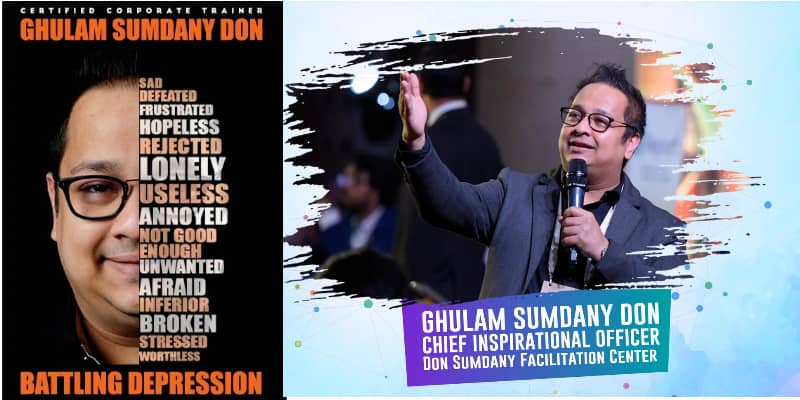
Don Sumdany
Don Sumdany opens the curtains with all necessary information, opportunities, and schedules. It was great that he presented his parents, spouse, and the prettiest 3-year old daughter. The key program points he briefed:
The best line of 12 speakers from a variety of sectors
12 Facebook lives formally and many more informally
Goody bags with more than Tk. two thousand +offers
Free coffee and chips
28 Sponsors
2000 Audience
150 Volunteers
He thanked the audience for attending a place for networking instead of visiting tourist spots on this 3-day vacation.
After ice-breaking sessions with Hi-five, message, chopping, and a bit of fun with dance, he explained the struggles to arrange such a program. Unavailability of the Sportstars and the 90% decline from the clients for the show were presented.
1. Success stories is rejection stories,
2. Be persistent
3. Improving you constantly (you can not manage such programs tomorrow, be always the better version of yourself, dreaming of bringing Arnold Schwarzenegger, Barack Obama)
4. Select the proper association with the value-adding ecosystem, network, friends, mentors. Your association should be better than you, not necessarily in terms of money.
5. Stop making wrong comparisons (Do not disappoint with social media Success)
6. Magic happens outside the comfort zones. Do things out of the box
7. Success is our duty, responsibilities; no way to miss it
8. Love the work you do as a sport
Robin Sharma, “If you are the first runner, you are on the wrong track.”
Work so hard that you are a speaker in the ‘Rise Above All’ one day.
Yasir Azman, CEO, Grameenphone Ltd
Yasir Azman is a rare person to lead an MNC in Bangladesh.
Asked and listed about what to listen to him (Audience: success, struggle, love, humble story, daily activities, rejection, song)
He shares stories about his parents’ Doctor demand(however, he married a doctor), missing IBA after HSC in 1992, resorted to Abu Dhar Gifari College, B.Com, and finally completed MBA from IBA. Success formula he shares:
Purpose,
Passion,
Hard work(together interrelated, magic happens, all possibilities in everyone)
Achieve special skills to reach your goals with passions Power of people essential
After IBA AMZ Grindlays 2010, he joined Ulenor(Udissa, India) to work on the least performing state and improve.
In Karnataka, after losing their license, he Secured 500 employees’ jobs first before his job application invited competition CEOs to recruit.
To lead a society corporation, your must-have qualities are:
Honesty and Transparency: Leaders’ sustainable growth must require honesty, ethics, and transparency.
Empathy for people(Don’t put a devil shadow with a starship attitude)
Constant learning(learn from juniors with respect)
Result-oriented: Performance matters a lot.
Feedback Reward(reward and celebrate) cocreations, talking to every stakeholder’s Diversity Each can(believing)
Q-A: Ethical leadership ensures sustainability, Firing employees happens, and the issue is how honorably, empathy and result-orientation do not clash as the result-oriented target is set not to fire but to align goals with proper logistics
Syed Alamgir, MD, and CEO, Akij Ventures Limited
Happy to share experience disruptive marketing strategies.
Honors from Science Faculty, in Chemistry, MBA(IBA 6th batch)
What to share: struggles, lessons, failure stories
Halal concept, a man with success magic Taking risks Disruptive Halal(soap hahaha), US(Halal corner in McDonald’s), Malaysia, BD Govt(Halal certification by BSTI), govt. officials, Shariah scholars Struggle: MBA(IBA-6th batch)
1. Sanofi Aventis(British Pharmaceutical16 years)
2. Jamuna Group of Companies as Group Marketing Director(6-7 years)
Agrabad in CTG friends informed none knew, Nurul Islam Babul offered incredibly, Challenging to join local leaving MNC, US retuned as everything is done ownself, worked on shoes to compete Bata to be no. two(Pegasus sneakers and keds), to support RMG’s first knitting, dyeing, and finishing of Jamuna
Aromatic Cosmetics
3. ACI as Executive Director and became Managing Director of consumer brands and introduced ACI Salt, ACI Flours, ACI Foods, Joint-ventures Dabor, Tata, Godrej, etc.
4. Akij Ventures Akij Dairy, Akij Foods and Beverage
The Fantastic spray is in place.
Akij Healthcare and Hygiene is coming soon
Focus on local products.
Unilever MD in Sheraton thanked for international quality and similar pricing strategy; Lux soap need not be contested as your mom and his first wash with it. What foreigners can, we can too as for examples in soap (noodles, glycerine, perfume- soap manufacturers outsource all three and machine)
Noodles, rice less foam, animal cheap, Vegetable pricey, better foam, and no scent. Outsourced great at a higher price and waited for London restaurant(beef 100% halal-concept originated, even wife first called traveling India thought me mad as they thought soap is not eaten).
Most IBA friends declined except one, Ruhul Amin, persuaded to establish own venture as it will succeed).
Then proceeded and published all soaps haram, suspense came, 300 trainees were very eager with the speech.
2013, Kotler Foundation confirmed the concept had been included in the book Principles of Marketing(Page 67), and later, when Philip Kotler visited Bangladesh, he handed over the printed book.
Initiated unlimited brands and the success rate is impressive.
In ACI, two products(Savlon and Aerosol, joined 8 crores turnover, left 3,000 crores turnover, recruited 7,000 staffs, 9 awards from brand forums last year, ACI salt 13 crores packs) How to do such unbelievable? Firm believers (IBA best student)
ACI salts 11 crore loss in 5 years, then researched and declares ACI salt develop merits (great response and success).
Why Akij? It provides the best products with quality and innovative products from all ten sons; ten groups. 13 companies registered so far.
Q-A: Customer satisfaction and retention strategy: The Best way to customer retention is finding with research and feedback that your products are in demand to customers and helpful to them.
Tips:
Adaptability and understanding (Dealing with medicine but leads electric items in Jamuna)
Painstakingly hard work
Disruptive marketing( Halal soap, salt helps brain development)
Syed Ashik Rahman, CEO, RTV
Syed Ashikur Rahman has been with RTV since 2010 and contributed to RTV to reach new heights. RTV is one of the most popular Bangladeshi satellite and cable television channels owned by Bengal Media Corporation. Mr.Ashik shares his personal experience regarding his journey in the media platform and will be giving tips for a career in media.
With inspiration from my mother, tuition started from school life and continued that helped me in leadership and self-study. After going abroad, I felt homesick and hardly missed any opportunities and vacations. Always felt like doing something for the country.
RTV has worked on digitization since 2009, with many requests from the USA to manage their channels online.
When the offer came for work in media back in 2004, one of the founders of Banglavision was profitable for the first time in Bangladesh with proper planning.
He contributed a lot in accounting, marketing, software, award program, business talks.
Q-A: Why do we lag behind Indian channels?
India is a country with huge people, and still many of them follow us. So during corona, we arranged folk song competitions with mobile. We have been able to impose ads from abroad. So we are highly qualified to compete in India. Our channels are unbeatable for dramas.
Bangladesh suffers from R&D in the media industry. This is because the media deals with the smartest people and makes heroes easily and shortly. Skilled people are short in the industry.
What are tips for youngsters loving the media profession?
Be with time, beat the time with tech knowledge.
What is the future for journalism students?
Do not expect money first; quality will draw media to you.
Few suggestions:
Planning
Dedication (dedication to work makes CEO in RTV at 32 only)
Discipline
Keep trying
Learn and apply science (Fantasy fails in most of the cases)
Ayman Sadiq, Founder, and CEO, 10 Minute School
The 10-minute school guy Ayman Sadiq shares his versatile experiences and focuses on a Social media masterclass considering the demography of the audience-mostly students. Social media marketing skill may be an excellent skill for students to
Two factors play vital roles to increase the organic reach in facebook-User-generated content (UGC) and content multiplier
1. User-generated content-UGC
A. Creating group perform better as the people also contribute the content creation ( page and group simultaneously)
B. Uploading notes(handwritten) from group people with few hundreds/thousands of shares
C. Distribute to all platforms(blogs, books, scrapping audio-podcasts, quotes from video(multiplication by your team). It multiplies automatically and regularly.
Mobile itself does the best jobs(Inshot, Canva) Content>Upload>Distribution Comments, special notes, pinning the first comment, special notes.
FB:
Share videos you can crosspost(vital point), repost, not reshare. Relevant videos in comment Instagram: Link on Bio Stories highlight- link Soundcloud: Distributing Hacks: Screenshot of most viewed videos
Why do you need:
1. Branding organizations/brands
2. Branding you Referal in hiring from FB and Linkedin
How are you branded? (what are the three words about you)
Implement the hacks today to be in use.
“We only suffer inner memory and imagination.”
Raba Khan, Content Creator
Facebook: 1.4 million subscribers
Instagram: 0.5 million
Raba Khan is Bangladesh’s famous social media content creator, singer, RJ, etc. She was enlisted in Forbes’s ’30 under 30-Asia’ in 2020.
She shared the story behind her glorious success and the struggles behind that.
She expressed her confusion about what to discuss. She is a young lady Loving Toktoks, dramas, stories. Then started her own story:
Very loving family with freedom unlimited
It’s challenging when family supports you
First income from Mehendi in twelve grade
I was urged to prove to the family as well as money love, a bit arrogant Creative family (cultural too), extracurricular always, the family got shocked as students taking photos during O-level
Negativity can not touch me as she is associated with many positive people.
At 14 before O level, I started Relatives reacted negatively as media Radio RJ( as 16, TJ)
Five suggestions she leaves:
1. Focus(experiment everything, writing, video, radio, singing, recent album মুহূর্ত) so, choose many and find what works, in real life, she is not relatable, she can monetize her time
2. Make sure that you do not work excessively
3. Ensure your mental health first( during starting, didn’t get directed) do what you are contented with
4. Love and understand you( benefits from interviews, reality shows)
5. Never talk bad about yourself in front of people (people may take advantage, one school friend took it)
Rafsan, Content Creator
Social media Statistics:
YouTube: 1.0 million subscribers
Facebook: 2.4 million subscribers
Lots of Youtube watching
Introvert
Studied in IUB
Real in life Weight 125 kg, without merit, making videos for others(, Ekramul friend encouraged me to make videos on foods before Burger King.
Be out of comfort zones(Life begins out of comfort zones). The First video in 2017(friends- garbage) didn’t stop.
Be what your passion leads.
One key is common to leaders( speakers on the rise, too) consistency
Teamwork matters(previously one in two months, now productive and motivated)
People need not demean others as it affects personal life.
Q: How to avoid demotivation?
Playing games
Rubana Huq, Vice-Chancellor, Asian University for Women VC-Asian University for Women
A lady with versatile experiences and exposures is Rubana Huq who was the first female president of BGMEA
Don is a hopeful man; address him as a son(beta).
Need to be humble enough
All is possible from my part and your part too; you must have courage and family support (as Don brings parents)
Age always has wisdom.
Works in pleasure and in bad times thanks Allah as a believer(sleep at 2 am after lots of painstaking hard work
Believe in you and Don’t waste time with the shedding of tears,
be strong-minded Dream of AUW 70 students from garments, 18 graduates; they are going to be entrepreneurs
No dream dies for money University I could not for manage accommodation fee $12000(scholarship managed) NYU(Lubna Marium- Dancer, wife of Sufi vai, needed not money but inspired, ), now I am faculty, Fellow of Harvard
Be the man to be supportive as supports matter
Light by yourself walk with all.
Rise Above All should be above biases- request for Rise With All), who are you leaving, why, all-inclusive, not engaging, must be meaningful, impact, keep all with you-it does not define you Lots of millionaires but no Tata, Birla.
“Failure is deliberate”-Rezwana Hasan Bela- you are a victorious generation.
How BD can be Asian +1 is underway.
Manish Chauhan, Co-Founder, Noize Jeans & LoveGen
Interestingly, Angshika Chauhan, daughter of Manish Chauhan had a presence who can sing songs in 5 languages. Don took the chance and two songs touched the hearts of the audience.
Indian by birth, Bangladeshi by heart
Very ordinary to relate( Was disorganized, lazy Punctual, disciplined, At 4/5, jumped, slapped thrice, thought and discovered skipping Don’t jump
Don’t repeat the mistake
Analyse the causes of issues 3 km to save 10 rupees( walking together, try to make pressures to pleasures) find pleasures in work Create a team(success comes from people)
befriended with topper guy to know how he topped, You can associate with right people what you can not do well
People in hostels were textile, ideas surrounding was textile,
try to be a good absorber- sponge Knowledge matters, not academics (electronic engineering serving in all posts in textile) Extraordinary in the job( spinning mill supervisor with 1600 rupees)
Most workers come and go to save jobs
Do something that differentiates you, in six years to topmost post-2003 from 1997 heading 4000 people(doing projects, not jobs). The textile sector considers my case study.
2003, in BD at 20,000, marketing yarn, USP(Unique Selling Proposition), study what existing and discovered amazing,
Cut the competition
Reduce the queue by differentiated products
In 2009, business career first business with a partner
In 2011, zero with $500 bank balance, worked as spring to jump(to absorb failures), Anurag supported, maintain relations, problems reduce, 1+1 becomes 11, be selfish(happy) to make and help be happy
The first production 2015 in BD 36000 to 3 mil in 2019, yearly 40-50% growth, targeting to be the largest by 2025, Training lots of freshers,
Fashion denim was by Turkish and Italian; we bet and succeeded.
Lovegen is in association with Don for the local retail brand globally, community to involve people.
Biggest 5 tips to succeed:
1. Sponge knowledge
2. Spring
3. People’s guy
4. Be Successful
5. Knowledge
Siam Ahmed, Actor
When approached, found me unfit as we disclosed all in interviews.
Never give up
Explore but never take negative parts from social media
Focus (as I reverted me in London and secured 89.50% marks best in 40 years)
You can not satisfy all (one of my course teachers still marked me 61% as he was enemy to gents, my family demeaned me as taking acting as a career after studies, going to be a first-class citizen)
Make sure that you are happy first before making family and others happy
Rubaba Dowla, Country Managing Director, Oracle Bangladesh
Rubaba thanks the organizers and the vibrant audience. She explains why her journey, corporate life, and struggles are not getting priority as they are available online from previous sessions. She instead shares 10 Rules of being the best version of yourself with the practical orientation from her personal and corporate life.
Rule#1 Love yourself
Rule#2 Love what you do
Rule#3 Do not compromise (Especially for women)
Rule#4 Create your own path
Rule#5 Embrace failure
Rule#6 Be a lifelong learner(Every day I ask what new I learned)
Rule#7 Give wings to your dreams
Rule#8 Be bold(confidence, fearless-limitless, be brave when you need to say yes or no, raise your voice to be heard for you and who do not raise voice)
Rule#9 Surround yourself with positive people
Rule#10 Do not forget your roots
Nasrul Hamid, State Minister of Power, Energy, and Mineral Resources
The keynote speaker presented some practical and futuristic aspects that showcase how Bangladesh advanced and how young people are prioritized. He focuses on three topics:
Why you should bet on Bangladesh
The government listens to the youth
Lessons for the future
One of the biggest ministries where the prime minister is the minister, ADB budget around BDT 30,000 crore, investment portfolio around $24 billion, 26 institutions, all big investments. It is no. 1 in ADB, APR with a fantastic team. The ministry moves with the political mandate from the prime minister to ensure 100% electricity by 2021.
Digital Bangladesh and 100% electricity by 2021, Developing by 2026, Upper middle income by 2031, Developed by 2041, Delta plan for 2100.
Bangladesh is the rarest country with the provision for electricity in the constitution, 100% electricity declaration, 100 years plan.
The visionary father of the nation bought 4 gas fields for $4 million in 1975 on 9th August. Politicians rule the country as they foresee, he risked and we still benefit.
A Detailed Masterplan in 2010 and revision every 5 years for electricity
Tremendous development in gender equality
Electricity supply uninterrupted
Financial inclusion
Freelancer growth
Rooppur 13b
Rampal 5b
Moheshkhali LNG
Matarbari powerplant 7b
Padma Bridge 3.6b
Express train
Karnaphuli Tunnel
Elevated expressways
100 EPZs
Most of the big projects are going to be visible in the next 5 years. Remote southern sides are getting in touch.
Many projects are being ready before the scheduled time and saving funds.
March 21, 2022, is a milestone as 100% electrification declaration by prime minister Sheikh Hasina in a physical presence for any such occasion since corona lockdown.
The government listens to the youth
Mobile phone adoption
150 public and private universities
Freelancer ID cards to more than 5 lacs
Startup program through BHTPA
5G network
National fibre backbone
https://www.youtube.com/watch?v=llKVYS6u7Wk
The 5 skills for a future career include:
Design thingking/ Structured thinking
Strategic Research and research methodology
S-T-E-M Education
Business communication
Financial management and scaleup
Golam Murshed, MD and CEO, Walton Hi-tech Industries
Golam Murshed had the opportunity to make fun as the audience decreased. Expressed his urge for missing the crowd and the sessions of all the speakers. However, he felt good with the organic audience and requested honorarium raise for the guests.
Then, shared the case study with Joshua Bell by the Washington Post. There Bell earned only 30-40 Dollars with his violin show without notice on a subway. People hardly knew and listened to him. The reasons
Behavior: Home goers are not so much interested.
Beauty
Judgment: People were did not feel interested
Perception: People were not aware that he was Bell
Then comes the realistic experiences he shares:
Motivation does not work if you do not change your thought process
People comment/throw many unnecessary issues
A blend of both aged and young people are important for organizational advancement
Dream with young but utilize the experienced officials ( Relay race needs both past and next runners)
Age of our dreams is around 60 years and they change constantly with the contexts
We are running for the 30 years with the relay sticks as the responsibilities to give someone who will then run.
Responsibilities come automatically and we must deal with. As the birth place, parents can not be avoided, so the responsibilities. Love yourself and your responsibilities to organization, family, society, country
We may talk some from our experiences, not motivational speech
We usually forget the country branding (though leader, money, position thought as successful)
Do not follow someone blindly, take some applicable lessons
No thumb rules for life as it varies from person to person.
Love what you do and do what you love
When you feel best at your status quo, you are living dead as it hiders from creating, risking ang going out of comfort zones.
An early riser from the childhood to manage schools and coachings.
Never miss the breakfast
All of you are unique and capable of growing
Unicorn may come next year to boost startups
Shares the story of learning speaking with Ayman Sadiq and fake pupils and claps.
33 Practical success secrets revealed
Here is the list of 33 Practical success secrets the legendary speakers revealed in their speeches. These are very easy-to-follow tips and tricks they shared from their long experience.
Success stories is rejection stories, embrace failure, be a spring to come back after failure, rejections and stumbles, take risks
Be persistent and consistent
Be a sponge to absorb knowledge, improve you constantly, learn from juniors with respect, adaptability and understanding matter heavily
Select the proper association with the value-adding ecosystem, network, friends, mentors. Surround yourself with positive people
Stop making wrong comparisons (Do not disappoint with social media Success, glamor, criticism, explore but never take negative parts from social media)
Magic happens outside the comfort zones. Think and do things out of the box.
Success is our duty, responsibility; no way to avoid it
Honesty and Transparency: Leaders’ sustainable growth must require honesty, ethics, and transparency.
Empathy for people (Don’t put a devil shadow with a starship attitude, be a people’s guy, be humble enough)
Painstakingly hard work
As a content creator, take benefits of the User-generated content-UGC and Content multiplication
Branding you and your organizations matters a lot
Focus but do not forget to experiment everything (writing, video, radio, singing, choose many and find what works)
Monetize your time , be what your passion leads.
Love and understand you ( benefits from interviews, reality shows)
Disruptive marketing strategies may make you hero quickly
Teamwork matters(productive and motivated)
Works in pleasure and in bad times thank Allah as a believer
Believe in you and Don’t waste time with the shedding of tears, be strong-minded, you must need courage and family support
No dream dies for money
Rise Above All biases, think all-inclusive, be not only engaging but also meaningful and impactful
Cut the competition, reduce the queue by differentiated products and services
Never give up
You can not satisfy all
Do not compromise (Especially for women)
Create your own path
Give wings to your dreams, dream big that keeps you moving
Be bold(confidence, fearless-limitless, be brave when you need to say yes or no, raise your voice to be heard for you and who do not raise voice)Surround yourself with positive people
Politicians rules the country as they can foresee and take risks
You should bet on Bangladesh, the future of Bangladesh is full of potentials
The government listens to the youth
Responsibilities come automatically and we must deal with. As the birth place, parents can not be avoided, so the responsibilities. Love yourself and your responsibilities to organization, family, society, country
A blend of both aged and young people are important for organizational advancement, age has wisdom, sit whenever any aged/sick come
Rise above all 2022 success
Managing the speakers
Managing so many leading speakers from versatile industries is really a matter of great success, Don managed it rightly. However, the success stories are rejection stories as he discussed that the speaker management made him suffer a lot.
Managing the sponsors
As Bangladesh is not a place to spend money on mentorship, getting funds for the program was not a matter of joke. The sponsors showed their trust in Don and sponsored the largest learning event in Bangladesh.
Managing the partners
Arranging a successful program with more than 2,000 audiences is never so easy, it takes efforts from various parties. Partnering with the relevant stakeholders is very vital and managed well.
Managing the audience
A houseful audience looks and feels good but the hectic and creative steps behind the scene matter a lot. Managing such a big audience requires the marketing expertise of the hosts.
So big dreams
The vibrant young audience with whole-hearted shout proved that they found their dreams with the motivational leaders. Many of the going to be entrepreneurs were happy to see and interact with the business leaders with tremendous success.
Rise above all 2022 challenges
The learning event was a huge success in almost all aspects. However, it suffered from many challenges that could easily be avoided with a good event management strategy. These are not the blames to the hosts, the issues are raised to help them excel in those areas later on. The areas to develop include:
Time management
The program was expected to start at 10.00 am but started around an hour late. Similarly, it ended around 2 hours at 9.30 pm.
No instruction
The audience suffered from the lack of detailed instructions. It created a haphazard situation.
Ticket Management
Ticket management was a mess, especially for the online ticket collectors. They did not get any physical ticket though they had to queue for registration. Registration for them was repeated as all the data were available online and the hosts could collect the details with some clicks.
Goody bags distribution
Goody bags could not reach each participant ( online ticket collectors were more prone to miss). As it was a paid session with advance tickets, it was not expected to fall short of the goody bags.
Microphone management
As an open question-answer session, microphones were very critical to reach all areas properly but their availability suffered a lot.
Too uncomfortable
The Thai massage and chopping therapy may be too much uncomfortable for the audience with opposite gender counterparts. Many of the participants avoided the steps and that led to later avoidance of instructions from the organizers.
Wrap up
The 6th episode of the Rise Above All 2022 was a milestone and largest motivational learning and speaking session in Bangladesh. Don Sumdany Facilitation & Consultancy arranged such a unique event to bridge the industry leaders and newbies. The expert opinions, candid experience, practical tips, industry best practices, and many more value-adding aspects got revealed to ease the way ahead. The program was a great success with enormous motivation and lots of dreams for the audience. Waiting for the next episode of the rise above all (rise with all).
Bangladesh Institute of Capital Market (BICM) is a leading think tank working in capital market research, education, and policy advocacy. It is the first and only institution in Bangladesh that focuses exclusively on capital market issues. The institute offers diploma, certificate, and executive training programs in capital market subjects. It has also conducted numerous research studies on various aspects of the capital market. It is an affiliated institution under the University of Dhaka.
Certificate Award Ceremony 2022
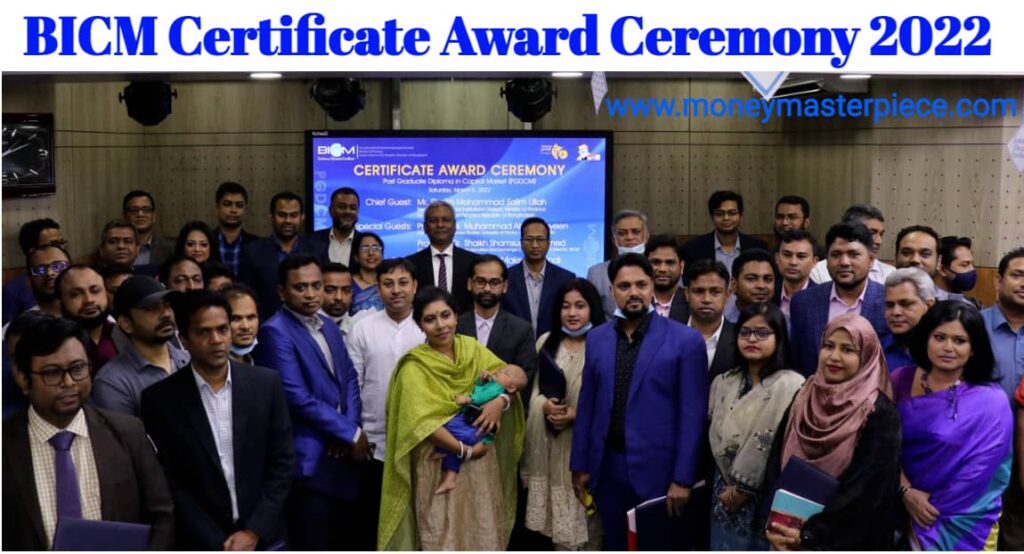
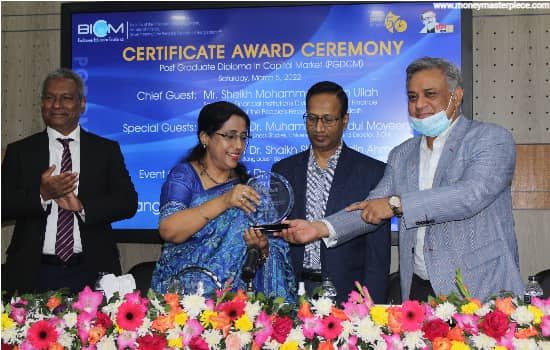
The Bangladesh Institute of Capital Market (BICM) awards certificates to its 89 Postgraduate Diploma in Capital Market Program (PGDCM) Graduates from its 6th to 17th evening and a few day batches. On March 5, 2022, it was a great program at the BICM the multipurpose hall room in Dhaka. The article will lead you to all about BICM with the programs and courses it offers for the sustainable development of the capital market and the economy of Bangladesh.
All the officials and faculty members of BICM were present there, along with its Executive President, Professor Dr. Mahmuda Akter as the hosts.
The guests and resource persons
Chief Guest: Mr. Sheikh Mohammad Salim Uddin, Secretary, FID, MoF
Special Guests:
Professor Dr. Muhammad Abdul Moyeen, Dean, Faculty of Business Studies, University of Dhaka, and Director, BICM
Professor Dr. Shaikh Shamsuddin Ahmed, Commissioner BSEC and Director, BICM
Event Chair: Professor Dr. A.S.M. Maksud Kamal, Pro-VC(Academic), University of Dhaka
Other guests
Dr. Osman Imam, Professor, Department of Finance, University of Dhaka
Mr. Kamaluzzaman, former Commissioner, BSEC
Md. Saifur Rahman, Executive Director, Bangladesh Securities and Exchange Commission (BSEC), was also present.
Md. Saifur Rahman is an Adjunct/Part-time faculty member and a very favorite personality to students for his practical orientations to capital market-related rules and regulations.
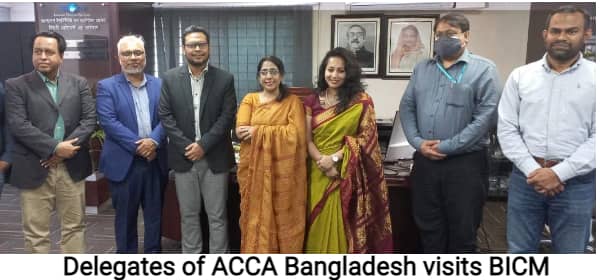
With the live anchoring of Assistant Professor Md Habibullah, ACCA, and active participation of the students, it was a program that will be evergreen in participants’ memory.
https://youtu.be/1aYW9Axez4Q
The Certificate Award Ceremony was followed by dinner at the institute.
Issues addressed by the guests
Executive President Professor Dr. Mahmuda Akter presents all the developmental and proactive efforts BICM has been taking over the years to uphold the capital market in Bangladesh.
Professor Dr. Shaikh Shamsuddin Ahmed, Commissioner BSEC and Director, BICM, addresses the following aspects:
PGDCM is the core and flagship program by BICM
Gain knowledge before investing in stock market
Special programs ensure employment with specific skills.
Mid and Higher managerial support possible with specialized knowledge
BICM to focus more on practical aspects
There are fewer resource persons to present informative dialogues on war, inflation, and SWIFT communications.
Proper knowledge drives away rumors.
BICM to focus on learning/uses of tech in the capital market(T+1, blockchain)
BSEC is always cooperative with BICM
Facilitating the financially poor students get intellectually rich.
Mr. Sheikh Mohammad Salim Uddin, Secretary, FID, MoFaddresses the following aspects:
Seasonal beauties and the pacing of people with natural changes
Money keeps people unstable
Capital market is like a flying bird or running horse.
Graduates are to dedicate themselves to the sector.
Graduates will play vital roles for the roads to SDG, Developed nation.
Demographic dividends of Bangladesh to harvest with skills and dedications.
Professor Dr. A.S.M. Maksud Kamal, Pro-VC(Academic), University of Dhakaaddresses the following aspects:
Declares graduation
Congrats on hard-earned certificates
Emphasizes using knowledge for making a difference
Knowledge is for value addition
Learning adds value only when applies practically for personal, social, national, or even international great causes.
Hails the roles of BICM in research, analytics, and capacity building
High salaried managers come from local people
Warns of avoiding the demographic trap of Srilanka by acquiring and applying knowledge
Sustainable development bases on training, knowledge, and capacity
The program got coverage in various print media and channels including the Business Standard, The Daily Star, . Capital market-related resource persons, regulators, academicians, and media personalities attended the program to give it a great vibe.
Two graduates shared their experiences and expectations during the course and after completion. They lauded the impacts BICM has on them. Their career paths have been reported to be smoother than earlier.
Wajid Hasan Shah, Director (Studies), BICM presented a vote of thanks to conclude the program.
All about BICM
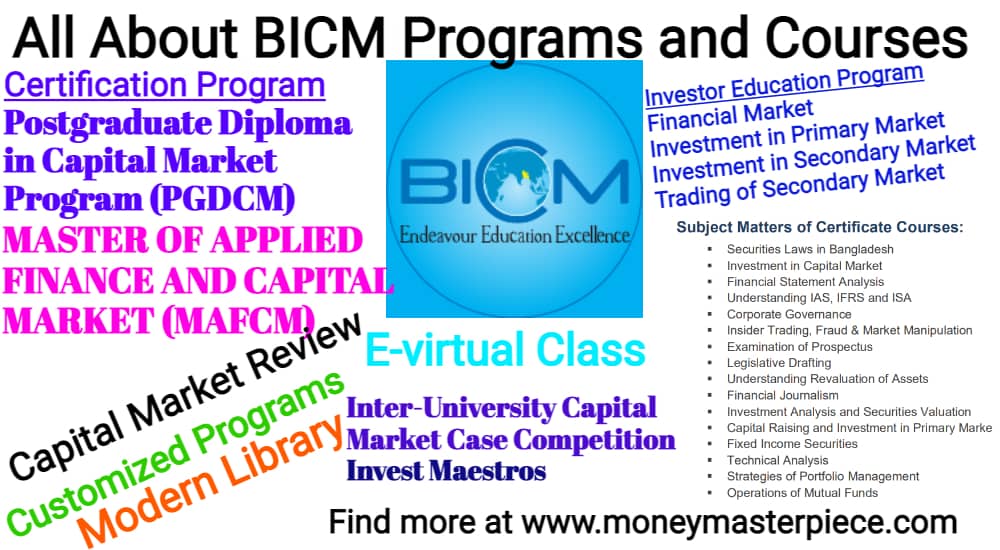
BICM is Bangladesh’s first and only fully-fledged capital market institute. It is the institution for spreading education imparting training on the capital market. It was established on July 24, 2008. The Government of Bangladesh fully funds the institute. The Government approved the organogram of the IInstitutein 2010 and the compensation structure for the IInstitutein 2013. The policy direction of the IInstituteis given by a Board of Directors chaired by the Chairman, BSEC, and members are representing stakeholders, like Academicians, Exchanges, market intermediaries, and professional bodies. BICM offers diplomas, certificates, and executive courses in capital market subjects to develop skilled human resources for the country’s capital market. The institute also researches versatile branches of the capital market.
BICM is the first and only Institute in Bangladesh that provides capital market education. It offers Certificate, Diploma, and Advance Diploma courses in Capital Market. In addition, BICM also provides training on various aspects of the capital market for the employees of different organizations.
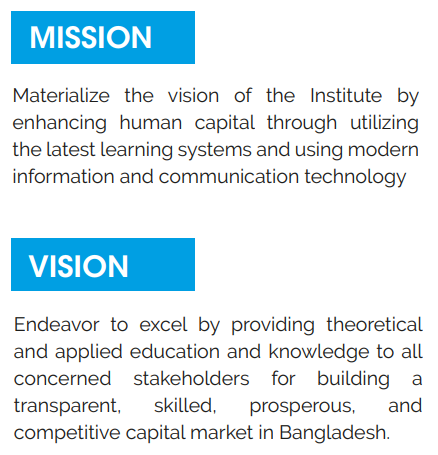
The main objectives of BICM are to promote institutional development and build human resources in the capital market.
The institute offers many courses, including a six-month diploma course, covering all aspects of the capital market. It also conducts short-term courses on specific topics, such as initial public offerings (IPOs), mutual funds, and derivatives. In addition, BICM publishes a quarterly magazine, “Capital Market Review,” which contains articles on current issues and developments in the capital market.
The institute has a well-equipped library that contains a wide range of books, journals, and magazines on the capital market.
The courses are designed to provide participants with the skills required to work in these industries. In addition, the institute also conducts research on various aspects of the capital market.
The BICM has several advantages over other institutes:
It is the only institute that offers diploma courses in the capital market. It gives participants a competitive advantage when seeking jobs in these industries.
The institute researches various aspects of the capital market, which helps improve the market’s functioning.
The institute has a well-equipped lab for faculties and participants to practice their skills.
A library with versatile books is an excellent source of study and research.
Some aspects of BICM
BICM is a research and training institute for the capital market in Bangladesh. The institute offers training programs for securities professionals, research capital market issues, and provides technical assistance to Bangladesh’s Securities and Exchange Commission. The University of Dhaka accredits the iInstitute’sMaster’s program. The BICM has been instrumental in developing the capital market in Bangladesh and helping it grow into one of the most vibrant markets in South Asia.
Certification courses
Postgraduate Diploma in Capital Market Program (PGDM)
BICM offers its flagship diploma named Postgraduate Diploma in Capital Market (PGDCM) for market intermediaries, professionals, and graduates pursuing a career in the capital market. The program blends theory and practice on the capital market, instruments, techniques, and regulations. The program consists of 8 courses of 24 credit hours, in 9 months costing BDT 33,000. The program was a 1-year, 13 courses including internship and 36 credits costing BDT 47,000. Till now, 17 batches of this flagship Program have started.
MAFCM
MASTER OF APPLIED FINANCE AND CAPITAL MARKET (MAFCM) is a 2-year, 51 credits program that provides an in-depth understanding of financial markets. The program offers a unique blend of courses in finance, accounting, and economics which prepares students for careers in the financial industry. BICM offers the program in affiliation with the University of Dhaka.
The MAFCM is a comprehensive and rigorous program that provides students with the knowledge and skills to work in finance, the stock market, and related sectors. The program covers various topics, including financial analysis, investment banking, portfolio management, and risk management. Students also gain practical experience through hands-on training in financial markets. The MAFCM is designed for students who want to pursue a finance or capital markets career. It is the first of its kind and only Master’s Program on Applied Finance and Capital Market in Bangladesh.
Why MAFCM
MAFCM program, students are expected to:
evaluate the use of relevant concepts in making financial decisions
process financial information and problems
comply legal aspects in the capital market of Bangladesh
mastering ethical aspects
understand new products and techniques
know financial services with the latest innovations
utilize Fintech applications
ascertain valuations
explain the role of different actors in sustainable finance and capital market
Certificate Courses for Professionals
BICM offers certificate courses on various aspects of capital markets designed for professionals, regulators, market intermediaries, and sector stakeholders. The courses cater to individuals with different levels of knowledge, from basics to advanced. Some of the areas covered in the courses include securities laws, capital raising and investment in the primary market, fixed income securities, mutual funds, financial statements analysis, understanding IAS and IFRS, corporate governance, insider trading, fraud and market manipulation, examination of the prospectus, and financial econometrics.
Investor Education Program
BICM conducts a regular investment literacy program free of cost for investors on the basics of the capital market investment. Recently, the BICM has started to offer the program online, which allows learners and trainers to communicate in real-time and interactively from various geographical locations.
Customized Programs
BICM also arranges a range of customized certificate programs for officials of BSEC, FID, BMDF, and many more. In addition, the institute has also offered programs for different stakeholders, e.g., journalists, women entrepreneurs, and university students.
Workshops and Seminars
The institute offers workshops and seminars as part of its Continuous Professional Development Program. These workshops and seminars cover contemporary developments in the capital market, regulatory issues, product structures, and more. Additionally, the institute offers seminars on investor protection, good governance, and other sustainable economic and capital market development topics.
Exposure Visits
The institute arranges exposure visit programs to international stock exchanges so that students can exchange knowledge, learn about advanced products, and observe operational mechanisms.
Infrastructural Facilities
The institute offers training, research, workshop, an enriched library, a multipurpose hall, classrooms, and lab facilities.
Inter-University Capital Market Case Competition
BICM has arranged Invest Maestros for the different public and private universities participating in this competition to disseminate capital market knowledge among University students.
Collaboration
ACCA
Delegates of ACCA Bangladesh visit BICM for potential collaboration like joint training, certifications for the CPD of ACCA members, and other finance & accounting professionals.
ICAB
ICAB President Mahmudul Hasan Khusru FCA, and Prof. Dr. Mahmuda Akter, Executive President, BICM, signed a Memorandum of Understanding (MoU) on December 23, 2021) at the Council Hall of CA Bhaban in Dhaka.
The objective of the MoU include:
Conducting research
Organizing webinars, seminars, training programs, workshops jointly
Collaboration for accounting, financial reporting, and auditing
Providing professional training in accounting, auditing, taxation, corporate governance, financial market, corporate laws, and relevant subjects.
Why to choose BICM
BICM) is the first and only institute in Bangladesh that offers specialized education on the capital market. BICM has been imparting theoretical and practical knowledge on the capital market since its inception.
Affordable Fees: The cost of studying at the institute is cheaper than other higher education institutions in the country. The fees are designed to be affordable for students from all backgrounds, ensuring that everyone has an opportunity to learn about and participate in the capital markets. Additionally, the institute offers scholarships and financial aid to help students.
Exceptional Faculty: The Exceptional Faculty in Bangladesh Institute of Capital Market comprises experienced professionals who have worked in the capital market for many years. They are incredibly knowledgeable in their field and provide valuable insights to students. Furthermore, they are always willing to help students with their studies and career planning. The faculty at the institute is truly exceptional and sets a high standard for teaching and learning.
Diverse Course Offerings: Bangladesh Institute of Capital Market (BICM) offers a diverse range of courses to cater to the students’ needs. The courses are designed in a way that can help the students to understand the capital market and its functioning. The curriculum keeps pace with the current trend in the capital market. Moreover, different workshops and seminars are also arranged by BICM to provide more practical knowledge about the capital market.
A welcoming and diverse Network: The Bangladesh Institute of Capital Market (BICM) provides graduates with a solid professional and social support system. The network includes current and former students and faculty, and staff. It offers opportunities for career development, networking, and socializing. In addition, the BICM alumni network is a valuable resource for graduates seeking to build their careers in capital markets.
Excellent career prospects: The institute provides students with a strong foundation in financial concepts and practices, which helps them pursue careers in finance and other related fields.
Modern facilities and equipment: The modern facilities and equipment in the Bangladesh Institute of Capital Market are unparalleled in their ability to facilitate the education and training of individuals seeking to work in the capital markets. From state-of-the-art classrooms and computer labs to a library stocked with the latest research materials and financial databases, the institute provides everything its students need to gain an edge in this rapidly growing sector of the global economy.
The institute offers world-class education and training in this field. In addition, it has a well-developed research infrastructure that helps students stay up-to-date with the latest developments in the capital market. Moreover, the institute provides ample opportunities for students to gain practical experience through internship and job placement programs.
The students of BICM get an opportunity to undergo internships in different reputable organizations operating in the capital market.
Wrap up
The Bangladesh Institute of Capital Market is a valuable resource for anyone looking to invest in the Bangladeshi capital market. The institute provides comprehensive education and research on all aspects of the market, making it ideal for investors to learn about the opportunities and risks involved in investing in Bangladesh. Moreover, the BICM can be a valuable ally for investors looking to capitalize on the growing Bangladeshi economy with its well-trained staff and extensive resources.