Category: Behavioral Economics

  • What is the Multiplier Effect? Examples and use cases

    The Multiplier Effect is an economic concept that describes the relationship between initial investment and subsequent economic benefits. In simple terms, it is the idea that a dollar invested today can have a greater impact on the economy tomorrow than if it were spent today. The Multiplier Effect has been used to justify everything from stimulus spending to tax cuts, and its proponents argue that it is a powerful tool for promoting economic growth.

    However, critics say that the effect is often overstated and that its real-world impact is often far less than advertised.

    The multiplier effect is an economic concept that refers to the amplified impact of an initial investment on the economy. The idea is that a single unit of currency can generate more economic activity than its original value, as it is re-spent multiple times throughout the economy. There are various ways in which the multiplier effect can occur.

    One example is when someone spends money on goods and services, which in turn generates income for other businesses who then use that income to buy more goods and services, and so on. Another way it can happen is when someone invest money in a business venture, which leads to job creation and increased spending by employees, all of which boosts economic activity. The size of the multiplier effect depends on a number of factors, including the level of consumer confidence, the level of government spending, and how open an economy is to international trade.

    In general, though, the larger an initial investment or injection of cash into the economy, the greater the potential for multiplicative impacts down the line. While there are numerous real-world examples of the multiplier effect at work, one notable instance occurred during World War II. As governments around the world ramped up military spending in order to fight Nazi Germany, this led to increased production across many industries and created millions of new jobs.

    The resulting increase in incomes and consumer spending helped spur global economic growth during what was otherwise a very difficult period.

    What Do You Mean by Multiplier Effects?

    Multiplier effects are the additional economic activity that is generated by an increase in spending. For example, if a company builds a new factory, it will need to purchase raw materials, hire workers, and buy equipment. This increase in spending will create jobs and income for other businesses in the economy, which in turn will lead to more spending and even more economic activity.

    Multiplier effects can be either positive or negative, depending on whether spending is increasing or decreasing.

    A multiplier is an economic term that refers to how much an increase in one economic activity will lead to an increase in another. In other words, it measures the indirect or secondary effects of a primary action or decision. Multipliers are important because they help policy-makers understand the potential impacts of their decisions on the economy as a whole.

    For example, suppose the government spends $1 million on infrastructure projects. This spending will directly create jobs for construction workers, but it will also have indirect effects on other sectors of the economy. The construction workers will then have more money to spend, which will boost demand for goods and services across the economy.

    The increased demand will lead to more jobs and higher incomes, and so on. This chain reaction is known as the multiplier effect. The size of the multiplier depends on a number of factors, including the level of consumer confidence, the state of business investment, and whether there is spare capacity in the economy (unused resources that can be brought into production).

    Generally speaking, when there is spare capacity and businesses are confident about future demand, multipliers tend to be larger. Multipliers are often used by governments to assess the likely impacts of their policies before making decisions. They can also be used by businesses to estimate how much extra sales they might see from changes in consumer spending or government policy.

    What is Multiplier Effect And Example?

    The multiplier effect is the name given to the phenomenon whereby an increase in spending leads to an even greater increase in economic activity. The original idea was put forward by British economist John Maynard Keynes in his 1936 book, The General Theory of Employment, Interest and Money. In simple terms, the multiplier effect occurs because when someone spends money, it creates a chain reaction of additional spending throughout the economy.

    For example, if you spend $100 on a new pair of shoes, the person who sold you the shoes will then have more money to spend. They may use that extra money to buy a new shirt, which then puts more money into the pocket of the person who sold them the shirt. This process continues until eventually all of the extra money has been spent and everyone in the economy has benefited from the initial $100 expenditure.

    The size of the multiplier effect depends on a number of factors, including how much people save out of their extra income and how much they spend on imports (which don’t provide a boost to domestic economic activity). Generally speaking, though, economists believe that the multiplier effect is relatively large – meaning that even a small amount of extra spending can lead to a significant increase in overall economic activity. One famous real-world example of the multiplier effect at work is President Franklin Roosevelt’s New Deal program in 1930s America.

    By increasing government spending during this period of severe economic hardship, Roosevelt helped spur a recovery that eventually led America out of Depression and back onto its feet again.

    What are the Uses of Multiplier?

    In economics, a multiplier is an economic variable that measures how much an increase in one economic activity will lead to an increase in another. The term is often used to refer to the multiplier effect, which is the impact that one change will have on many other parts of the economy. The multiplier effect occurs when an initial change in spending leads to a larger final change in output or income.

    The size of the multiplier depends on how much money is spent and how it is spent—whether it goes into savings or consumption, for example. Multipliers are important because they help us understand how changes in one part of the economy can affect other parts. They also help policymakers determine whether stimulus spending will be effective at boosting economic growth.

    What is Multiplier Effect in Tourism with Example?

    Multiplier effect is when an initial investment in the economy creates additional economic activity. This can be in the form of jobs, income or spending. The tourism industry is a great example of how the multiplier effect can work.

    When someone spends money on a vacation, that money then gets circulated throughout the local economy. It supports businesses like hotels, restaurants and souvenir shops. And as those businesses make money, they in turn reinvest that money back into the economy, creating even more jobs and income.

    This ripple effect continues until eventually the entire community benefits from the initial investment.

    The multiplier effect is a term used in economics to describe how an initial increase in spending can lead to a much larger increase in economic activity. The tourism industry is one of the sectors that can see a large boost from the multiplier effect. When tourists come to an area, they not only spend money on hotels, restaurants, and attractions, but they also often use local services such as transportation, tour guides, and shopping.

    This spending then leads to more jobs and income for locals, which in turn leads to even more spending. The ripple effect of this increased spending can have a significant impact on the economy of a region or country. The multiplier effect is especially important for developing countries where the tourism industry is often one of the largest sources of income.

    In these countries, even a small increase in tourist spending can have a big impact on economic growth and job creation. So if you’re planning your next vacation, remember that your spending could have a much bigger impact than you might think! By supporting the local economy through tourism, you can help create jobs and spur economic growth.

    The Multiplier Effect explained:

    Multiplier Effect Formula

    The multiplier effect is a macroeconomic tool that measures the indirect and direct effects of an increase in spending on final output. The formula for the multiplier effect is: Multiplier = 1 / (1 – MPC). Where MPC stands for marginal propensity to consume.

    The multiplier effect occurs when an initial injection of spending leads to a greater final increase in output. The size of the multiplier depends on the MPC; if the MPC is low, then the multiplier will be high. The reverse is also true; if the MPC is high, then the multiplier will be low.

    An example of how the multiplier effect works can be seen when considering two different economies, one with a high MPC and one with a low MPC. If both economies receive an injection of $100 million dollars, we would expect to see a greater increase in output in the economy with the low MPC than in the economy with the high MPC. This is because each time someone in the low-MPC economy spends money, they re-circulate it back into the economy multiple times before it finally leaves as savings.

    In contrast, someone in a high-MPC might spend their money once and then save most of what’s left, meaning that there are fewer opportunities for re-circulation. So basically,the Multiplier Effect Formula lets us know how much more our economy will produce based on extra spending .

    Multiplier Effect Calculator

    If you’re like most people, you probably think of the multiplier effect as something that only economists need to worry about. But in fact, the multiplier effect is something that affects all of us on a daily basis. So what is the multiplier effect?

    Put simply, it’s the idea that when someone spends money, that money doesn’t just disappear into thin air. It gets reinvested in the economy, and can ultimately lead to even more spending and economic activity. To see how this works, let’s say you go out to dinner with friends and spend $100 on food and drinks.

    That $100 doesn’t just vanish – it goes to pay the restaurant’s employees, who then go out and spend their earnings on other things. And so on and so forth. Each time that money changes hands, it drives a little bit more economic activity.

    In theory, this could go on forever – but in practice there are limits. Eventually the marginal propensity to consume (MPC) will kick in, which is the tendency for people to save rather than spend when they have extra income. The MPC varies from person to person – some people are quite frugal while others tend to spend everything they earn – but it averages out to be around 0.6 (meaning that 60% of extra income will be spent while 40% is saved).

    This means that our original $100 dinner would eventually lead to $160 worth of total economic activity once the MPC kicks in (0.6 x $100 = $60 which is added to the original $100 for a total of $160). And this is where the multiplier effect calculator comes in handy! With a multiplier effect calculator, you can input different values for things like initial spending, MPC, tax rates, and more to see how much total economic activity your spending could generate over time.

    So if you’re ever curious about how your spending might impact the economy down the line, be sure to give one of these calculators a try!

    What is the Multiplier Effect in Economics

    In economics, the multiplier effect is the expansion of a country’s money supply that results from commercial banks making loans. The money supply expands because each time a bank makes a loan, the borrower gets new money to spend. This spending then generates income for others, who in turn spend some of their new income, and so on.

    The result is that a small increase in the amount of money available for lending can lead to a much larger increase in the total amount of money in circulation. The size of the multiplier effect depends on two things: how much banks are willing to lend out (the “lending propensity”), and how much people are willing to borrow (the “borrowing propensity”). If both propensities are low, then the multiplier effect will be small.

    Conversely, if both propensities are high, then the multiplier effect will be large. The lending propensity is determined by reserve requirements set by central banks, which determine how much cash commercial banks must keep on hand relative to their deposits. The higher the reserve requirement, the less cash commercial banks have available to lend out, and thus the smaller the multiplier effect.

    The borrowing propensity is determined by factors such as consumer confidence and business investment trends. If consumers are confident about their future incomes and businesses are investing heavily in new projects, then they will be more likely to borrow funds for consumption or investment purposes.

    Types of Multiplier in Economics

    In economics, a multiplier is an economic term that refers to how much more output or income an economy can generate from a unit of investment. The most common type of multiplier is the fiscal multiplier, which measures how much additional income an economy can generate from a unit of government spending. Other types of multipliers include the monetary multiplier and the trade multiplier.

    The fiscal multiplier is calculated by dividing the change in GDP (gross domestic product) by the change in government spending. For example, if government spending on infrastructure increases by $1 billion and GDP increases by $2 billion as a result, then the fiscal multiplier would be 2 ($2 billion divided by $1 billion). This means that for every dollar the government spends on infrastructure, the economy generates an additional two dollars in output or income.

    The monetary multiplier measures how much more output or income an economy can generate from a unit of money creation. It is calculated by dividing the change in GDP by the change in the money supply. For example, if the money supply increases by $1 billion and GDP increases by $4 billion as a result, then the monetary multiplier would be 4 ($4 billion divided by $1 billion).

    This means that for every dollar created through quantitative easing or other forms of money creation, four dollars of economic activity are generated. The trade multiplier measures how much more output or income an economy can generate from a unit of exports. It is calculated by dividing the change in GDP by the change in exports.

    For example, if exports increase by $1 billion and GDP increases at least $3 million as a result (imports could also increase), then the trade multiplier would be 3 ($3 million divided by $1 million). This means that for every dollar worth of goods exported, three dollars worth of economic activity are generated domestically.

    Conclusion

    The multiplier effect is a term used in economics to describe the additional economic activity that results from an increase in spending. The impact of this spending can be multiplied across the economy, resulting in even more economic activity. For example, if a company builds a new factory, this will create jobs for construction workers, engineers, and other professionals.

    These workers will then have more money to spend on goods and services, which will create even more jobs and generate even more economic activity. The multiplier effect can also work in reverse, leading to less economic activity when spending is reduced.

  • 20 Retirement Planning mistakes and myths to avoid

    When it comes to retirement, there are a lot of myths out there. Perhaps the most prevalent one is that retirement is a time when you can finally relax and enjoy your golden years. Unfortunately, this simply isn’t true for most people.

    For many, retirement is a time of financial insecurity. With rising costs of living and limited Social Security benefits, many seniors are struggling to make ends meet. 

    There are many myths about retirement planning that can lead people astray. Here are 20 of the most common myths and why you should avoid them:

    1. It’s a “Selfish” Goal

    Some people are so much caring to others and careless to themselves that they find planning retirement is selfish.

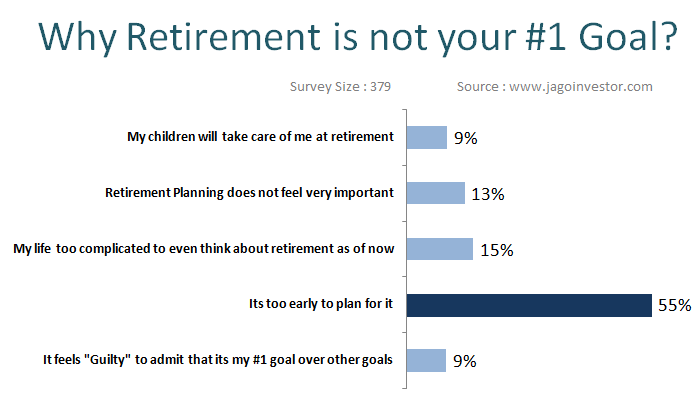
    2. It’s too early to plan

    The sooner you start saving for retirement, the better off you’ll be. That’s because compound interest will have more time to work its magic and grow your nest egg. If you wait until later in life to start saving, you’ll likely end up having to save much more money each month to catch up.

    Not having a clear plan is another mistake that people often make when planning for retirement. It’s important to know how much money you’ll need to have saved in order to cover your expenses during retirement. Without a plan, it can be difficult to stay on track and make progress towards your goal.

    The sooner you start saving for retirement, the better off you will be. Even if you can only afford to put away a small amount each month, it will add up over time.

    3. Investing Too Conservatively

    Many people are risk-averse when it comes to investing their retirement savings. While it’s important to be mindful of preserving your hard-earned money, investing too conservatively can actually do more harm than good in the long run.

    Why? Because inflation will erode the value of your savings if they’re not invested in assets that have the potential to grow over time. As such, it’s important to strike a balance between safety and growth when choosing investments for your retirement portfolio.

    Over time, the cost of living will almost certainly go up, but your income may not keep pace. This means that the purchasing power of your retirement savings will decrease unless you take steps to account for inflation. Investing too conservatively is another potential mistake.

    If you invest too conservatively, you may not earn enough growth on your investments to keep up with inflation or reach your long-term financial goals. On the other hand, investing too aggressively can be risky and lead to losses if the markets take a downturn. Finally, another common mistake is withdrawing money from retirement accounts before age 59½ without paying the 10% early withdrawal penalty.

    While there are some exceptions (such as using the money for qualifying medical expenses), generally speaking, it’s best to leave your retirement savings untouched until you reach retirement age.

    4. Underestimating Longevity Risk

    One of the biggest risks facing retirees is outliving their savings. This is especially true for women, who tend to live longer than men on average.
    If you don’t plan carefully, it’s easy to underestimate how long your retirement might last and end up running through all of your savings too early. So, avoid this myth of living a few years and accumulate assets support to you in longer life ahead.

    5. I’ll Delay Saving For Retirement Until Later When It’s Easier

    6. Investing is too complicated and risky

    7. not able to visualize the “Retirement” goal

    8. Not able to save enough money

    Not saving enough money is one of the biggest mistakes that people make. Other common mistakes include not having a clear plan, not diversifying your investments, and taking on too much debt.

    Saving enough money for retirement is crucial, but it’s not always easy. A lot of people procrastinate when it comes to saving for retirement, and by the time they’re ready to retire, they don’t have nearly enough saved up. It’s important to start saving early and to make sure you’re contributing enough to reach your goals.

    9. Not contributing enough to your retirement savings –

    If you want to have a comfortable retirement, you need to make sure that you are putting away enough money each month. A good rule of thumb is to try and contribute at least 10% of your monthly income.

    10. Withdrawing from your retirement account too early

    It is important to resist the temptation of tapping into your retirement savings before you reach retirement age. Doing so can significantly reduce the amount of money that you have available later on in life.

    11. They see their kids as retirement corpus

    12. My Spouse Will Take Care Of My Retirement

    13. Social security will take care of retirement needs

    14. My Company Or Government Will Take Care Of My Retirement,

    My Company And Medicare Will Take Care Of My Health Insurance Needs During Retirement

    15. Need less income after retirement

    16. Medicare will cover all health expenses

    Failing to plan for healthcare costs One of the biggest expenses in retirement is healthcare costs, yet many people fail to plan for this expense adequately . Healthcare costs can include insurance premiums , out-of-pocket expenses , long-term care , and prescription drugs .

    If you’re not covered by Medicare , health insurance can be very expensive . Long-term care insurance is another important consideration , especially if you want to avoid becoming a burden on your family .

    17. Work until full retirement age

    18. Inheritance will cover the retirement needs

    19. Rely on Bonds than Equity

    Diversifying your investments is also important in retirement planning. Having all of your eggs in one basket is risky, and if something happens to the investment you’ve put all of your money into, you could be left without anything. Diversifying helps protect you against loss and gives you a better chance of seeing returns on your investment over time. Diversification is key when investing for retirement (or really any other goal). By investing in a variety of asset classes, you can help reduce the risk of losing money in any one particular investment.

    20. Making poor spending decisions in retirement.

    Just because you’re retired doesn’t mean you can suddenly start living like there’s no tomorrow. It’s important to be mindful of your spending in retirement so that your savings last as long as possible.

    Lower tax bracket after retirement

    Retirement Planning Myth Bonus: Retirement Planning Is All About Money

    retirement planning survey
    Wealth creation for retirement

    7 Mistakes to Avoid in Retirement

    There are a number of risks that come along with retirement, and it’s important to be aware of them before making the decision to retire. 1. Financial insecurity: One of the biggest risks of retirement is financial insecurity. Without a regular paycheck coming in, it can be difficult to make ends meet and cover all your expenses.

    This is why it’s so important to have a solid financial plan in place before you retire.

    2. Health problems: Another risk to consider is your health. As we age, our health can decline and we become more susceptible to chronic illnesses and injuries.

    This can make retirement much more difficult and expensive if you’re not prepared for it.

    3. Loneliness: Retirement can also be quite lonely for some people. If you don’t have a strong social network or close relationships, you may find yourself feeling isolated and alone after retiring from work.

    4. Boredom: Some people also find retirement quite boring without the structure and routine of work life. It’s important to have hobbies or activities lined up that will help keep you mentally stimulated during your retirement years.

    5 . Risk of long-term care needs: Finally, another risk associated with retirement is the need for long-term care services such as nursing home care or in-home caregiving services. This can be very costly and stressful for both retirees and their families. Overall, there are a number of risks to consider before retiring.
    6. Financial Stress: Money woes are one of the biggest sources of stress for retirees.

    7. Not Having a Plan: It’s important to have a solid plan for retirement, both financially and emotionally.
    Without a plan, it’s easy to get off track and end up stressed out or worse off than you intended.


    However, by being aware of these risks, you can take steps to mitigate them and still enjoy a happy, healthy, and fulfilling retirement.

    What is the 4 Rule Retirement?

    The 4% rule is a guideline for retirement spending that says you can withdraw 4% of your portfolio each year in retirement and not run out of money. The rule is based on the work of William Bengen, a financial planner who published a study in 1994 in which he found that a portfolio consisting of 50% stocks and 50% bonds would support withdrawals of up to 4% annually for 30 years, adjusted for inflation, without running out of money. Bengen’s study has been widely cited by financial planners as evidence that retirees can safely withdraw 4% of their portfolios each year.

    However, some critics argue that the 4% rule is too conservative and doesn’t allow for enough flexibility in retirement spending. If you’re using the 4% rule to plan your retirement, there are a few things to keep in mind. First, the rule is based on historical data and may not be accurate if future market conditions are different from what they’ve been in the past.

    Second, the rule assumes you’ll invest equally in stocks and bonds, but you may want to adjust your asset allocation depending on your risk tolerance. Finally, remember that the 4% rule is just a guideline – you may need to adjust your spending up or down depending on how long you live or what unexpected expenses come up in retirement.

    What Should You Not Do When You Retire?

    When you retire, there are a few things you should avoid doing in order to make the most of your golden years. Here are four things you should steer clear of:

    1. Don’t skimp on your health insurance

    One of the biggest mistakes you can make when you retire is to skimp on your health insurance. Even if you’re healthy now, it’s important to have comprehensive coverage in case anything happens down the road. No one knows what the future holds, so it’s best to be prepared with a good health insurance plan.

    2. Don’t forget about long-term care insurance Another type of insurance that’s important for retirees is long-term care insurance. This will help cover the costs of nursing home care or other types of assistance if you need it later in life.

    It’s something that many people don’t think about, but it can be vital in ensuring that you have the resources you need as you age.

    3. Don’t withdraw money from your retirement accounts too early It can be tempting to cash out your retirement savings when you first retire, but this is usually not a good idea.

    Withdrawing money from your account too early can trigger taxes and penalties, and it also means that your money won’t have as much time to grow. If possible, wait until later in retirement to start tapping into those savings so that they can last longer.

    4. Don’t neglect your estate planning documents

    Finally, don’t forget to update your estate planning documents once you retire. This includes things like wills, trusts, and power of attorney forms.

    How Much to Retire at 60

    If you’re looking to retire at 60, there’s a good chance you’ll need to have saved up quite a bit of money. How much exactly? It depends on several factors, including how much money you’ll need to cover your expenses and how long you expect to live in retirement.

    Assuming you want to retire comfortably and have your nest egg last as long as possible, most financial experts recommend saving enough money to cover about 80% of your pre-retirement income. So, if you currently earn 20,00,000 per year, you should aim to have around 16,00,000 per year in retirement income. Of course, this is just a general guideline – the actual amount you’ll need will depend on your specific situation.

    If you have lower living expenses or are in good health and expect to live a longer than average life span, you may be able to get by with less than 80%. On the other hand, if your costs are high or your health is not great, you may need even more than 80%. The best way to figure out how much money you’ll need in retirement is to sit down and do some serious planning.

    There are a number of online calculators that can help you estimate how much money you’ll need in retirement based on different factors like inflation rates and life expectancy. Once you’ve got a ballpark figure for how much income you’ll need each year, start working on ways to make it happen. If saving up that much seems daunting (or impossible), don’t despair – there are plenty of ways to make it easier.

    Start by taking advantage of any employer matching programs for 401(k)s or other retirement accounts. Every little bit helps!

    Is 20 Million Enough to Retire

    When it comes to retirement, there is no magic number. But for many people, 2 million is enough to comfortably retire. Here’s a look at why 20 million may be enough for you:

    1. You can live off the interest If you have 20 million saved for retirement, you can expect to withdraw about 8,00,000 per year (assuming a 4% interest rate). That should cover your basic living expenses and leave you with some extra cash to enjoy your golden years.

    2. You’ll have other sources of income In addition to your savings, you’ll likely have other sources of income in retirement, such as Social Security or a pension. This will help supplement your savings and give you more financial security in retirement.

    3. Your costs will go down in retirement Once you retire, your costs are likely to go down significantly. You’ll no longer need to save for retirement, so you can use that extra money to pay off debts or fund other goals.

    And, if you own your home outright, your housing costs will decrease as well. All of this means that 20 million may be more than enough to support yourself in retirement.

    Conclusion

    Retirement planning is a complex process, and there are many myths and mistakes that can trip people up. This blog post looks at some of the most common retirement planning myths and mistakes, including the belief that you don’t need to start saving for retirement until you’re in your 30s, that Social Security will be enough to cover your costs, and that you shouldn’t concern yourself with estate planning. The reality is that retirement planning requires careful consideration and a solid understanding of the various factors involved.

    If you want to ensure a comfortable retirement, it’s important to start early, plan carefully, and avoid making these common mistakes.

  • Poison pills in the business world

    A poison pill is a defensive tactic used by a company to make itself a less lucrative bid as an anti-takeover measure. The poison pill usually takes the form of a clause in the company’s charter that allows shareholders to buy shares at a discount if the company is acquired. The poison pill makes the takeover less attractive to the acquirer because it would have to pay a higher price per share to get control of the company. 

    What is a poison pill defense?

    A poison pill defense is a strategy that intends to prevent hostile takeovers of businesses. The target company or business adopts versatile poison pills to save it from the unwanted control of any business or person.

    History of poison pills in the business?

    The poison pill defense was first used in the 1980s and has been used by several companies since then. 

    Martin Lipton of Wachtell, Lipton, Rosen & Katz introduced the poison pill concept in 1982 as a tool to handle hostile takeovers. Lipton was a mergers and acquisitions lawyer. The poison pill concept became popular during the early 1980s in fighting the wave of takeovers by corporate raiders like T. Boone Pickens and Carl Icahn.

    Some companies have used the poison pill to fend off unwanted takeover attempts, while others have been unable to stop a hostile takeover despite having a poison pill in place.

    What are poison pills called?

    The poison pills are known as the “shareholder rights plans” formally. However, the concept is very common worldwide as a poison pill.

    Criticisms of a poison pill defense

    There are many criticisms of the poison pill defense.

    Some argue that it can be used to entrench management and make it harder for shareholders to hold them accountable.

    Others argue that the poison pill can block takeovers that would benefit shareholders.

    The poison pill defense is a controversial tactic, but several companies have used it successfully to ward off unwanted takeover attempts.

    What is the goal of a poison pill defense? A poison pill defense (also known as a defensive takeover) aims to prevent hostile companies from acquiring your company. For example, suppose your company is publicly-traded. You have control over the voting rights in the case of certain types of the hostile takeover — such as a takeover offer or an acquisition using a proxy (involving an investment bank and/or institutional investors). In that case, you will likely want to provide a poison pill defense. ”

    Why are poison pills used?

    Poison pills are used as a defensive tactic by a company to make itself less attractive to a hostile takeover bid. The poison pill usually takes the form of a clause in the company’s charter that allows shareholders to buy shares at a discount if the company is acquired. The poison pill makes the takeover less attractive to the acquirer because it would have to pay a higher price per share to get control of the company.

    How does a flip-over poison pill work?

    A flip-over poison pill is a type of poison pill that is triggered when a hostile bidder takes control of a portion of the company’s shares. Once the hostile bidder acquires this percentage, the poison pill is activated, and all shareholders can buy shares at a discount.

    This makes the company less attractive to the hostile bidder, as they would have to pay a higher price per share to acquire the company. The poison pill is an effective way to prevent a hostile bidder from acquiring a company. It creates a situation where the hostile bidder must buy shares at a higher price per share than they would have paid if the company did not have this type of protection.

    What is a poison pill price?

    A poison pill price is per share that a hostile bidder would have to pay to acquire a company if a poison pill is in place. The poison pill price is usually set at a higher level than the current market price of the company’s shares, making the company less attractive to a hostile takeover bid. Poison pills are often used to maintain the company’s share price or prevent a hostile takeover that would significantly change the company’s management. They are usually employed when one party attempts to acquire shares in a company, which may create a conflict of interest.

    Is a poison pill good for shareholders?

    There is debate on whether or not poison pills are good for shareholders. Some argue that they can be used to entrench management and make it harder for shareholders to hold them accountable. Others argue that the poison pill can block takeovers that would benefit shareholders. Ultimately, the decision on whether or not a poison pill is good for shareholders depends on the specific circumstances of each case.

    Types of Poison Pill Defenses

    There are different poison pill defenses, each with its strengths and weaknesses. Let’s explore what are they, how they work, and examples.

    Preferred stock plans were used as poison pills before 1984 to prevent a hostile takeover. The company would issue a dividend of preferred stocks to existing shareholders and allow voting rights. It usually made the entry challenging for hostile takeovers.

    The Flip-in poison pill is a strategy used by target companies to discourage hostile takeovers by allowing existing stockholders to buy shares at a discount. The dilution prevents the new buyer from pursuing the deal.

    The target company designs its employee stock-option plans to become effective at a higher price during an unwelcome bid. Thus, the acquiring company would not be able to quote a lower price for the shares. However, if the acquirer is ready to offer a very high price, the Back-end rights plan fails to prevent it. It is usually a process of delaying and hardly succeeds in encountering takeovers.

    Golden handcuffs are incentives for key employees to stay with the company for long. However, they can work as an anti-takeover mechanism. When any hostile bid occurs, the critical staff becomes free from their golden handcuffs. It makes the acquirer less interested in taking over the company.

    Target companies use the Super-voting rights plan to discourage hostile takeovers. When an investor obtains a large share block, preference shareholders get super-voting rights. As a result, the bulk share purchaser gets less voting rights and control over the company.

    The Flip-over poison pill strategy encourages the target company’s shareholders to buy shares at a discounted rate in the acquirer’s company. As a result, it dilutes the acquirer’s company control and makes the takeover quite costly. The most common type of poison pill is the flip-over poison pill. A flip-over poison pill is a type of poison pill that is triggered when a hostile bidder takes control of a portion of the company’s shares. Once the hostile bidder acquires this percentage, the poison pill is activated, and all shareholders can buy shares at a discount. This makes the company less attractive to the hostile bidder, as they would have to pay a higher price per share to acquire the company.

    Another type of poison pill is the poison pill that is triggered when a hostile bidder attempts to replace the company’s management after acquiring a part of the shares. This type of poison pill is designed to make it more difficult for the hostile bidder to take over the company by making it harder to replace the management.

    The white knight poison pill is triggered when a white knight bidder tries to acquire the company. The white knight is typically a friendly company to the target company and is seen as a savior from the hostile bidder. The white knight poison pill allows the target company to sell itself to the white knight at a discount, making it less attractive for the hostile bidder to acquire the company. There are several other poison pills, but these are the three most common.

    Pros and cons of Poison Pills

    There are some advantages and disadvantages to using a poison pill defense.

    Advantages

    One advantage of using a poison pill is that it can give the target company time to find a white knight bidder. A white knight is a friendly company to the target company and is seen as a savior from the hostile bidder. The white knight can help the target company avoid being taken over by the hostile bidder.

    Another advantage of using a poison pill is that it can make the target company less attractive to the hostile bidder. The hostile bidder would have to pay a higher price per share to acquire the company, making the takeover less attractive.

    Disadvantages

    One disadvantage of using a poison pill is that it can entrench management. The poison pill can make it difficult for shareholders to hold the administration accountable.

    Another disadvantage of using a poison pill is that it can block takeovers that would benefit shareholders. The poison pill can make it more difficult for shareholders to sell their shares to the highest bidder.

    Limitations of the Poison Pill Defense: What are the risks and limitations? 

    There are several risks and limitations associated with using a poison pill defense. One risk is that the poison pill can entrench management. The poison pill can make it more difficult for shareholders to hold the administration accountable.

    Another chance is that the poison pill can block takeovers that would benefit shareholders. The poison pill can make it challenging for shareholders to offload shareholdings at the best price.

    Another limitation of the poison pill is that it is only effective if shareholders approve of it. If the shareholders disapprove of the poison pill, the company may be forced to abandon it.

    Finally, the poison pill is only effective if the company has enough cash to buy back the shares at a discounted price. If the company does not have enough cash, the poison pill will not be effective.

    Is the Poison Pill Defense a viable strategy?

    The poison pill defense is a controversial tactic, but several companies have used it successfully to ward off unwanted takeover attempts. The poison pill can make a company less lucrative to any hostile takeover bid. 

    Are Poison pills legal in the real world?

    “The legality of poison pills had been unclear when they were first put to use in the early 1980s. However, the Delaware Supreme Court upheld poison pills as a valid instrument of takeover defense in its 1985 decision in Moran v. Household International, Inc.”

    Poison pills in action

    Let’s find some poison pills use cases in the real world over the last couple of years.

    Papa John’s

    In July 2018, the management of restaurant chain Papa John’s adopted the poison pill to prevent ousted founder John Schnatter from controlling the company. Schnatter owned 30% of the company’s stock. The price would go double if Schnatter and his affiliates acquires a stake in the company to 31%, or if anyone purchased 15% of the common stock without the board’s approval.

    Netflix

    In 2012, Netflix just days after Carl Icahn acquired a 10% stake stipulated that with any new acquisition of 10% or more, any Netflix merger, sales, or transfer of more than half of assets, allows for existing shareholders to get shares for half of the price.

    Twitter

    In the middle of April 2022, the board of Twitter adopted the poison pill by offering existing stockholders the opportunity to buy stocks at discount to prevent Elon Musk from taking control as he hinted to buy at 54.20 a share. With the new provision, stockholders qualify for the discount if anyone buys more than 15% of outstanding shares. Elon already has a 9.1% stake in Twitter.

    Conclusion

    The poison pill defense is a controversial tactic, but it has been used successfully by many companies to ward off unwanted takeover attempts. The poison pill can make a company less attractive to a hostile takeover bid. Do you know about nudges in the business world?

  • Anchors in marketing to benefit your sales

    Anchors are a powerful marketing tool used to influence a customer’s purchasing decision. Anchors can be either internal or external and can be either physical or perceived. Anchors can be either external or internal. External anchors are cues in the environment, such as prices and other people’s opinions. Internal anchors are personal beliefs or feelings about a product or service. When marketers use anchors, they want to create a comparison point for the consumer.

    Anchors in marketing

    The main reason anchoring bias is problematic is that it can lead to irrational buying decisions. For example, if you are presented with two options – one that costs $100 and another that costs $200 – you may be more likely to choose the option anchored earlier in your memory (the $100 option). 

    Therefore, marketers need to be aware of anchoring bias and use techniques like desensitization (repeating the information repeatedly until it becomes less relevant) or framing (presenting the information in a way that reduces its importance) to help consumers make informed choices.

    For example, if you are selling a product and are asked how much it costs, your initial response may be influenced by the price you were told when first introduced to the product. Anchoring occurs when people rely too heavily on one piece of information (the anchor) to form an opinion about something else.

    The effect of anchoring can be negative or positive, depending on how it affects your business. For example, if your anchor is low, you may end up pricing your products too low to compete with other companies that have set lower anchors. However, if your anchor is high, you may end up overcharging for your products to stand out from the competition.

    What is anchoring in Consumer Behavior?

    Anchoring can occur in many different situations, including when you’re shopping for products or services, deciding what price to pay, or evaluating your current situation.

    The more critical the decision, the more likely you will be anchored. For example, if you’re looking to buy a car and see two models side by side, the model with the higher price tag is more likely to be your anchor. You’ll be less likely to consider other factors, like how comfortable the car feels or how reliable it has been in the past. 

    The critical thing to remember is that anchoring can hurt your decision-making process. So if you’re trying to decide whether or not to buy something, for example, it’s important not to let your anchor affect your judgment too much.

    The number that is assigned meaning is called an anchor.

    Most people tend to want to remain consistent with their decisions.

    Anchoring can be seen in many different areas of life but is most prevalent in consumer behavior.

    Anchoring bias occurs when people are so focused on one or two options that they cannot accurately evaluate the quality of the other options.

    It is best seen when people are making their decision on what to eat at a restaurant.

    People may focus so much on what they want to eat at the restaurant that they forget to see what is on the menu.

    It can lead to the person making a decision based on anchoring bias and not getting the best food possible.

    What are anchors in sales?

    One of the most important aspects of sales is an anchor. An anchor is a term that describes your first contact with a potential buyer and sets the stage for future interactions. Anchors should be professional, confident, and memorable. The first few minutes you spend with a potential buyer will set the tone for future conversations and will likely determine if they even work with you or not; make sure to make an excellent first impression!

    An anchor is any factor that influences people’s decision-making process. Factors such as price, quality, and convenience can be considered anchors in the buyer’s mind. Putting an anchor at the beginning of the negotiation will make it more difficult for the seller to make concessions later. An anchor is any factor that influences people’s decision-making process.

    An anchor is a sales technique that makes you seem more credible or trustworthy. It can be anything from having a handwritten autograph to being an experienced seller. Still, by presenting yourself as being knowledgeable, it’s easy for others to want to buy what you have to offer.

    Why Anchors in marketing?

    When creating your marketing content, it’s essential to include anchors to help potential customers remember your brand and make a purchase.

    Anchors are the key to a successful sales process. They are the things that keep you focused and motivated while you are selling.

    Anchors can be anything from your company’s mission statement to your target market. However, they should be important to you and that you believe in.

    Once you have identified your anchors, ensure that you use them throughout your sales process. This will help you stay focused and motivated, and it will also help you sell more products or services. 

    Here are some tips on how to use anchors in your sales process: 

    1. Establish personal relationships with your customers. 

    2. Always provide valuable information about the products or services you are selling. 

    3. Use testimonials or reviews to prove the effectiveness of your products or services. 

    4. Use humor to lighten the mood during tough conversations about money or buying decisions.

    The term “anchoring bias” is often used to describe cognitive bias when people rely too heavily on one piece of information when making decisions. That one piece of information is your anchor.

    What is an anchor pricing strategy?

    Anchor pricing is the pricing strategy that focuses on price alone to associate with the complexity and quality. This is a compelling strategy, challenging for competitors to compete with.

    Is price anchoring illegal?

    Price anchoring is an essential part of the marketing strategy. Therefore, the use of price anchoring in the marketing mix is widespread. However, we understand that most marketers are unaware of price anchoring and how this works in practice.

    What is the shortcoming of price anchoring?

    When making a purchase, many shoppers rely on price anchoring, or the use of a reference price to make a decision. This cognitive bias can be helpful in making rational choices, but it can also lead to faulty decisions. One shortcoming of price anchoring is that it can cause people to focus too much on the reference price and not on the actual value of the product. Anchoring can also lead to over-spending, as people may be more likely to buy something if it is cheaper than they expected. Anchoring can also lead to people being overconfident about their ability to predict future prices.

    There are a couple of reasons why price anchoring can be a terrible idea. The first reason is that many customers have no idea what they want or need. Second, price anchoring can lead to mass adoption of the wrong products, services, and software. Finally, there is no way to measure the effectiveness of price anchoring.

    What is the anchor price in real estate?

    It is the lowest price at which a property can be purchased. It is also the amount of money that a buyer, who is either unwilling or unable to buy at this price, will pay for a property.

    What does anchoring mean in real estate?

    When a real estate agent offers a buyer an estimate for the purchase price, he does not consider the relationship between the price and quality of the property that is being purchased.

    What is a premium pricing strategy?

    A premium pricing strategy is when a company charges over the average price of its product to highlight its superior qualities. This strategy can be effective because it incentivizes consumers to purchase the product. After all, they feel like they are getting more for their money. However, this type of strategy can also backfire if buyers perceive that the higher price is due to hype or high demand and not quality. To avoid this, companies should offer incentives such as free shipping or other discounts to make up for the price difference.
    Premium pricing is a strategy used by companies to increase the demand for their products. Premium pricing can be implemented when companies can charge more because of its exclusivity. It is most commonly found in markets with little competition, where customers are willing to pay this higher cost for the premium product they perceive as being of better quality.

    What is anchoring bias in marketing?

    To get consumers’ attention, many retailers use a technique called “anchoring bias,” a marketing strategy that relates a product’s price to a much higher or lower price. This technique is common in stores that sell items on clearance. For example, a customer may see a clearance sign advertising underwear for $7.99 and think it’s too good of a deal to pass up, not realizing the original price was only $10.

    Anchoring bias is a psychological phenomenon where people are affected by the first number they are given when making decisions. For example, if you are looking to buy a car and the salesman shows you two cars priced at $20,000 and $30,000. The more expensive car will likely be your first choice because it was the first number presented to you.

    Anchoring bias is an example of how marketing can influence us in ways that we may not even realize. The phenomenon of anchoring bias occurs when our expectations influence what we perceive. For example, if you are in a furniture store and see a couch for $200, you might think, “well, the prices on these sofas are pretty reasonable.

    What is an anchor pricing strategy?

    Anchor pricing is a purchase strategy where the buyer sets the product’s price, making it seem like an attractive deal. It’s a way to set the customer’s expectations to buy other products for more than they are worth.

    Anchor pricing is the first pricing strategy used to sell its product or service. The first price that a customer sees will be a psychological price point, which influences other prices in the future.

    An anchor pricing strategy is a pricing technique in which a seller prices an item at a specific price and then offers discounts from that amount for additional items. The goal is to encourage buyers to spend more money on the product category to reap the benefits of the discounts. Anchor pricing can be successful in retail settings, such as clothing stores, where it helps shoppers decide what sections to purchase in and how much they should spend.

    Is price anchoring illegal?

    The US Department of Justice recently filed a lawsuit claiming that price anchoring is illegal. The DOJ’s lawyers claim that the company used unfair practices to inflate prices on one of its products artificially. This company has been under scrutiny for this same practice in the past. Industry insiders will watch the case closely, awaiting results and business owners trying to understand how to avoid questioning their pricing strategies.

    When an individual uses a price anchoring technique, they are taking advantage of the common tendency to believe that something is more expensive. A person engaging in this type of behavior can use it to get an item at a lower price or get better service than they might otherwise receive.

    Some people have been taken to court for allegedly practicing price anchoring in recent years. In 2007, a grocery store owner in Pennsylvania was taken to court for allegedly driving up prices by more than 10% due to others’ mispricing strategies. The grocery store owner claimed that the pricing strategy was not illegal and had been practiced at other grocery stores without any controversy.

    What are brand anchors?

    The term, brand anchors, is often used when referring to a company’s core values and the strong emotional connection felt by consumers. 

    Brand anchors are created by combining a company’s history and culture with its current product offerings. 

    Anchors can be established in various ways, including customer service interactions, promotions, and marketing tactics. In addition, brand anchors help develop a sense of trust between the consumer and the company, which helps build long-term relationships.

    The term “brand anchor” has been used to describe how a consumer’s perception of a brand can impact their interest in other products or services offered by the same company. One way to take advantage of this phenomenon is by releasing new product lines with similar branding. This will alter consumers’ perceptions of the new product line by believing it is connected to the original.

    When it comes to brand identity, many different factors go into it. However, one factor that is often overlooked is the product’s color. Color is one way a company expresses its logo, and it plays a significant role in what a consumer thinks about a product. For example, some studies have shown that people will buy a red shirt more than a blue one if they see both of them on display.

    What are the five keys to anchoring?

    The five keys to successful anchoring are Intensity, Timing, Uniqueness, Replicability, and the Number of times.

     What is anchoring in advertising?

    A common form of persuasive advertising is anchoring, a technique used by one piece of evidence or information to make a point while distracting from counter-arguments. Anchors can be factual or fictional and come in various imagery, slogans, and narratives. Advertisers often use anchors to persuade customers to buy products by associating their product with feelings such as happiness, safety, creativity, and success.

    What is anchoring in advertising? Anchoring is a psychological tactic where the price of a product influences how much you want it. For example, a study conducted by Jonah Berger and Kamenica (2011) found that people paid more for a set of chocolates when they were sold at $2 rather than $1. So when we see a product priced higher, we come to think that it’s more valuable.

    Anchoring is a psychological tactic where the price of a product influences how much you want it. For example, a study conducted by Jonah Berger and Kamenica (2011) found that people paid more for a set of chocolates when they were sold at $2 rather than $1. So when we see a product priced higher, we come to think that it’s more valuable.

  • Spillover Effects: How to avoid and deal with them

    The spillover effect happens when events in one nation affect the economies of other countries. For example, an earthquake, stock market crisis, invasion, or another macro event may have adverse, neutral, or positive spillover effects. 

    Understand the spillover effects of a domestic event

    One of the most important things you can do to avoid spillover effects is to understand the spillover effects of a domestic event. It means understanding the Macroeconomic Events (M.E.) that can hurt other countries.

    M.E.s can take many different forms, but they all have one common goal – to cause economic pain to other countries. There are often two types of M.E.s: financial and political. Financial M.E.s can cause banks, stocks, or other companies to crash, and political M.E.s can cause wars, revolutions, or coups.

    Avoiding spillover effects in your business

    1. Stay organized and keep track of your events and situations.

    2. Make sure your business complies with any regulations that impact spillover effects.

    3. Stay informed about the latest events and developments in your industry so that you can stay ahead of the curve and prevent any potential adverse spillover effects.

    4. Make sure that you have a contingency plan in place in case of any adverse spillover effects. It means having enough money saved up so that you can cover any unexpected costs incurred as a result of a spillover effect.

    5. Don’t be afraid to experiment with different marketing approaches to see what works best for your business and your customer base.

    Note when avoiding spillover effects is that you can’t change the world.

    A spillover effect occurs when an event in one area of your business causes a change in another business area.

    Spillover effects can be positive or negative. If a company has a negative spillover effect, their product or service is affecting other businesses and causing them to lose profits.

    To avoid spillover effects, you need to make sure that your business is not affected by the changes in other enterprises.

    For example, if a company has a factory in China and suddenly finds out that the Chinese government will raise taxes on various goods, this change will hit it hard. To avoid these kinds of problems, companies need to stay up-to-date with all the latest changes in their industry.

    Find all about the nudge theory.

    To avoid spillover effects, you need to make sure that your business is not too reliant on one or two sources of income.

    There are a lot of ways to avoid these effects. One way is by diversifying your revenue streams and creating more than one source of income.

    So, there are many ways to avoid spillover effects and deal with them- some easy and some more challenging. Here are five tips to get started:

    • – research what type of spillover effect your situation may have
    • – find out how you can reduce or prevent it
    • – find out who your potential victims are
    • – take action now to reduce or prevent
    • -monitor and evaluate the effectiveness of the measures taken

    Handling spillover effects when they happen

    1. Stay organized

    It can be hard to stay aware of what’s happening in your world and how it might affect other people. To avoid spillover effects is to keep organized. Make a timeline for events in your life and keep track of what’s going on globally. 

    2. Be prepared

    If something wrong happens, make sure you’re prepared. You should have a plan for what to do if there is an emergency, and you should have documents that will help you carry out that plan. It will help you stay safe and unaffected by any spillover effects.

    3. Get involved

    Do something to help others when something goes wrong. If you can get involved with your community or workplace, you can positively impact the world.4. Try to learn as much as possible

    Learning about different cultures and events can help dodge spillover effects. Try reading books, watching T.V. shows, or listening to music that has been influenced by these events.5. Keep your emotions in check

    It can be challenging to maintain peace and composure when something terrible happens. It’s important to let your emotions keep cool.

    Understanding the signs of a spillover effect

    When you experience a spillover effect, you can look for a few things. The first sign is that at the beginning might be an increase in business transactions, a rise in prices, or an increase in traffic to your website. Once the spillover effect has started, it isn’t easy to stop. The next sign is when people begin to feel like they’re not allowed to do anything else because their attention is focused on the event itself. They might be too busy checking their social media accounts or news. The last sign is when people start to feel like they don’t have anything else to do because they’re all focused on the event.

    Dealing with the aftermath of a spillover effect

    1. Make sure you have a plan for managing the aftermath of a spillover effect. It may mean having contingency plans in place for when things go wrong, handling information carefully, and making sure everyone is aware of what’s going on.

    2. Be prepared to deal with difficult emotions. It may be tough to deal with the aftermath of a spillover effect. Many people may feel anger, disappointment, and sadness. These emotions can cause problems for businesses and individuals alike.

    3. Avoid any kinds of retaliation or violence. It could lead to further conflict and damage in the area where the spillover effect occurred.

    4. Seek out international support if you need it. A lot can happen after a spillover effect, and there may be limited options available to help both businesses and individuals affected by the event.

    5. Stay organized and keep track of all the information since the spillover effect occurred. It will help you stay focused on what needs to be done and ensure that everything is proceeding as planned.

    Understanding how to deal with spillover effects in your personal life

    The first step is to understand how spillover effects work in your personal life. Next, you have to be aware of what could happen if something unfavorable happens in one country and spreads to other people. This can be not easy, but it’s essential to stay safe and protect yourself.

    If you’re traveling, make sure you are aware of the laws in your destination country and make sure you are following the regulations related to travel. In addition, make sure you’re familiar with the news articles and videos related to the spillover effect so that you can prepare for any possible consequences.

    Managing spillover effects in your social life

    One of the most important things you can do to avoid spillover effects is to manage your social life well. If you’re not sure how to do this, it’s best to ask a friend or family member. They may help you avoid any potential adverse spillover effects.

    Another way to manage your social life is by having an active online presence. It will ensure that people know who you are and that your products and services are well known. For example, you may use Facebook, Twitter, and LinkedIn to stay in touch with your customers and followers.

    Why does the spillover effect occur?

    1. The spillover effect is a result of the interconnectedness of economies
    2. The spillover effect is a result of the herd mentality and bandwagoning
    3. The spillover effect is a result of market saturation
    4. The spillover effect is a result of the diffusion of innovation
    5. The spillover effect is a result of the Matthew Effect

    Unrelated events to the original event often cause spillover effects. For example, an earthquake may have a negative spillover effect on the economies of surrounding nations. An invasion can have a negative spillover effect on the economies of neighboring nations. A stock market crisis can have a negative spillover effect on the economies of neighboring countries. These are just some examples.

    The spillover effect may exist when one company’s success or failure affects companies not directly involved in the business. For example, the 2008 financial crisis was caused by the housing market.

    The spillover effect can be seen in the example of the housing market crash. The housing market crash had a ripple effect on the stock market, as people began to sell their stocks to cover their losses.

    What is the difference between spillover and contagion?

    Spillover refers to the accidental spread of a contagion, while contagion refers to the intentional spread of disease.

    The two concepts are important because they help to understand how digital marketing can be harmful and how it can be helpful.

    What is the spillover effect on ecology?

    The spillover effect of ecology is how events in one nation can significantly impact the economies of other countries. For example, if you have an earthquake in Japan and California, the two events will have a positive or negative spillover effect. Similarly, the two economies will be affected when a stock market crisis happens in one country and spills over to another country.

    What is the spillover effect on ecology? 

    The spillover effects on ecology are the effects of human activities on the ecosystem. It could be direct or indirect. The spillover effect on ecology is one of the most critical topics in the world today. It is a primary concern for scientists, policymakers, and environmentalists. There are many ways humans affect their environment, and these effects can be both positive and negative.

    There are three types of spillovers. The first type is positive spillovers, which occur when human activities positively affect the non-human environment. 

    The second type is negative spillovers, which occur when human activities adversely affect the non-human environment. The third type is mixed spillovers, which appear when both positive and negative effects from human activity.

    What is the spillover effect in HRM?

    The spillover effect is a term used to describe the impact of one individual or group on others. The same concept can be applied to marketing, finance, and other business areas.

    The spillover effect can happen with any human resource management (HRM) function such as recruitment, selection, training, and development.

    In HRM, the spillover effect is often measured through the cost-benefit analysis (CBA). This method makes it possible to compare the costs and benefits incurred for each HRM function before and after its implementation.

    The spillover effect in HRM refers to how employees influence their peers, managers, and the company as a whole. For example, this can happen when employees share knowledge with their colleagues or develop company policies that affect their peers and manager.

    What is the spillover effect in psychology? 

    The spillover effect in psychology refers to the influence of one person’s behavior on the actions of another person. It happens when someone is exposed to an activity or event that directly or indirectly impacts their thoughts and feelings.

    The spillover effect can be positive, negative, or neutral. The positive effects cause people to change their thoughts and feelings, while adverse effects cause changes for the worse. An example of a positive spillover effect will be if someone depressed learns to improve their mood from reading a book about happiness.

    The spillover effect in psychology can occur when exposed to someone else’s emotions. This could be positive, such as empathy, or negative, like envy.

    The most common example of this is when people see someone crying, and they get teary-eyed themselves because they feel sad for that person.

    Ex: A person who has been drinking alcohol may be more likely to drink more alcohol when they see people drinking alcohol.

    The spillover effect can also be seen in the workplace. People who have been working for long hours are less likely to take breaks and take care of their health. This leads to them becoming less productive and eventually getting fired from their jobs.

    The first example is that more agreeable people tend to be more giving than less cooperative.

    – The second example is that more conscientious people tend to have better health outcomes than those who are less conscientious.

    What are spillover effects in research? 

    The spillover effect is the idea that a change in one area of research will impact other research areas. Spillovers are often studied using quantitative methods, but qualitative methods are also used for qualitative research.

    For example, when more people start using a particular technology, it can lead to more innovations for that specific field. Or, if people begin to think about a particular topic differently, they may be more likely to use that same technology or think about the same issue differently themselves.

    In research, many variables can have a spillover effect on each other. For example, if we study how people respond to stress, we can see how they react to different levels of social support.

    The spillover effect is also referred to as the butterfly effect because it is thought that a slight change in one place can cause massive changes somewhere else.

    What is the spillover effect in business? 

    The spillover effect in business refers to the unintended consequences of business decisions or actions. These consequences may be positive or negative and can impact employees, customers, suppliers, and the community. For example, a company that announces layoffs may experience a drop in stock prices due to the spillover effect, as investors fear that the company’s financial troubles will negatively impact other businesses.

    The spillover effect in business is the events in one nation impacting the economies of other countries. There are many ways to avoid spillover effects and deal with them, but here are five tips to get started.

    What are the economic spillover effects of the 9/11 attack on Twin Tower?

    The 9/11 attack on the Twin Towers has had a significant impact on the economy of the United States. The attack led to a decline in real estate, the stock market, and many other sectors.

    The September 11th terrorist attack on the Twin Towers in New York City had a substantial economic impact on the world. It is estimated that the economic effects of this attack will be $3 trillion for the United States.

    The economic effects of the 9/11 attack on the Twin Towers were significant. The attacks decreased the GDP of the United States by $100 billion and declined in exports by $180 billion.

    These effects are not limited to just the U.S. but to other countries like Canada, China, Japan, and France.

    The 9/11 terrorist attacks on the Twin Towers in New York City left a lasting impact on the United States economy. However, the physical destruction and loss of life were only the beginning; the attacks also led to a decline in consumer confidence and stock prices. 

    What are the economic spillover effects of the U.S. attack on Afghanistan?

    The U.S. attack on Afghanistan has had several economic spillover effects. One such effect has been the increase in oil prices. The attack has also led to a decrease in global trade and increased air travel costs. In addition, the attack has caused many companies to cancel or postpone their plans to invest in Afghanistan.

    The economic effects of the U.S. attack on Afghanistan have been largely positive for the United States.

    What are the economic spillover effects of the Russian attack on Ukrain?

    The world has started to find the major spillover effects too early. Many capital markets has suffered volatility, oil prices are getting record high, LNG price is uptrend. Cross-border banking transactions are at risk as the EU are threatening of cutting Russia from the SWIFT network. Tensions among nations are increasing surrounding the attack and there are ongoing sanctions that will further deteriorate the scenario.

  • Nudge Theory in Business | Secrets to positivity

    Nudge theory is the notion that subtle interventions can lead people to make better choices. For instance, if you put fruit in reach of your employees, they are more likely to eat healthier snacks during the day. The theory has many applications for businesses like increasing productivity and boosting morale.
    A growing number of business owners are employing nudge theory to improve their company’s operations. With more than 1 billion people employed worldwide, this strategy has become an invaluable asset to employers around the world.

    What is a nudging strategy?

    Nudges are small behavioral prompts that people might not even notice consciously. 

    Nudge theory is a concept that proposes small, simple changes to environmental factors that can have drastic effects on behavior. It was first introduced by the libertarian economist Richard Thaler and legal scholar Cass Sunstein in their 2008 book Nudge: Improving Decisions About Health, Wealth, And Happiness. The theory is on the idea that people are not always rational beings. Instead, people are often predictable in how they behave- making them easy to manipulate for the betterment of society.

    It suggests that small, strategic acts can significantly affect behavior. It is instrumental in business and applicable to health care management, financial security and well-being, and sustainable living. In the workplace setting, nudges encourage employees to increase their well-being or take steps that benefit them and the company.

    Businesses are always looking for ways to stay competitive. Still, the reality is that it is becoming more difficult for organizations to grow and change at the same pace as their customers. As a result, many companies turn to nudge theory to subconsciously influence their customers to make up for this lag. It involves making subtle changes to the customer experience that result in desired behavioral changes.

    Nudge Theory in Business

    What are the types of nudges?

    Nudges can be categorized into two types: 

    1. Informational nudges- these are the ones that provide you with information to make a decision. 

    2. Behavioral nudges- these are the ones that provide you with a nudge in one direction or another to help you make a decision.

    What are examples of nudges?

    • If the waiter suggests, you will buy drinks with a burger.
    • Extra charges for polythene bags may discourage its demand and thus prevent pollution.
    • Financial incentives for returned bottles may save the environment
    • Examples of nudges include adding healthy options to vending machines, reminding people to drink water during their day, and providing forms for the simplified tax form.
    • It can be through subtle reminders or reframing how the choice is framed. For example, nudges are in labels, information on packaging, or text messages reminding people to do certain things.
    • A simple example of a nudge can be an arrow on the ground leading people to the exit.
    • -The placement of healthy food at eye level in a cafeteria encourages people to make healthier choices.
    • -A text message reminding people to take their medication.
    • -A reminder to turn off the lights when leaving a room. Pictures of icecream closer to a freezer increase purchases and make it easier for people to find recycling from trash cans by adding recycling information labels.
    • Examples of nudges include putting fruit near the cash register so that customers will buy more or tweaking language to encourage healthier food choices.
    • For example, if you want to stop drinking soda, you could set up your refrigerator so that the sodas are at the back of the shelf and not in plain sight. This is just one example of a nudge that may help you cut down on your soda consumption.

    What is nudging in organizational behavior?

    Nudging is a subtle way to influence people’s actions without them noticing. The idea of nudging originated from the work of Richard Thaler and Cass Sunstein, who coined the term in their 2008 book “Nudge: Improving Decisions About Health, Wealth, and Happiness.” 

    It is a form of social engineering that uses behavioral science to influence people into making better choices.

    Nudging is a concept that psychologists and behavioral economists have introduced to describe subtle ways individuals are influenced, often without awareness. Nudging is an attempt to harness the power of behavioral science without coercion.

    It is the idea that when we cannot change people’s attitudes and behaviors, we can instead use subtle interventions in their environment to influence them in the desired direction. Nudging aims to “nudge” people toward better decisions using behavioral science insights.

    Why is the nudge theory critical for business?

    In a world of information overload, the nudge theory is vital to making decisions. The idea is that people will often make choices automatically rather than thinking about what they want. However, in some cases, people might not know what they want and would need to be nudged in a direction to help them make a decision.

    The Nudge Theory is a phenomenon playing an increasingly prominent role in how we live and interact with others. It involves government policies that promote desirable behaviors by making it easier to take desired actions and more challenging to do undesired ones. The theory has applications in healthcare, education, energy provision, and tax compliance.

    Nudging or influencing people in a specific direction can be done in many ways, like using default choice architecture. As a result, the nudge theory has become an essential tool to improve public welfare.

    The nudge theory is vital for business because it helps companies make more informed decisions. Companies can use it to help their customers make the best possible choices for themselves, leading to higher customer satisfaction and lower costs for the company.

    The nudge theory is vital for business because it can make people more productive in their daily lives. For example, the nudge theory can make people more likely to put on sunscreen at the beach or apply for disability benefits when eligible.

    The nudge theory is essential for businesses because it can help enterprises create more purchases. For example, the approach could help a company design a product label with a product picture and nutritional information. This way, consumers will be more likely to purchase the product with less effort.

    The nudge theory is essential to business because it allows modifying people’s behavior without knowing they faced manipulation. It can influence their decisions and make them more likely to buy a product or service.

    The nudge theory is vital for business because it can encourage people to make good decisions for themselves. For example, it can persuade people to stop smoking, drink less alcohol or junk food, or purchase healthier products. In addition, the nudge theory has proven successful in influencing consumer purchasing decisions through signage and labeling.

    The nudge theory is essential for business because it offers an easy way for marketers to encourage customers to purchase products without using forceful tactics. It also helps marketers reach customers on a subconscious level, which can be beneficial to establishing brand recognition. 

    Nudge theory is vital for business because it offers an easy way for marketers to encourage customers to purchase products without using forceful tactics.

    In a world of information overload, the nudge theory is essential to making decisions. The idea is that people will often make choices automatically rather than thinking about what they want. However, in some cases, people might not know what they want and would need to be nudged in a direction to help them make a decision.

    The Nudge Theory is a phenomenon playing an increasingly prominent role in how we live and interact with others. The theory was first proposed by behavioral economist and Nobel laureate Dr. Cass Sunstein and legal scholar Dr. Richard Thaler. It involves government policies that promote desirable behaviors by making it easier to take desired actions and more challenging to do undesired ones. The theory has been applied in healthcare, education, energy provision, and tax compliance.

    The power of persuasion is strong, and social psychologist Richard Thaler has found that nudges are one way to affect people’s choices without forcing them. Nudging or influencing people in a particular direction can be done in many ways, like using default choice architecture. As a result, the nudge theory has become an essential tool for governments and organizations to improve public welfare.

    The nudge theory is critical because it allows governments to change people’s behavior without coercion. It is especially important in the age of social media, where people are more and more able to avoid messages they don’t want to hear.

    The nudge theory is essential for business because it helps companies make more informed decisions. Companies can use it to help their customers make the best possible choices for themselves, leading to higher customer satisfaction and lower costs for the company.

    The nudge theory is vital for business because it can make people more productive in their daily lives. For example, the nudge theory can make people more likely to put on sunscreen at the beach or apply for disability benefits when eligible.

    The nudge theory is essential for businesses because it can help companies create more likely to be purchased. For example, the approach could help a company design a product label with a product picture and nutritional information. This way, consumers will be more likely to purchase the product with less effort.

    The nudge theory is essential to business because it allows modifying people’s behavior without knowing they faced manipulation. As a result, it can influence their decisions and make them more likely to buy a product or service.

    The nudge theory is vital for business because it can encourage people to make good decisions for themselves. For example, it persuades people to stop smoking, drinks less alcohol or junk food, or purchase healthier products. In addition, the nudge theory has proven successful in influencing consumer purchasing decisions through signage and labeling.

    The nudge theory is essential for business because it offers an easy way for marketers to encourage customers to purchase products without using forceful tactics. It also helps marketers reach customers on a subconscious level, which can be beneficial to establishing brand recognition. 

    Nudge theory is vital for business because it offers an easy way for marketers to encourage customers to purchase products without using forceful tactics.

    What are the most common nudges, and how do they work?

    One study found that they doubled the number of people who pay into a retirement account. Another study found that reminding people to turn off their monitors at night can improve sleep quality.

    How is the nudge theory related to behavioral economics?

    Nudge theory is related to behavioral economics because it is designed to influence people’s behavior to improve social welfare. The nudge theory was created by Nobel Prize-winning psychologist Richard Thaler and economist Cass Sunstein. It involves controlling people’s choices in the most advantageous way for them. It could be done by providing information or changing the default choice they face, for example.

    The nudge theory is a relatively new concept in the field of economics. It is derived from behavioral science and social psychology insights, which prove that human behaviors are easy to manipulate through intervention. Richard Thaler and Cass Sunstein first introduced the concept of the nudge theory. The idea behind this theory is that small cues can influence people’s choices without restricting their freedom of choice.

    Nudge theory is a term coined by Cass Sunstein and Richard Thaler to describe how groups, organizations, and governments can influence people’s decisions – often in a direction that leads to better results. The idea is that we often fail to choose the best option because we neglect the importance of context, neglect information about our choices, or because we are too lazy. It means that nudges are applicable to help us make better decisions.

    A few examples of nudges in action – Pre-filled in tax forms, defaults with retirement saving in 401k plans, default organ donation in some European countries, reminders about the flu vaccine

    The nudge theory is a behavioral economic idea that suggests that small environmental changes can significantly affect people’s choices. This theory has been used in many fields, including healthcare, education, and law.

    How do I nudge at work?

    To nudge at work, identify the desired behavior and then create a plan of action to promote it. One example would be using positive words and phrases in conversations to encourage productivity and work harder. Another is making sure break areas are stocked with fresh fruit and water instead of sugary snacks.

    Every day you have a choice to make. You can either go about your workday with a sense of apathy or find ways to be more productive and significantly impact your job. Sometimes all it takes is a little nudge to get yourself going. Nudging is essentially asking someone to do one thing that will lead them toward the desired outcome.

    Ever wondered how to nudge your coworkers into doing the things you need to be done? Here are some ways that might work. These tips might help:  

    1) ask politely and explain why they need to complete an assignment or task. 2) When people say “No,” maybe they don’t mean it.

    Many people struggle with this problem at work, and they know that their boss is willing to help if they ask for it. But, unfortunately, despite your best efforts to garner help, some bosses don’t offer anything without being prompted. , Often, it’s because they are busy or have their hands complete with other responsibilities.

    It could be as simple as adding incentives to complete tasks or writing out a detailed process for completing a job in the workplace.

    Is nudge theory practical?

    Nudge theory is based on the idea that people are more likely to make rational decisions when opting out of a decision. Governments and private companies have used this theory to encourage healthy behaviors. For example, some restaurants offer more nutritious options at eye level so that customers can see them without asking for them.

    The effectiveness of the nudge theory varies depending on the situation. It may be effective for some people but not for others.

    What are nudges in economics?

    Economists have been exploring the idea of nudges for decades, but recent discussions have focused on them as a way to reform policy potentially. For example, in 2008, Cass Sunstein and Richard Thaler wrote a paper arguing that “libertarian paternalism” is a viable alternative to traditional libertarianism and paternalistic regulation.

    Economists have been exploring the idea of nudges for decades, but recent discussions have focused on them as a way to reform policy potentially.

    Nudges are an innovative way to change the behavior of individuals within society by influencing their decision-making process. It can be done using different techniques, such as providing informative summaries, social norms, or personalizing everything. It was first introduced in 2015 by economist Richard Thaler and behavioral psychologist Cass Sunstein. They wrote a book about this concept called “Nudge.

    How does nudge theory help consumers make better choices?

    Nudge theory, typically used in public policy, is gaining popularity among marketing experts as businesses seek to influence consumer behavior without using coercive or manipulative tactics. It’s based on the idea that people are more likely to choose if it’s presented and briefly. The theory can be used in many ways, such as placing healthier food items at eye level or designing websites with less scrolling.

    To get consumers in the desired direction, organizations use nudges or minor adjustments in the environment that lead the consumer towards better decision-making. Examples of nudges include:

    • Changing how food choices are displayed on a menu.
    • Adjusting the wording on a recall notice.
    • Providing helpful information about specific products during checkout.

    One example of how it works is providing healthy food options next to unhealthy ones and then subtly steering people towards the better choice. Another way is by looking at what triggers people to buy and nudging them towards the more profitable one for the company.

    Is nudge theory ethical?

    Nudge theory is a hot topic in the social sciences that describes the idea of influencing people’s behavior in a nonthreatening manner. The two main nudge tactics are 1) designing choice environments to make desired choices more likely to occur and 2) providing individuals with information or tools that make it easier to make choices consistent with their goals.

    Proponents of nudging maintain that this technique is ethical because it does not involve coercion or manipulation. In addition, proponents of nudge theory believe it is ethical because it seeks to help people make better decisions. Still, critics are wary of any policy that involves manipulating individuals’ choices without their consent.

    Those who oppose this technique argue that it is unethical to try and manipulate people’s decisions without their conscious knowledge or agreement. 

    Who created nudge theory?

    Nudge theory is that subtle changes can influence people in their environment without being aware of it. The idea was developed by Richard Thaler and Cass Sunstein in their 2008 book Nudge: Improving Decisions About Health, Wealth, and Happiness.

    The authors argue that people are often unaware of their decisions and do not make the best choices.

    Are nudges inevitable?

    Yes, nudges are inevitable, and they can be used for both good and bad.

    Nudges are inevitable because we’re constantly making decisions and choices in our lives. Sometimes these choices are very deliberate, and other times, they’re more unconscious or automatic, but we’re constantly deciding what to do next. And since we’re constantly making decisions, there’s a chance that someone will use a nudge to influence us.

    It is true whether it’s done for good or evil purposes.

    Nudges are not inevitable. Nudges are a form of soft paternalism, which is the idea that it’s okay to interfere with people’s choices for their good. This idea is based on the assumption that people are not rational actors who make decisions in their best interest. Still, instead, they are vulnerable to biases and often make irrational decisions.

    Why is nudging ethical?

    Nudging can be more ethical than persuasion techniques such as coercion because nudging doesn’t involve manipulation or deception. As a result, this tactic is often used in health care, education, and workplace settings.

    Nudging is ethical because it does not force people to decide anything, letting them make their own choices. It has offered many benefits.

    Nudging is used to change decisions without limiting the person’s autonomy. Public health professionals, for example, can use nudges to encourage people to stop smoking or drinking alcohol by posting messages on billboards and running ads on television stations.

    Are nudges manipulative?

    Nudging can be seen as manipulation; however, many psychologists disagree with this view. Nudging is simply an innovative way to help people make better decisions without requiring strict government intervention or punishments for poor choices.

    Nudges shouldn’t be seen as manipulating a person’s decision-making process. The theory that nudges alter the decision-making process is called “bounded rationality.” In this theory, it is proposed that nudges reduce the information processing load on the decision-maker. It means that nudgers should see their actions to make it easier for people to make good decisions without going about their decision-making in an unethical way.

    For a long, economists and psychologists have been exploring how to nudge people in the desired direction. It has ranged from manipulating what food people see on the shelves so they buy more healthy foods to giving employees the option of working from home when it’s cold outside. Nowadays, many governments are turning to nudges to steer people towards healthier lifestyles without resorting to further regulation or penalties that may be more forceful.

    Find Anchoring and Pygmalion effects for more on behavioral aspects in the business.

    How to Use Nudge Theory in Business

    There are many grounds why businesses need to use nudges. They can help motivate and engage employees, increase sales, and improve customer service. However, when it comes to using nudges in business, there are a few key things to keep in mind:

    1. Use nudges in a way that is effective and efficient. If you use them too often or for too long, they might become counterproductive.
    2. Use in a way that is fair and consistent. You should not push people to do something they don’t want to do, and you should not make them feel uncomfortable or uncomfortable with the experiment.
    3. Remember that nudges should not be used as a substitute for other marketing or customer service forms.
    4. Nudges can complement those efforts rather than replace them.

    Wrapping

    The Nudge Theory is an effective tool for governments and businesses to achieve their goals.

    The article discusses the benefits of implementing the Nudge Theory in business. Governments or companies can use it to achieve their goals better, whether to get people to act responsibly or make healthier choices. The Nudge Theory has shown success in governments worldwide and has been proven successful in the private sector.