Negative Goodwill – A Comprehensive Guide on Its Meaning and Implications
Welcome to our latest blog post, where we will explore the concept of negative goodwill and its implications in the business world. Negative goodwill is a term often used in accounting and finance, and it can have significant effects on companies and their financial statements. In this article, we will explain what negative goodwill is, how it arises, and the potential impacts it can have on businesses.
Understanding Negative Goodwill
Negative goodwill, also known as a bargain purchase, occurs when a company acquires the assets of another company for less than their fair market value. In simpler terms, it means that the purchasing company paid less for the acquired assets than the estimated value of those assets. This situation usually arises during financial distress or when the selling company faces financial difficulties or is in a distressed state.
This negative difference between the purchase price and the fair market value of the assets acquired is recognized as negative goodwill. From an accounting perspective, this negative goodwill is classified as a gain and is recorded as an extraordinary item in the buyer’s financial statements.
Factors Contributing to Negative Goodwill
Several factors can contribute to the occurrence of negative goodwill. For instance:
1. Financial Distress:
When a company is in severe financial distress, it may result in its assets being undervalued.
2. Market Conditions:
During an economic downturn, when the market is down, the fair market value of assets may decrease.
3. Industry-Specific Factors:
Sector-specific events, such as changes in regulations or technology advancements, can devalue assets.
4. Competitive Pressures:
Intense competition in a particular industry can lead to lower prices for acquired assets.
Credit: fastercapital.com
https://www.youtube.com/watch?v=x8o0vE4v610
Implications of Negative Goodwill
Now let’s take a closer look at the implications of negative goodwill:
Boost to Buyer’s Financial Statements: Negative goodwill is recognized as a gain in the buyer’s financial statements. This gain can help improve the buyer’s overall financial position by increasing its net income and shareholders’ equity.
Sign of Distress for the Seller: Negative goodwill typically indicates financial distress for the seller. It signifies that the seller had to sell its assets at a price below their fair market value due to financial difficulties.
Enhancement of Future Earnings: Acquiring assets at a bargain price can provide the buyer with opportunities for future earnings growth. It allows them to generate higher profits in the long term, assuming the assets appreciate in value.
Tax Benefits: Negative goodwill can sometimes provide tax benefits to the buyer. They may be able to claim deductions on the purchase price below the fair market value of the assets acquired.
Credit: www.linkedin.com
Conclusion
In summary, negative goodwill, or bargain purchase, occurs when a company acquires assets for less than their fair market value. It is often caused by financial distress or adverse market conditions. Negative goodwill has significant implications for both the buyer and the seller. While it can boost the buyer’s financial statements and future earnings potential, it indicates financial difficulties for the seller. As with any accounting concept, it is crucial for businesses and investors to understand the implications and consider how negative goodwill may impact their financial analysis and decision-making processes.
Thank you for reading our comprehensive guide on negative goodwill. We hope you found it informative and helpful in understanding this complex accounting concept. If you have any questions or would like to learn more, please feel free to contact us.
Have you ever wondered about synthetic positions and how they can be used in investment strategies? In this article, we will provide you with a comprehensive guide to synthetic positions, including what they are, how they work, and their potential benefits and drawbacks. So, let’s dive in!
Understanding Synthetic Positions
Synthetic positions refer to a strategy in which an investor replicates the risk and reward profile of a specific financial instrument using a combination of other instruments. These positions are often created when an investor wants to gain exposure to an asset without direct ownership or to leverage their investments.
For instance, if an investor wants to profit from the upward movement in a particular stock but doesn’t want to purchase the actual shares, they can create a synthetic position by combining options, futures, or other derivatives.
How Do Synthetic Positions Work?
Synthetic positions are created through the strategic combination of different financial instruments, often derivatives, to mimic the underlying asset’s price movements. By using options, futures, or other contracts, investors can replicate the risk and reward characteristics of owning the asset directly.
Let’s take an example to understand this concept better:
Instrument
Position
Payoff Profile
Long Stock
Buy shares of XYZ
Linear upside potential with unlimited risk
Long Call Option
Buy Call Options on XYZ
Non-linear upside potential with limited risk
Short Put Option
Write Put Options on XYZ
Limited upside potential with limited risk
In this example, an investor wanting to profit from an upward move in XYZ stock can create a synthetic long position by buying call options and writing put options on XYZ. This combination allows the investor to participate in the stock’s potential upside while limiting their risk.
Potential Benefits of Synthetic Positions
Risk Management: Synthetic positions allow investors to manage their risk exposure more effectively. By using derivatives, investors can hedge against adverse price movements and protect their portfolios.
Cost Efficiency: Creating synthetic positions may be more cost-effective than buying or selling the underlying asset directly. Derivatives can provide leverage and allow investors to gain exposure with less capital investment.
Flexibility: Synthetic positions offer flexibility in tailoring the risk and reward profile according to an investor’s preferences. Investors can use different combinations of derivatives to achieve their desired exposure.
Drawbacks of Synthetic Positions
Complexity: Synthetic positions involve the use of various financial instruments and strategies, which can be complex to understand and implement. Investors must thoroughly understand the underlying instruments and associated risks.
Risks of Derivatives: Synthetic positions heavily rely on derivatives, which can be highly volatile and subject to market changes. If not properly managed, derivative positions can lead to significant losses.
Counterparty Risk: When dealing with derivatives, investors face counterparty risk, the risk that the other party may default or fail to fulfill their obligations. This risk can be mitigated by selecting reputable counterparties.
Frequently Asked Questions Of Synthetic Position
Faq: What Is A Synthetic Position In Investment?
A synthetic position in investment refers to the replication of the performance of an asset or trading strategy using a combination of financial derivatives. It allows investors to gain exposure to certain assets without directly owning them.
Faq: How Does A Synthetic Position Work?
A synthetic position is created by combining long and short positions of options or other derivatives to simulate the behavior of the underlying asset. By using derivatives, investors can replicate the risk-return profile of the desired investment without actually buying or selling the asset itself.
Faq: Why Would Someone Use A Synthetic Position?
Investors use synthetic positions for various reasons. They may want to gain exposure to an asset class that is not easily accessible or expensive to trade directly. It can also be used for hedging purposes, reducing risk or enhancing returns, or taking advantage of arbitrage opportunities in the market.
Faq: What Are The Advantages Of Using Synthetic Positions?
There are several advantages to using synthetic positions. Firstly, it offers flexibility as investors can tailor the position to their specific objectives and risk appetite. It also allows for cost-effective exposure to certain assets and strategies. Additionally, synthetic positions can provide better liquidity and overcome certain restrictions or limitations in the markets.
Conclusion
Synthetic positions offer investors an alternative way to gain exposure to specific assets or implement investment strategies. By strategically combining different financial instruments, investors can replicate the risk and reward profile of the desired asset class. However, it’s essential to thoroughly understand the complexities and risks involved in synthetic positions, and proper risk management is crucial to avoid potential losses.
Structural Unemployment – Causes, Effects, and Solutions
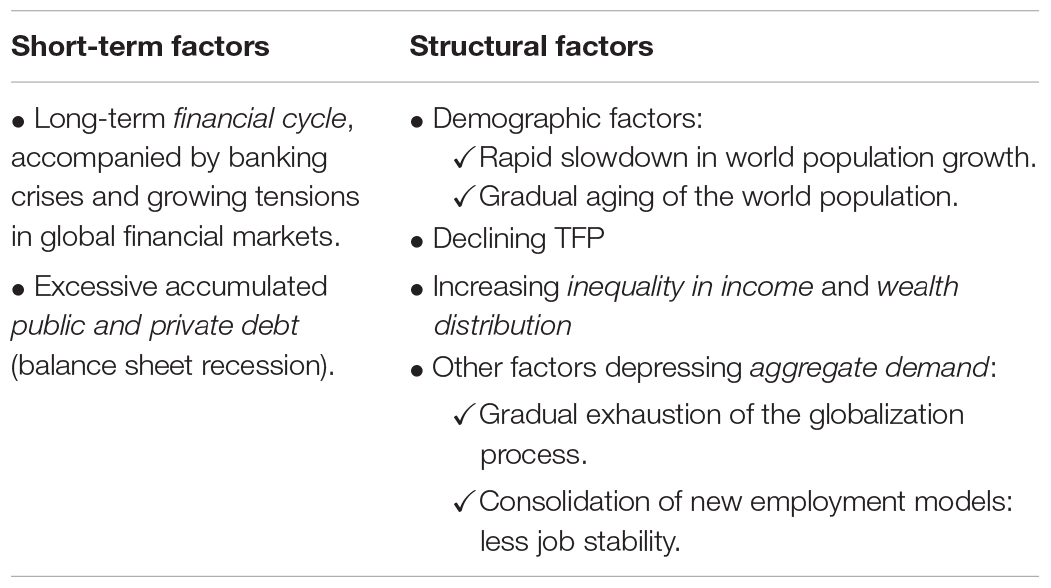
Structural unemployment is a type of unemployment caused by a mismatch between the skills and qualifications of job seekers and the requirements of available job positions. Unlike cyclical unemployment, which is directly related to the ups and downs of the business cycle, structural unemployment is more long-term and stems from fundamental shifts in the economy.
Credit: www.frontiersin.org
Causes of Structural Unemployment
There are several factors contributing to structural unemployment:
Technological advancements:
The automation and digitalization of industries often lead to a decreased demand for certain jobs that can be replaced by machines or computer programs.
Globalization:
The integration of world economies has resulted in outsourcing and offshoring, leading to job losses in certain industries in developed countries.
Changes in consumer preferences:
When consumer preferences shift, certain industries may decline, resulting in layoffs and unemployment for workers in those sectors.
Educational system:
Inadequate education and training programs may leave workers ill-equipped to meet the changing demands of the job market.
Credit: www.mdpi.com
Effects of Structural Unemployment
Structural unemployment has significant social and economic implications:
High unemployment rates:
Structural unemployment contributes to overall unemployment rates, causing economic distress and reduced productivity.
Income inequality:
The loss of jobs in specific industries can disproportionately affect certain groups, leading to increased income inequality.
Skills mismatch:
Workers may find it challenging to transition into new industries due to a lack of transferable skills, resulting in prolonged unemployment.
Social unrest:
Long-term unemployment can lead to social unrest and increased social welfare costs as individuals face financial hardships.
Solutions for Structural Unemployment
Addressing structural unemployment requires proactive measures to align the workforce with evolving labor market needs:
1. Education and Training Programs
Investing in educational programs that teach relevant skills and providing retraining opportunities for displaced workers can help bridge the skills gap.
2. Flexible Labor Markets
Implementing policies that promote labor market flexibility, such as reducing barriers to entry or encouraging entrepreneurship, can facilitate smoother transitions for job seekers.
3. Industry Collaboration
Encouraging collaboration between industries, educational institutions, and government bodies can ensure that education and training programs align with the demands of the job market.
4. Innovation and Research
Investing in research and development can promote innovation and create new job opportunities in emerging industries.
Addressing structural unemployment requires a multi-faceted approach that combines education, policy changes, and collaboration to ensure individuals are equipped with the necessary skills for available job positions. By adapting to the changing economic landscape, we can mitigate the adverse effects of structural unemployment and foster sustainable economic growth.
Investing in real estate options is a profitable way to make money in the real estate industry. By utilizing options contracts, investors have the right, but not the obligation, to buy or sell a property at a predetermined price within a specified timeframe, allowing them to profit from changes in property values.
We will explore how to make money with real estate options, including strategies such as leasing options, wholesale options, and fix-and-flip options. Additionally, we will highlight important considerations and risks involved in real estate option investing. Whether you’re a beginner or an experienced investor, understanding the ins and outs of real estate options can provide you with lucrative opportunities in the market.
Understanding Real Estate Options
What Are Real Estate Options?
A real estate option is a contract that gives the buyer the right, but not the obligation, to purchase or sell a property at a predetermined price within a specified period. This financial tool allows investors to control a property without owning it outright.
How Do Real Estate Options Work?
Real estate options work by the property owner granting the buyer the exclusive right to buy or sell the property at an agreed-upon price within a defined time frame. The buyer pays a fee, known as the option consideration, to secure the option agreement. If the buyer chooses to exercise the option, they can either purchase the property or sell the option to another investor for a profit.
Key Terms To Know In Real Estate Options
Option consideration: The payment made by the buyer to the seller for the right to purchase or sell the property.
Strike price: The price at which the buyer can buy or sell the property.
Expiration date: The deadline by which the option must be exercised.
Assignment: The transfer of the option from the original buyer to another party.
Finding Profitable Real Estate Opportunities
Finding Profitable Real Estate Opportunities
When it comes to making money through real estate options, finding profitable opportunities is crucial. You need to research the market, evaluate the profitability of potential properties, and negotiate deals with property owners. By following these strategies, you can maximize your chances of success in the real estate market.
Researching The Market And Identifying Potential Properties
Researching the market is essential to identify potential properties with high-profit potential. Utilize online databases to gather information on local real estate trends and market conditions. Look for areas experiencing growth and development to spot emerging opportunities. Once you’ve identified potential properties, conduct thorough financial analysis and due diligence to ensure their viability.
Evaluating The Profitability Of Real Estate Options
When evaluating the profitability of real estate options, consider factors such as location, market demand, property condition, and potential for value appreciation. Calculate the potential return on investment (ROI) and assess the long-term rental income or resale value. By conducting a comprehensive evaluation, you can make informed decisions about the profit potential of each property.
Negotiating Deals With Property Owners
Negotiation skills are vital in securing profitable real estate opportunities. Approach property owners with a clear understanding of market trends and the benefits of their property. Demonstrate your value as a potential buyer or investor and negotiate terms that are favorable for both parties. Establishing rapport and communicating effectively can lead to successful deals in the real estate market.
Executing Real Estate Option Contracts
Learn how to execute real estate option contracts and maximize your earnings in the lucrative world of real estate options. Discover strategies to make money and leverage your investments for a profitable outcome.
Drafting And Reviewing Option Contracts
Before executing a real estate option contract, it is crucial to draft and review the contract thoroughly to protect both parties involved. The contract should outline the terms and conditions of the option, including the purchase price, duration of the option period, and any specific clauses or contingencies.
During the drafting process, it is essential to clearly define the rights and obligations of the buyer and seller. This can include specifying the property details, such as the address and legal description, as well as any responsibilities regarding repairs, maintenance, or insurance.
Additionally, the contract should also address financing and payment terms, including whether the buyer will obtain a mortgage or if the option payment will be credited towards the purchase price. It is important to include a provision for dispute resolution or mediation in case any conflicts arise.
Reviewing the contract with a real estate attorney is highly recommended to ensure legal compliance and to minimize the risk of future disputes. They can provide valuable insights, identify any potential red flags, and address any concerns regarding the contract’s enforceability.
Common Pitfalls To Avoid When Executing Option Contracts
While executing an option contract, it is essential to steer clear of common pitfalls that can jeopardize your real estate investment. Being aware of these potential pitfalls can help you navigate the process smoothly and protect your interests.
1. Lack of clarity: One common pitfall is not having a clearly defined contract. A well-drafted and precisely-worded contract will help minimize misunderstandings and legal disputes. Ensure that the contract includes all essential terms and conditions, leaving no room for ambiguity.
2. Inadequate due diligence: Failing to conduct thorough due diligence on the property could result in unexpected issues or costs down the road. Take the time to research and gather all necessary information about the property, such as its current condition, any liens or encumbrances, zoning restrictions, and potential future development plans.
3. Ignoring legal requirements: Real estate transactions are subject to various legal requirements and regulations. Ignoring these legal obligations can lead to significant legal consequences. Make sure you comply with all relevant laws and regulations, including obtaining any necessary permits, licenses, or certifications.
4. Failure to communicate effectively: Clear communication is vital throughout the execution process. Ensure that both parties are on the same page regarding the terms of the option contract, expectations, and timelines. Regularly communicate with the other party, keeping them updated on any significant developments or changes.
5. Not seeking professional advice: Real estate transactions can be complex, and it is often worth seeking professional advice from experts such as real estate attorneys, accountants, or financial advisors. They can provide insights and guidance to help you make informed decisions and avoid costly mistakes.
By keeping these common pitfalls in mind and taking necessary precautions, you can increase the chances of executing a successful real estate option contract, minimizing risks, and maximizing the potential for profit.
Strategies For Maximizing Profits
Discover effective strategies to maximize your profits through real estate options. Learn how to make money by leveraging the power of real estate investments and capitalize on market opportunities for lucrative returns.
Flipping Properties With Real Estate Options
Making money through real estate options is an enticing prospect for both seasoned investors and newcomers to the industry. One particularly lucrative strategy for maximizing profits is to flip properties using real estate options. Flipping involves purchasing a property at a discounted price through an option contract and then quickly reselling it at a higher price.
This strategy allows investors to capitalize on market fluctuations and potentially generate substantial returns in a relatively short period. By leveraging real estate options, investors can secure attractive properties with minimal capital investment. This method suits those who enjoy the thrill of closing deals swiftly and turning a handsome profit.
Renting Or Leasing Properties Acquired Through Options
An alternative strategy for maximizing profits with real estate options is to acquire properties and then rent or lease them out. This approach allows investors to generate consistent streams of income in the form of rental payments. By holding onto properties acquired through options, investors can benefit from potential appreciation over time while generating passive income.
Moreover, renting or leasing properties provides a sense of stability, as this passive income can serve as a reliable source of cash flow. By carefully selecting properties in high-demand areas and ensuring that rental rates align with market values, investors can optimize their returns and potentially build long-term wealth.
Using Real Estate Options To Acquire Properties For Development
For those looking to take on more ambitious projects, using real estate options to acquire properties for development can be a highly profitable strategy. Developers can leverage options to secure parcels of land or existing properties at a predetermined price, allowing them to initiate development plans without significant upfront costs.
Benefits of using real estate options for development:
– Reduced financial risk by locking in prices
– Flexibility to pursue development when market conditions are favorable
– Potential for substantial gains through value appreciation
By utilizing real estate options to acquire properties for development, investors can strategically time their projects to maximize profitability. This strategy is particularly suitable for individuals with expertise in construction and development, as it allows them to leverage their skills and market knowledge to generate significant returns.
Frequently Asked Questions On How Make Money Real Estate Options
What Is The Most Profitable Type Of Real Estate?
Residential real estate, such as housing units and apartments, is often the most profitable type. Its demand remains steady, ensuring a continuous stream of potential buyers or renters, which contributes to high returns and long-term growth.
What Is The Best Way To Make Money Buying Real Estate?
The best way to make money buying real estate is by investing in properties with high potential for appreciation and rental income. Focus on location, market demand, and property condition. Buy at a good price, maintain the property, and consider leasing or selling for maximum profit.
How Do Real Estate Options Work?
Real estate options allow you to buy or sell a property at a later date with a predetermined price. It gives you the right, but not the obligation, to proceed with the transaction. This allows flexibility and can be beneficial when market conditions are uncertain.
Conclusion
Real estate options can provide a lucrative opportunity to make money. By leveraging your knowledge, research, and negotiation skills, you can tap into a profitable market and generate a steady stream of income. With careful planning and strategic decision-making, real estate options offer the potential for financial growth and success.
Start exploring this investment avenue and unlock the doors to a profitable future in real estate.
Hot money, also known as speculative capital or short-term capital, refers to funds that are quickly moved between financial markets to seek maximum returns. In this article, we will explore the concept of hot money, its impact on economies, and strategies for managing it.
https://www.youtube.com/watch?v=-8UQZwH1PDs
The Nature of Hot Money
Hot money typically flows into countries or markets with higher interest rates or expected currency appreciation. Unlike long-term investments aimed at supporting sustainable economic growth, hot money seeks short-term profit opportunities by exploiting interest rate differentials and exchange rate fluctuations.
It flows quickly into an economy to take advantage of favorable conditions and can just as swiftly exit when conditions change. The speed of movement makes it highly volatile and poses risks to financial stability.
Credit: www.netflix.com
Credit: www.amazon.com
The Impact of Hot Money
The inflow of hot money can bring short-term benefits, such as increased liquidity and temporary currency appreciation. However, it also poses significant risks:
Market Instability: Large inflows and outflows of hot money can disrupt financial markets, leading to increased volatility and the potential for asset bubbles.
Exchange Rate Volatility: Hot money flows can cause abrupt currency fluctuations, making it challenging for policymakers to maintain exchange rate stability.
Vulnerability to External Factors: Countries heavily reliant on hot money are susceptible to external shocks, such as changes in global financial conditions or investor sentiment.
Managing Hot Money
While completely controlling hot money flows is difficult, policymakers implement various strategies to mitigate its risks:
1. Macroprudential Measures
Macroprudential measures aim to strengthen the resilience of financial systems, including:
Tightening capital controls or implementing transaction taxes to limit speculative capital inflows.
Requiring higher reserve ratios for banks to ensure adequate liquidity buffers.
Implementing counter-cyclical capital buffers to prevent excessive lending during boom periods.
2. Monetary Policy Adjustments
Central banks use monetary policy to stabilize hot money flows:
Raising interest rates to attract inflows and prevent excessive credit growth.
Intervening in the foreign exchange market to influence currency appreciation or depreciation.
3. Strengthening Economic Fundamentals
Enhancing economic fundamentals helps reduce vulnerability to hot money:
Promoting stable fiscal policies and maintaining sound macroeconomic management.
Implementing structural reforms to enhance productivity and attract long-term investments.
4. Coordination And Cooperation
International cooperation can facilitate better management of hot money:
Sharing information and best practices among countries to harmonize regulatory approaches.
Coordinating policies to minimize the spillover effects of hot money flows.
Collaborating on efforts to strengthen global financial stability.
Conclusion
Hot money plays a significant role in global financial markets, but its volatile nature poses risks to economies. By implementing effective measures, policymakers can better manage and mitigate these risks. Macroprudential measures, monetary policy adjustments, strengthening economic fundamentals, and international cooperation all have a role to play in ensuring financial stability in the face of hot money flows.
The Nikkei Index, also known as the Nikkei 225 or the Nikkei Stock Average, is a stock market index representing the performance of the Tokyo Stock Exchange (TSE). Created in 1950, it is one of the most widely recognized and followed stock market indices in Japan and around the world. In this article, we will explore what the Nikkei Index is, how it is calculated, and why it is significant.
What is the Nikkei Index?
The Nikkei Index is composed of 225 of the most liquid and actively traded blue-chip stocks on the TSE. These stocks represent a wide range of industries, including technology, automotive, manufacturing, finance, and more. The index is market capitalization-weighted, which means that the larger the company, the more influence it has on the index’s movement.
How Is The Nikkei Index Calculated?
The Nikkei Index is calculated using a relatively simple formula. It is a price-weighted index, which means that the stock prices of the included companies are the main factor in the calculation. The formula used to calculate the index is as follows:
Step
Description
Step 1
Add up the closing prices of the 225 component stocks
Step 2
Divide the total by the Dow divisor
Step 3
Adjust for stock splits, spin-offs, and other corporate actions
The Dow divisor is a number that is adjusted from time to time to compensate for changes in the component stocks.
Why is the Nikkei Index significant?
The Nikkei Index is significant for several reasons. Firstly, it is considered a barometer of the Japanese economy. As one of the world’s largest economies, changes in the Nikkei Index can indicate broader trends in the country’s financial health.
Secondly, the Nikkei Index is closely followed by traders, investors, and analysts around the world. Movements in the index can have a significant impact on market sentiment and investment decisions.
Finally, the Nikkei Index is a useful tool for diversification. By including a wide range of industries and companies, it provides a snapshot of the performance of the Japanese stock market as a whole. This allows investors to assess the overall health and stability of the market and make informed investment choices.
Notable Events in Nikkei Index History
In 1989, the Nikkei Index reached its all-time high of 38,915 points, fueled by a speculative bubble in the Japanese economy.
During the global financial crisis in 2008, the Nikkei Index experienced a sharp decline, reaching its lowest point in over 26 years.
In recent years, the Nikkei Index has been influenced by factors such as economic policies, global trade tensions, and the impact of the COVID-19 pandemic.
In conclusion, the Nikkei Index is a widely recognized stock market index that represents the performance of the Tokyo Stock Exchange. It is calculated using a price-weighted formula and consists of 225 component stocks. The index is significant for its role in the Japanese economy, its influence on market sentiment, and its utility as a diversification tool for investors. Understanding the Nikkei Index is essential for anyone interested in Japanese stocks and the broader financial landscape.
Frequently Asked Questions For Nikkei Index
What Is The Nikkei Index?
The Nikkei Index, also known as the Nikkei 225, is a stock market index that measures the performance of the top 225 companies listed on the Tokyo Stock Exchange.
How Is The Nikkei Index Calculated?
The Nikkei Index is calculated using a price-weighted average, where the stock prices of the 225 component companies are multiplied by a certain divisor to determine the index value.
Why Is The Nikkei Index Important?
The Nikkei Index is an important indicator of the Japanese stock market’s overall performance and investor sentiment. It is often used by analysts and investors to assess the health of the Japanese economy.
Which Companies Are Included In The Nikkei Index?
The Nikkei Index includes a wide range of companies across various sectors, such as manufacturing, finance, technology, and retail. Some notable companies in the index include Toyota, Sony, and SoftBank.