Author: MMP

  • Credit Card Debt Forgiveness

    Credit Card Debt Forgiveness

    Credit card debt forgiveness allows individuals to eliminate or reduce their outstanding credit card balances. We will explore the concept of credit card debt forgiveness, including how it works, the options available, and the potential benefits and drawbacks.

    We will also provide some tips for managing credit card debts effectively and avoiding the need for forgiveness in the future. Whether you are struggling with overwhelming credit card debt or simply want to gain a better understanding of this debt relief option, this article aims to provide you with the information you need to make informed decisions about your financial situation.

    Let’s dive in.

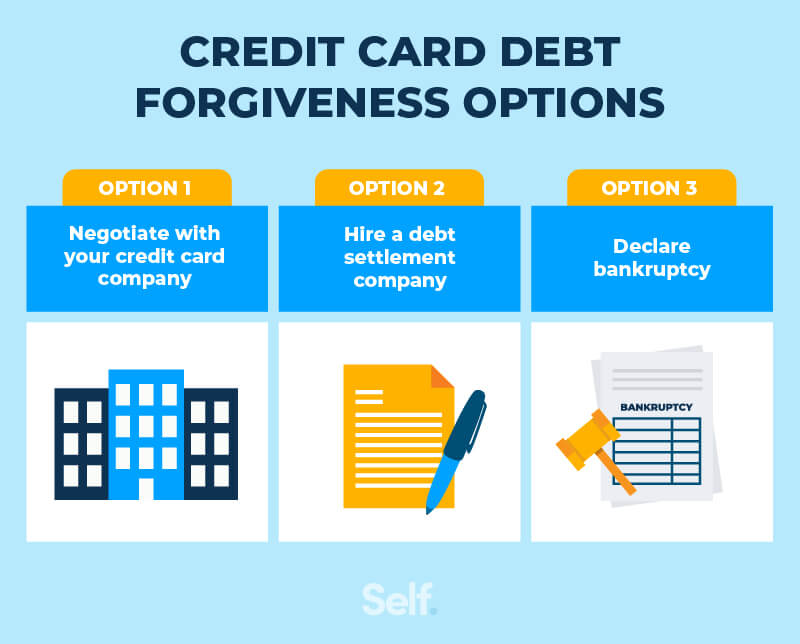
    Credit Card Debt Forgiveness

    Credit: www.budgetingfaithfully.com

    Understanding Credit Card Debt Forgiveness

    When it comes to managing credit card debt, many people find themselves overwhelmed with high interest rates and mounting balances. This is where credit card debt forgiveness can come to the rescue. If you are burdened with credit card debt that seems impossible to repay, understanding how credit card debt forgiveness works can provide you with a potential solution to your financial woes.

    How Does Credit Card Debt Forgiveness Work?

    Credit card debt forgiveness, also known as debt settlement, is a process that allows you to negotiate with your credit card company to reduce the total amount you owe. Instead of paying off the full balance, you can settle for a reduced lump sum payment or a manageable payment plan that is more affordable for you.

    The process typically involves contacting your credit card company or working with a debt settlement agency to negotiate the terms of your debt forgiveness. This negotiation can result in a reduction of the principal balance, the elimination of interest and fees, or even a combination of both. It is important to note that credit card debt forgiveness is not guaranteed and depends on the willingness of your credit card company to negotiate.

    While credit card debt forgiveness can offer relief from burdensome debt, it is important to consider the potential consequences. In some cases, settling your debt for a lesser amount may have a negative impact on your credit score. It is crucial to weigh the benefits against the potential downsides and consult with a financial advisor or credit counselor to determine the best course of action for your specific situation.

    Benefits Of Credit Card Debt Forgiveness

    There are several key benefits to credit card debt forgiveness:

    • Debt Reduction: The primary benefit of credit card debt forgiveness is the significant reduction in the amount you owe. This can provide immediate relief and a clear path towards financial freedom.
    • Lower Monthly Payments: By negotiating a settlement or a favorable payment plan, your monthly payments can become more manageable, enabling you to regain control of your finances.
    • Elimination of Fees: Credit card debt forgiveness may also involve the elimination of accumulated late fees and penalties, reducing the overall burden of your debt.
    • Quicker Debt Repayment: With a reduced balance and potentially eliminated interest charges, you can pay off your debt sooner, freeing up resources for other financial goals.

    Remember, credit card debt forgiveness is just one potential solution for managing overwhelming debt. It is essential to carefully consider your options and seek professional guidance to determine the best approach for your financial situation.

    Qualifying For Credit Card Debt Forgiveness

    If you find yourself drowning in credit card debt, you may be feeling overwhelmed and wondering if there is a way out. The good news is that credit card debt forgiveness is a possibility for those who meet certain qualifications. In this article, we will explore the criteria for qualifying for credit card debt forgiveness, including financial hardship and the option of working with debt settlement companies.

    Financial Hardship

    To be eligible for credit card debt forgiveness, you typically need to demonstrate a significant level of financial hardship. This means showing that you are experiencing difficulties meeting your financial obligations due to circumstances beyond your control. Financial hardship can arise from various situations such as job loss, unexpected medical expenses, divorce, or a decrease in income.

    When requesting credit card debt forgiveness based on financial hardship, it is important to provide supporting documentation. This can include termination letters, medical bills, divorce decrees, or documentation of income reduction. The more evidence you can provide to substantiate your claim of financial hardship, the stronger your case for debt forgiveness.

    Working With Debt Settlement Companies

    Another avenue to explore when seeking credit card debt forgiveness is working with debt settlement companies. These companies specialize in negotiating with creditors on your behalf to reduce the amount of debt you owe. Debt settlement companies have experience dealing with credit card companies and can often negotiate lower interest rates and reduced balances.

    Before partnering with a debt settlement company, it is crucial to do your research. Look for reputable companies with positive reviews and a track record of success. Be cautious of companies that promise quick fixes or guarantee debt forgiveness, as these claims may be unrealistic or even fraudulent.

    When working with a debt settlement company, they will typically require you to make regular payments into an escrow account. These funds will be used to negotiate settlements with your creditors. While debt settlement can be an effective solution for some, it is important to be aware that it may have negative impacts on your credit score and should be carefully considered before proceeding.

    In conclusion, if you are struggling with credit card debt, credit card debt forgiveness may be a viable option. By demonstrating financial hardship and considering the possibility of working with a reputable debt settlement company, you can take steps towards regaining control of your financial situation.

    The Process Of Credit Card Debt Forgiveness

    Are you struggling to manage your credit card debt? It can be overwhelming and financially draining. However, there is a way out – credit card debt forgiveness. This process allows you to negotiate with your creditors and potentially reduce or eliminate a portion of your debt. In this article, we will explore the step-by-step process of credit card debt forgiveness to help you regain control of your financial situation.

    Assessing Your Debt

    Before you can begin the credit card debt forgiveness process, you need to assess your debt situation. Start by gathering all your credit card statements and making a list of the outstanding balances, interest rates, and minimum monthly payments for each card. This will give you a clear picture of the amount of debt you need to address.

    Next, calculate your total monthly income and expenses. This will help you determine how much you can afford to pay towards your credit card debt each month. It’s important to be realistic and create a budget that allows for both debt repayment and essential living expenses.

    Additionally, consider factors such as missed payments, late fees, and accrued interest. These can significantly impact your debt amount and may need to be factored into your negotiation strategy.

    Negotiating With Creditors

    Once you have a firm grasp on your debt situation, it’s time to negotiate with your creditors. Reach out to each credit card company and explain your financial hardship. Be prepared to provide documentation to support your claims, such as pay stubs or medical bills, if applicable.

    During the negotiation process, express your willingness to work towards a resolution. Credit card companies are often open to negotiations as they prefer to receive some payment rather than none at all. Offer to pay a reduced lump sum or propose a new payment plan with lower interest rates or extended terms.

    Remember to stay calm and maintain open lines of communication with your creditors. Be persistent and patient, as the negotiation process can take time. Keep detailed records of phone conversations, emails, and any agreements reached to ensure a smooth resolution.

    If negotiating with your creditors proves challenging or unproductive, consider seeking assistance from a reputable credit counseling agency. They can provide expert advice and guidance to help you navigate the debt forgiveness process.

    In conclusion, the process of credit card debt forgiveness begins with assessing your debt and creating a realistic budget. Then, you can negotiate with your creditors to reduce or eliminate a portion of your debt. By following these steps and seeking professional assistance if needed, you can alleviate the burden of credit card debt and regain control of your financial future.
    Credit Card Debt Forgiveness

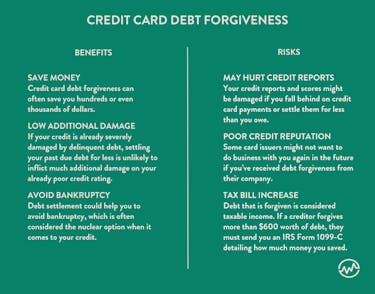
    Credit: wealthfit.com

    Impact Of Credit Card Debt Forgiveness

    Understanding the impact of credit card debt forgiveness is crucial for anyone struggling with overwhelming financial burdens. While the prospect of having your credit card debt forgiven may seem like a relief, it’s important to consider the potential consequences that come along with it. In this article, we will explore two key aspects of credit card debt forgiveness: its effects on your credit score and the legal ramifications.

    Effects On Credit Score

    Your credit score is a significant factor in determining your financial health and access to future credit opportunities. With credit card debt forgiveness, there can be both positive and negative implications for your credit score.

    On one hand, having your credit card debt forgiven can alleviate a significant financial burden, allowing you to regain control over your finances. This newfound relief can potentially lead to improved financial management and prompt bill payments, positively impacting your credit score in the long run.

    On the other hand, credit card debt forgiveness may have an initial negative impact on your credit score. When a debt is forgiven, it may be reported to credit bureaus as “settled” or “charged-off,” which can lower your credit score temporarily. It is important to note that this negative impact may vary depending on the specific reporting practices of the credit card issuer and how they classify the forgiven debt.

    Despite the potential short-term impact, it is essential to focus on rebuilding your credit score after credit card debt forgiveness. By establishing responsible financial habits, such as making timely payments and keeping credit utilization low, you can gradually improve your creditworthiness over time.

    Legal Ramifications

    While credit card debt forgiveness offers relief from financial stress, it is crucial to understand the legal ramifications associated with this process.

    When seeking credit card debt forgiveness options, it is essential to work with reputable organizations and understand the specific terms and conditions involved. Engaging with fraudulent or unethical debt relief companies can lead to severe consequences, including scams, collection lawsuits, and further financial distress.

    Credit card debt forgiveness may also have potential tax implications. In some cases, forgiven debt can be considered taxable income, leading to additional financial obligations. It is advisable to consult with a qualified tax professional to understand the potential tax consequences specific to your situation.

    By remaining vigilant and informed about the legal aspects of credit card debt forgiveness, you can navigate the process while safeguarding your financial well-being.
    Credit Card Debt Forgiveness

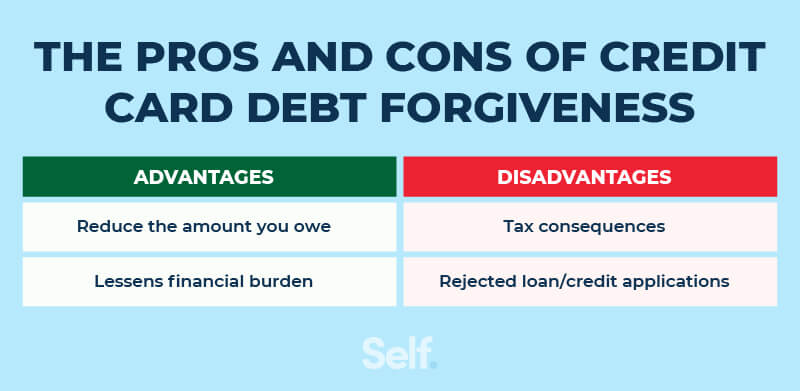
    Credit: www.self.inc

    Frequently Asked Questions On Credit Card Debt Forgiveness

    Can Credit Card Debt Really Be Forgiven?

    Yes, credit card debt can be forgiven.

    How Can I Legally Get Rid Of My Credit Card Debt?

    To legally eliminate your credit card debt, you have a few options: negotiating with creditors for lower payments, enrolling in a debt management plan, filing for bankruptcy, or working with a credit counseling agency. Consider consulting a financial advisor to determine the best course of action for your specific situation.

    How Do I Get My Credit Card Debt Written Off?

    To get your credit card debt written off, you can negotiate with your credit card provider for debt settlement or explore debt consolidation options. Seek professional advice from credit counseling services to help consolidate and negotiate your debts. Be aware of debt relief scams and keep up with your payments to avoid damaging your credit score.

    Is There A Government Credit Card Debt Relief Program?

    Yes, there are government credit card debt relief programs available. They provide assistance in reducing or eliminating credit card debt for qualified individuals. These programs aim to provide financial relief and help individuals regain control of their finances.

    Conclusion

    Credit card debt forgiveness can provide much-needed relief to individuals struggling with overwhelming financial burdens. By taking advantage of debt forgiveness programs, you can potentially have a portion of your debt waived or reduced, allowing you to regain control of your finances.

    However, it is essential to fully understand the terms and conditions of these programs, as they may have implications for your credit score. Seeking professional advice and exploring all available options is crucial in your journey towards financial freedom.

  • Idiosyncratic Risk

    Idiosyncratic Risk

    Idiosyncratic risk, also referred to as unsystematic risk, is an essential concept in the world of finance. It plays a vital role in understanding investment strategies and evaluating the potential risks associated with individual securities or assets. In this article, we will delve deeper into the intricacies of idiosyncratic risk, why it matters, and how it can impact investment decisions.

    Defining Idiosyncratic Risk

    In simple terms, idiosyncratic risk refers to the risks that are unique to a particular asset or security and cannot be diversified away through a well-diversified portfolio. Unlike systematic risk, which affects the entire market, idiosyncratic risk only impacts specific companies, industries, or sectors, making it a more localized form of risk.

    Idiosyncratic risk arises due to factors that are specific to individual companies, such as management decisions, industry-specific regulations, competitive advantages, customer base, or even natural disasters. These factors introduce uncertainty and potential volatility into the value and performance of a particular investment.

    Understanding the Impact of Idiosyncratic Risk

    Idiosyncratic risk can have both positive and negative impacts on investment returns. On one hand, positive idiosyncratic events, such as successful product launches, mergers and acquisitions, or favorable regulatory changes, can lead to above-average returns for investors who hold the related securities. On the other hand, negative idiosyncratic events, such as earnings disappointments, lawsuits, or unexpected industry downturns, can result in significant losses.

    For investors, idiosyncratic risk becomes a crucial consideration when building a diversified portfolio. By diversifying investments across different asset classes, sectors, and geographies, investors aim to reduce idiosyncratic risk. This diversification strategy helps to minimize the potential impact of any single company’s poor performance on the overall portfolio.

    However, it is important to note that not all idiosyncratic risk can be eliminated through diversification alone. Some factors, such as macroeconomic events or shifts in investor sentiment, can impact a broad range of companies and exert systemic pressures on the market. These systematic risks are beyond the control of individual investors.

    Evaluating Idiosyncratic Risk

    Accurately evaluating idiosyncratic risk requires a comprehensive analysis of various factors that can affect a particular investment. Some key methods and tools used to evaluate idiosyncratic risk include:

    • Financial Statements Analysis: Examining a company’s financial statements, including its income statement, balance sheet, and cash flow statement, can provide insights into its financial health and potential idiosyncratic risks.
    • Industry Analysis: Understanding the specific industry dynamics, such as competition, regulatory environment, and technological advancements, can help assess idiosyncratic risks associated with that industry.
    • Management Assessment: Evaluating the competence and decision-making abilities of a company’s management team can give insights into the potential idiosyncratic risks stemming from their actions or strategic direction.
    • External Factors Evaluation: Considering external factors such as geopolitical events, macroeconomic conditions, or changes in consumer preferences can help identify idiosyncratic risks that may not be directly related to the company’s operations.

    By utilizing these evaluation methods, investors can gain a better understanding of the idiosyncratic risks associated with potential investments, enabling them to make more informed decisions.

    Managing Idiosyncratic Risk

    While it may not be possible to completely eliminate idiosyncratic risk, there are several strategies investors can employ to manage and mitigate its impact on their portfolios:

    • Diversification: As mentioned earlier, diversifying holdings across different asset classes, sectors, and geographies can help reduce the impact of idiosyncratic risk. This strategy ensures that losses from one investment are potentially offset by gains in others.
    • Thorough Research: Conducting extensive research and analysis before making investment decisions can help identify potential idiosyncratic risks. This includes analyzing financial data, industry trends, competitors, and any other relevant factors.
    • Hedging: Implementing hedging strategies, such as options or futures contracts, can provide a level of protection against adverse idiosyncratic events. These strategies help minimize potential losses when specific risks materialize.
    • Regular Monitoring: Continuously monitoring investments and staying updated on company news, industry developments, and market conditions allows investors to react promptly to idiosyncratic events that may affect their holdings.

    By incorporating these risk management strategies, investors can effectively navigate the uncertainties associated with idiosyncratic risks.

    Frequently Asked Questions Of Idiosyncratic Risk

    What Is Idiosyncratic Risk?

    Idiosyncratic risk refers to the uncertainty that is unique to a particular company or investment, and cannot be diversified away.

    How Does Idiosyncratic Risk Differ From Systematic Risk?

    Idiosyncratic risk is specific to an individual investment, while systematic risk affects the entire market.

    Why Is Idiosyncratic Risk Important For Investors?

    Understanding idiosyncratic risk helps investors assess the potential volatility and performance of specific investments.

    How Can Investors Measure Idiosyncratic Risk?

    Idiosyncratic risk can be measured using statistical tools such as the standard deviation of returns or beta coefficients.

    Conclusion

    Idiosyncratic risk poses unique challenges and opportunities for investors. While it can lead to unexpected losses, it can also present opportunities for above-average returns. Understanding the concept of idiosyncratic risk, its impact on investment returns, and the strategies to manage it is essential for successful investing. By employing sound risk management techniques and conducting thorough research, investors can effectively navigate the complexities of idiosyncratic risk and make informed investment decisions.

  • The Benefits of Wealthtech

    In recent years, the financial landscape has witnessed a revolutionary transformation with the rise of wealthtech, bringing about a myriad of advantages for both individuals and financial institutions. This technological evolution has not only democratized access to financial tools but has also paved the way for a more inclusive, efficient, and innovative financial system. Let’s delve into the key advantages that wealthtech brings to the table.

    For Individuals:

    1. Democratization of Investment:

    Wealthtech has broken down barriers, democratizing access to investment opportunities. Robo-advisors and micro-investing platforms empower individuals to embark on their investment journey with minimal amounts, making wealth accumulation more attainable.

    Example: John, a young professional, starts investing with just $100 through a user-friendly robo-advisor, diversifying his portfolio effortlessly.

    2. Personalized Financial Management:

    Utilizing cutting-edge algorithms and big data, wealthtech tools offer personalized financial insights. These insights, tailored to individual needs and goals, empower users to make informed decisions, thereby enhancing their overall financial management.

    Example: Maria receives tailored investment recommendations based on her risk tolerance, financial goals, and preferences, optimizing her portfolio for long-term growth.

    3. Convenience and Automation:

    Wealthtech platforms streamline financial tasks, from portfolio management to budgeting and bill payments. The convenience and automation provided by these platforms free up valuable time for users, reducing stress and allowing them to focus on other aspects of their lives.

    Example: David sets up automatic transfers to his investment account and receives real-time updates on his portfolio, simplifying his financial management.

    4. Lower Costs:

    Compared to traditional financial services, wealthtech solutions often come with lower fees and minimum investment requirements. This affordability makes them accessible to a broader audience, especially younger investors or those with smaller portfolios.

    Example: Sarah, a college student, benefits from a robo-advisor’s low fees, enabling her to invest with a limited budget and start building her wealth.

    5. Increased Engagement and Education:

    Wealthtech platforms go beyond transactions; they offer educational resources and interactive tools. These resources help users enhance their financial literacy, understand investment strategies, and stay informed about market trends.

    Example: Mark explores educational content on a wealthtech platform, gaining insights that empower him to make informed investment decisions.

    For Financial Institutions:

    1. Improved Efficiency and Scalability:

    Wealthtech solutions automate manual tasks and streamline workflows, resulting in reduced operational costs and increased efficiency for financial institutions. This efficiency allows them to serve a larger client base and scale their operations effectively.

    Example: XYZ Bank implements a wealthtech solution, automating client onboarding processes and reducing administrative overhead.

    2. Enhanced Client Engagement and Retention:

    By providing personalized services and engaging experiences, wealthtech platforms strengthen the bond between financial institutions and their clients. This enhanced engagement leads to higher client satisfaction, retention, and loyalty.

    Example: A financial advisory firm uses a wealthtech platform to offer personalized financial plans, increasing client satisfaction and loyalty.

    3. Expanding Market Reach:

    Wealthtech facilitates the expansion of financial institutions’ market reach by attracting younger generations and tech-savvy individuals who prefer digital solutions. This broadens their client base and opens up new revenue streams.

    Example: A traditional bank launches a mobile wealth management app, attracting a younger demographic and expanding its market presence.

    4. Data-Driven Insights and Decision Making:

    Wealthtech platforms generate valuable data about client behavior, market trends, and investment preferences. Financial institutions can leverage this data to enhance product offerings, personalize services, and make informed, data-driven decisions for strategic growth.

    Example: An investment firm analyzes client data to identify emerging investment trends, informing the development of new financial products.

    5. Innovation and Competitive Advantage:

    Embracing wealthtech positions financial institutions as innovators, allowing them to offer cutting-edge solutions that set them apart from competitors. This innovative approach strengthens their market position and attracts new clients.

    Example: A forward-thinking bank introduces AI-driven investment advisory services, gaining a competitive edge and attracting tech-savvy clients.

    Conclusion:

    The benefits of wealthtech extend far beyond convenience; they represent a paradigm shift in the financial landscape. As individuals enjoy personalized financial management and lower costs, financial institutions are reaping the rewards of enhanced efficiency, expanded market reach, and data-driven innovation.

  • What is Wealthtech?

    Wealthtech refers to the use of technology to enhance and automate wealth management and financial planning services. Wealthtech utilizes software, algorithms, and digital platforms to provide personalized investment advice, portfolio management, and financial goal tracking for clients.

    In today’s digital age, traditional wealth management services are being disrupted by the emergence of wealthtech. With the help of advanced technology, wealthtech platforms can offer cost-effective and convenient solutions to individuals and businesses seeking financial planning services. These platforms utilize algorithms and artificial intelligence to analyze financial data and provide customized investment strategies.

    By leveraging technology, wealthtech aims to democratize access to quality financial advice and empower individuals to make informed investment decisions. This has made wealth management more accessible, efficient, and transparent than ever before.

    The Rise Of Wealthtech

    The wealth management industry has witnessed a significant transformation in recent years, thanks to the emergence of Wealthtech. This term refers to the use of technology and innovative solutions to enhance the provision of wealth management services. Wealthtech is all about leveraging advanced digital tools to streamline processes, optimize investment strategies, and facilitate better client experiences.

    Various factors have contributed to the rapid growth of Wealthtech. One such factor is the increasing demand for personalized and digitalized financial solutions. Clients now expect easy access to their financial information and investment options from anywhere at any time. Wealthtech platforms enable financial advisors to meet these expectations and deliver tailored advice efficiently, leading to improved client satisfaction and retention.

    Additionally, regulatory changes and cost pressures have also played a crucial role in driving the adoption of Wealthtech. New regulations have increased transparency and compliance requirements, making it essential for wealth management firms to leverage technology to stay compliant. Furthermore, the automation and digitization of processes provided by Wealthtech solutions have helped firms reduce costs and increase operational efficiency.

    In conclusion, Wealthtech is revolutionizing the wealth management industry, enabling financial institutions to provide superior services while meeting evolving client needs, regulatory demands, and cost constraints.

    Benefits Of Wealthtech

    The rise of wealthtech has revolutionized the financial landscape, offering a plethora of benefits for both individuals and financial institutions. Let’s dive into some of the key advantages:

    For Individuals:

    • Democratization of Investment: Wealthtech democratizes access to investment opportunities that were previously out of reach for many. Robo-advisors and micro-investing platforms allow individuals to start investing with small amounts, making it easier to build wealth over time.
    • Personalized Financial Management: Wealthtech tools utilize algorithms and big data to provide personalized financial insights and recommendations tailored to individual needs, goals, and risk tolerance. This empowers users to make informed investment decisions and manage their finances effectively.
    • Convenience and Automation: Wealthtech platforms offer convenient and automated solutions for tasks like portfolio management, budgeting, and bill payments. This frees up time and reduces stress for users, allowing them to focus on other aspects of their lives.
    • Lower Costs: Wealthtech solutions often come with lower fees and minimum investment requirements compared to traditional financial services. This makes them more accessible and cost-effective, especially for younger investors or those with smaller portfolios.
    • Increased Engagement and Education: Wealthtech platforms provide educational resources and interactive tools that help users learn about financial concepts, investment strategies, and market trends. This fosters financial literacy and encourages more informed decision-making.

    For Financial Institutions:

    • Improved Efficiency and Scalability: Wealthtech solutions automate manual tasks and streamline workflows, reducing operational costs and increasing efficiency for financial institutions. This allows them to serve more clients and scale their operations effectively.
    • Enhanced Client Engagement and Retention: By providing personalized services, convenient tools, and engaging experiences, wealthtech platforms help financial institutions build stronger relationships with their clients and increase customer satisfaction. This leads to higher client retention and loyalty.
    • Expanding Market Reach: Wealthtech can help financial institutions reach new client segments, particularly younger generations and tech-savvy individuals who prefer digital solutions. This opens up new revenue streams and fosters market expansion.
    • Data-Driven Insights and Decision Making: Wealthtech platforms generate valuable data about client behavior, market trends, and investment preferences. This information can be used to improve product offerings, personalize services, and make data-driven decisions for strategic growth.
    • Innovation and Competitive Advantage: Embracing wealthtech allows financial institutions to stay ahead of the curve and offer innovative solutions that differentiate them from their competitors. This strengthens their market position and attracts new clients.

    Overall, the benefits of wealthtech go beyond mere convenience. It’s about democratizing access to financial tools, fostering informed decision-making, and creating a more inclusive and efficient financial system for everyone.

    Key Technologies In Wealthtech

    Wealthtech refers to the use of technology and digital platforms to provide financial services and solutions to individuals and businesses. Key technologies in wealthtech include robo-advisory services, artificial intelligence and machine learning, and data analytics and insights.

    Key Technologies Shaping the Future of Wealthtech:

    1. Artificial Intelligence (AI):

    • Robo-advisors: AI-powered platforms provide automated investment management based on client goals and risk tolerance.
    • Algorithmic trading: AI analyzes vast data sets to generate investment recommendations and execute trades autonomously.
    • Chatbots & virtual assistants: AI-powered tools offer personalized financial advice, answer client questions, and automate tasks.
    • Fraud detection & risk management: AI helps identify suspicious activity and protect client assets.

    2. Big Data & Analytics:

    • Personalized financial insights: Analytics tools utilize client data to personalize investment recommendations, financial planning, and product offerings.
    • Market prediction & portfolio optimization: Advanced analytics helps forecast market trends and build optimal investment portfolios based on individual needs.
    • Client segmentation & targeting: Data analysis enables wealth managers to tailor their services and marketing to specific client segments.
    • Risk analysis & portfolio stress testing: Data-driven models estimate potential risks and future performance of investments.

    3. Blockchain & Digital Assets:

    • Fractional ownership & democratization of assets: Blockchain enables fractional ownership of previously illiquid assets like real estate or artwork, making them accessible to a wider investor base.
    • Secure transactions & recordkeeping: Blockchain provides a secure and transparent platform for recording and managing investment transactions.
    • Decentralized finance (DeFi): Blockchain-based financial applications offer alternative options for lending, borrowing, and earning interest on investments.
    • Tokenization of assets: Converting traditional assets into digital tokens opens up new avenues for investment and liquidity.

    4. Cloud Computing & APIs:

    • Scalability & accessibility: Cloud platforms offer scalable and flexible infrastructure for wealthtech applications, enabling them to cater to larger user bases and adapt to changing needs.
    • Integrations & open banking: APIs facilitate seamless integration between different wealthtech tools and services, providing a more holistic view of financial data.
    • Cost-effectiveness & efficiency: Cloud-based solutions offer cost-effective alternatives to traditional on-premise infrastructure, increasing efficiency and flexibility.
    • Mobility & accessibility: Cloud-based wealthtech platforms can be accessed from anywhere, anytime, through mobile devices and web browsers.

    5. Cybersecurity & Data Privacy:

    • Protecting client data: Robust cybersecurity measures are essential for safeguarding sensitive financial information and preventing cyberattacks.
    • Regulatory compliance: Wealthtech companies must adhere to stringent data privacy regulations and user consent requirements.
    • Building trust & transparency: Clear communication and transparency about data practices are crucial for building trust with clients.
    • Biometric authentication & secure storage: Advanced security measures like biometric authentication and secure data storage enhance client protection.

    Bonus:

    • Natural Language Processing (NLP): Analyzing textual data to understand client sentiment, financial goals, and risk tolerance.
    • Augmented Reality (AR) & Virtual Reality (VR): Immersive experiences for financial planning, market visualization, and virtual property tours.
    • Internet of Things (IoT): Integrating financial data with smart devices for personalized financial insights and automated portfolio adjustments.

    By embracing these advancements, wealthtech companies can offer more personalized, efficient, and secure financial services, democratize access to investment opportunities, and ultimately transform the way people manage their wealth.

    Challenges And Risks In Wealthtech

    Challenges and risks in Wealthtech include concerns over data privacy and security as well as regulatory compliance.

    1. Data Security and Privacy:
      • Ensuring the protection of sensitive financial data and maintaining user privacy is a critical challenge in WealthTech.
    2. Regulatory Compliance:
      • Adhering to complex and evolving financial regulations poses a significant challenge for WealthTech companies, requiring continuous monitoring and adaptation.
    3. Cybersecurity Threats:
      • The financial industry is a prime target for cyberattacks. WealthTech platforms must implement robust cybersecurity measures to safeguard against data breaches and unauthorized access.
    4. Integration with Legacy Systems:
      • Many financial institutions operate with legacy systems. Integrating modern WealthTech solutions with these systems can be challenging and may require significant effort.
    5. User Trust and Adoption:
      • Gaining and maintaining user trust is crucial. Convincing users to adopt digital wealth management solutions over traditional methods presents a hurdle.
    6. Market Volatility:
      • Fluctuations in the financial markets can impact the performance of automated wealth management algorithms, leading to challenges in providing consistent returns.
    7. Customer Education:
      • Educating customers about the benefits and functionalities of WealthTech services is essential. Lack of awareness may hinder widespread adoption.
    8. Algorithmic Biases:
      • WealthTech algorithms may unintentionally exhibit biases, impacting investment recommendations. Addressing and mitigating biases is a constant concern.
    9. Operational Resilience:
      • Ensuring uninterrupted service during unforeseen events or disasters is a risk. WealthTech platforms need robust contingency plans for business continuity.
    10. Scalability:
      • As user bases grow, scalability becomes a concern. Ensuring that the platform can handle increased loads and transactions is crucial for seamless operations.
    11. Market Saturation:
      • The increasing number of WealthTech players may lead to market saturation, intensifying competition and making it challenging for new entrants to differentiate themselves.
    12. Evolving Customer Expectations:
      • Meeting the changing expectations of tech-savvy customers is an ongoing challenge. WealthTech companies must stay agile and adapt to evolving user needs.
    13. Global Economic Conditions:
      • Economic downturns and global financial crises can significantly impact the performance of wealth management portfolios, leading to challenges in maintaining profitability.
    14. Talent Acquisition and Retention:
      • Attracting and retaining skilled professionals in areas such as data science and financial technology is a persistent challenge for WealthTech companies.
    15. Fraud Prevention:
      • Implementing effective measures to prevent fraud and unauthorized transactions is a constant concern, requiring continuous improvement and vigilance.

    Future Trends In Wealthtech

    Future Trends in Wealthtech:

    Wealthtech is rapidly evolving to meet the demands of the tech-savvy investor. One notable trend is the integration of Blockchain Technology into wealth management platforms. Blockchain technology ensures security and transparency in financial transactions, attracting investors who prioritize data integrity.

    Virtual Financial Assistants are gaining popularity in the wealth management industry. These AI-powered assistants provide personalized recommendations based on individual investment goals and risk tolerance, making wealth management more efficient and accessible.

    Enhanced customization and personalization are also key trends in wealthtech. Investors now have access to platforms that offer tailored investment portfolios and financial planning tools, aligning with their specific financial goals and preferences.

    Frequently Asked Questions

    Is Wealthtech A Fintech?

    Yes, Wealthtech is a type of fintech. It focuses on using technology to offer innovative financial services and solutions for wealth management.

    What Is The Future Of Wealthtech?

    The future of Wealthtech looks promising, with advancements in technology transforming the way wealth management is conducted. AI, machine learning, and automation will play a key role in providing personalized financial advice, improving investment strategies, and enhancing customer experiences.

    What Is Wealth Management Tech?

    Wealth management tech refers to technology tools used by financial advisers to help their clients manage their wealth. These tools provide insights and analysis of investments, financial planning, budgeting, and asset allocation. By utilizing wealth management tech, advisers can enhance their services and make more informed decisions for their clients.

    What Is Wealthtech?

    Wealthtech refers to the innovative use of technology to provide financial services and investment solutions to individuals. It combines wealth management and technology to democratize and streamline financial planning and investment management.

    Conclusion

    Wealthtech is revolutionizing the finance industry by leveraging technology to provide innovative solutions for wealth management and investing. From robo-advisors to digital platforms, these advancements are reshaping the way individuals manage and grow their wealth. As more people embrace this digital era, Wealthtech will continue to thrive, offering greater accessibility and transparency for investors.

    Stay ahead of the curve by exploring the possibilities that Wealthtech has to offer and take control of your financial future.

  • What are the Largest Wealthtech Companies?

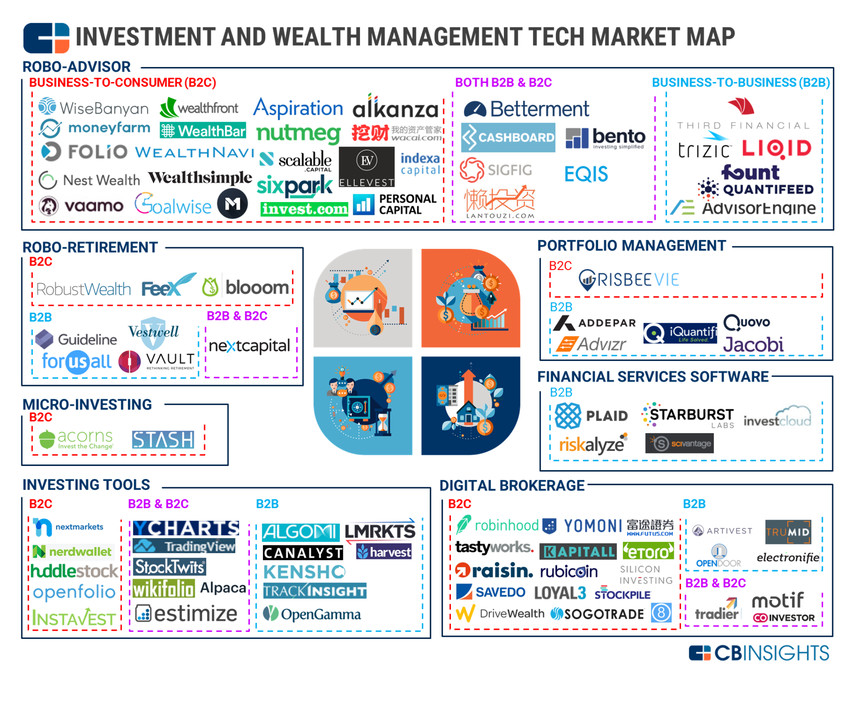
    Betterment, Robinhood, Personal Capital, and Wealthfront rank among the largest wealthtech companies as the key players in the innovative financial sector.

    Wealthtech companies are revolutionizing the financial industry by leveraging technology to manage personal and institutional wealth. These firms utilize algorithms, big data, and user-friendly interfaces to provide services ranging from automated investing to financial planning. Addepar specializes in data aggregation and analysis for wealth managers, while Personal Capital offers digital wealth management and financial advising.

    Wealthfront and Betterment pioneer in robo-advising, providing automated, algorithm-based portfolio management. Robinhood has disrupted the brokerage industry with its commission-free trading model, appealing to a new generation of investors. These companies are at the forefront of making investment advice and management more accessible and affordable, reshaping how individuals and institutions approach their financial future.

    The Rise Of Wealthtech

    The financial services industry is witnessing a transformative era, marked by the escalation of Wealthtech companies. Technology has permeated the realm of wealth management. It generates innovative solutions for both consumers and providers. The Wealthtech sector is bustling with activity, reshaping investment strategies, and democratizing financial advice.

    Early Beginnings And Evolution

    Wealthtech’s roots trace back to the aftermath of the 2008 financial crisis. During this period, trust in traditional financial institutions waned. Innovative startups seized the opportunity. They began offering digital tools aimed at investment and personal wealth management. As technology advanced, so did these companies. They developed robust platforms harnessing big data, artificial intelligence, and machine learning. This evolution disrupted the way people interact with their wealth.

    • Automated advisors, such as robo-advisors, emerged to offer low-cost investment guidance.
    • Peer-to-peer lending platforms arose to connect borrowers and lenders directly.
    • Personal finance management tools were created to help users track and plan their finances.

    Current Landscape And Growth Drivers

    The landscape of Wealthtech is now teeming with large, influential companies. These industry leaders are defined by their impressive user bases and substantial capitalization. The traction of the Wealthtech segment springs from several key drivers:

    Growth Driver Impact on Wealthtech
    Technological Advancements Digital platforms evolve to offer sophisticated investment tools.
    Regulatory Changes New regulations encourage transparency and consumer protection.
    Shift in Consumer Behavior A preference for digital-first financial services becomes prominent.
    Democratization of Finance Investing and financial advice become accessible to a wider audience.
    Global Connectivity Borderless financial ecosystems facilitate growing international investments.

    These drivers are the backbone of the sector’s rapid expansion. As a result, Wealthtech companies have mushroomed globally. They deliver innovative financial services at the fingertips of the everyday investor. Some of these firms have reached unicorn status. They have valuations soaring over the billion-dollar mark.

    Measuring The Giants

    In the realm of wealthtech, size matters. How large a company stands within this innovative financial landscape often affects its market influence and customer reach. Wide-scale operations, extensive service offerings, and heavyweight portfolios characterize the sector’s giants. To gauge their true magnitude, we must examine specific factors and metrics.

    Factors Determining Size And Influence

    Determining the size and sway of leading wealthtech enterprises involves looking at their:

    • Assets under management (AUM): A vital indicator of wealthtech influence.
    • User base: More users suggest greater market acceptance.
    • Geographical presence: Companies spanning multiple regions boast increased prominence.
    • Funding and valuation: Higher numbers often imply robust financial health and investor confidence.
    • Partnerships and integrations: Collaborations can extend a firm’s reach and functionality.
    • Innovation and technology adoption: Cutting-edge solutions propel firms ahead.

    Metrics For Success In Wealthtech

    Success in wealthtech not only reflects size but also longevity and growth prospects:

    Key Performance Indicators
    Metric Description
    Revenue growth Reflects a firm’s expanding financial footprint.
    Client retention rates High rates mean satisfied customers and stable income.
    Operational efficiency Streamlined operations lead to cost savings and improved experiences.
    Scalability Capacity to grow without sacrificing service quality.
    Market share Larger share hints at dominance and influence.
    Innovation index The frequency and impact of new product launches.

    Therefore, wealthtech titans not only possess substantial AUM but also exhibit sustained revenue escalation, high client loyalty, operational finesse, and consistent innovation. Their dominance is a composite of financial prowess, strategic partnerships, and technological foresight.

    The Titans Of Wealthtech

    Wealthtech has transformed the way we manage and invest money. The titans of this industry offer cutting-edge platforms. They make investing accessible and efficient for everyone. Below, we delve into the leaders paving the way in this financial revolution.
    Defining “largest” in the wealthtech field depends on several factors, like market capitalization, assets under management (AUM), or revenue. Here are some potential contenders for the title, depending on the chosen metric:

    By Market Capitalization:

    1. Charles Schwab Corp. (SCHW): $161.84 billion (as of October 2023) – A leading US brokerage firm with a focus on traditional and digital investing.
    2. Blackstone Inc. (BX): $111.89 billion – A global asset manager with significant investments in technology and digital solutions for wealth management.
    3. Intuit Inc. (INTU): $102.40 billion – A fintech giant known for its popular TurboTax software and expanding into wealth management through Rocket Money and other products.
    4. PayPal Holdings Inc. (PYPL): $95.92 billion – A digital payments giant offering investment and wealth management services through partnerships and its Venmo platform.
    5. Morgan Stanley (MS): $82.42 billion – A traditional investment bank actively investing in digital wealth management solutions and expanding its online presence.

    By Assets Under Management (AUM):

    1. BlackRock Inc. (BLK): $10 trillion – A global leader in asset management, offering various wealth management solutions through its iShares ETFs and other products.
    2. The Vanguard Group: $8.1 trillion – A mutual fund giant known for its low-cost index funds and target-date retirement solutions.
    3. State Street Corp. (STT): $4.2 trillion – A major custodian bank with investment management services for individuals and institutions.
    4. Fidelity Investments: $3.3 trillion – A diversified financial services provider known for its mutual funds, brokerage services, and wealth management offerings.
    5. UBS Group AG (UBS): $2.2 trillion – A global wealth management leader with a strong digital presence and focus on personalized investment solutions.

    By Revenue:

    1. BlackRock Inc. (BLK): $16.81 billion (2022 fiscal year) – Diversified revenue streams from asset management fees, technology solutions, and other services.
    2. Charles Schwab Corp. (SCHW): $15.03 billion (2023 fiscal year) – Revenue primarily from interest income, transaction fees, and investment management services.
    3. Fidelity Investments: $14.5 billion (2022 fiscal year) – Revenue from diversified sources like asset management fees, brokerage commissions, and wealth management services.
    4. Intuit Inc. (INTU): $12.32 billion (2023 fiscal year) – Revenue primarily from software sales and subscriptions, including its TurboTax and Quickbooks products.

    Remember, these are just a few examples, and the rankings may change depending on market conditions and company performance. Additionally, there are numerous other successful and noteworthy wealthtech companies worldwide, focusing on different niches and areas within the broader wealth management landscape.

    For a more comprehensive picture, consider researching specific sectors of wealthtech, like robo-advisors, digital brokerages, or wealth management platforms, to discover more potential leaders in the field.

    Innovators Of Market Disruption

    The Wealthtech sector thrives on innovative companies. They shake up traditional finance realms with technology. Here we spotlight the trailblazers. Their platforms offer unique, tech-driven solutions.

    • Robinhood – Simplified stock trading with no fees
    • Acorns – Micro-investing by rounding up purchases
    • Betterment – Automated investing and robo-advisors
    What are the Largest Wealthtech Companies?

    Credit: www.cbinsights.com

    Business Models And Revenue Streams

    The ‘Business Models and Revenue Streams’ of large wealthtech companies are as varied as the services they offer. From robo-advisors to crowd-funding platforms, these digital giants tap into the lucrative finance sector. They transform traditional wealth management with innovative approaches. Their revenue models are diverse, reflecting a blend of the latest technology, evolving markets, and changing client needs. Let’s delve into the mechanisms powering the growth of these financial titans.

    Diverse approaches to wealth management

    Diverse Approaches To Wealth Management

    Wealthtech companies employ distinct methods to provide value to users. Some offer direct-to-consumer investment solutions, whilst others cater to clients through institutions. Each approach leverages technology differently. This innovation makes accessing investment information and services easier than ever.

    Table showcasing different business models

    Company Service Model
    Robo-Advisors Automated, algorithm-driven financial planning
    Online Brokers Digital platforms for buying and selling securities
    Peer-to-Peer Lending Connecting borrowers and lenders through online platforms

    Monetizing digital financial services

    Monetizing Digital Financial Services

    Wealthtech companies capitalize on digital services for generating revenue. They monetize through subscription fees, transaction costs, or by taking a percentage of assets managed. Some rely on data analytics and insight selling to businesses. All these streams pivot on the digital nature of wealth management today.

    List of common revenue streams

    • Subscription Fees: Monthly or annual charges for platform access
    • Transaction Costs: Fees for each trade or financial operation conducted
    • Asset-Based Fees: A percentage charged based on the amount of managed assets
    • Data Analytics Revenue: Selling insights and analytics derived from user data

    Future Projections And Industry Impact

    The landscape of wealth management is rapidly evolving. This evolution stems from the innovative strides in Wealthtech, which refers to the intersection of wealth management and technology. The largest Wealthtech companies today are reshaping investment strategies and client experiences.

    With powerful algorithms, data analytics, and user-friendly platforms, they offer tailored financial advice. They make investment more accessible. These companies are poised to become even more influential in the financial sector. This section delves into the future of Wealthtech. It looks at how it may further disrupt traditional banking and finance practices.

    Predictions For The Coming Decade

    Within the next ten years, it’s expected that Wealthtech companies will:

    • Dominate the market with continued growth and increased market shares.
    • Enhance AI capabilities to provide more personalized financial advice.
    • Drive down costs, making investment tools more affordable for the masses.
    • Push the envelope in automated asset management and robo-advising.
    • Expand globally, breaking down geographic barriers for investors.

    Effects On Traditional Banking And Finance

    The rise of Wealthtech firms is set to have a significant impact:

    • Fostering increased competition among established financial institutions.
    • Encouraging banks to adopt similar technologies to stay relevant.
    • Changing consumer expectations, who will demand more digital services.
    • Leading to strategic partnerships or acquisitions between traditional banks and fintech firms.
    • Promoting greater financial inclusivity and literacy across diverse demographics.

    Wealthtech is not just transforming how we invest. It’s revolutionizing who can invest by breaking down age-old barriers. It’s leading to a future where anyone with internet access can potentially grow their wealth. This is just the beginning of a new era in the financial domain.

    What are the Largest Wealthtech Companies?

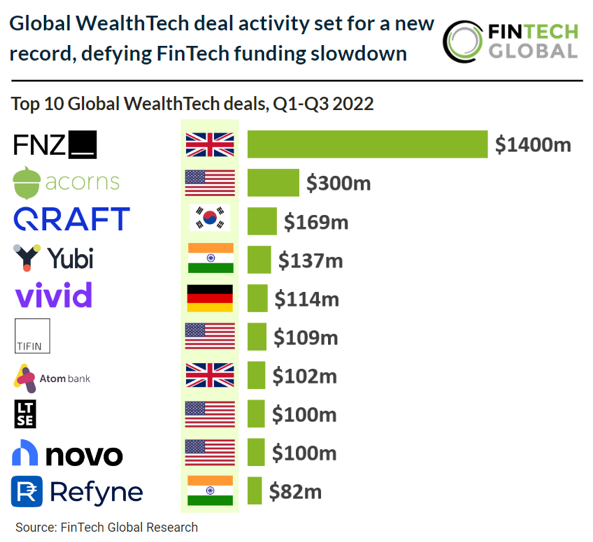
    Credit: fintech.global

    What are the Largest Wealthtech Companies?

    Credit: www.linkedin.com

    Frequently Asked Questions

    What Is The Difference Between Fintech And Wealthtech?

    Fintech focuses on the broad application of technology in finance, including payments and banking. Wealthtech, a subset of fintech, specifically innovates in wealth management and investment sectors, leveraging technology to optimize personal finance, advisory services, and portfolio management.

    What Is The Future Of Wealthtech?

    The future of Wealthtech is geared towards personalized, AI-driven investment strategies, enhanced mobile experiences, and increased accessibility for users. Advancements in blockchain and regulatory technology will further transform the industry, promoting security and compliance.

    Is Robinhood A Wealthtech Company?

    Yes, Robinhood is considered a Wealthtech company as it provides technology-driven solutions for personal investing and wealth management.

    How Fintech Is Changing Wealth Management?

    Fintech is revolutionizing wealth management by offering personalized investment solutions, automating advice through robo-advisors, and enhancing client experiences with mobile platforms. It’s making financial advice more accessible and cost-effective.

    Who Leads In Wealth Management Technology?

    Several companies are at the forefront, including Addepar, Personal Capital, Wealthfront, and Betterment, which are recognized for revolutionizing wealth management through technology.

    How Do Wealthtech Companies Make Money?

    Wealthtech firms typically earn revenue through management fees, subscription services, percentage of assets under management, or per-transaction fees.

    Conclusion

    Navigating the landscape of wealthtech titans, we uncover firms revolutionizing financial management. These powerhouses blend technology and expertise, shaping our financial future. Their innovative approaches offer both challenges and opportunities for investors and professionals alike. As the sector evolves, staying informed is key to leveraging wealthtech’s full potential.

    Keep an eye on these industry leaders—they’re redefining wealth management.

  • Banking Acronyms in Bangladesh With Abbreviations

    Banking abbreviations and acronyms are a common aspect of the financial industry, often used to simplify complex terms and concepts. These abbreviations can be found on bank statements, financial documents, and various financial websites, making it essential for individuals to understand their meanings to navigate the world of banking effectively. This blog post will provide an overview of some of the most common banking abbreviations and acronyms, helping you decipher the language of the financial world.

    Acronyms vs Abbreviations

    Acronyms and abbreviations are both shortened forms of words or phrases, but they differ in some key ways:

    Formation:

    • Acronyms: Formed by taking the initial letters or syllables of words and combining them into a new, pronounceable word. Some acronyms become words in their own right, and their original meaning may be less emphasized over time. Examples: BACH (Bangladesh Automated Clearing House), BRAC (Bangladesh Rural Advancement Committee).
    • Abbreviations: Abbreviations are shortened forms of single words or phrases. They may consist of the initial letters, a combination of letters, or a series of characters that represent the full word or phrase. Examples: Pvt. (Private), Ltd. (Limited), etc. (et cetera)

    Pronunciation:

    • Acronyms: Pronounced as a single word.
    • Abbreviations: Usually pronounced by saying each letter individually (e.g., D-R, L-T-D). Some exceptions exist, like “PhD” being pronounced “pee-aitch-dee”.

    Banking Acronyms In Bangladesh

    The list of banking abbreviations and acronyms provided in this blog post mainly focuses on Bangladesh. Therefore, this blog post will be particularly useful for individuals who are interested in understanding the banking industry in Bangladesh and its associated acronyms. Some acronyms are used in other sectors and even may seem unrelated but they are listed here for somehow being used in the banking industry. The list is alphabetically arranged to let you easily find the terms you are looking for. So, let’s start exploring!

    AACOBB Association of Anti-Money Laundering Compliance Officers of Banks in Bangladesh

    A/C Account

    ACD Agriculture Credit Department

    ACS Automated Challan System

    ACU Asian Clearing Union

    ACUD Asian Clearing Union Dollar

    ADB Asian Development Bank

    ADC Alternate Delivery Channels

    ADP Annual Development Programme

    ADR Advance Deposit Ratio

    ADs Authorised Dealers

    AFI Alliance for Financial Inclusion

    AFD Agence Francaise de Developpement

    AGDs Authorized Gold Dealers

    AGM Annual General Meeting

    AIIB Asian Infrastructure Investment Bank

    AIT Advance Income Tax

    ALCO Asset Liability Management Committee

    ALM Asset-Liability Management

    AML Anti Money Laundering

    APA Annual Performance Agreement

    APG Asia Pacific Group on Money Laundering

    APTA Asia Pacific Trade Agreement

    ASA Association for Social Advancement

    ASEAN Association of South East Asian Nations

    ATDTL Average Total Demand and Time Liabilities

    ATM Automated Teller Machine

    B2B Business to Business

    B2P Business to Person

    BAC Board Audit Committee

    BACH Bangladesh Automated Clearing House

    BACPS Bangladesh Automated Cheque Processing Systems

    BADC Bangladesh Agricultural Development Corporation

    BAFEDA Bangladesh Foreign Exchange Dealers Association

    BAMLCO Branch Anti-Money Laundering Compliance Officer

    BANBEIS Bangladesh Bureau of Educational Information and Statistics

    BARD Bangladesh Academy for Rural Development

    BAS Bangladesh Accounting Standards

    BASIC Bangladesh Small Industries and Commerce

    BAU Business As Usual

    BB Bangladesh Bank

    BBMC Bangladesh Bank Musharaka Certificate

    BBS Bangladesh Bureau of Statistics

    BBTA Bangladesh Bank Training Academy

    BCBS Basel Committee on Banking Supervision

    BCG Boston Consulting Group

    BCIC Bangladesh Chemical Industries Corporation

    BCO Branch Compliance Officer

    BCP Business Continuity Plan

    BCP Basel Core principles

    BCR Bangladesh Compounded Rate

    BDBL Bangladesh Development Bank Limited

    BDT Bangladesh Taka

    BEPZ Bangladesh Export Promotion Zone

    BEZA Bangladesh Economic Zones Authority

    BEFTN Bangladesh Electronic Fund Transfer Network

    BEPZA Bangladesh Export Processing Zone Authority

    BFIU Bangladesh Financial Intelligence Unit

    BFRS Bangladesh Financial Reporting Standards

    BGIIB Bangladesh Government Islamic Investment Bond

    BGIS Bangladesh Government Investment Sukuk

    BGITB Bangladesh Government Islamic Treasury Bill

    BGTBs Bangladesh Government Treasury Bonds

    BHBFC Bangladesh House Building Finance Corporation

    BHI Bank Health Index

    BIA Bangladesh Insurance Academy

    BIBM Bangladesh Institute of Bank Management

    BREN Bangladesh Research and Education Network.

    BGMEA Bangladesh Garments Manufactures and Exporters Association

    BHTPA Bangladesh Handloom Board Bangladesh Hi-tech Park Authority

    BIDA Bangladesh Investment Development Authority

    BIDS Bangladesh Institute of Development Studies

    BIMSTEC Bay of Bengal Initiative for Multi-Sectoral Technical and Economic Cooperation

    BIS Bank for International Settlements

    BJMC Bangladesh Jute Mills Corporation

    BKB Bangladesh Krishi Bank

    BKMEA Bangladesh Knitwear Manufacturers and Exporters Association

    BLPA Bangladesh Land Port Authority

    BO Beneficiary Owners BO Beneficial Owner

    BOI Board of Investment

    BOSEL Bangladesh Overseas Employment and Service Limited

    BoP Balance of Payments

    BPC Bangladesh Petroleum Corporation

    BPC Bangladesh Parjatan Corporation

    BPSSR Bangladesh Payment and Settlement Systems Regulations

    BPDB Bangladesh Power Development Board

    BRAC Bangladesh Rural Advancement Committee

    BRDB Bangladesh Rural Development Board

    BRMC Board Risk Management Committee

    BRPD Banking Regulation & Policy Department

    BRTA Bangladesh Road Transport Authority

    BSBL Bangladesh Samabaya Bank Limited

    BSC Bangladesh Shipping Corporation

    BSCCL Bangladesh Submarine Cable Company Limited

    BSEC Bangladesh Steel and Engineering Corporation

    BSEC Bangladesh Securities and Exchange Commission

    BSFIC Bangladesh Sugar and Food Industries Corporation

    BSCIC Bangladesh Small and Cottage Industries Corporation

    BSI Banking Soundness Index

    BSRD Bangladesh Systemic Risk Dashboard

    BSS Bangladesh Secretarial Standards

    BTCL Bangladesh Telecommunication Company Limited

    BTMC Bangladesh Textile Mills Corporation.

    BTRC Bangladesh Telecommunication Regulatory Commission

    BTMC Bangladesh Textile Mills Corporation

    BURO Basic Unit for Resources and Opportunities of Bangladesh

    c&f cost and freight

    CA Certifying Authority

    CA Chartered Accountant

    CAMD Capital Adequacy and Market Discipline

    CAMEL Capital Adequacy, Asset Quality, Management, Earnings and Liquidity

    CAMELS Capital Adequacy, Asset Quality, Management, Earnings, Liquidity and Sensitivity to Market Risk

    CAMLCO chief Anti-money Laundering Compliance Officer

    CASA Current Account, Savings Account

    CASPI CSE all share price Index

    CAR Capital Adequacy Ratio

    CBS Core Banking Solution CBS Core Banking Software

    CCA Controller of Certifying Authority

    CCB Capital Conservation Buffer

    CCB Counter-cyclical Capital Buffer

    CCC Central Compliance Committee

    CCTG Coordination Committee Technical Group

    CCTV Closed-circuit Television

    CDBL Central Depository Bangladesh Limited

    CDLC Central Depository for Large Credit

    CECRFP COVID-19 Emergency and Crisis Response Facility Project

    CEO Chief Executive Officer

    CET1 Common Equity Tier-1

    CETP Central Effluent Treatment Plant

    CEU Chief Economist’s Unit

    CEZL City Economic Zone Limited

    CFC Cyber Fusion Center

    CFP Contingency Funding Plan

    CFR Cost and Freight

    CFSI Composite Financial Stability Index

    CFT Combating the Financing of Terrorism

    CGC Corporate Governance Code

    CGS Credit Guarantee Scheme

    CIB Credit Information Bureau

    CIF Cost, Insurance and Freight

    CIC Central Intelligence Cell

    CICO Cash In/ Cash Out

    CIDD Center for Inclusive Development Dialogue

    CIP Commercially Important Person

    CIPC Customers Interest Protection Centre

    CIRDAP Centre on Integrated Rural Development for Asia and the Pacific

    CIT Cheque Imaging and Truncation

    CMMS Corporate Memory Management System

    CMS Cottage, Micro and Small Enterprise

    CMSME Cottage, Micro, Small and Medium Enterprises

    CNY Chinese Yuan Renminbi

    COVID-19 Corona Virus Disease of 2019

    CP Commercial paper

    CPI Consumer Price Index

    CRAB Credit Rating Agency of Bangladesh

    CRAR Capital to Risk-weighted Asset Ratio

    CRISL Credit Rating Information and Services Limited

    CRM Credit Risk Management

    CRMs Cash Recycler Machines/Cash Recycling Machine

    CRMR Comprehensive Risk Management Report

    CRR Cash Reserve Requirement

    CSE Chittagong Stock Exchange

    CSP Customer Security Program

    CSR Corporate Social Responsibility

    CYFI Child and Youth Finance International

    DBI-1 Department of Banking Inspection-1

    DBI-2 Department of Banking Inspection-2

    DBI-3 Department of Banking Inspection-3

    DBI-4 Department of Banking Inspection-4

    DBI-5 Department of Banking Inspection-5

    DBI-6 Department of Banking Inspection-6

    DBI-7 Department of Banking Inspection-7

    DBI-8 Department of Banking Inspection-8

    DCFCL Departmental Control Function Checklist

    DEI Diversity, Equity and Inclusion

    DFEI Department of Foreign Exchange Inspection

    DFIM Department of Financial Institutions & Market

    DFS Digital Financial Services

    DIB Dollar Investment Bond

    DID Deposit Insurance Department

    DIS Deposit Insurance System

    DITF Deposit Insurance Trust Fund

    DMBs Deposit Money Banks

    DMD Debt Management Department

    DMS Document Management System

    DNC Department of Narcotics Control

    DNS Deferred Net Settlement

    DOMS Digital Office Management System

    DOS Department of Off-site Supervision

    DP Depository Participant DPs Depository Participant

    DPA Domestic Processing Areas

    DPB Dollar Premium Bond

    DSE Dhaka Stock Exchange

    DSEX Dhaka Stock Exchange Broad Index

    D-SIBs Domestic Systemically Important Banks

    DTA Deferred Tax Assets

    DTH Direct to Home

    DVS Document Verification System

    EAR Early Alert Review

    EBCP Enterprise Business Continuity Plan

    EBITDA earnings before interest, taxes, depreciation and amortization

    EC Executive Committee

    ECB European Central Bank

    ECAI External Credit Assessment Institutions

    ECF Extended Credit Facility

    ECL Expected Credit Loss

    ECRL Emerging Credit Rating Limited

    EDF Export Development Fund

    EDS Electronic Dealing System

    EDW Enterprise Data Warehouse

    EEF Equity and Entrepreneurship Fund

    EFD Electric Fiscal Device

    EFT Electronic Fund Transfer

    EGBMP Enterprise Growth and Bank Modernization Programme

    EI Expenditure-Income

    EMI Equated Monthly Installments

    EMT Executive Management Team

    EMV EuroPay, MasterCard and VISA

    EOI Expression of Interest

    EoP End of Period

    EPB Export Promotion Bureau EPZ Export Processing Zone

    EPS Earnings Per Share

    ERAF Enterprise Risk Associates Forum

    ERGF Enterprise Risk Governance Forum

    ERM Enterprise Risk Management

    ERMC Executive Risk Management Committee

    ERP Enterprise Resource Planning

    ERQ Exporters’ Retention Quota

    ESCAP the United Nations Economic and Social Commission for Asia and the Pacific

    ESDD Environmental and Social Due Diligence

    ESF Entrepreneurship Support Fund

    ESG Environmental, Social & Governance

    ESRM Environmental and Social Risk Management

    ESRR Environmental and Social Risk Rating

    ETP Effluent Treatment Plant

    EU European Union

    EVA Economic Value Added

    EXIM Export Import Bank of Bangladesh

    FAO Food and Agriculture Organisation

    FATF Financial Action Task Force

    FC Foreign Currency

    FCA Financial Conduct Authority

    FCD Forreign Currency Deposit

    FCBs Foreign Commercial Banks

    FCK Fixed Chimney Kiln

    FCY Foreign Currency

    FDI Foreign Direct Investment

    FEPD Foreign Exchange Policy Department

    FFD Freedom Fixed Deposit

    FIs Financial Institutions

    FICSD Financial Integrity and Customer Service Department

    FID Financial Inclusion Department

    FIID Financial Institutions Inspection Department

    FIU Financial Intellligence Unit

    FMI Financial Market Infrastructure

    FPMU Food Planning and Monitoring Unit

    FoB Free on Board FPM Financial Projection Model

    FRC Financial Reporting Council

    FRS Financial Stability Report

    FRTB Floating Rate Treasury Bond

    FRTMD Foreign Reserve and Treasury Management Department

    FSD Financial Stability Department

    FSM Financial Stability Map

    FSR Financial Stability Report

    FSs Financial Statements

    FSSSPD Financial Sector Support and Strategic Planning Department

    FSSP Financial Sector Support Project

    FUM Fund Under Management

    FVI Financial Vulnerability Index

    FX Foreign Exchange

    FY Financial Year (July- June)

    G2P Government to Person

    G-7 Group of Seven

    GABV Global Alliance for Banking on Values

    GCRM Guidelines on Country Risk Management

    GDE Gross Domestic Expenditure

    GDP Gross Domestic Product

    GDS Gross Domestic Savings

    GF Green Finance

    GFSR Global Financial Stability Report

    GFET Guidelines for Foreign Exchange Transactions

    GHG Green House Gas

    GIIB Government Islamic Investment Bond

    GIZ German Agency for International Cooperation

    GNI Gross National Income GNS Gross National Savings

    GPF General Provident Fund

    GoB Government of Bangladesh

    GRA General Resources Account

    GRI Global Reporting Initiative

    GS Govornor Secretariat

    GSIMS Government Savings Instrument Management System

    GTF Green Transformation Fund

    GVA Gross Value Added

    H1 First Half

    H2 Second Half

    HBFC House Building Finance Corporation

    HFT Held for Trade

    HHK Hybrid Hoffman Kiln

    HRD Human Resources Department

    HTM Held to Maturity

    HQLA High Quality Liquid Asset

    IAD Internal Audit Department

    IADI International Association of Deposit Insurers

    IAMCL ICB Asset Management Company Ltd

    IAR Integrated Annual Report

    IAS International Accounting Standards

    IASB International Accounting Standards Board

    IB Islamic Banking

    IBF Islamic Bond Fund

    IBFT Internet Banking Fund Transfer

    IBRD International Bank for Reconstruction and Development

    IBS Islamic Banking System

    ICAAP Internal Capital Adequacy Assessment Process

    ICAB International Chartered Accountants of Bangladesh

    ICB Investment Corporation of Bangladesh

    ICC Internal Control and Compliance

    ICCD Internal Control and Compliance Division

    ICMAB Institute of Cost and Management Accountants of Bangladesh

    ICML ICB Capital Management Ltd

    ICSB Institute of Chartered Secretaries of Bangladesh

    ICT Information and Communication Technology

    ID Identity Document

    IDA International Development Association/ International Development Agency

    IDLC Industrial Development Leasing Company

    IDR Investment Deposit Ratio

    IDRA Insurance Development and Regulatory Authority

    IESBA International Ethics Standards Board for Accountants’

    IFC International Finance Corporation

    IFRS International Financial Reporting Standards

    IFF Illicit Financial Flow

    IIFM Islamic Inter-bank Fund Market

    IIRC International Integrated Reporting Council

    IMF International Monetary Fund

    IMTOs International Money Transfer Operators

    IOSCO International Organization of Securities Commissions

    IPDC Industrial Promotion and Development Company

    IPFF Investment Promotion and Financial Facility IPFF Investment Promotion and Financing Facilities

    IPO Initial Public Offering

    IR Investor Relations

    IRF Incident Response Forum

    IRM Investment Risk Management

    IRIDP-3 ‘Important Rural Infrastructure Development Project on Priority Basis-3

    ISAs International Standards on Auditing

    ISDSD Information Systems Development and Support Department

    ISMD Integrated Supervision Management Department

    ISO International Organisation for Standardisation

    ISS Integrated Supervision System

    ISSP Information System Strategy Paper

    ISTCL ICB Securities Trading Company Ltd.

    IT Information Technology

    ITC-ILO International Training Centre of the International Labour Organisation

    ITES Information Technology Enabled Services

    ITM Interbank Transaction Matrix

    JBC Jibon Bima Corporation

    JICA Japan International Cooperation Agency

    JPY Japanese Yen

    KPI Key Performance Indicators

    KRI Key Risk Indicator

    KSA Kingdom of Saudi Arabia

    KYC Know Your Customer

    LC Letter of Credit

    LCR Liquidity Coverage Ratio

    LDCL Loan Documentation Checklist

    LDPE Low-Density Polyethylene

    LEA Law Enforcement Agencies

    LED Light Emitting Diode

    LF-I-SME Local Finance Initiatives Support to SMEs

    LFSSP Line of Finance to Support SMEs Project

    LIBOR London Interbank Offered Rate

    LOS Loan Originating System

    LPG Liquefied Petroleum Gas

    LS Liquidity Support

    LSF Liquidity Support Facility

    LTD. Limited

    LTFF Long Term Financing Facility

    M1 Narrow Money

    M2 Broad Money

    MANCOM Management Committee

    MCR Minimum Capital Requirements

    ME Mutual Evaluation

    MF-CIB Credit Information Bureau for Micro Finance Institutions

    MFIs Microfinance Institutions

    MFS Mobile Financial Services

    MFSPs Mobile Financial Service Providers

    MI Market Infrastructure M

    MICR Magnetic Ink Character Recognition

    MIMAP Micro Impact of Macroeconomics and Adjustments Policies

    ML Money Laundering

    MLT Medium to Long Term

    MoF Ministry of Finance

    MoU Memorandum of Understanding

    MPD Monetary Policy Department

    MPI Murabaha Post Import

    MPS Monetary Policy Statement

    MPSA Microsoft Product and Services agreement

    MRA Microcredit Regulatory Authority

    MSI Monetary Sector Index

    MSMEs Micro, Small and Medium Enterprises

    MTMF Medium Term Macroeconomic Framework

    MTR Murabaha Trust Receipt

    MVA Market Value-added

    NAFTA North American Free Trade Agreement

    NAV Net Assets Value

    (NBDCs Non- bank Depository Corporations

    NBFIs Non-Bank Financial Institutions

    NBR National Board of Revenue

    NCI Non-controlling Interest

    NDA Net Domestic Assets

    NEER Nominal Effective Exchange Rate

    NFA Net Foreign Assets

    NFAs No-Frill Accounts

    NFC Near Field Communication

    NFCD Non-Resident Foreign Currency

    NFCs Non Financial Corporations

    NFIS National Financial Inclusion Strategy

    NGOs Non-Governmental Organisations

    NIA Negotiable Instruments Act

    NIBM National Institute of Bank Management

    NII Net Interest Income

    NIM Net Interest Margin

    NIS National Integrity Strategy

    NITAs Non-resident Investor’s Taka Accounts

    NOPAT Net Operating Profit After Tax

    NPA Non-performing Asset

    NPI Non-performing Investment

    NPL Non-performing Loan

    NPLs Non-performing Loans

    NPSB National Payment Switch, Bangladesh

    NRB Non-resident Bangladeshi

    NSDS National Sustainable Development Strategy

    NSFR Net Stable Funding Ratio

    OBO Off-shore Banking Operation

    OBU Off-shore Banking Unit

    ODA Official Development Assistance

    ODB Overdraft-block

    ODC Overdraft- current

    OFC Other Financial Corporations

    OIC Organization of Islamic Cooperation

    OMO Open Market Operation

    OMOF Open Market Operations Fund

    OMS Open Market Sales

    OPGSPs Online Payment Gateway Service Providers

    OTC Over the Counter P2B Person to Business

    P2G Person to Government

    P2P Person to Person

    PAT Profit After Tax

    PBT Profit Before Tax

    PBV Price-to-book Value

    PCB Printed Circut Board

    PCBs Private Commercial Banks

    PCIDSS Payment Card Industry Data Security Standard

    PDs Primary Dealers

    PESTEL Political, Economic, Social, Technological, Legal, and Environment.

    PET Polyethene Terephthalate

    PFDS Public Food Distribution System

    PF Proliferation Financing

    PFI Participating Financial Institution

    PGL Portfolio Guarantee Limit

    PIF Post Import Financing

    PKSF Palli Karma Sahayak Foundation

    PLS Profit and Loss Sharing

    PMBF Professional Masters in Banking and Finance

    PMFIs Participating Microfinance Institutions

    PMS Performance Management System

    PN Policy Note

    POL Petroleum, Oil and Lubricants

    POs Partner Organisations

    POS Point of Sale

    PPE Personal Protective Equipment

    PP&E Property, Plant and Equipment

    PPG Product Program Guideline

    PSD Payment Systems Department

    PSO Payment Systems Operator

    PSP Payment Services Providers

    PSR Profit Sharing Ratio

    PV Photovoltaic

    PVC Polyvinyl Chloride

    QFSAR Quarterly Financial Stability Assessment Report

    QIIP Quantum Index of Industrial Production

    QOR Quarterly Operations Report

    QR Quick Response

    RAKUB Rajshahi Krishi Unnayan Bank

    RAM Random Access Memory

    RAS Risk Appetite Statement

    RBCA Risk Based Capital Adequacy

    RBS Risk Based Supervision

    RBIA Risk Based Internal Audit

    RCDM Real-time Cash Deposit Machine

    RCF Rapid Credit Facility

    RFCD Resident Foreign Currency Deposit

    RECI Regional Economic Climate Index

    REER Real Effective Exchange Rate

    REPO Repurchase Agreement

    RFFO Regulatory Fintech Facilitation Office

    RFI Rapid Financing Instrument

    RHS Right Hand Side

    RICO Racketeer Influenced and Corrupt Organizations Act

    RJSC & F Registrar of Joint Stock Companies & Firms

    RM Reserve Money

    RMD Risk Management Division

    RMG Ready Made Garments

    RMU Risk Management Unit

    ROA Return on Assets

    ROC Regional Operating Centre

    ROE Return on Equity

    RoI Return on Investment

    RPO Repeat Public Offering

    RTDM  Real Time Deposit Machine RTDM

    RTGS Real Time Gross Settlement

    RTI Right to Information

    RTL Raw Tech Limited

    RWA Risk Weighted Assets

    SAARC South Asian Association for Regional Cooperation

    SABINCO Saudi-Bangladesh Industrial & Agricultural Investment Company Limited

    SAFA South Asian Federation of Accountants

    SAM Special Asset Management

    SAP Systems, Applications and Products in data processing

    SARs Suspicious Activity Reports

    SBs Specialized Banks

    SBC Shadharan Bima Corporation

    SCBs State -owned Commercial Banks

    SCDP Second Crop Diversification Project

    SCF Supply Chain Finance Solution

    SCT Strategic Communication Team

    SD Statistics Department

    SD Secure Digital

    SDC Sales Data Controller

    SDC Swiss Agency for Development and Cooperation

    SDGs Sustainable Development Goals

    SDP Skills Development Program

    SDR Special Drawing Rights

    SEC Securities and Exchange Commission

    SEF Small Enterprise Fund

    SEIP Skills for Employment Investment Programme

    SEK Singapore Dollar SF Sustainable Finance

    SFD Sustainable Finance Department

    SFU Sustainable Finance Unit

    SGD Singapore Dollar

    SIM Subscriber Identity Module

    SLR Statutory Liquidity Ratio

    SMA Special Mention Account

    SMAP Small and Marginal Sized Farmers Agricultural Productivity Improvement and Diversification Financing Project

    SMEs Small and Medium-sized Enterprises

    SMESDP Small and Medium-sized Enterprise Sector Development Project

    SMESPD SME & Special Programmes Department

    SMS Short Message Service

    SOC Security Operation Centre

    SOCBs State Owned Commercial Banks

    SOICs State Owned Insurance Companies

    SP Special Publication

    SPCBL Security Printing Corporation (Bangladesh) Ltd.

    SPCSSECP Supporting Post COVID-19 Small Scale Employment Creation Project

    SPM Suspended Particulate Matter

    SPS Service Process Simplification

    SPTB Special Treasury Bonds

    SPV Special Purpose Vehicle

    SREP Supervisory Review Evaluation Process

    SRF Socially Responsible Finance

    SQAT Software Quality Assurance and Testing

    SRP Supervisory Review Process

    SREP Supervisory Review Evaluation Process

    SREUP Safety Retrofits and Environment Upgrades in RMG Project

    SRF Socially Responsible Financing

    SSD Solid State Drive

    STP Straight-Through-Processing

    STRs Suspicious Transaction Reports

    SWIFT Society for Worldwide Interbank Financial Telecommunication

    TA Technical Assistance

    TAT Turnaround Time

    TBS Triple Benefit Savings

    TF Terrorist Financing

    TDS Tax Deducted at Source

    TIN Tax Identification Number

    TMS Treasury Management System

    TMSS Thengamara Mohila Sabuj Sangha

    ToR Terms of Reference

    ToT Terms of Trade

    TSEL Technaf Solar Tech Energy Limited

    TSS Technical Support Services

    UAE United Arab Emirates

    UBSP Urban Building Safety Project

    UK United Kingdom

    UNCDF United Nations Capital Development Fund

    UNCTAD United Nations Conference on Trade and Development

    UNODC United Nations Office on Drugs and Crime

    UNSDGs United Nations’ Sustainable Development Goals

    US United States

    USA United States of America

    USB Universal Serial Bus

    USD US Dollar

    USDOJ US Department of Justice

    VAS Value Added Service

    VAT Value Added Tax

    VDP Village Defense Party

    VoC Voice of Customers

    VSBK Vertical Shaft Brick Kiln

    WAR Weighted Average Resilience

    WAR-WIR Weighted Average Resilience-Weighted Insolvency Ratio

    WDV Written Down Value

    WEDB Wage Earner Development Board

    WEF Women Entrepreneur Fund

    WEO World Economic Outlook

    WFH Working From Home

    WHO World Health Organization

    WHT Withholding Tax

    WP Working Paper

    WTO World Trade Organisation

    YLP Young Leaders’ Programme

    YoY Year on Year

    Conclusion

    Understanding banking abbreviations and acronyms is crucial for navigating the complex world of finance. By familiarizing yourself with these terms, you can better comprehend financial documents, statements, and conversations. The more you learn about these abbreviations and acronyms, the more informed decisions you can make about your financial matters. So, take the time to explore the list of abbreviations and acronyms provided in this blog post, and empower yourself to better understand and manage your finances.