Author: MMP

  • ‘Wealth is a spiritual outcome’ Myron Golden

    “Wealth is a spiritual outcome” — a profound statement made by Myron Golden that transcends conventional notions of prosperity. In delving into this perspective, we unravel a paradigm shift that challenges the materialistic lens through which wealth is often viewed. Myron Golden, a renowned business trainer and speaker, beckons us to explore the spiritual dimensions of wealth, offering insights that redefine success and abundance.

    Redefining Wealth Beyond Materialism

    In a world dominated by material pursuits, the concept of wealth is often synonymous with financial affluence, opulent lifestyles, and tangible possessions. Myron Golden disrupts this narrative by asserting that wealth is not merely a material manifestation but a spiritual outcome. This perspective beckons us to reconsider the very essence of abundance and affluence, transcending the confines of bank balances and possessions.

    The Spiritual Foundations of Wealth

    At the heart of Myron Golden’s assertion lies the idea that true wealth emanates from spiritual foundations. It implies aligning one’s purpose, values, and actions with a higher, purposeful existence. In this context, wealth becomes a reflection of spiritual abundance, encompassing aspects such as gratitude, generosity, and a sense of fulfillment beyond monetary measures.

    Wealth as a Consequence of Service

    Myron Golden emphasizes the correlation between wealth and service. According to this paradigm, one attains wealth not by accumulating for personal gain but by providing value and service to others. This resonates with the age-old adage that the more you give, the more you receive. In the spiritual economy of wealth, acts of service become the currency that fosters prosperity.

    Abundance Mindset: A Spiritual Perspective

    The idea of wealth as a spiritual outcome is intrinsically tied to cultivating an abundance mindset. Myron Golden encourages individuals to shift their focus from scarcity and lack to a mindset of abundance. This shift involves recognizing the infinite potential within oneself and acknowledging the boundless opportunities that exist in the world. It’s a spiritual journey of self-discovery and empowerment.

    Examples of Spiritual Wealth in Action

    To grasp the concept fully, consider individuals who have exemplified spiritual wealth in their lives. Philanthropists like Warren Buffett and Bill Gates, whose dedication to charitable causes reflects an understanding of wealth as a means to contribute positively to society, embody this spiritual perspective. Their wealth is not merely a collection of assets but a tool for creating impactful change.

    Fulfillment as the Ultimate Wealth

    Myron Golden’s assertion invites contemplation on the relationship between wealth and fulfillment. In the spiritual context, true wealth is not solely measured by external markers but by the sense of purpose, joy, and contentment derived from one’s endeavors. It’s the recognition that material possessions, while a part of life, are not the ultimate source of fulfillment.

    Integrating Spiritual Wealth into Everyday Life

    The journey toward spiritual wealth involves practical steps. Myron Golden advocates for daily practices that align with spiritual principles, such as gratitude journaling, acts of kindness, and mindful living. These actions, when integrated into daily life, contribute to a holistic understanding of wealth that extends beyond financial abundance.

    Final Thoughts

    In conclusion, Myron Golden’s assertion that “wealth is a spiritual outcome” prompts a reevaluation of our perspectives on prosperity. It challenges us to shift from a narrow focus on material accumulation to a broader understanding of wealth as a spiritual journey. Embracing this paradigm invites a profound transformation, ushering in a wealth that transcends the tangible, enriching not only our lives but the lives of those around us.

  • How To Earn An Annual Income Monthly?

    Have you ever looked at someone making 10, 12, or even 20 times more money than you and wondered, “How is that even possible?” The concept of turning your yearly income into your monthly income might sound like a far-fetched dream, but in this comprehensive guide, we will delve into the strategies and mindset shifts required to make this seemingly impossible feat a reality.

    How To Earn An Annual Income Monthly?

    The Power of Income-Producing Assets:

    The journey to financial freedom often starts with a fundamental shift in mindset. The key principle from “Rich Dad Poor Dad” emphasizes focusing on creating income-producing assets. The distinction between the wealthy and those struggling financially lies in the accumulation of such assets.

    Income Follows Assets:

    Daniel Priestley’s assertion that “income follows assets” reinforces the idea that the more income-producing assets you accumulate, the more significant your income potential becomes. This principle challenges the conventional approach of exchanging time for money and prompts a shift towards building and leveraging assets.

    Easier to Make More in Less Time:

    The bold statement that it’s easier to make a million dollars a month than a million dollars a year might initially sound outrageous. However, the analogy provided using various modes of transportation illustrates a crucial point: leveraging resources can lead to more significant financial gains with less effort.

    Leveraged Work vs. Laborious Work:

    The Distinction

    To embark on the journey to financial freedom, one must grasp the pivotal concept of differentiating between leveraged work and laborious work. This understanding serves as a compass, guiding individuals towards strategies that lead not only to financial success but, more importantly, to a life where effort translates into exponential rewards.

    Laborious Work: The Struggle for Linear Returns

    Laborious work encapsulates the conventional notion of trading time and physical effort for financial compensation. This is the realm where countless individuals find themselves, putting in hours of hard work with the expectation of a proportional financial return. The limitation lies in its linearity – more time and effort input equate to linear increases in income. The analogy here is akin to running a race on foot. The exertion is direct, the pace set by individual capabilities, and the outcome proportional to the effort invested.

    Leveraged Work: Exponential Growth with Less Effort

    Contrastingly, leveraged work opens the door to a realm of exponential growth with considerably less individual effort. This is a paradigm shift where resources are intelligently harnessed to multiply the impact of each unit of effort. The analogy of racing on various modes of transportation, such as a bicycle, car, plane, or jet, brilliantly illustrates this concept.

    The Racing Analogy

    Imagine a scenario where individuals are tasked with reaching a destination. The person on foot represents laborious work, requiring immense effort and time for progress. The bicyclist introduces an element of leverage, as the rider can cover more ground with less effort. Transitioning to a car amplifies this leverage, allowing for even greater speed and efficiency. Taking it a step further, a plane provides an unprecedented level of leverage, enabling the traveler to cover vast distances with unparalleled speed. The ultimate expression of leverage is the jet, symbolizing a quantum leap in efficiency and effectiveness.

    Application in Financial Pursuits

    In the realm of finance, this analogy holds profound implications. Laborious work might involve a traditional job where one is compensated for the hours worked. Leveraged work, on the other hand, could manifest through investments, business ownership, or other ventures where the potential for returns surpasses the direct effort applied.

    Leveraging Resources

    Understanding the power of leveraging resources is a cornerstone of transitioning from a mindset of scarcity to one of abundance. Resources can encompass various forms – financial capital, human capital, technology, and intellectual property. Leveraging these resources strategically amplifies the impact of individual effort, paving the way for accelerated financial growth.

    Levels of Value Creation:

    To transform your annual income into your monthly income, you need to understand the levels of value creation. The speaker outlines four levels: implementation, unification, communication, and imagination. Each level represents a higher form of value creation, with imagination being the pinnacle where significant fortunes are made.

    Implementation: The Lowest Level of Value

    At the implementation level, individuals exchange time and physical effort for money. This level has its limitations as it relies on a physical resource (muscles) and a limited resource (time), making it challenging to achieve unlimited financial outcomes. Multiplying something with limited (Time) can not bring unlimited (wealth).

    Unification: Managing People and Resources

    Moving up to unification involves managing people and resources. This level allows for greater scalability and income potential, but it still has limitations compared to higher levels of value creation.

    Communication: The Power of the Spoken Word

    Communication, the third level, involves using the power of language to influence and create value. This level transcends physical limitations and opens the door to significant income potential based on the ability to convey messages effectively.

    Imagination: Unlocking Limitless Potential

    At the pinnacle is imagination, where individuals leverage their minds and financial resources to create exponential wealth. This level represents the ability to think beyond conventional limits and visualize innovative solutions and opportunities.

    Wealth as a Spiritual Outcome:

    A paradigm shift is emphasized – viewing wealth as a spiritual outcome. Understanding that abundance is inherent and that limitations are self-imposed opens the door to financial prosperity.

    The Role of Faith and Language:

    Faith and language, identified as spiritual elements, play a crucial role in the creation and belief in value. The speaker emphasizes that money’s worth is derived from the messages and faith associated with it, rather than tangible backing.

    Becoming a Better Communicator:

    Practical advice is provided for those seeking to increase their income through communication. Becoming a better communicator involves honing both thinking and speaking skills. The speaker challenges societal norms that may have discouraged speaking up and encourages embracing the power of language for financial gain.

    Decide to Raise the Floor and Eliminate the Ceiling:

    Empowering individuals to decide their financial destiny is a recurring theme. The notion of raising the financial floor and eliminating the ceiling signifies a commitment to continuous improvement and unlimited potential.

    Conclusion:

    Transforming your annual income into your monthly income is not a distant dream but a tangible goal achievable through strategic thinking, leveraging resources, and embracing higher levels of value creation. By shifting your mindset, becoming a better communicator, and tapping into your imagination, you can unlock the path to financial freedom and abundance. The journey begins with a decision to break free from limiting beliefs and chart a course towards a future of financial prosperity.

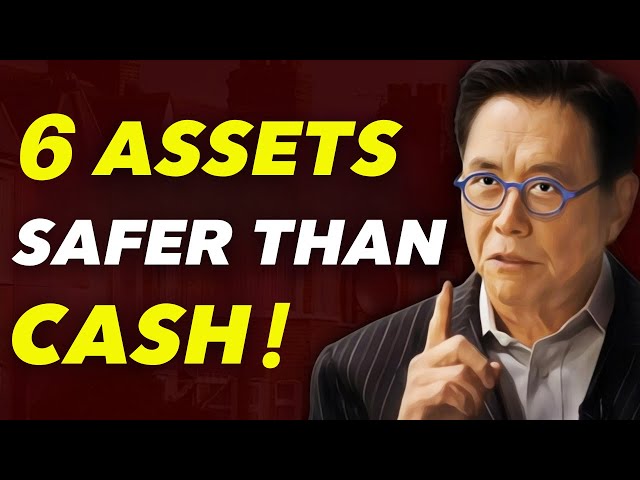
  • What Assets Are Safer And Better Than Cash?

    What Assets Are Safer And Better Than Cash?

    When it comes to managing your finances and investments, it’s important to consider the various assets that are available to you. While cash is often considered a safe and easily accessible option, there are other assets that can offer better stability, growth potential, and protection against inflation. In this article, we’ll explore some assets that are safer and better than cash for long-term financial planning.

    1. Certificates of Deposit (CDs)

    Certificates of Deposit (CDs) are a type of savings account that typically offer higher interest rates than regular savings accounts. CDs are considered a safe and low-risk investment because they are FDIC-insured and offer a fixed rate of return over a specified period of time. With CDs, you can choose the term length that suits your needs, ranging from a few months to several years.

    CDs are a great option for individuals who want to earn a higher return on their cash while minimizing risk. They are particularly suitable for short to medium-term financial goals, such as saving for a down payment on a house or a major purchase.


    2. Government and Municipal Bonds

    Government and municipal bonds are debt securities issued by governments and municipalities to raise funds for various projects and operations. These bonds are considered safe investments because they are backed by the full faith and credit of the issuing authority. Government bonds are issued by the federal government, while municipal bonds are issued by state and local governments.

    Government and municipal bonds offer fixed interest payments at regular intervals and return the principal amount at maturity. They are generally considered to be low-risk investments, making them a safer option than keeping cash in a low-interest savings account. Additionally, interest income from certain government bonds may be exempt from state and local taxes.

    3. Real Estate Investments

    Real estate can be a lucrative and tangible asset that offers potential for long-term growth and income generation. Investing in rental properties, commercial real estate, or real estate investment trusts (REITs) can provide a steady stream of rental income and the potential for property appreciation over time.

    While real estate investments may require a higher initial capital outlay compared to other assets, they can offer diversification and a hedge against inflation. Real estate is considered a hard asset, meaning it has intrinsic value and can serve as a tangible store of wealth. In comparison to holding a large amount of cash, investing in real estate can provide better long-term returns and protection against the eroding effects of inflation.

    Land, considered a non-depreciable asset, has been a valuable resource throughout history. Investing in real estate provides a tangible and inflation-resistant asset. Residential homes, office spaces, and commercial properties offer stability in times of economic uncertainty. For those with limited capital, Real Estate Investment Trusts (REITs) allow small investors to participate in the real estate market without the burden of property management.

    4. Dividend-Paying Stocks

    Stocks that pay dividends can be an attractive alternative to holding cash, especially in a low-interest rate environment. Dividend-paying stocks are issued by publicly traded companies that distribute a portion of their profits to shareholders in the form of dividends. These stocks can provide investors with a steady income stream while offering the potential for capital appreciation.

    Dividend-paying stocks are often associated with established and financially stable companies that have a history of consistent dividend payments. While there are risks involved in stock investing, dividend-paying stocks can offer a better long-term return compared to holding cash in a savings account or money market fund. Additionally, reinvesting dividends can help accelerate the growth of an investment portfolio over time.

     
    What Assets are Safer And Better Than Cash?

    Credit: eightify.app

    5.God’s Money: Gold, Silver, and Platinum

    Often referred to as “God’s money,” precious metals like gold, silver, and platinum have stood the test of time as reliable stores of value. Unlike fiat currencies that governments can print endlessly, these metals are scarce and resistant to inflation. Historical data shows the consistent appreciation of gold, making it a preferred choice for investors. For those looking for exposure without owning physical gold, investing in Gold ETFs provides an affordable and convenient option.

    Investing in precious metals such as gold and silver can serve as a hedge against economic uncertainty and currency devaluation. Precious metals have been used as a store of value for centuries and are considered a tangible asset with intrinsic worth. Unlike fiat currencies, the value of precious metals is not influenced by monetary policies or central bank actions.

    While the price of precious metals can be volatile in the short term, they have historically proven to retain value during times of market turmoil and inflation. Holding physical gold or silver, or investing in precious metal ETFs or mining stocks, can provide diversification and protection against the depreciation of paper currency. As a long-term store of wealth, precious metals can offer stability and security that surpasses holding large sums of cash.

    6. Industrial Commodities: Raw Materials

    Investing in industrial commodities like silver, cobalt, nickel, and copper offers a unique advantage. These materials not only have inherent value but also play a crucial role in various industries, such as electronics and energy. The demand for raw materials often surges, driving up their prices. Investors can gain exposure to these commodities through stocks of mining companies, mining-focused mutual funds, or derivatives like futures and options.

    7. Safe Haven Currencies

    In times of geopolitical turmoil and economic instability, safe haven currencies become a refuge for investors. The Swiss franc, known for Switzerland’s strong economic system and political stability, is a prime example. Investing in currencies like the Swiss franc, British pound, and Chinese Yuan can act as a hedge against currency depreciation. For smaller investors, currency ETFs and Forex brokers provide accessible avenues to gain exposure to these stable currencies.

    8. Value Stocks and Mutual Funds

    For those seeking higher returns than traditional bank accounts, value stocks and mutual funds present an attractive option. Value stocks, with strong fundamentals and stable dividends, provide a balance between risk and return. Dividend-focused mutual funds, such as the Vanguard High Dividend Yield Index Fund, offer an ideal entry point for retail investors looking to diversify their portfolios and earn stable returns.

    9Breaking free from the notion that cash in the bank is the safest option opens up a world of alternative assets that not only protect wealth but also offer the potential for growth. Diversifying one’s portfolio across precious metals, commodities, stable currencies, sovereign guarantees, value stocks, real estate, and even collectibles provides a robust strategy against the erosion of wealth caused by inflation. As financial landscapes evolve, understanding and embracing these alternative assets can pave the way for sustainable and intergenerational prosperity. Remember, the key to financial success lies not only in earning money but also in making smart choices about where and how to store it.. Collectibles

    Beyond traditional financial instruments, investing in collectibles such as vintage cars, rare art pieces, and limited edition items can be a unique way to preserve and grow wealth. These items, often considered timeless repositories of value, can appreciate significantly over time. Online marketplaces and platforms like Whatnot and Masterworks make it easier for investors to explore partial ownership or sell rare and valuable collectibles.

    Conclusion

    While cash provides liquidity and immediate access to funds, there are various assets that offer greater safety and potential for long-term growth. By diversifying your portfolio with assets such as CDs, government bonds, real estate, dividend-paying stocks, and precious metals, you can enhance your financial stability and protect your wealth from the erosive effects of inflation.

    It’s important to assess your risk tolerance, investment goals, and time horizon when considering alternative assets to cash. Consulting with a financial advisor can help you develop a well-rounded investment strategy that aligns with your financial objectives and enhances the security of your wealth.

  • How to Make Money With Debt?

    In a world where the adage “debt is the root of all evils” prevails, it’s crucial to reevaluate our perspective on debt. While consumer debt can indeed be detrimental, the savvy use of debt is a powerful tool that the wealthy employ to accumulate even more wealth. This comprehensive guide explores unconventional yet effective ways through which individuals, especially those with financial acumen, can leverage debt to make money.

    1. Borrowing for Business:

    Traditional businesses often thrive on borrowed capital. For instance, importing goods without paying upfront allows entrepreneurs to test markets and minimize risks. This strategic use of debt can turn into a lucrative venture, especially when dealing with products in constant demand.

    2. Refinancing Real Estate:

    Real estate, considered a safe investment, offers opportunities for wealth accumulation through debt. Savvy investors often purchase properties, renovate them, and then refinance their mortgages. This not only builds equity but also provides a means to generate passive income while capitalizing on tax deductions.

    3. Hedge Funds and Shorting:

    Hedge funds, synonymous with the affluent, use unconventional strategies like shorting stocks to profit from market downturns. By borrowing stocks, selling them, and then repurchasing them at a lower price, investors can make significant gains. This high-risk, high-reward approach is a well-known tool for accumulating wealth.

    4. Forex Trading:

    The foreign exchange (Forex) market is a playground for those with a keen understanding of currency fluctuations. Traders can borrow substantial sums, amplifying their purchasing power. Successful predictions on currency movements can result in substantial profits, making Forex an attractive avenue for wealth creation.

    5. Credit Score Optimization:

    Building and maintaining a strong credit score is a fundamental aspect of leveraging debt. A solid credit history opens doors to favorable interest rates, allowing individuals to borrow at lower costs. Entrepreneurs can use their creditworthiness to secure loans for business expansion or investment opportunities.

    6. Leveraging Business Credit:

    Establishing a strong credit profile for your business allows you to access business credit. This can be used to finance operational expenses, invest in growth opportunities, or even weather financial downturns. Effectively managing business credit enhances your company’s financial flexibility.

    7. Margin Trading in the Stock Market:

    Margin trading involves borrowing funds to invest in the stock market. While it amplifies potential returns, it also increases the risk. Astute investors, armed with a thorough understanding of market dynamics, can use margin trading to enhance their investment portfolio and capitalize on market trends.

    9. Debt Crowdfunding for Entrepreneurs:

    Crowdfunding platforms extend beyond just equity or reward-based models. Debt crowdfunding involves individuals lending money to businesses or projects in exchange for interest payments. Entrepreneurs can tap into a broad network of lenders, diversifying their sources of funding.

    8. Venture Capital and Startups:

    Entrepreneurs often seek venture capital to fund their startups. While this involves giving up equity, it’s a form of leveraging someone else’s money to build and scale a business. Successful startups can result in significant returns for both the entrepreneur and the venture capitalist.

    10. Education Financing and Skill Investment:

    Taking on debt for education can be an investment in future earning potential. Acquiring new skills through courses, certifications, or degrees can lead to career advancement and increased income. Strategic educational borrowing aligns debt with future earning capacity.

    11. Peer-to-Peer Lending:

    Platforms facilitating peer-to-peer lending connect borrowers directly with individual lenders. By participating in this decentralized lending system, individuals can earn interest by lending money to others. This model cuts out traditional financial institutions, providing borrowers with potentially lower interest rates.

    12. Purchase of Income-Generating Assets:

    Borrowing to acquire income-generating assets, such as rental properties, can be a prudent financial move. The rental income can cover the debt service, and over time, the property may appreciate, offering a dual benefit of cash flow and capital appreciation.

    13. Government Bonds and Securities:

    Investing in government bonds or securities is essentially lending money to the government. While the returns may not be as high as some riskier investments, these options provide a relatively stable and secure way to earn interest on borrowed capital.

    14. Business Expansion Loans:

    Established businesses can leverage debt for expansion projects. This could involve opening new locations, diversifying product lines, or investing in marketing campaigns. When expansion leads to increased revenue, the return on the borrowed capital can be substantial.

    Conclusion:

    Contrary to the conventional wisdom that all debt is detrimental, strategic and informed use of debt can be a powerful wealth-building tool. As illustrated by successful businesses, real estate investors, hedge funds, Forex traders, and individuals with optimized credit scores, the judicious use of borrowed capital can lead to substantial financial gains. Understanding these unconventional approaches to debt is the first step towards unlocking new avenues for wealth accumulation. Remember, it’s not just about avoiding debt; it’s about using it as a strategic instrument to achieve financial prosperity.

  • HOW TO CONVERT LIABILITIES INTO ASSETS: Mastery with Kiyosaki

    Welcome back to a captivating session with renowned financial educator Robert Kiyosaki, where we delve into the profound art of transforming liabilities into assets. In the company of Alexa, a keen learner, Kiyosaki expands on key financial principles, revealing the intricate web of financial intelligence, asset management, and cash flow mastery.

    Understanding Assets and Liabilities:

    1. Redefining Assets – The House Conundrum: Robert challenges a pervasive belief: your home as an asset. He provocatively emphasizes that the crux of the matter lies in cash flow—whether your property adds to your financial health or drains it.

    2. Cash Flow as the Cornerstone: Financial literacy, Kiyosaki asserts, pivots around essential terms: income, expense, asset, liability, and cash flow. He underscores that the often-overlooked element is controlling cash flow, a skill seldom taught in traditional education.

    3. Navigating the Cash Flow Patterns: Breaking down cash flow patterns, Robert illustrates the disparities between the poor, the middle-class, and the wealthy. He underscores that financial success is more about controlling outflows through prudent investments than the amount earned.

    Human Liabilities and Aging Concerns:

    4. Human Liabilities – Planning for the Future: Kiyosaki introduces a novel perspective: people as assets or liabilities. He discusses how family members, particularly as they age, can transition from assets to liabilities, necessitating careful and considerate financial planning.

    5. Unseen Liabilities – Insurance and Social Expectations: Hidden financial burdens associated with life choices, such as marriage, divorce, and having children, are discussed. Kiyosaki cautions against overlooking the long-term financial implications, especially concerning their potential impact on cash flow.

    6. Financial IQ and Aging Challenges: As individuals age, their family members might transition from assets to liabilities. Kiyosaki shares the stark reality that a substantial portion of savings can be depleted in the final years of life due to escalating medical expenses, prompting the need for strategic financial planning.

    Practical Steps for Millennials:

    7. Investing in Income-Generating Assets: For young adults, Kiyosaki advises focusing on investments that generate positive cash flow. He highlights the importance of viewing houses, cars, and even family planning through the lens of cash flow for long-term financial health.

    8. Avoiding Common Pitfalls – The 401(k) Debate: Kiyosaki challenges conventional notions of retirement plans like 401(k)s, shedding light on how these can be liabilities rather than assets. He advocates for alternative investment strategies that prioritize consistent cash flow.

    9. Financial Intelligence for the Next Generation: Encouraging millennials to prioritize financial education and intelligence, Kiyosaki believes that mastering the six crucial financial terms empowers individuals to make informed decisions about assets, liabilities, and overall cash flow.

    Conclusion:

    In this comprehensive guide, Robert Kiyosaki intricately unravels the complexities of converting liabilities into assets. Beyond the traditional definitions, he empowers individuals to cultivate financial intelligence, take control of their cash flow, and make informed decisions resonating across generations. This session serves as an invaluable resource for millennials navigating the intricate landscape of personal finance, fostering a deeper understanding of financial principles that stand the test of time.

  • Lessons from Books on Money to Make You Rich

    In the quest for financial literacy and wealth creation, the wisdom distilled from various books on money and investing serves as a valuable guide. These literary treasures, ranging from classics like “Rich Dad Poor Dad” to modern gems like “The 4-Hour Work Week,” provide insights that can reshape your financial perspective. Let’s embark on a comprehensive journey through the lessons gleaned from these financial literary giants.

    Lessons from Books on Money

    1. Rich Dad Poor Dad

    At the foundation of financial education stands Robert Kiyosaki’s “Rich Dad Poor Dad.” It demystifies the conventional approach to money by introducing the concept of assets and liabilities. Kiyosaki challenges the traditional path of job security and pension, advocating for independent thinking and investing in assets that generate income. This timeless classic emphasizes viewing money as a tool, each dollar with a purpose, ultimately reshaping your financial mindset.

    • Lesson: Distinguish between assets and liabilities to build sustainable wealth.
    • Insight: Kiyosaki’s classic introduces the foundational concepts of personal finance, emphasizing the importance of viewing money as a tool and making it work for you.

    2. Cash Flow Quadrant

    Kiyosaki extends his teachings in “Cash Flow Quadrant,” exploring the four paths to earning money: being an employee, self-employed, a business owner, or an investor. This book liberates readers from the notion that a stable job is the sole path to financial security, offering a new perspective on income generation. It encourages thinking beyond the traditional nine-to-five model, fostering financial independence and freedom.

    • Lesson: Explore alternative income paths beyond traditional employment.
    • Insight: Kiyosaki’s follow-up book categorizes income sources into four quadrants, encouraging readers to shift from being an employee to an investor, unlocking diverse avenues for financial growth.

    3. The 4-Hour Work Week

    Tim Ferriss challenges the conventional narrative of working tirelessly for retirement in “The 4-Hour Work Week.” This modern classic advocates working smarter, not harder, and building businesses that operate efficiently. Ferriss shares strategies for creating automated income streams, allowing individuals to live their desired lifestyle now rather than deferring it to retirement. The book serves as a blueprint for achieving a millionaire lifestyle without waiting for the traditional retirement age.

    • Lesson: Focus on efficiency and automation to create a lifestyle of financial freedom.
    • Insight: Ferriss challenges the conventional notion of working long hours, advocating for a strategic approach that leverages technology and smart business practices.

    4. The Millionaire Fast Lane

    “The Millionaire Fast Lane” by MJ DeMarco dispels the myth of getting rich easily while acknowledging the possibility of getting rich quickly through hustle, hard work, and discipline. DeMarco introduces three financial paths: the Sidewalk, the Slow Lane, and the Fast Lane. The book emphasizes leveraging time to create passive income, challenging the conventional slow-and-steady approach. It serves as a reality check, highlighting the commitment required for accelerated financial success.

    • Lesson: Pursue entrepreneurial endeavors and create systems for passive income.
    • Insight: DeMarco debunks the myth of an easy path to wealth while stressing the significance of entrepreneurial ventures and generating income that isn’t solely tied to time.

    5. Think and Grow Rich

    Napoleon Hill’s “Think and Grow Rich” delves into the power of mindset in wealth creation. While opinions on this book vary, its emphasis on the correlation between mindset and success is undeniable. Hill’s philosophy underscores the significance of believing in abundance and taking consistent, focused action. The book serves as a guide for those seeking to unlock their limiting money beliefs and cultivate a mindset conducive to wealth.

    • Lesson: Cultivate a wealth-oriented mindset to achieve financial success.
    • Insight: Hill’s book explores the correlation between thoughts, beliefs, and financial outcomes, urging readers to align their minds with abundance to attract prosperity.

    6. The Psychology of Money

    In “The Psychology of Money,” Morgan Housel explores the psychological aspects of financial decision-making. Housel reveals how our emotions, past experiences, and perceptions of luck influence our financial behavior. The book encourages readers to focus on patterns rather than exceptional stories, offering a nuanced understanding of the role of chance in financial success. It emphasizes the importance of a balanced mindset and consistent action in achieving financial goals.

    • Lesson: Acknowledge the psychological aspects influencing financial decisions.
    • Insight: Housel delves into the behavioral aspects of money, cautioning against overestimating the role of luck in financial success and highlighting the importance of understanding common patterns.

    7. Investing Wisdom: From The Intelligent Investor to Common Sense Investing

    To navigate the complex world of investing, several foundational books provide essential knowledge. “The Intelligent Investor” by Benjamin Graham, recommended by Warren Buffett, imparts timeless principles, emphasizing a rational framework and emotional control. “Common Sense Investing” by John Bogle advocates for a simple yet effective strategy: investing in index funds for long-term success. These books serve as invaluable guides for beginners, dispelling ignorance debt and laying the groundwork for informed investing.

    • Lesson: Simplify investment strategies with a focus on low-cost index funds.
    • Insight: Bogle advocates for a straightforward approach to investing, emphasizing the effectiveness of index funds for long-term, low-risk growth.

    8. The Dhandho Investor and One Up on Wall Street

    “The Dhandho Investor” by Mohnish Pabrai and “One Up on Wall Street” by Peter Lynch share a common principle: the best investments often align with what we already know. Both books encourage investors to leverage their daily experiences and observations to identify potential opportunities. Pabrai and Lynch argue that average investors can outperform professionals by recognizing the value in familiar businesses and industries.

    • Lesson: Identify investment opportunities in familiar industries or products.
    • Insight: Pabrai’s book encourages investors to explore opportunities in areas they understand well, asserting that common knowledge can be a powerful tool in making successful investment decisions.

    9. The Importance of Investing in Yourself

    While these financial books provide valuable insights into managing money and investing, it’s crucial not to overlook the significance of investing in oneself. Building skills, pursuing entrepreneurship, and cultivating a growth mindset are essential components of short-term financial success. The journey of self-improvement aligns with the long-term game of wealth creation, creating a harmonious balance between immediate gains and future prosperity.

    10. Beyond Financial Literacy: Ignorance Debt and Investing Journey

    As Alex Fimosi suggests, a crucial aspect of embarking on an investing journey is acknowledging and tackling “ignorance debt.” This concept underscores the importance of continuous learning and the realization that the gap between your current knowledge and financial success is simply the information you haven’t yet acquired. Books such as “The Intelligent Investor” and “Girls That Invest” serve as foundational resources for beginners, offering a rational framework and demystifying the terminology of investing.

    1. “The Intelligent Investor” by Benjamin Graham: Timeless Investment Principles
      • Lesson: Base investment decisions on a rational framework and long-term perspective.
      • Insight: Graham’s classic emphasizes the importance of intelligent investing, focusing on fundamental principles and maintaining emotional discipline in the face of market fluctuations.
    2. “The Girls That Invest” by Seun Adu: A Beginner’s Guide to Investing
      • Lesson: Grasp the basics of investing and align your portfolio with your personality.
      • Insight: Adu’s book caters to beginners, providing foundational knowledge on investing, terminology, and guiding readers to discover their unique investing preferences.

    11. Building Wealth Beyond Investments: The Ignored Fundamentals

    While these books provide a wealth of knowledge on money and investing, it’s essential to recognize the often overlooked fundamentals. Very few money-focused books stress the significance of allocating funds toward personal development before diving into the stock market. Investing in oneself through education, skill-building, and entrepreneurial ventures is equally crucial for short-term gains and long-term financial stability.

    12. The Road to Getting Rich: Discipline, Persistence, and Control

    A recurring theme across all reputable financial advice is the absence of shortcuts to success. Discussed in “The Millionaire Fast Lane” and echoed in various other books, the journey to wealth demands discipline, persistence, and emotional control. It dispels the myth of overnight success, emphasizing the need for commitment and hard work. These qualities, coupled with a sound financial education, form the bedrock of sustainable wealth creation.

    13. Balancing Short-Term Gains and Long-Term Prosperity

    While investing in the stock market is a valuable component of wealth creation, it’s crucial to strike a balance between short-term gains and long-term prosperity. Recognizing the slow and steady nature of traditional investing, coupled with the potential rapid growth from strategic personal investments, allows individuals to create a diversified approach to wealth accumulation. This balanced strategy aligns with the principles advocated in “The 4-Hour Work Week” and “The Millionaire Fast Lane.”

    14. Mindset and Action: The Dual Engines of Success

    Success, particularly in the realm of finance, is an interplay between mindset and action. “Think and Grow Rich” underscores the power of a positive, abundance-oriented mindset, while emphasizing that mindset alone is insufficient without consistent, focused action. Recognizing the symbiotic relationship between mindset and action is vital for individuals seeking to transform their financial lives. These dual engines propel one toward success, ensuring that beliefs align with tangible efforts.

    15. Patterns Over Personalities: Decoding Financial Success

    “The Psychology of Money” offers a crucial lesson in decoding financial success. Morgan Housel’s insights highlight the tendency to attribute financial success to exceptional stories rather than recognizing underlying patterns. Emphasizing the importance of identifying consistent patterns in financial behavior and decision-making, the book encourages a pragmatic approach to financial planning. Understanding these patterns can serve as a compass, guiding individuals toward sound financial choices.

    To Sum up

    In summary, the amalgamation of lessons from these diverse books on money forms a comprehensive roadmap for financial success. From foundational principles to advanced investing strategies, the insights gathered pave the way for informed decision-making. Whether reshaping one’s mindset, navigating the intricacies of the stock market, or recognizing the value of personal development, this collective wisdom empowers individuals to chart their course toward prosperity. Remember, the journey to financial success is multifaceted, requiring a harmonious blend of knowledge, discipline, and a commitment to lifelong learning.