Author: MMP

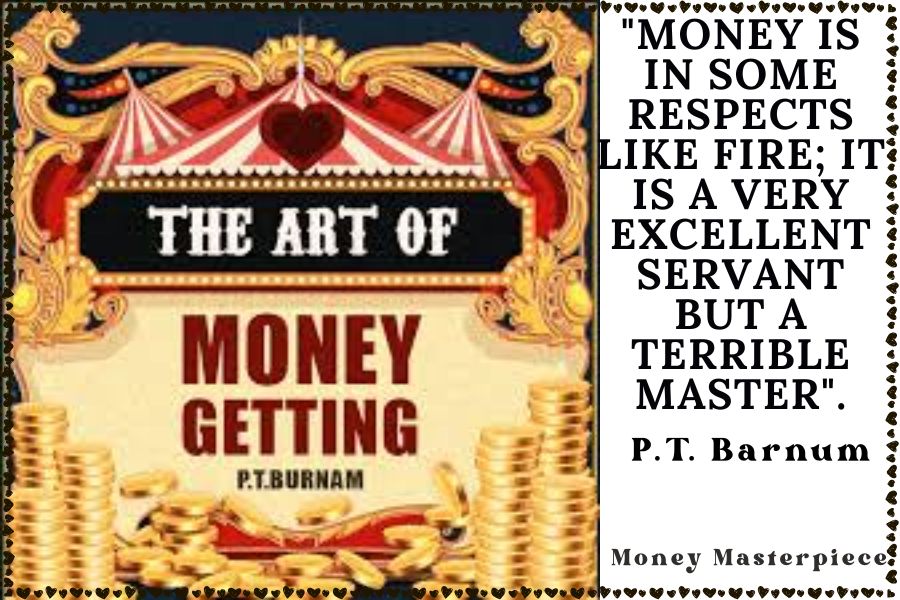
  • The Art of Money Getting by P.T. Barnum

    The Art of Money Getting; or, Golden Rules for Making Money by P.T. Barnum is a classic book on wealth, work ethic, and integrity. Barnum, a famous entrepreneur and showman, provides practical advice on building and preserving fortune. His rules combine common sense, prudence, and morality. Written in simple words, the book offers timeless lessons for anyone seeking financial security.


    Who May Benefit from the Book

    • Young professionals searching for financial discipline and guidance
    • Entrepreneurs aiming to grow their businesses wisely
    • Students seeking direction in career choices
    • Readers interested in wealth-building and character development
    • Anyone struggling with debt or financial mismanagement

    Top 3 Key Insights

    1. True economy means spending less than you earn, not being miserly.
    2. Perseverance and self-reliance are essential for lasting success.
    3. Integrity and honesty are the strongest foundations for wealth and reputation.
    4 More Lessons and Takeaways

    1. Choosing the right vocation and location matters as much as effort. Success follows when skill meets demand.
    2. Debt is a dangerous form of slavery. Living within means keeps a man free and respected.
    3. Business requires focus. Dividing attention across too many ventures brings failure.
    4. Politeness, charity, and fairness to customers and workers increase goodwill, which ensures long-term profit and legacy.

    The Book in 1 Sentence

    Barnum teaches that financial success is built on economy, persistence, integrity, wise choices, and respect for others.


    The Book Summary in 1 Minute

    P.T. Barnum’s The Art of Money Getting delivers practical rules for earning and keeping wealth. He stresses economy, health, honesty, and self-reliance as essential foundations. Barnum warns against debt, vanity, and scattering energy across too many ventures. He emphasizes choosing the right career, working diligently, and treating customers with kindness. Integrity, charity, and systematic work are highlighted as keys to financial and personal fulfillment.


    The Book Summary in 7 Minutes

    Barnum opens his book with a reminder that wealth without health is meaningless. Good health is the foundation of success. He argues that in America, opportunities are abundant, and the road to wealth is plain: spend less than you earn.

    Economy and Financial Discipline

    True economy, Barnum explains, is often misunderstood. It is not meanness but wise spending. A man may ruin himself by saving pennies in the wrong place and wasting dollars elsewhere. Vanity and the desire to impress others cause many to live beyond their means. To Barnum, real independence comes only when income exceeds expenses.

    Choosing the Right Vocation

    Every person has natural abilities. A mechanic who hates machinery or a lawyer without a gift for law will struggle. Barnum urges young people to select vocations that align with their talents. Parents must not impose careers on children against their nature, as forcing one’s hand leads to lifelong dissatisfaction.

    Selecting the Right Location

    After vocation, location is the next key. A skilled person in the wrong place will fail. Opening a business in a village without demand or growth prospects is a recipe for ruin. Barnum highlights that sometimes relocation is necessary, and a bold move can save a failing career.

    The Dangers of Debt

    Debt enslaves and destroys character. A debtor loses self-respect and constantly fears creditors. Barnum condemns borrowing for consumption, calling it “money working against you.” His maxim is simple: pay as you go. Debt-free living ensures peace of mind and builds credibility.

    Perseverance and Self-Reliance

    Barnum insists that perseverance is the key difference between success and failure. Many people give up just before reaching their goals. Perseverance must be paired with self-reliance, as depending too much on others weakens resolve. Determination and pluck separate the successful from the defeated.

    Work with All Your Might

    Success comes only to those who throw themselves fully into their work. Half-hearted effort brings mediocrity. Barnum urges diligence, early and late labor, and refusal to procrastinate. Luck is not real; instead, success follows consistent effort and sound methods.

    Using the Best Tools and People

    Employers should hire workers who use both hands and heads. Skilled, thoughtful employees are valuable assets. Barnum warns against overpaying those who think themselves indispensable but encourages rewarding loyalty and ability. The best results come from personal supervision combined with skilled helpers.

    Stay Grounded in Business

    Barnum cautions against starting business with unearned wealth or lottery luck. True success is built gradually, through patience, economy, and effort. He observes that poor boys often grow rich, while sons of the rich grow poor due to inexperience.

    Learn Something Useful

    Life is uncertain, and fortunes change. Barnum advises everyone to learn a trade or skill to fall back upon in case of failure. A practical skill ensures security in times of trouble.

    Avoiding Visionary Schemes

    Many men remain poor because they chase visionary projects and scatter their energies. Barnum warns against pursuing too many ventures at once. Concentration on a single line of work brings mastery and success.

    Be Systematic

    System saves time and energy. Barnum recommends doing tasks promptly, keeping order, and avoiding careless habits. Yet he warns against excessive formality, which leads to inefficiency. Balanced order brings productivity and leisure.

    The Importance of Newspapers

    In an age of rapid change, businessmen must stay informed. Newspapers provide valuable knowledge of markets, inventions, and trends. A man without news is cut off from progress.

    Beware of Outside Operations

    Barnum warns successful men against risky investments outside their field. Speculation in unknown areas often leads to ruin. Staying with what one knows is safer than gambling on uncertain promises.

    Caution with Endorsements

    He advises never to endorse notes or loans without security. Even for family, one should only risk what can be lost without regret. Careless endorsements have ruined many.

    Advertising and Publicity

    For merchants and showmen alike, advertising is vital. Good products must be advertised consistently until the public is fully aware. Clever, memorable advertisements attract customers, but spurious goods will fail regardless of promotion.

    Politeness and Customer Care

    Courtesy pays better than rudeness. Customers return to polite sellers and avoid those who cheat or act harshly. Barnum stresses that treating customers well is an investment in future profit.

    Charity and Generosity

    Generosity brings goodwill and prosperity. Barnum promotes thoughtful charity, given to those willing to help themselves. Miserly men are shunned, while liberal men earn respect and patronage.

    Guarding Secrets

    Sharing business secrets, hopes, or losses damages reputation and invites harm. Barnum warns against careless talk or letters that reveal too much. Silence protects business interests.

    Integrity Above All

    The book closes with integrity as the supreme rule. Dishonesty leads to prison and disgrace, while honesty commands trust and opportunity. For Barnum, honesty is the best policy and the surest path to lasting wealth.


    About the Author

    Phineas Taylor Barnum (1810–1891) was an American showman, businessman, and politician, best known for founding the Barnum & Bailey Circus. He earned fame for his exhibitions of curiosities and entertainment enterprises. Despite controversy, Barnum built a reputation as one of the most successful entrepreneurs of the 19th century. Beyond show business, he wrote extensively on money, character, and industry, blending practical wisdom with moral lessons. His influence extended to philanthropy, education, and civic life, where he advocated for perseverance, honesty, and innovation.


    How to get the best of the Book

    Read one chapter at a time, then reflect on how the lesson applies to your personal or business life. Keep notes and revisit them often.


    Conclusion

    Barnum’s The Art of Money Getting offers timeless wisdom for wealth and character. His simple yet powerful rules stress economy, honesty, and perseverance. For modern readers, his guidance remains as relevant as in his day: success is not luck but discipline, integrity, and effort.


  • The Science of Getting Rich by W. D. Wattles

    The Science of Getting Rich by Wallace D. Wattles is a practical guide that blends philosophy, faith, and actionable principles for wealth creation. First published in 1910, it continues to inspire readers who seek prosperity through disciplined thought and purposeful action. Unlike many motivational texts, this book presents wealth-building as an exact science, not a matter of luck.


    Who May Benefit from the Book

    • Individuals seeking financial improvement through structured thinking and action.
    • Entrepreneurs desiring practical guidance for sustainable wealth creation.
    • Readers interested in self-help and prosperity literature.
    • Professionals aiming to balance spiritual growth with material success.
    • Anyone curious about the philosophy of abundance and prosperity.

    Top 3 Key Insights

    1. Wealth creation is an exact science governed by universal laws.
    2. Thoughts shape reality, and a clear mental vision backed by faith attracts riches.
    3. True prosperity comes from creative action, not competition, by adding value to others.

    4 More Lessons and Takeaways

    1. Gratitude connects to abundance: A grateful mind stays in harmony with universal intelligence, ensuring continuous flow of wealth.
    2. Faith fuels action: Strong belief prevents doubt and directs energy toward purposeful actions that open channels of opportunity.
    3. Efficiency over quantity: Success results from doing each act well, with focus and commitment, rather than attempting too much.
    4. Impression of increase: Every interaction should leave others better off, reinforcing the principle of advancing life for all.

    The Book in 1 Sentence

    Wealth comes through faith-driven thought, gratitude, and purposeful action aligned with universal laws of abundance and creativity.


    The Book Summary in 1 Minute

    Wattles explains that getting rich is not luck but a science. He argues that thought shapes reality, and by holding a clear vision of wealth, infused with faith and gratitude, individuals can manifest abundance. Success requires efficient action in the present, shifting from competition to creation, and always giving more in use value than taken in cash.


    The Book Summary in 7 Minutes

    The Right to be Rich

    Wattles begins by affirming that everyone has the right to be rich. A fulfilling life requires money, as it enables full expression of body, mind, and soul. Poverty restricts growth, while wealth empowers one to serve others. The desire for riches is a natural desire for more abundant life.

    Wealth as a Science

    He stresses that getting rich follows universal laws, much like mathematics. Anyone can become wealthy by acting in a “Certain Way.” This approach is independent of environment or luck and works with certainty when applied faithfully.

    Abundance and Opportunity

    Opportunity is not monopolized. Though industries may be controlled, new opportunities constantly arise. The universe, made of Formless Substance, is inexhaustible. Poverty persists only because people fail to act in the Certain Way.

    The Power of Thought

    Thought is the creative force that shapes reality. By impressing ideas upon Formless Substance, desired results take form. To succeed, one must think abundance, not poverty, and maintain a clear mental picture of desired wealth.

    Increasing Life

    The universe seeks constant expansion. Riches align with this purpose, as they allow greater expression of life. The focus should be on creation rather than competition. True wealth benefits all, as no gain is achieved at another’s expense.

    How Riches Come

    Wealth flows through existing channels of trade and commerce. To attract it, one must offer more in use value than received in cash. Holding a vivid vision, backed by certainty, ensures that opportunities align to deliver riches.

    The Role of Gratitude

    Gratitude keeps the mind aligned with abundance and prevents drifting into fear of scarcity. A thankful spirit maintains harmony with Formless Substance, ensuring continuous flow of blessings. Gratitude naturally strengthens faith.

    Thinking in the Certain Way

    Desires must be clearly defined. Vague wishes cannot impress Formless Substance. Faith, purpose, and gratitude must accompany the vision, creating a mental attitude of ownership before the riches appear physically.

    Using the Will Correctly

    The will should be applied only to oneself, not others. It strengthens discipline, keeps focus on abundance, and avoids distractions like poverty consciousness. True willpower compels persistent faith-driven action.

    Acting Now

    Action is crucial. Wealth does not appear by thought alone; one must act effectively in the present environment. Each task should be performed with excellence, regardless of current circumstances, while remaining aligned with future vision.

    Efficient Action

    Success depends not on doing more, but on doing each act efficiently. Faith and purpose must be infused into every effort. Small but effective actions compound to create large results.

    Choosing the Right Business

    Any business can bring wealth if approached in the Certain Way. True success comes from work one genuinely desires, aligning with inner purpose. Desire signals innate capacity to succeed in that field.

    Conveying Increase

    Every interaction should leave others with an impression of increase. People naturally seek growth, and when they sense advancement, they remain connected. Giving more in use value ensures lasting prosperity.

    The Advancing Man

    Wage earners, professionals, and entrepreneurs alike can apply these principles. Success radiates when individuals infuse faith and purpose into their work, uplifting everyone they encounter. The advancing person inspires confidence and attracts opportunities.

    Final Cautions and Observations

    Wealth is not blocked by governments or systems. Challenges dissolve when one acts with faith, gratitude, and persistence. Speaking of failure or entertaining doubts disrupts the creative process. True failures often redirect toward better outcomes.

    The Summary Science

    The book condenses into clear steps:

    • Think in harmony with Formless Substance.
    • Hold a definite vision of riches.
    • Maintain unwavering faith and gratitude.
    • Act efficiently in the present.
    • Provide more in use value than taken in cash.
    • Advance yourself and others simultaneously.

    About the Author

    Wallace D. Wattles (1860–1911) was an American writer and pioneer in the self-help movement. Despite personal struggles and financial challenges, he studied widely in philosophy, religion, and social reform. His works emphasize the creative power of thought and practical methods for personal growth. The Science of Getting Rich remains his most influential book, inspiring countless prosperity thinkers and motivational writers.


    How to Get the Best of the Book

    Read with an open mind, apply principles daily, and practice gratitude. Focus on efficient action, not mere theory, and stay consistent.


    Conclusion

    Wattles presents wealth-building as a predictable process rooted in thought, faith, gratitude, and action. His method promotes abundance for all, rejecting competition for creation. Anyone who follows this disciplined approach with persistence can achieve both prosperity and personal fulfillment.

  • The Mathematical Certainty of Wealth: Why Getting Rich is an Exact Science

    W. D. Wattles’ seminal work, The Science of Getting Rich, first published in 1910, is not a philosophical treatise upon theories, but a practical manual intended for men and women whose most pressing need is for money. The book’s radical assertion, central to its framework, is found in Chapter II: There is a Science of Getting Rich. This chapter declares that acquiring wealth is not a product of luck, environment, or superior talent, but the inevitable consequence of following specific, demonstrable laws.

    Wattles expects readers to accept his fundamental conclusions upon faith and prove their truth by acting upon them without fear or hesitation. He guarantees that the science applied here is an exact science, making failure impossible for those who adhere to its principles.

    The Laws Governing Riches

    The core principle of this science is defined with clarity: Getting rich is an exact science, like algebra or arithmetic.

    This absolute certainty stems from a foundational natural law: like causes always produce like effects. The ownership of money and property results from doing things in a Certain Way. Consequently, any man or woman who learns and obeys these laws will infallibly get rich.

    Wattles contrasts those who succeed by doing things in this Certain Way (whether accidentally or on purpose) with those who, despite working hard or being highly capable, remain poor because they fail to employ this method.

    Dispelling the Myth of Environment

    One of the most powerful arguments presented in Chapter II is the elimination of external circumstances as the primary cause of wealth or poverty.

    • Geographic location is secondary: If getting rich were solely a matter of environment, all people in certain neighborhoods or cities would be wealthy, while those in others would remain poor.
    • The evidence of contradiction: We consistently observe rich and poor living side by side. They often inhabit the same environment and are engaged in the same vocations.
    • The true determinant: When two men operate the same business in the same neighborhood, and one succeeds while the other fails, it “shows that getting rich is not, primarily, a matter of environment”. While location counts for something—one would not expect successful business in the heart of the Sahara—the fact remains that if anyone else in your town or state can get rich, so can you.

    Talent, Thrift, and the Certain Way

    Wattles systematically debunks other common explanations for wealth, further solidifying his assertion that the Certain Way is the sole deciding factor:

    1. Talent is not the cause: The ability to operate in this Certain Way is not due solely to the possession of talent. Many highly talented people remain poor, while individuals with very little talent achieve riches. Those who acquire wealth are often an average lot in all respects, having no greater talents than other men; they succeed simply because they happen to do things in a Certain Way.
    2. Saving is not the cause: Getting rich is not the result of saving, or “thrift”. Many penurious (very saving) people are poor, while free spenders often become rich.
    3. Action alone is insufficient: It is not simply doing things that others fail to do. Two men in the same business may do almost exactly the same things, yet one gets rich while the other remains poor or goes bankrupt.

    The ultimate conclusion derived from these observations is that getting rich results entirely from doing things in a Certain Way. This realization brings the acquisition of wealth “within the domain of exact science“.

    Universal Accessibility: Anyone Can Succeed

    The Science of Getting Rich is not reserved for an elite few; it is universally accessible. Wattles dismisses the idea that the Certain Way might be too difficult to follow, noting that rich people include talented individuals and “blockheads,” intellectually brilliant and very stupid people, and the physically strong and the weak.

    • Intellectual Requirement: Only some degree of ability to think and understand is essential, but “any man or woman who has sense enough to read and understand these words can certainly get rich”.
    • Business Selection: While you will naturally do best in a business you like or one suited to your developed talents or locality (e.g., a salmon fishery in the Northwest rather than Florida), getting rich is not dependent upon your engaging in some particular business. If someone else is getting rich in your current line of business, and you are not, it is solely because you are not doing things in the same Way that the successful person is doing them.
    • The Power of Starting Without Capital: Crucially, no one is prevented from getting rich by lack of capital. While having capital makes increase easier and more rapid, those with capital are already rich. The getting of capital is a part of the process of getting rich and invariably follows the doing of things in the Certain Way. Even if you are the poorest man on the continent, deeply in debt, and lack friends or resources, if you begin to do things in this Way, you must infallibly begin to get rich.

    Conclusion

    Chapter II establishes the fundamental premise of W. D. Wattles’ philosophy: the journey to wealth is not a chaotic struggle, but an orderly scientific process. Since the universal law dictates that like causes must produce like effects, your immediate task is not to change your environment, talent, or even business, but to learn the exact method. If you are in the wrong location or business, you can still begin right now, in your present business and in your present location, to follow the Certain Way which guarantees success. The following chapters will reveal the first principles required to put this exact science into action.

  • 5 Rich Habits Learned from More Than 200 Millionaires

    Wealth doesn’t happen by accident. It’s the product of intentional daily actions, smart decisions, and disciplined habits repeated over time. Over a five-year period, Tom Corley — a CPA, financial planner, and author of Rich Habits — studied the routines of 233 wealthy individuals (177 of whom were self-made millionaires) and compared them with people struggling financially.

    His findings are clear: entrepreneurship can help build wealth faster than saving and investing alone, but only if paired with the right daily habits. On average, entrepreneurs in his study reached $7.4 million in 12 years, compared to 32 years for “saver-investors” who worked traditional jobs.

    The Rich Habits

    The good news? These millionaire habits can be learned and applied by anyone. Below are five rich habits from Corley’s research that can help aspiring entrepreneurs and professionals alike accelerate their journey to financial success.


    1. Set Clear, Actionable Goals

    Millionaires don’t stumble into success — they plan it. Corley’s research found that 80% of self-made millionaires set specific long-term goals and revisited them daily. Entrepreneurs in particular benefited from having a laser-focused vision, whether that meant launching a new product, scaling revenue, or entering a new market.

    The key difference? They adopted a “do it now” mindset — taking immediate steps rather than waiting for perfect conditions. This habit keeps momentum alive and prevents procrastination.

    💡 Action Step: Write down your top business goal for the next 12 months. Break it into quarterly, monthly, and daily tasks. Review progress every evening and adjust as needed.


    2. Commit to Continuous Learning

    Wealthy entrepreneurs are lifelong learners. Corley discovered that 88% of millionaires dedicate at least 30 minutes a day to self-education — whether by reading business books, listening to podcasts, or studying industry trends.

    In contrast, those struggling financially spent their free time on passive entertainment: TV, social media scrolling, or fiction reading with little practical application. Knowledge compounds just like money, and the habit of learning helps entrepreneurs make better decisions, spot opportunities, and stay competitive.

    💡 Action Step: Replace 30 minutes of social media or Netflix with a business-related book or podcast. Over a year, that’s more than 180 hours of high-value learning.


    3. Live Frugally and Reinvest Profits

    Millionaires aren’t reckless spenders. In fact, both entrepreneurs and saver-investors in the study lived below their means. The difference lies in where their savings went.

    • Saver-Investors put aside at least 20% of their income into investments over decades.
    • Entrepreneurs, however, lived frugally so they could reinvest profits directly back into their businesses — in marketing, new hires, or product development.

    Wealthy individuals typically budgeted their income carefully:

    • Housing: ≤ 25%
    • Food: ≤ 15%
    • Entertainment: ≤ 10%
    • Vacations: ≤ 5%

    Frugality isn’t about deprivation; it’s about maximizing the capital available for opportunities.

    💡 Action Step: Automate 20% of your business profits into a reinvestment account. Treat it like a non-negotiable “growth tax” for your company.


    4. Build Power Relationships

    Your network is your net worth. Corley found that 93% of millionaires with mentors credited them for their success. Mentors shortened the learning curve by sharing proven strategies and connecting entrepreneurs with powerful contacts.

    But mentorship is just one piece of the puzzle. Millionaires also built “power relationships” with optimistic, driven peers who encouraged growth and opened doors to collaboration. They didn’t waste time with negative or toxic people who drained energy.

    💡 Action Step: Identify one mentor in your industry and schedule a call or meeting to seek specific guidance. At the same time, offer mentorship to someone starting out — teaching strengthens your own knowledge while expanding your influence.


    5. Take Calculated Risks

    Risk-taking is a defining feature of entrepreneurship. However, Corley’s study revealed that wealthy entrepreneurs were not gamblers. Instead, they embraced calculated risks — making informed decisions backed by research, market analysis, and mentorship advice.

    About 27% of millionaires failed in business at least once, but instead of giving up, they learned from mistakes, refined their approach, and tried again. Failure wasn’t the end — it was tuition for long-term success.

    💡 Action Step: Before launching a new venture, test your idea with a pilot program or small market experiment. Gather data, adjust, and scale only after proving demand.


    Bonus Habit: Prioritize Positivity and Health

    Though not part of the top five, one recurring theme among millionaires was the importance of energy and mindset. 76% exercised regularly, and many practiced gratitude and “rich thinking” — focusing on solutions rather than problems.

    Optimism and health provided the stamina to endure long work hours and bounce back from setbacks — an underrated advantage in wealth-building.


    The Power of Passion and Persistence

    Habits alone don’t create wealth without passion. Corley emphasizes that passion keeps entrepreneurs motivated when challenges arise. Passion fuels persistence, and persistence — combined with rich habits — compounds into financial success.

    While entrepreneurship is the fastest path to wealth, it’s not an overnight journey. Millionaires in the study still took an average of 12 years to reach multimillion-dollar status. But compared to traditional saving and investing, that’s a far shorter timeline.


    Final Thoughts

    The study of 233 millionaires shows that building wealth is less about luck and more about habits. By setting goals, learning continuously, living frugally, building networks, and taking calculated risks, anyone can follow the millionaire blueprint.

    Entrepreneurship offers the fast lane, but it demands discipline, resilience, and consistency. Adopt these five rich habits, and you’ll not only grow wealth but also create a life of purpose and fulfillment.


    Would you like me to also create a shorter 1-minute “snackable” version of this post for your Summarypedia format — something readers can grasp instantly?

  • Gold and Silver Money in The Wealth of Nations

    The Wealth of Nations explicitly categorize gold and silver money, despite its necessity for commerce, as a “dead stock” that is unproductive, contrasting its circulation function with the actual generation of wealth. This perspective is central to understanding the true nature of national capital.

    I. Money as the Universal Instrument of Circulation

    The function of money arose out of the practical difficulties inherent in a system of barter once the division of labour had been thoroughly established. To conduct exchanges efficiently, men ultimately gave preference to metals, such as gold and silver, over every other commodity. These metals possess qualities, like durability and the ability to be divided and easily reunited, that render them uniquely fit to be the instruments of commerce and circulation.

    In all civilized nations, money has become the universal instrument of commerce, intervening in the buying, selling, and exchanging of all kinds of goods. This function means that money acts as the “great wheel of circulation,” distributing the society’s revenue among its members. The price of every commodity is thus most frequently estimated by the quantity of money it exchanges for.

    II. Gold and Silver as Dead Stock

    Despite serving this vital function of distribution, the sources stress that the gold and silver comprising the currency do not themselves constitute or produce wealth; they are merely an expensive piece of machinery:

    1. Unproductive Capital: The stock of money circulating in any country is considered a “very valuable part of the capital of the country, which produces nothing to the country”. The ready money a dealer is obliged to keep unused for answering demands is called “dead stock,” yielding no product either to him or to his country while it remains idle. Money is regarded as the “most unprofitable part” of the national capital.
    2. Deduction from Revenue: Money, as the great wheel of circulation, makes no part of the revenue of the society. When calculating the total or net revenue of any society, the entire value of the money must be deducted from the annual circulation of money and goods. The expense of supporting this “great but expensive instrument of commerce”—which includes valuable materials (gold and silver) and highly skilled labor—is a deduction from the neat revenue of the society. This expense does not augment the stock reserved for consumption, conveniences, or amusements.
    3. Analogy of the Highway and Utensil: To emphasize its non-productive nature, the circulating gold and silver money is compared to a highway. A highway circulates and carries the grass and corn to market, but it “produces itself not a single pile of either”. Similarly, gold and silver, whether coined or in plate form, are functionally considered utensils. The quantity of these metals in any country is necessarily limited by the use for them (for coin to circulate commodities, or for plate as household furniture).

    III. Converting Dead Stock into Active Capital via Banking

    The recognition that circulating gold and silver is unproductive dead stock forms the basis for advocating the introduction of paper money and judicious banking.

    The substitution of paper for gold and silver money essentially replaces a very expensive tool of commerce with one that is much less costly, enabling circulation to be carried on by a new “wheel” that costs less to erect and maintain.

    The goal of banking operations is to convert this dead stock into productive capital:

    • Active Stock: Judicious banking enables a dealer to convert his unused ready money (dead stock) into “active and productive stock”—such as materials to work upon, tools, and provisions for workers—which produces something for both the individual and the country.
    • National Gain: By substituting paper in the place of a large portion of gold and silver, the country can convert this dead stock into active and productive stock.
    • The Metaphor of the Waggon-Way: This transformation is described vividly: banking provides, by a “violent metaphor,” a sort of “waggon-way through the air,” which enables the country to convert a large part of its “highways” (the unproductive gold and silver circulation) into “good pastures, and corn fields,” thus significantly increasing the annual produce of its land and labour.

    When paper money replaces gold and silver, the quantity of materials, tools, and maintenance that the circulating capital can supply is increased by the whole value of the gold and silver released. This released gold and silver is then sent abroad in exchange for foreign goods, which are likely to be purchasing materials, tools, and provisions necessary to employ and maintain an additional number of industrious people. This process transforms the former dead stock into capital that encourages industry.

  • The 3 Phases of Building a Business with Case Studies

    Starting a business is exciting, but it requires more than just passion and a good idea. To turn your vision into a sustainable venture, you need clear planning, smart execution, and ongoing management. This guide walks you through the essential steps of building a business—from the spark of an idea to long-term growth and even a potential exit strategy.

    Phase 1: Planning Your Business

    Strong planning sets the foundation for everything that follows. Here’s how to get started:

    1. Becoming an Entrepreneur

    Entrepreneurship is more than owning a business—it’s a mindset. It involves resilience, adaptability, and a willingness to take calculated risks. Begin by understanding your motivations and committing to continuous learning.

    Case in Point: Elon Musk embodies this mindset. From software (Zip2) to space travel (SpaceX), his career shows how embracing risk and long-term vision can transform industries.

    2. Finding Your Business Idea

    The best businesses often solve real problems. Look for gaps in the market, customer frustrations, or emerging trends. Brainstorm, validate your ideas, and assess whether they align with your skills and passions.

    Case in Point: Airbnb was born when its founders couldn’t pay rent and realized travelers wanted affordable, unique accommodations. That simple idea grew into a multibillion-dollar company.

    3. Conducting Market Research

    Before investing time or money, research your target customers, industry trends, and competitors. Ask: Who are my customers? What do they want? Who else is serving them, and how can I do it better?

    Case in Point: Netflix initially mailed DVDs but shifted to streaming after seeing data on customer behavior. Their market research and foresight gave them the edge over Blockbuster.

    4. Writing a Business Plan

    Your business plan should clearly outline your mission, vision, goals, target audience, competitive advantage, and financial forecasts. Think of it as a roadmap that not only guides your actions but also convinces investors or lenders of your credibility.

    Tip: Many successful startups refine their plans as they grow. Dropbox, for example, started with a simple video demo to prove demand before scaling.

    5. Choosing a Business Structure

    Decide whether your venture should be a sole proprietorship, partnership, LLC, or corporation. The right structure affects liability, taxation, and ownership flexibility. Always consult a legal or financial advisor before finalizing this choice.

    Tip: Tech startups often prefer Delaware C-Corporations because they make it easier to attract venture capital.

    6. Selecting Your Business Model

    Your business model determines how you will make money. Will you sell products directly, use subscriptions, offer services, or leverage advertising? Choose a model that matches your industry and revenue goals.

    Case in Point: Spotify used a freemium model—offering free access with ads and charging for premium subscriptions—which attracted millions of users before achieving profitability.

    Phase 2: Launching Your Business

    Once your foundation is in place, it’s time to bring your business to life.

    1. Securing Funding

    Most businesses need startup capital. Explore funding options such as personal savings, bank loans, angel investors, venture capital, or crowdfunding. Ensure your funding strategy matches your long-term growth plans.

    Case in Point: Oculus VR raised $2.4 million on Kickstarter before being acquired by Facebook for $2 billion.

    2. Registering and Obtaining Licenses

    Make your business official by registering with government authorities. Obtain the necessary licenses, permits, and tax IDs to avoid compliance issues later.

    Tip: Compliance upfront avoids costly setbacks. Uber faced challenges in multiple cities because it expanded before securing proper licenses.

    3. Protecting Your Business

    Safeguard your assets with proper insurance (liability, property, professional), contracts, and intellectual property protection. Risk management is not optional—it’s essential.

    Case in Point: Apple fiercely defends its patents, ensuring its innovations are legally protected from competitors.

    4. Branding Your Business

    A strong brand builds trust and loyalty. Create a memorable name, design a professional logo, and craft a unique voice that resonates with your target audience. Your brand should reflect both your values and your customers’ needs.

    Case in Point: Warby Parker disrupted the eyewear industry by branding itself as affordable, stylish, and socially responsible, gaining instant traction with millennial customers.

    5. Opening a Brick-and-Mortar Business

    If you plan a physical location, consider factors like foot traffic, rent, accessibility, and proximity to suppliers. The right location can accelerate your growth.

    Case in Point: Starbucks strategically chooses high-traffic areas and creates a consistent customer experience worldwide, fueling its global expansion.

    6. Creating an Online Presence

    In today’s digital-first world, an online presence is mandatory. Build a professional website, optimize for search engines, and use social media to engage customers and build credibility.

    Case in Point: Dollar Shave Club gained fame through a viral YouTube video and a simple subscription website, which Unilever later bought for $1 billion.

    7. Tracking Your Income and Expenses

    Implement an accounting system from day one. Accurate financial records help you manage cash flow, file taxes, and make informed business decisions.

    Tip: QuickBooks and Xero are popular tools for startups to manage cash flow and taxes without needing a full accounting team.

    Phase 3: Running Your Business

    Once your business is up and running, the real challenge begins: keeping it profitable and sustainable.

    1. Monitoring Finances

    Cash flow is the lifeblood of your business. Regularly review income statements, balance sheets, and cash flow reports. Stay disciplined with budgeting and expense control.

    Case in Point: Many restaurants close within a year due to poor cash flow management, not lack of customers. Always monitor your burn rate.

    2. Using Big Data and Analytics

    Data-driven decisions separate thriving businesses from struggling ones. Track customer behavior, sales patterns, and operational efficiency. Use analytics tools to refine strategies and spot growth opportunities.

    Case in Point: Amazon uses data analytics for everything from product recommendations to supply chain optimization, giving them a huge competitive edge.

    3. Staffing Up

    As your business grows, you’ll need a strong team. Recruit the right talent, onboard them effectively, and invest in training. A motivated workforce can be your greatest competitive advantage.

    Case in Point: Zappos became famous for its culture of customer service, driven by how it hired and trained employees.

    4. Understanding Business Law

    Stay compliant with employment laws, tax regulations, and industry-specific rules. Ignorance of the law can result in costly fines or lawsuits.

    Case in Point: Facebook faced billions in fines for privacy law violations—proof that compliance is not optional.

    5. Marketing Your Business

    Build consistent marketing campaigns across digital and traditional channels. Identify what resonates most with your audience—be it storytelling, discounts, or influencer partnerships.

    Case in Point: Coca-Cola’s “Share a Coke” campaign personalized bottles with names, driving both sales and social media buzz.

    6. Boosting Sales

    Upselling, cross-selling, loyalty programs, and excellent customer service can all help increase revenue. Focus not just on acquiring customers but also on retaining them.

    Tip: Amazon’s “Frequently Bought Together” upselling feature generates billions in extra revenue annually.

    7. Improving Operations and Logistics

    Streamline supply chains, automate repetitive tasks, and invest in tools that reduce waste and improve efficiency. Operational excellence saves money and delights customers.

    Case in Point: Toyota’s lean manufacturing model revolutionized production efficiency worldwide.

    8. Selling Your Business

    Eventually, you may want to exit. Whether through selling, merging, or passing it on, prepare early to maximize value. A well-documented, profitable business is far more attractive to buyers.

    Case in Point: Instagram had just 13 employees when Facebook bought it for $1 billion, largely because of its growth potential and clean operations.

    Final Thoughts

    Starting a business is not a single step but a journey—from planning and launching to long-term management. By carefully addressing each stage—idea generation, funding, branding, operations, and growth—you position yourself for sustainable success.

    Remember: a thriving business doesn’t just happen. It’s built, managed, and continuously improved.