Blog

  • behavioral economics vs behavioral finance: All you need to know

    Behavioral economics focuses on the individual’s economic decision-making processes, whereas behavioral finance focuses studies how individual behavior, including irrational behavior/cognitive biases, impacts financial decisions and markets. They are sometimes used interchangeably. 

    Some economists believe that behavioral economics is a better label for their field because it addresses human behavior in labor markets, consumer markets, and especially financial markets. 

    On the other hand, behavioral finance is a discipline within finance focusing on how psychology affects investment decisions. We will explore all aspects of behavioral economics vs behavioral finance.

    What is Behavioral Economics?

    Behavioral Economics studies how people make economic decisions. It looks at human decision-making tasks or processes. This includes trying to understand why people behave irrationally. As a result, behavioral economics helps devise better public policies and other research questions that are more in tune with the way humans act.

    Like any other economic theory, behavioral economics uses several concepts and insights to analyze agents’ actions. The underlying premise is that people do not always behave economically rationally. More specifically, they make decisions based on their emotions and habit rather than the most practical action through the lens of traditional economic theory. These irrational behaviors often lead to less than optimal results for themselves and others.

     They may behave irrationally or not in their best interests because they are not fully aware of the consequences of their decision. In this way, people studying behavioral economics hope to understand better how humans make economic decisions and develop applicable policies that account for human biases and irrationalities.

    behavioral economics vs behavioral finance

    Is there a relationship between behavioral economics and finance?

    Behavioral economics is a term that has emerged as an interdisciplinary field that crosses between psychology and economic theory, which studies how people make decisions. In addition, there are many areas where behavioral economics intersects with finance. One such area is understanding bubble risk, or whether some phenomena like irrational asset prices could result from human biases.

    Finance is the study of how people think when making financial decisions. Behavioral economics is the study of how people make economic decisions. So, there are connections between these two topics. 

    There are some connections between behavioral economics and finance because behavioral economics is focused on understanding the underlying psychology behind people’s decisions. In addition, research indicates this field could be helpful when looking at market pricing in certain situations due to its focus on human judgment.

    What are the differences between Behavioral Economics and Consumer Behavior?

    Behavioral economics studies consumer behavior, emphasizing how people make decisions based on past experiences rather than rational choices. Behavioral economics has been an emerging area of study since 2002, but it has remained relatively under-researched until recent years. As a result, consumers are usually unaware of the degree to which psychological quirks or biases affect their decision-making.

    It looks at the difficulty of understanding and predicting human behavior. For example, consumer behavior is a branch of marketing that indicates what people want to buy and wish for the product. The two branches are very different but have a common goal: understanding how to make more effective decisions.

    One difference is that a person’s perception of a product directly influences how they experience it. Also, consumers have expectations about products before using them because advertising does not always tell the whole story. Consumers also have a different understanding of risk than economists. Lastly, consumers evaluate products differently as well as under other circumstances.

    What is the association between behavioral economics and behavioral finance?

    Behavioral finance is a part and subset of behavioral economics. It is an academic field that blends elements of economics, social psychology, and cognitive psychology, especially the work of Amos Tversky and Daniel Kahneman on prospect theory. However, behavioral economics usually refers to behavioral finance and more traditional economic models, considering psychological factors.

    It has been steadily gaining recognition in the academic world for the last few decades, b. This field of research focuses on human decision-making psychology and how it influences economic decisions. As a result, behavioral economists have found ways to help people make better decisions, which has helped advance the field of finance. This has happened through experiments conducted by behavioral economists, who have found that people are not always rational thinkers.

    Behavioral economics and behavioral finance are two branches of economics that have grown since psychology was researched more thoroughly. Behavioral economics is a way of studying human behavior focusing on financial decision-making. On the other hand, behavioral finance focuses more just on the behavior of investors and traders. Both fields have shown that people often make irrational decisions that they might not if they knew better or had a clearer head.

    What is something that behavioral economics explains clearly?

    One area that behavioral economics has helped clear up is that people act rationally. For decades it’s been widely accepted that people always choose the best option, but behavioral economics comes with a more nuanced aspect of human behavior.

    Another explanation that behavioral economics provides is what causes people to overpay for items when they lose money in an auction.

    In his book, Thinking Fast and Slow, Daniel Kahneman, Nobel Prize-winning economist, shares research that has given us new insights into the two modes of thought- intuition and reasoning- that influence our decision-making. He demonstrates how our intuitive mind is subject to biases that can be detrimental to our judgment. In contrast, the reasoning mind is more rational and less influenced by these cognitive errors.

    Behavioral economics explains more about human behavior than the traditional rational actor model. In the conventional model, people always make decisions that maximize their utility. However, this newly emerging field shows that the brain is often biased, and there are many factors affecting decision-making that can’t be predicted with rationality.

    Examples of behavioral economics

    When a person is making a decision, they weigh the costs and benefits of every option. In economics, this is called a rational choice theory. However, behavioral economics looks at how real people make decisions- sacrificing now for a better future payoff, immediate gratification, etc. Behavioral economics also studies how people take risks and react to external factors, such as advertising. The term “behavioral economics” was first used by Herbert Simon in 1959.

    For example, it can help predict when traders panic and sell stocks in a bear market. 

    One example of behavioral economics is how people react to changes in the stock market due to their own beliefs. People buy low and sell high but often do the opposite based on what they want at that moment.

    Another well-known example is the effect of prices on consumers, where customers are more likely to buy when there is a discount or when an item is on sale. This can be seen in grocery stores when items left near the end of their shelf life are given a lower price tag.

    Some examples are loss aversion, hyperbolic discounting, and general overconfidence with risk-taking. Another example is heuristics, which are rules of thumb used by most people to make decisions with little information.

    Some examples of these frameworks include bounded rationality. People use heuristics to make decisions, with little consideration of probabilities. For example, prospect theory states that people have a negative attitude towards losses and a positive attitude towards gains. It means it takes less to become indifferent to an inevitable loss than the other way around.

    Who paved the way to behavioral economics and Behavioral Finance?

    Richard Thaler played an excellent role in behavioral economics and Behavioral Finance. Notable individuals and the studies regarding them include:

    • Richard H. Thaler and Cass Sunstein ( Nudge: Improving Decisions About Health, Wealth, and Happiness, 2008)
    • Daniel Kahneman (illusion of validity, anchoring bias; 2002)
    • George Akerlof (procrastination; 2001)
    • Nobel laureates Gary Becker (motives, consumer mistakes; 1992)
    • Herbert Simon (bounded rationality; 1978)

    The future of behavioral economics

    Behavioral Economics has been the darling of academicians for decades now. Moreover, it is widely accepted by policymakers and academicians alike as a much-needed correction to classical economics models. 

    This field has led to a better understanding of consumer and investor behavior and how this information can adapt products, services, and policies. The future of this field will rely mainly on the continued development of psychological tools such as social psychology principles and insights from neuroeconomics; however, there are still many open questions that need answers.

    In the past, economists have mainly focused on human behavior as a medium for rational decision-making. Still, more recently, behavioral economics has been gaining traction, with Nobel Prize winner Daniel Kahneman even suggesting it could be the future of the profession.

    Why is behavioral economics important?

    Behavioral economics considers the psychological factors in economic decision-making. This includes how people think about, understand, anticipate, and react to various events in their lives. Behavioral economics requires psychology research to understand better how people respond to multiple events. For example, people are not always rational actors regarding money.

    It is essential because it provides a framework for understanding how psychological, neurological, and biological factors affect economic choices and decision-making. Behavioral economists use experiments and surveys to learn about people’s beliefs, preferences, and behavior.

    It brings psychology into the economic equation. Therefore, it is crucial to take the influences of psychology on our decision-making processes into account to create better solutions for all. In addition, the relationship between behavior and economics can be seen in some currently being researched theories.

    How can behavioral economics improve marketing?

    Behavioral economics proponents believe that a better understanding of human psychology will allow more intelligent and effective marketing campaigns. This article discusses how different applications of behavioral psychology are in marketing, such as controlling the amount of choice offered to customers, using “loss aversion” to create urgency in a product’s availability, and using incentive-based pricing tactics.

    Economic theory posits that understanding individual psychology and decision-making processes can help improve marketing and advertising. For example, research has found that consumers react more favorably to messages delivered in person than TV. In addition, many participants reported that the experience was more enjoyable and convincing.

    It can help improve marketing. The first step is to define what decision-making means within behavioral economics. The second step is to identify the three basic decision-making processes typically used in marketing situations: information processing, prioritizing and deciding.

    How can Behavioural economics help business?

    Behavioral Economics is an influential field that can be applied to business techniques. It is generally based on the idea that people are not rational, but they are subject to cognitive biases which affect their decisions. Furthermore, the concept is based on observing that people’s behavior does not always follow logical decision-making. Therefore the study of human behavior is vital in understanding consumer buying patterns.

    If businesses understand how people think and what influences their choices, they better understand what to sell. This will allow better product development, efficient marketing, and increased sales.

    What can you do with a behavioral economics degree?

    Behavioral economics is the study of how people’s emotions, social norms, and individual circumstances influence their economic decision-making. This growing field is the next step in economic research, more important than ever considering psychology’s significant role in today’s world. A behavioral economics degree can prepare you for a career in either research or education.

    Behavioral economists are interested in the consequences of short-term decision-making that may lead to long-term effects. It works on emotions, social networks, culture, limited attention span, and other human traits that affect these decisions.

    It is an important field to study because by understanding how we make our decisions, we can help people make more rational choices and thus improve their lives. Economists with a behavioral economics degree might work in many industries or areas such as marketing, consulting, banking, insurance, law enforcement, and government.

    What’s the difference between the castle-in-the-air theory and behavioral finance?

    Castle-in-the-air theory is an investment term used to describe an investor’s wishful thinking about the future. Behavioral finance is a branch of financial economics that attempts to understand why investors behave the way they do, not just what they do. Behavioral economists have studied how emotions impact decisions and have identified certain cognitive biases that can lead to investing mistakes.

    The castle-in-the-air theory is a concept that was first used by the financial advisor, Jeremy Siegel. The theory suggests that people live in the past because they believe the market will always rise. Therefore, investors should rely on what is happening now and act accordingly. Behavioral finance refers to the study of how psychology affects financial decisions. It also looks at how memories color our thoughts and make us take action because of these emotions.

    Behavioral Finance’s heart is that investors are not rational and will often make irrational decisions regarding their investments. So it uses psychological principles to analyze how investors behave and make decisions. The castle-in-the-air theory goes one step further and argues that humans always consider what might happen in the future and build castles in their minds about what could happen, but these castles never exist.

    Is Behavioural Finance the same as Behavioural economics?

    Behavioral finance is a subset of behavioral economics, which studies human decision-making. Behavioral economics is broader and includes all concepts of behavioral finance.

    Wrap up

    Behavioral economics provides a helpful framework for understanding economic decisions at the individual level. Behavioral finance explains how investors behave and what drives the economy. There are many similarities between them. Just as Daniel Kahneman stated, “Both of these approaches are based on the proposition that the economic agents of the system–individuals, firms, or governments are not fully informed, rational decision-makers.” However, for sure: behavioral finance has had a more significant and direct impact, whereas behavioral economics has broader consequences on society.

  • Why anchoring bias is so tricky | All you need to know

    Anchor Bias is a cognitive bias that causes us to make decisions based on the first piece of information we encounter, rather than considering all available evidence and making an informed decision. 

    Anchoring Bias

    Anchoring bias is a term used in psychology to describe the human tendency to rely too heavily on one piece of information. A typical example may be estimating the value of a house based on its initial cost without considering how long it has been lived in and what kind of renovations it made. 

    Anchoring bias is a cognitive situation where people rely too heavily on the information they receive first.

    Discovery

    The findings of anchoring bias or the heuristic were first discovered by Amos Tversky and Daniel Kahneman in 1974.

    The anchoring bias is when people are influenced by the first information they receive. It is often the price of the item or the price they knew. It can be a severe problem in negotiations because the other person’s opening price influences both parties.

    How can Anchoring Bias practically misguide us? 

    The bias can potentially mislead us into making significant decisions. It happens when we rely too much on the first piece of information we receive and then disregard other relevant information. For example, imagine you’re looking at a job listing, and it’s asking for qualifications such as having a degree, experience, certifications from an accredited university, etc. You notice a degree is one of the qualifications, and you think to yourself, “I have a degree!

    It can be problematic as human beings make many decisions, which means the first information they receive is not always accurate. It can lead people to make sub-optimal decisions because they overestimate the quality of their initial decision. I’ll give you an example. Let’s say you were thinking about buying either a Honda Accord or a Subaru Outback, but you weren’t sure which one would be more reliable.

    Overcoming anchor bias easily

    The answer is no. Anchoring bias is hard to overcome because it is an unconscious human behavior that is hard to control. 

    People tend to believe what they already believe, and it is hard for them to change their minds.

    One of the main concepts in behavioral finance is the concept of anchoring. It tends to rely heavily or focus on irrelevant information when making decisions or judgments. It can be difficult for humans to process such large amounts of information and make decisions without any outside influence, but this is much easier when we use arbitrary information as a point of reference. Humans naturally ask themselves: “What would be an excellent decision to make in this situation?

    What are the methods to avoid Anchoring bias altogether? 

    To avoid the anchoring bias, the following measures may help a lot:

    1. -Use a checklist for calculations.
    2. -Keep an open mind
    3. -Ask yourself if the anchor is that good
    4. -Ask yourself if the anchor is that bad
    5. -Reflect on the words
    6. -Think of other things you associate with the anchor
    7. -Challenge the anchor’s significance
    8. -Test your assumption

    What are the Impacts of Anchoring Bias? 

    Anchoring bias tends to rely too heavily on the first piece of information that you receive.

    Anchoring bias impacts how people perceive the world around them. It also influences how people make future decisions.

    With 80% of the American population being aware of “anchoring bias,” it is essential to point out that it also has a negative effect. Most of the time, an average individual only thinks of one side of a topic and disregards all other information. It is called confirmation bias and leads to biases such as anchoring bias.

    Anchoring bias emphasizes one piece of information or event and then bases decisions or judgments on that one piece of information. An example of this is when a price for a product is set, and people will find it more expensive than if they had never seen the first price tag.

    Anchoring bias also impacts how people make decisions. For example, people are more likely to buy a house in a specific price range if they think about buying it.

    One way anchoring bias can be avoidable is by gathering information before concluding. This way, people are less likely to be biased when making decisions.

    Some of the impacts of anchoring bias are that people are more likely to get married if they are older when they get

    Anchoring bias and its effect on risk perception

    Anchoring bias and the limitations of decision making

    Anchoring Bias and how it affects our ability to make decisions

    Anchoring Bias and how it affects organizations and their decision-making process

    How does Anchoring bias relate to marketers?

    Are we supposed to avoid anchoring bias at all costs? 

     Participants were asked to give an initial estimate based on a given starting point of 25% and the opportunity to adjust their estimates.

    The findings were that people tended to adjust their estimates closer to the initial 25% estimate, suggesting that the initial 25% estimate had an anchoring effect.

    Another example of bias is price anchoring: an artificially high or low price to influence the perception of the value and magnitude of tradeoffs.

    Furthermore, people tend to anchor to the original price to make decisions about other products.

    Anchoring bias is a cognitive bias that relies on a person’s initial impression, even when

    Another example of bias is price anchoring: an artificially high or low price to influence the perception of the value and magnitude of tradeoffs.

    People tend to anchor to the original price to make decisions about other products. For instance, if an individual is trying to sell a used car and sets an initial price, potential buyers may add a percentage of that original price to their car valuation. If a potential buyer is willing to pay $2,000 for the car, and the seller’s initial price was $10,000, then the buyer may “anchor” on this number and only offer $12,000. If the seller had initially listed a higher price (perhaps $15,000), the buyer might have offered $13,500.

    “‘Anchoring bias is a cognitive bias that relies on a person’s initial impression, even when subsequent information indicates that it should have a revision. In addition to influencing decisions

    How can we harness and use Anchoring bias? 

    An example of this is a price tag, where we feel compelled to buy something because we think we are saving money, but in reality, we just get taken advantage of. We can harness the effects of anchoring bias by using it on ourselves for more productive purposes.

    You can harness anchoring bias to determine purchase prices for goods and services. That means that if an individual considers two similar products but seems more expensive, they will tend to purchase the cheaper product.

    We can harness and use this bias in various ways, making it an important decision-making tool. For example, anchoring bias can make predictions, which would give us more confidence in choosing an option if we have confidence in our forecast.

    For example, a customer might look at the price of an item and then, without realizing it, adjust that price to be higher or lower when considering a purchase.

    It can be a big problem when purchasing a car, as the price the customer initially sees can influence their willingness to pay.

    However, there are ways to counteract this bias, such as asking the customer to write down the price they would be willing to pay before seeing the price.-

    Additionally, it is possible to avoid this bias entirely by not mentioning the price to the customer and instead presenting them with a price sheet.

    How can we harness and use Anchoring bias?

    One way to avoid the anchoring bias is by not mentioning the

    How chunking and anchoring combined can help influence others? 

    Chunking and anchoring are two psychological techniques that can influence others.

    Chunking breaks down an enormous task or idea into smaller, more manageable tasks. It can help you focus on the task at hand and avoid distractions. 

    Anchoring uses a reference point or standard to help you make decisions. This reference point can be anything from your own past experiences to what other people in your field are doing. When you anchor a decision, you are more likely to stick with it because you have a sense of security. 

    When used together, chunking and anchoring can help you better understand and remember information. It will allow you to make better decisions based on that information.

    Anchoring bias is a cognitive bias that consists of a situation in which a person will have a disproportionately strong memory recall of a particular event, meaning they will think of the event as a much more significant part of their life than it is.

    In other words, the person will “anchor” their thinking to a certain point, and that point will be the point from which they measure other events. For example, if a person has a good experience with a restaurant, they will be happy with the food and service. If they have a terrible experience, they will negatively think about the restaurant.

    What is the Anchoring Bias Examples? 

    Anchoring Bias Examples can involve many different things. For example, it can affect the first piece of information someone is exposed to, later affecting their thoughts.

    The most common form of anchoring bias is the “starting point bias.” This is when someone starts thinking about things from a particular perspective. For example, if you are trying to evaluate the features of a house, the first house you look at will have a significant effect on your thoughts about the other places.

    Anchoring bias is often used in marketing. For example, if you are trying to sell a car, the price from the first car you show someone will affect how much they think other cars cost.

    Anchoring bias is a bias that is a result of a person’s “starting point.” The first information a person is exposed to can significantly affect their thoughts. For example, if a person is thinking about a house, the first house they look at.

    There are a few ways to combat anchoring bias: 

    1. Use comparative statistics: Compare prices and features of different products before deciding. 

    2. Use contextual cues: Be aware of the situation in which you are making a decision and use any available information to help make an informed decision. 

    3. Get feedback: Ask customers their opinions about what they think the price should be and why.

    What is anchoring bias in investing?

    Anchoring bias in investing is when investors believe that the value of securities and financial assets are related to past prices. This can lead to a cycle where investors continue to buy or sell at prices around their initial purchase price because they believe that the current price is “too high” or “too low.”

     It can occur in investing when someone starts with an initial investment and regularly adds to it, sometimes without thinking about the original reason they invested in something or how it has performed. Investors can protect against anchoring bias by starting with a written framework and reviewing their progress and commitment regularly.

    Anchoring bias tends to rely too heavily on one piece of information when making investment decisions. This can lead to investors making decisions based on irrelevant or arbitrary factors rather than sound analysis.

    Anchoring bias can significantly impact an investor’s portfolio performance, as it can cause them to overweight or underweight certain assets or sectors of the market.

    There are a few ways that anchoring bias can manifest itself in an investor’s decision-making process: 

    • Investors may become overly reliant on past performance when assessing prospects. 

    • They may be biased towards assets that have been strongly correlated with returns in the past. 

    • They may focus excessively on short-term indicators such as stock prices and interest rates rather than considering long-term trends.

    Anchoring bias tends to rely too heavily on a single piece of information when making investment decisions. As a result, it can lead to investors making poor choices because they are biased towards the information they have relied on.

    There are two main types of anchoring bias: priming and availability heuristic.

    Priming occurs when we are influenced by how easy it is to recall a particular piece of information. For example, if we see numbers in big letters, we are more likely to remember them than small letters. 

    An availability heuristic tends to base our decision on how easily something comes to mind rather than whether or not it is accurate. So, for example, if we see a number for the first time and it’s close to what we think our portfolio should be worth, we’re more likely to believe it than if we’ve seen the number before and know that our portfolio is worthless.

    Anchoring is a financial behavioral term used to describe an irrational attitude towards an unrelated benchmark. The benchmark can influence decision-making on a security’s value by market participants, for example, which time to let the security go.

    What is anchoring bias in negotiation?

    Anchoring bias is a phenomenon that occurs when an individual will only settle for the first offer they receive because it usually feels like a “fair” deal after debating with themselves for so long. It has been seen to occur in negotiation scenarios, including salary negotiations and other forms of bargaining, such as getting a better price for an item you’re buying.

    When two parties are negotiating, they may anchor themselves to different figures for the same item. For example, one person might think an item is worth $1000 while another thinks it’s worth $2000. This difference could cause problems for the negotiation if both parties didn’t budge on their price.

    Anchoring bias is often seen in negotiations related to the first offer made. Psychologists have found that people are more likely to accept an offer they view as close to their original request. For example, if you are negotiating for a new car, and the first offer is $20,000, you might view this as too far off your requested price of $22,000.

    Anchoring bias is a cognitive bias that affects how people make decisions. It occurs when people rely too heavily on the first piece of information they are presented with, which can be anything from the price of an item to a job candidate’s salary.

    It can lead to problems in negotiations because it makes it difficult for parties to agree based on objective criteria. Instead, they may be swayed by the initial number or suggestion, becoming the “anchor” for future negotiations.

    The best way to avoid anchoring bias is to be aware of it and challenge any numbers you are presented with. This will help you arrive at a fair and equitable deal based on reality rather than preconceived notions.

    Anchoring bias is a cognitive bias that can affect our decision-making when negotiating. Anchoring occurs when we rely too heavily on one piece of information, such as the initial offer, to evaluate the value of something else.

    This can lead us to inaccurately assess the value of the item or situation we are negotiating, significantly impacting our bargaining position and final settlement.

    There are two main types of anchoring: priming and confirmation bias. 

    Priming is when we are influenced by how we are introduced to a concept or situation. For example, if I am asked to estimate the value of a car before seeing its features, I will likely anchor my estimate by thinking about how much I paid for my last car. 

    Confirmation bias is when we favor information that confirms our preexisting beliefs or hypotheses. For example, suppose I believe that cars with more significant engines are more expensive than cars with smaller engines. In that case, I might be more likely to agree to pay more for a car with a larger engine than for a car with a smaller engine, even if the actual prices are the same.

    Anchoring bias is a cognitive bias that overestimates the effects of the first piece of information seen. For example, anchoring bias can happen in the negotiation because it can cause people to fixate on a number that they have been given or told. This can make it more difficult for a person to make a fair and reasonable offer.

    Anchoring bias is a cognitive bias that overestimates the effects of the first piece of information seen. For example, anchoring bias can happen in the negotiation because it can cause people to fixate on a number that they have been given or told. This can make it more difficult for a person to make a fair and reasonable offer.

    An extremely well-documented cognitive error that is prevalent in negotiation, as well as in other settings, the anchoring bias explains the tendency of people to attach too much importance to the first number that is put on the table in a discussion, and then not be able to adjust to the new situation or the “anchor.” As a result, we even insist on anchors in the face of knowing they are insignificant.

    What is the anchoring effect in business?

    The anchoring effect in business is when people give undue weight to the first information they encounter when making decisions. This can happen with prices; for example, if people see a $5 product, they will say that the item is inexpensive; but if they see a $500 price tag, they will say that the item is expensive and not worth it.

    Businesses are often faced with the issue of pricing products. They could offer a product at a high price but then have trouble attracting customers. Or they could offer it at a low price, which would result in lower profit margins. A study by Nobel Prize-winning psychologist Daniel Kahneman found that people value an object when they are first given its price than when offered it for other reasons.

    The anchoring effect is a cognitive bias that affects both consumers and decision-makers. Bias refers to how an individual has difficulty recognizing the true value of something due to the reference point it is initially presented with. To illustrate this point, if someone was given $5 at the beginning of the day and then asked what they would like for lunch, they would be inclined towards thinking that $5 is not enough money for lunch.

    The anchoring effect is a cognitive bias where people rely too heavily on the first number they see (the ‘anchor’) and make poor decisions.

    For example, in a study of the price of used cars, the first number offered as a price is highly influential in the final price they pay.

    For example, in a study of the price of used cars, the first number offered as a price is highly influential in the final price they pay.

    What is the anchoring effect in economics?

    The anchoring effect in economics is when people are influenced by the first piece of information they are shown. For example, if someone walks into a store and asks how much they should pay for an item, then the first price they hear will shape their answer. As a result, the first price, also called the anchor, will influence their decision-making process even if it does not make sense.

    The anchoring effect in economics is when a person’s starting offer, or anchor, influences the person’s future decisions. Typically, this is demonstrated when people base their prices on something that they were told at or before the beginning of the negotiation. For example, if someone means to you that one thing costs $1 and then another item is $2, you are more likely to buy the first item for $1 because your anchor price has been set at $1.

    How do you use anchoring?

    Anchoring is a behavior that occurs when we consider a particular person as an exemplar of the group. For example, anchoring is often used in marketing to try and make people believe that they are getting an ‘overwhelming’ amount for their money, such as the price being £8 instead of £10. This technique doesn’t work well on everyone, though, so it’s usually best to use it with people already susceptible to this form of manipulation.

    Anchoring is a technique used by salespeople to use the contrast principle to make customers believe they are getting a good deal. 

    Anchoring can be used in many forms, but the classic example of an anchor is the starting price of a house. For example, a new homeowner may pay $300,000 for a house and find out that he or she could have easily gotten it for $250,000.

    Many people will use anchoring to get a good price on an item in a store. It is straightforward and only requires touching the item you want to buy. When you touch the item, it is said that your brain associates the product with the touch, and through various neurological processes, it makes it seem more valuable than if you hadn’t touched it at all.

    Why is anchoring bias significant?

    Anchoring bias can lead to poor decision-making because you cannot consider other options or factors.

    Anchoring bias occurs when we have a limited number of data points to work with, and we use the first piece of information that comes into our minds to make a decision. For example, if you decide whether or not to buy a car, you might be more likely to buy one if the salesperson tells you that the average price for cars in this area is $20,000. However, if you are looking at cars in another part of town and the salesperson tells you that the average price for vehicles in this area is $15,000, you would be more likely to buy a car from the latter.

    Anchoring bias is significant because it can lead us to make decisions based on reality. For example, if I am considering whether or not to invest in stocks, and I hear that the stock market has been doing well recently, I might be more likely to invest my money in stocks than if I had heard that the stock market was doing poorly recently. However, what happens if the stock market crashes after investing my money? Then my investment would have been based on an inaccurate assumption about how well the stock market was doing – which could have led me to lose money.

    Anchoring bias tends to rely too heavily on a single piece of information when making decisions. As a result, it can lead to bad choices because it affects how we weigh different pieces of information.

    Anchoring bias occurs when we have a preconceived notion about a particular item and use the first piece of information that comes our way to make a decision. For example, if you are considering whether or not to buy a car, you might be more likely to decide based on the price of the car rather than what type of car you want.

    The way that anchoring bias affects our decisions can be illustrated with an example. Suppose you are considering whether or not to buy stocks in a company. You might hear that the company’s stock prices have been going up for the past year, so you decide to buy some shares. However, if you were instead told that the company’s stock prices had been going down for the past year, your decision would be much harder since your anchor would be set at a higher value.

    Anchoring bias tends to be heavily influenced by an initial piece of information when making a decision. This can be used in negotiations to take advantage of the other party when they are unaware of this bias.

    The anchoring bias can be used when negotiating to take advantage of the other party and is often not recognized.

    How do you use anchoring bias to your advantage?

    There are many ways to use anchoring bias to your advantage. One of the most popular methods is to focus on the first price you hear. If you hear a high number, it can put you in a mindset where everything else seems more affordable. This can be especially effective when shopping for price-sensitive goods. Another option is to analyze the prices of several products before deciding. Then, instead of focusing on just one price, have a broader perspective of all the options available to you.

    Anchoring bias is a phenomenon that can be used to your advantage. Research has shown that anchoring bias influences our decisions and the price we’re willing to pay for goods and services. The anchor is an example of the retail price, impacting how much you’re ready to pay.

    Anchoring bias can be used to your advantage in many different ways. The article’s introduction will discuss how one-way anchoring bias can be used to one’s advantage. One type of example is called “anchoring and adjustment.” This is when you start with an initial number or range, follow it up with a more accurate estimate, and then come down to a final estimation one or two steps back.

    Anchoring bias is one of the most common cognitive biases. It’s the act of basing your opinions on irrelevant information, like the first piece of information you hear.

    How do you use anchoring?

    Why is anchoring bias significant?

    Anchoring bias occurs when you see a headline (or placement of a link) and think, “Where’s the rest of the story?” It is like seeing a bullet point on an outline and thinking there is a “space” where you should be reading.

    What is anchoring bias, and how does it affect writing tests?

    Anchoring bias tends to base judgments on a single point of interest in a text rather than other important issues. For example, this happens when we judge an expression (e.g., an adjective) by its first use rather than its second use.

    How do you use anchoring bias to your advantage?

    Anchoring bias is a psychological phenomenon in which we focus on the first word and ignore other meaningful words.

    The anchoring bias tends to judge a particular piece of information by its relationship with other pieces of information. The effect is similar to the well-known “anchor” effect in which people tend to remember the first word that pops into their mind when they think about a subject.

    The anchoring bias can be used as an excuse for poor writing, but it can also be used as an opportunity for improvement. It is important to note that this bias has nothing to do with our ability to write satisfactorily or adequately. Still, we all have some experience and know-how it affects our writing ability.

    Anchoring bias is a psychological phenomenon in which humans first see the most salient options. This means that the person will see a positive outcome as more likely than negative.

    This bias can be one of the reasons why people might not consider specific outcomes as unfavorable and therefore may not do anything about them.

    Anchoring bias is the tendency to rely on a single source or source of information when making a decision.

    Anchoring bias tends to rely on a single anchor or a specific word or phrase when reading an article.

    The anchoring bias is a psychological phenomenon that describes how people make decisions. It helps to understand the decision-making process and improve it.

    If you are an anchoring bias researcher, you have to be aware of the impact of this bias on your decisions and actions.

    This section will discuss the impact of anchoring bias on decision-making and activities.

    Anchoring is when a person or group is biased towards one specific item or event that strongly influences their decisions and actions. This can be in terms of time, money, friends or family, etc. The bias can also be towards one specific person or group rather than others in the same situation. Anchoring is already known as the most common type of cognitive bias that affects decision-making while at work. It happens when we look at events from our past and think about them as more important than other more recent events that may have occurred to us during our current life.

    Anchoring bias is a psychological phenomenon that affects how people think, evaluate, and make decisions. It tends to rely too much on one piece of information when deciding.

    There are two types of anchoring bias – anchoring bias and confirmation bias. These are different mechanisms that can help you avoid this problem at work.

    What is the anchor price in real estate?

    It is the lowest price at which a property can be purchased. It is also the amount of money that a buyer, who is either unwilling or unable to buy at this price, will pay for a property.

    What does anchoring mean in real estate?

    When a real estate agent offers a buyer an estimate for the purchase price, he does not consider the relationship between the price and quality of the property that is being purchased.

    Who do you think are the anchor investors?

    What are the main characteristics of anchor investors? Who do you think are the key players in the investment space.

    Why do anchor investors invest?

    There are many reasons why an investor may invest in a company. Some of these include providing capital for expansion or innovation because they believe the company will profit over time and diversify its portfolio. Another reason investors may invest is to gain prestige through association with other successful investors.

    Investors do not always invest for straight profit. Instead, they typically consider the risks and rewards associated with an investment, seeking to get the best value for their money. The individuals who invest in anchor projects often look for more than just monetary returns. A less obvious but equally rewarding return occurs when investors make long-term investments in companies like these.

    Anchor investors invest in entrepreneurial companies early on, which allows them to share in the company’s growth. These investments are critical for startups, which typically lack the resources to take their products to market without outside help. They also receive economic benefits from an investment, such as revenue sharing agreements and equity stakes.

    What is the role of an anchor investor?

    Who are the anchor investors?

    The anchor investor invests in a company or project before it officially launches. This type of thinking dates back to the 1800s when wealthy landowners would invest in new businesses to help them get off the ground. It was an easy way for these landowners to make money, increase their social prestige, and enjoy the thrill of being on the ground floor of something new. But how does this modern-day concept work?

    Anchor investors are an influential group of individuals because they make the initial investments in a company. This article discusses two people who were considered “anchors.” The first is Sheryl Sandberg, the entrepreneur, and COO of Facebook. The second is Elon Musk, the founder of Tesla Motors and SpaceX.

    In the last five years, more and more venture capitalists have been getting into the business of being anchor investors for startups. This trend, also known as “super angels,” was started by Roger McNamee, who invested in companies like Facebook, Twitter, and Yelp. The idea behind this type of investment is that it takes less time to find a good idea than it does to find a company that has the potential for exponential growth.

    Why do anchor investors invest?

    The reason for anchor investors investing varies from one person to another. Some do it strictly for the money, those who do it as a hobby, and those who want to make a difference in their community. But what they all have in common is that they want a positive impact.

    Anchor investors invest in high-growth, high-risk startups due to the amount of power and influence. Anchor investors invest in high-growth, high-risk startups to obtain a decent return on investment and maintain their status as influential players in the startup industry.

    Anchor investors can be found in many different industries. They are typically seen as investors who provide the initial investment capital to help fund an entrepreneur’s dream. Some people may wonder why anchor investors would invest, but they tend to do this because they believe in its success and want to see it grow. This type of investor is also seen as a potential leader or future CEO, which provides them with more incentive to invest in the company.

    What is the role of an anchor investor?

    What is an example of anchoring and adjustment bias? How can an anchoring bias be overcome? How do you avoid anchoring bias in investing? 

    How do you measure anchoring bias? 

    The measure of this effect is not straightforward. However, it can be measured by observing anchor points near the experiment where participants’ guesses are made. The researcher may also measure how extreme the guesses are about their anchor point to determine if anchoring bias occurs exposed to an external stimulus. One study found that, in general, respondents were willing to change their initial position an average of 1.8% – 3.4%.

    What is an example of the halo effect?

    How can an anchoring bias be overcome?

    What are the five keys to anchoring? So the five keys to successful anchoring are Intensity, Timing, Uniqueness, Replicability, and the Number of times.

     What are anchors psychology? What are anchors in therapy?

    An anchor is a memory or an object that helps someone reconnect to their senses or calm themselves. For example, anchoring therapy is used to help people experiencing PTSD, anxiety, and panic attacks. 

    The therapist will tap different body parts while asking the person to think about their anchor. The person must focus on their sensations when their anchor is activated. Then, when they feel ready, they can bring up the link between the anchor and their feelings.

    An anchor is a concept that is ingrained into the subconscious. Anchors are stimulus-response associations created through classical conditioning or operant conditioning. Anchors can be negative or positive, and they serve as a tool for therapists to bring about change in a person. One example of an anchor is an action such as brushing one’s hair, which becomes paired with feeling safe and calm.

    An anchor is a word or phrase you choose to use in your therapy sessions. It’s essential to pick an anchor that has meaning for you, as it can help calm down, focus, and feel grounded. In addition, it is conducive for easily distracted people who have difficulty paying attention. Anchors can also help with anxiety or pain management. When you’re feeling stressed, try repeating the anchor repeatedly until it gives you the relief you need.

    How does anchoring affect saving decisions?

    Individuals are often influenced by the reference point that is set or anchored. The fact that some individuals are more susceptible to anchoring than others is essential because it can substantially affect their saving decisions. Take, for example, individuals who are required to save five percent of their annual income from retiring at 62 years of age.

    When we think and feel about a purchase, we decide what we should do with our money. We try to determine what we can afford and spend it now or save it later. With the internet and access to information at our fingertips, it is difficult for consumers not to feel as though they’re always getting a good deal.

    Every day, individuals make decisions that affect how much money they will have in the future. People’s decisions affect their future finances, where to work, how much to spend, or what college to attend. One factor that influences many of these decisions is anchoring. Anchoring is a cognitive bias that causes individuals to rely too heavily on the first information they encounter and use it as a reference point for subsequent judgments.
  • Pygmalion effect in business and real life

    The Pygmalion effect, named after the Greek myth of Pygmalion, who carved an ivory statue of a woman and then fell in love with his creation, is the phenomenon in which people develop high expectations for others and thus need less effort to make them succeed. It can often happen when someone with power or authority over others expects them to perform well. We will find the aspects of Pygmalion effect in business and finance.

    What is the Pygmalion effect?
    In simplest terms, the Pygmalion Effect is a type of self-fulfilling prophecy. In the classic Pygmalion story, a sculpture was carved to resemble a person, and he soon transformed into a living being. In this way, our expectations lead us to project a specific behavior onto people or objects around us.

    The Pygmalion effect is a phenomenon in which a person’s expectation of a particular outcome in a given situation will influence their behavior, making it more likely that the expectation will come true. This tendency exists across all fields. From sports, education, relationships, sales, and any situation where there is at least some level of uncertainty.

    example of the Pygmalion effect

    There are many ways in which you may use the Pygmalion Effect. People can use it in their interactions with others, themselves, or their employees. One way people may use it is when they are interacting with others. Some may underestimate another person’s abilities due to making mistakes in their early attempts at a task.

    The Pygmalion effect, also known as the Rosenthal effect, was first researched by Pygmalion in Greek mythology. It is a phenomenon in which an individual’s expectations of another person directly influence how they act towards that person. For example, expectations can make people who are not more competent than others appear to be more brilliant because of the favorable treatment.

    How to use the Pygmalion effect?

    The Pygmalion effect is a phenomenon in which students perform better when teachers have higher expectations. A study conducted at the University of California, Berkeley, where two test subjects were given an IQ test. The first group, teachers with high expectations for their students, scored higher than the second group of teachers who did not expect them to do well. This experiment has been replicated many times but always produces similar results.

    The Pygmalion effect is a phenomenon in which people’s expectations about what they will see or experience influences the outcome. In other words, if an individual expects their partner to be successful at a task, they are more likely to succeed. So what does this have to do with you? Well, you’re probably a subject of the Pygmalion effect.

    Pygmalion effect in relationships

    The Pygmalion effect in relationships is when someone invests more time and energy into an individual because they believe they can achieve better outcomes. The term was coined by Dr. Rosenthal, who conducted a study on teacher expectations of their students. Teachers who were told that their students were either high or low academic achievers then treated them accordingly.

    How to use the pygmalion effect in relationships?

    The Pygmalion Effect is a powerful psychological phenomenon that can have a significant impact on our relationships. Named after the Greek myth of Pygmalion, who fell in love with a statue he had created, the Pygmalion Effect is a self-fulfilling prophecy where our expectations of others can shape their behavior and performance. In this blog post, we’ll explore how the Pygmalion Effect can be used in relationships to improve communication, increase motivation, and strengthen bonds.

    Applying the Pygmalion Effect in Relationships

    To use the Pygmalion Effect in relationships, it’s important to set positive expectations for your partner, encourage and support their goals, provide constructive feedback, and demonstrate confidence and trust. Here are some specific strategies to help you use the Pygmalion Effect in your relationships:

    1. Set positive expectations: By expecting the best from your partner, you can inspire them to live up to your expectations. This can include having faith in their abilities, recognizing their strengths, and encouraging them to pursue their goals.
    2. Encourage and support: Encouraging and supporting your partner can help them feel motivated and empowered to achieve their goals. This can include providing emotional support, helping them to overcome obstacles, and celebrating their successes.
    3. Provide constructive feedback: Constructive feedback can help your partner grow and improve. However, it’s important to approach feedback in a positive and supportive way, focusing on your partner’s strengths and offering suggestions for improvement.
    4. Demonstrate confidence and trust: Demonstrating confidence and trust in your partner can help them feel valued and respected. This can include expressing your belief in their abilities, offering support when they need it, and trusting them to make their own decisions.

    The Benefits of Using the Pygmalion Effect in Relationships

    By using the Pygmalion Effect in relationships, you can reap several benefits, including:

    1. Improved communication and trust: When you set positive expectations, provide constructive feedback, and demonstrate confidence and trust, you create an environment of open communication and build trust in your relationship.
    2. Increased motivation and satisfaction: Encouraging and supporting your partner can help them feel motivated and satisfied with their progress. This can improve overall happiness and satisfaction in the relationship.
    3. Growth and development: By providing constructive feedback and recognizing your partner’s strengths, you can help them grow and develop as individuals, which can also improve your relationship.
    4. Positive impact on personal and professional life: The skills and techniques learned through the Pygmalion Effect can also have a positive impact on your personal and professional life, as you learn to set positive expectations, communicate effectively, and build strong relationships.

    Challenges and Considerations

    While the Pygmalion Effect can be a powerful tool for improving relationships, there are also some challenges and considerations to keep in mind. For example, it’s important to avoid unrealistic expectations, balance positive expectations with constructive feedback, and maintain a positive mindset

    and avoid negativity. It’s also important to remember that everyone is different, and what works for one person may not work for another.

    To Conclude

    In conclusion, the Pygmalion Effect is a powerful psychological phenomenon that can be used to improve relationships by shaping our expectations of others. By setting positive expectations, encouraging and supporting your partner, providing constructive feedback, and demonstrating confidence and trust, you can create a positive and supportive environment that fosters growth, motivation, and satisfaction. While there are challenges and considerations to keep in mind, the benefits of using the Pygmalion Effect in relationships are well worth the effort.

    So if you’re looking to strengthen your relationships, consider incorporating the principles of the Pygmalion Effect. You may be surprised at the positive impact it can have on your communication, trust, and overall satisfaction.

    Pygmalion effect factors

    The Pygmalion effect is a psychological phenomenon in which people’s expectations for a specific person or class influence their behavior. The four factors that cause this phenomenon are a self-fulfilling prophecy, expectation effects, stereotype threat, and labeling. Self-fulfilling prophecy occurs when the person expects the desired outcome to happen then tries to create that outcome. Expectation effects are when the person expects another person or group.

    Pygmalion effect on yourself

    How does the Pygmalion effect affect student performance?
    According to Dr. Rosenthal in the book Pygmalion in the Classroom: A Case Study, four factors are attributed to the Pygmalion effect. These four factors are teacher expectation, student performance, attribution, and Rosenthal’s special Pygmalion treatment. The artificial change in expectations between teachers and students due to teachers’ high expectations for their students leads to different performance levels in student achievement.

    The effect is the self-fulfilling prophecy that occurs when a teacher assumes their students are more intelligent than they are and consequently provides them with more attention, praise, and encouragement. It can also happen in inverse form when teachers expect low performance from their students. Statistically, the average IQ boost from the Pygmalion effect can be as high as 10 points.
    The Pygmalion Effect is a phenomenon observed over the years, where the expectations of someone towards another individual end up influencing their performance.

    For example, if individuals expect someone to be good at something, they will perform better because of the expectations. Research on this subject has shown that students don’t perform as well when their teachers set high expectations.

    Is the effect true?

    Many researchers have found that the effect is true in specific contexts. The Pygmalion effect can be defined as an increase in performance for people whose expectations are high. For example, in one study, students with high expectations did better than those on a spatial intelligence test. This study demonstrates that the Pygmalion effect is indeed realistic when it comes to academic performance.

    The Pygmalion effect, which is the phenomenon in which self-fulfilling prophecies come true, was first introduced to psychology by Professor Henry Higgins of George Bernard Shaw’s Pygmalion. The term has since been used to describe how people’s expectations can affect their success and happiness. This article will explore if the Pygmalion effect is functional and for society and individuals.

    Why is it called the Pygmalion effect?

    The name Pygmalion effect is derived from the story of Pygmalion, which was first written by the Ancient Greek author Ovid in the 1st century. According to Ovid’s version, Pygmalion was a sculptor who created an ivory statue of a woman at his home. One day, Venus came to life and came to him to fall in love with her.

    Opposite of the Pygmalion effect

    A new study suggests that the opposite of the Pygmalion effect may exist when one has lower expectations for a person based on their appearance, race, or gender. In this case, the person is more likely to perform poorly in an educational setting.
    The opposite of the Pygmalion effect is that people expect less from people they think are less intelligent. There is no name for this phenomenon, but it has been shown to happen in many studies.
    Recently, however, researchers have started examining the opposite of this phenomenon – what is known as the Golem effect. The Golem effect is when people act out of fear or frustration because they believe someone or something is evil or dangerous.

    Pygmalion effect on business

    The effect has been studied in many fields, one of which is business. It can be seen as a type of self-fulfilling prophecy: if we expect someone to be competent, they will become so, and vice versa. It should not be applied generally but rather to specific situations where we need to clarify expectations. When we think someone is competent, they may perform better because they know that they are supported in their efforts.

    Nowadays, the term is used in psychology and business. The Pygmalion effect in business is when people’s expectations for a business or company are influenced by what they believe about that company before they experience it.

    How do you break out of the Pygmalion effect?

    There are ways to break out of this cycle and avoid becoming trapped by your self-confidence. One way to combat the Pygmalion effect is by being aware of its existence and actively monitoring your own biases.

    Why is the Pygmalion effect unethical?

    This has been the subject of heated debate. It is seen as unethical because it takes advantage of a person’s vulnerability and presupposes a lower standard for some people.

    The effect is unethical because it can be used as a form of manipulation to create an unfair advantage. If the expectations are not met, there is a higher chance that the teacher will respond with punishments and lower grades.

    Do you think the Pygmalion effect is good or bad for business?

    Recent research shows that such effects can be beneficial in some contexts and harmful in others.

    The theory goes that if a manager believes in and communicates high expectations of a subordinate’s performance, they will likely achieve higher levels of job performance.

    How can Pygmalion be used in motivating employees?

    One way to motivate employees is through the use of Pygmalion. This psychological phenomenon describes the situation in which people’s self-confidence and performance improve after they receive positive feedback, even if that feedback was not intended as such. Studies have shown that when managers give their employees feedback or praise, it can significantly improve their work ethic and productivity. They also tend to see themselves more positively and view their bosses more favorably.

    • The benchmark for success: What the world needs now
    • Making a better day: What does your work say about you?
    • Care and attention: Creating a place of belonging
    • You can do anything: The power of words
    • The big difference: Pygmalion in the workplace
    • It’s not what you say; it’s what you do
  • 52-Week anchoring | Effects and solutions you need to know

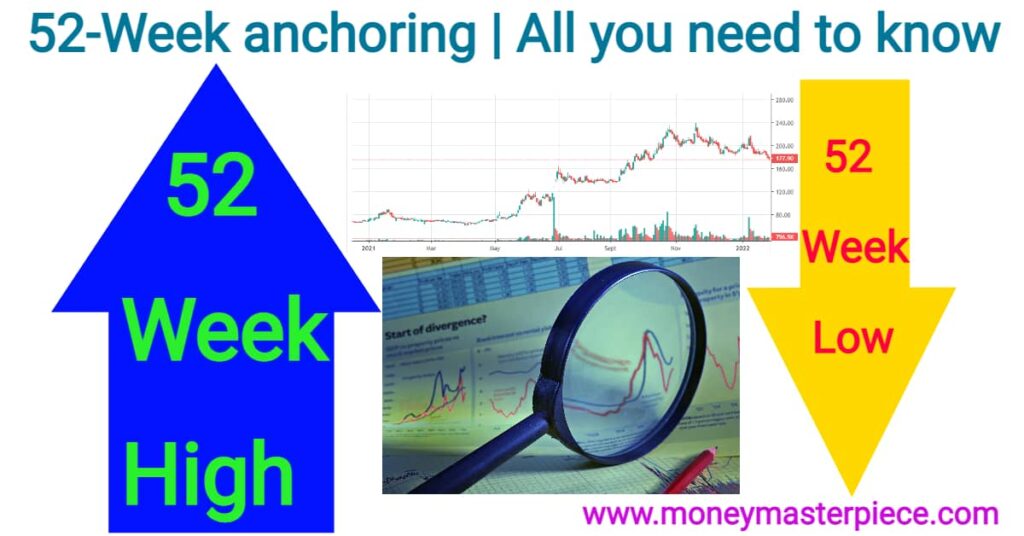
    An anchoring refers to a cognitive bias that occurs when the first piece of information that people have been exposed to influences their judgment. An anchoring bias occurs when people use an initial piece of information (the anchor) to make subsequent estimates. For example, a 52-week anchoring bias occurs when people anchor their current estimate based on the high/low stock prices in their previous year.

    52-week anchoring bias

    The 52-week high and low are important to traders for a few reasons. First, the 52 week high is the highest price that the stock has reached in the past year, while the 52 week low is the lowest price it dropped to last year. These prices are calculated by taking all of the closing prices for each day of trading for one year, adding them up, and dividing by 52.

    It is used to gauge the volatility of a stock and how much it may fluctuate in price over time. Finally, the 52-week high and low can be used to help predict a company’s future performance, as well as to estimate how much a particular stock might decrease or increase from its current price.

    What happens when a stock reaches a nearly 52-week high?

    Near a 52-week high often puts investors and traders on the lookout for an anticipated decline in the stock price. Regardless of whether the actual reduction occurs, this anticipation can cause a sell-off that drives down the price. This phenomenon is called “the momentum effect” and has been studied extensively by academics. The momentum effect generally plays out over periods too long to be influenced by any single event, such as a governmental change or company news release.

    Investors on the sidelines waiting for a plunge may be in luck as the stock of ABC Company has been rising steadily as of late. However, in some cases, as more investors buy into a stock and it continues to increase, there can be a point where investors with no interest in the company will start selling their shares. With more liquidity and fewer buyers than sellers, this can cause a fluctuation or drop in price.

    What happens when a stock reaches a nearly 52-week low?

    Many investors feel they have missed the boat when a stock reaches a nearly 52-week low, but this is not always the case. When a company’s shares are at rock bottom prices, more options are available to the investor. In addition, when stocks are low, it’s much easier to diversify an investment portfolio.

    A stock reaching a 52-week low often has investors and traders asking: what will happen next? Will it continue to drop, or will it start to rebound?

    A stock that reaches a nearly 52-week low typically means that the stock’s price has dropped significantly.

    Some stocks that reach a 52-week low may be worth buying because they could rise in value again, while others may be worth shady and should not be purchased.

    What happens when a stock reaches a 52-week high?

    It’s pretty obvious what happens when a stock reaches a 52-week high. However, when stocks reached this landmark, something remarkable happened recently to make the company successful. An excellent example of this is Amazon, setting 52-week highs for months. Every time Amazon hits a new benchmark, their stocks grow in value, and people start buying up shares in anticipation of more growth.

    What happens when a stock breaks a 52-week high?

    A stock breaking its 52-week high is an important event in the investment world. In general, stocks that break the 52-week high are worth watching closely for signs of growth or decline. On the other hand, if a stock price breaks its 52-week high, it may signify that they have been performing well and going up in value. This is often seen as an investment opportunity. It also indicates confidence in the company by investors and is sometimes associated with a positive outlook for the company.

    Breaking a 52 week high is a significant event in a company’s history. This article examines the implications of breaking a 52-week high for companies and discloses some surprising findings.

    Why does a stock split happen when a stock reaches a nearly 52-week high?

    The stock split occurs when a stock reaches a nearly 52-week high. This is so that the company can entice even more investors to buy it and grow its value. Therefore, stock splits when it reaches its peak, allowing more investors to get in on the stock before it inevitably falls in price.

    When a stock reaches a 52-weeks high, the company may decide to give more people the opportunity to invest in their company and thus initiate a stock split.

    Can firms break investors’ 52-week high anchoring bias?

    Investors usually tend to anchor to the 52-week high. So it has been shown in academic studies. However, a new article by University of Chicago researchers reveals that firms might be able to break this bias if they issue positive news after reaching new highs on Wall Street. For example, many stocks are trading at 52-week highs at this writing. This includes Qualcomm, which has been up 12% since January 1st.

    The 52-week high anchoring bias is a psychological phenomenon that individual investors tend to base their investment decisions on the current price relative to the highest point in the previous 52 weeks. Research shows that this bias can lead to detrimental consequences, and in some cases, it may be financially wise for unexpected events to occur to break this bias.

    One strategy for breaking this bias is when an investor buyback shares of stock when prices are at a 52-week high.

    What is the 52-week change?

    The 52-week change is a performance metric that looks at the difference between the current price and 52 weeks ago. A positive value indicates that the stock has risen since then, while a negative number shows that it has fallen. For example, if the stock were worth $5 per share 52 weeks ago but is now worth $10 per share, this would indicate a 52-week change of +$5.

    The 52-week change is a measure of stock performance over a year. To calculate the 52-week change, the year-end value would be divided by the value at the beginning of that year. The percentage difference between these two figures can then be usable to create an index for growth over that period.

    What is a 52 week high? How is 52 weeks high calculated?

    A 52-week high is its share price at its highest level in the 52 weeks. A 52-week change is a difference between a stock’s current share price and its 52-week high.

    A 52-week change is a difference between a company’s current share price and 52 weeks ago. Investors should look at these numbers to help them decide which stocks to invest in: if a company’s share price is higher than last year, it might be a good time to invest in the company.

    Should I buy at 52 weeks low?

    The consensus is that buying stocks at a 52-week low can be beneficial because the stocks are often much cheaper, and there is always the chance for big profits. However, there are some critical downsides to this strategy as well. For one, you might buy a stock too late and miss out on even bigger profits.

    Investing in the stock market is like riding a roller coaster. One day, your investments are up, and the next, they’re down. It’s a common belief that buying stocks at 52-week lows can provide a good opportunity for making money in the stock market. However, the strategy isn’t all that simple. Some risks need to be considered before investing in this type of tactic.

    How do you read a 52-week range?

    A 52-week range is used in the stock market to describe the difference in highs and lows in a year. When people want to buy a stock near its 52 week high, it means that they want to buy the stock at the high point in the past year and time frame. If you’re looking for stocks that have been performing well over the last year, then this is where you can find them.

    Obtaining a 52-week range is one of the most common indicators when determining the health of a company’s stock. The range provides insights into how a company’s stock has been trending and gives traders an idea of how to trade in the future with this information. The 52-week range is calculated using the highest price that stock reached in one year and then subtracting that amount from the lowest price it reached.

    What is a good market cap?

    What is considered a good market cap? It depends on the industry. Generally speaking, the higher, the better. A company with a market cap of fewer than one billion dollars is typically not in an industry that requires a high-market cap to maintain growth. On the other hand, a company with quickly growing revenues may warrant a higher market cap, all things being equal.

    A company’s market capitalization (often abbreviated as “market cap”) is the multiple of total number of shares outstanding and the market price of the shares. Market cap can gauge the size of a company and the amount of investor interest in it. However, not all market capitalization calculations are made using shares, such as Facebook’s market cap. For this calculation, cash and stock-based compensation are added to find the actual value.

    What is an excellent price-to-earnings ratio?

    When looking for stocks to invest in, the price-to-earnings ratio is one of the most important numbers to look at. It can be calculated by dividing the share price by earnings per share, which means you can tell what a stock costs relative to what it earns. For example, if a company had a share price of $40 and had earnings per share of $2, it would have a P/E ratio of 20 ($40/$2).

    A good price-to-earnings ratio is between 15 and 25. It should be low enough, so it doesn’t seem like the company is overvalued, but not so low that it isn’t worth buying.

    How do you find 52-week high and low?

    The 52-week high is the highest price that a company’s stock has traded at during the last year. It shows how popular that company’s stocks are with investors. The 52-week low is the minimum price a company’s stock has traded during the past year. A low number can indicate how badly a company is doing, indicating the likelihood of bankruptcy or restructuring.

    What is a 52-week average?

    A 52-week average is a way of measuring how much one variable varies from its mean within some set period. This statistic makes it possible to measure the volatility of some economic or financial data, such as stock prices or a currency’s exchange rate. It also presents a baseline to compare against current price levels.

    You can calculate the 52-week average by finding the average for all observations within a set period.

    The 52-week average is a statistic that investors have utilized to measure the current market climate. The reason behind the measurement is that it provides context for evaluating the current price of a stock and how it may be affected by future events. For example, if someone purchased 100 shares of a company on December 31st and sold them at the end of January, their return would be: [(100 x 2) + 100]/200.

    Are 52-week highs and breakouts the same?

    The 52 week high is the highest price a stock has traded last year. The breakout occurs when a stock breaks through its 52 week high and trades above it for at least one trading day. These two events may seem the same and can often lead analysts to believe that a breakout is imminent, but there are critical differences in how analysts interpret these events.

    What is a higher high in trading?

    A higher-high in trading is a price level where market prices have exceeded the previous highs and prices are making their way up. It is a continuance of an uptrend. A higher-high reaches when a new price exceeds the last top price. Though many factors may contribute to their formation, these highs are not always achieved. Nevertheless, they indicate confidence in the market, and traders often place buy orders at or near these points because they believe the upward momentum will continue.

    What happens when a stock hits an all-time high?

    A stock hitting an all-time high means that the price of stocks are reaching the highest prices they have ever been. This is typically a good thing for investors who are trying to make money with their investments, but it can also be devastating if the stock starts to decline.

    The stock market is made up of many individual stocks, and when one goes up others can go down.igh. In the short term, usually nothing. However, in the long run, investing in stocks at all-time highs is risky because they may not bounce back like other stocks during downturns.

    Wrap up

    a 52-week anchoring bias is a common psychological phenomenon where people use an unrealistic number to anchor their opinion on a new price, and they have difficulty adjusting to the new price. We recommend that you keep this phenomenon in mind before deciding to purchase something.

    The 52-week anchoring bias is a common psychological phenomenon where people use an unrealistic number to anchor their opinion on a new price, and they have difficulty adjusting to the new price.

  • Nash Equilibrium Examples: The Best Way to Understand It

    Nash equilibrium is a term used in game theory to describe a situation in which two or more players may want to reach an agreement but cannot because they have different incentives. It studies the behavior of games such as prisoner’s dilemma, Tit-For-Tat, and cooperative games.

    Nash equilibrium definition

    Nash equilibrium is a mathematical concept that describes a situation in which two or more players cannot reach an agreement because they have different incentives. John Nash first introduced the term in his paper “The Path of least resistance.”

    Examples of equilibrium situations

    In a Nash equilibrium game, two or more players may want to reach an agreement but cannot because they have different incentives. For example, in the prisoner’s dilemma, two people might be in a situation where they are both prisoners and want to escape. However, the person who wants to escape has a much higher incentive than the person in prison. This means the person who wants to escape will always be more likely to flee than those stuck in jail. In Tit-For-Tat, two people might be trying to steal something from each other.

    The problem is that if either person knows the other person will steal them something, they will both try to steal it. If one person knows that the other person will steal something, they will be less likely to try it and vice versa. Two players might build a tower in a cooperative game such as poly. The problem is that if either player knows the other player will make a tower, they will both build it and vice versa.

    The importance of Nash equilibrium in game theory

    In-game theory, Nash equilibrium is when two or more players may want to reach an agreement but cannot because they have different incentives. This can be difficult to resolve because the players may have various incentives (e.g., different goals) and may not find an agreement that is beneficial for them. Nevertheless, it is necessary because it allows for the study of how game theory can be used to understand the behavior of complex situations.

    Examples of Nash equilibrium situations

    Nash equilibrium applies in many situations where two or more players want to reach an agreement but cannot because they have different incentives. Here are six examples:

    1. A group of prisoners is being held together by a guard, and the guard wants them to break free so he can eat. However, the prisoners cannot break free because they have different incentives. They may want to survive, but they also want to get food.

    2. Two teams of robbers are trying to rob a bank. The robber team has more incentive to rob the bank than the robber team has to survive. Therefore, the robber team will choose robbery over survival if it can take advantage of the fact that the other team will not fight back.

    3. In a cooperative game, two teams catch a thief. The thief team has more incentive to steal from the other team than the thief team has to survive. The thief team will choose theft over survival if it can take advantage of the fact that the other team will not fight back.

    4. In an equilibrium situation, two teams of students are trying to get as many points as possible on their math test. The students have different incentives, and they will each try to get as many points as possible without harming their teammates.

    5. A business is trying to win customers by offering them excellent products at a low price and then making sure that when they buy those products, they feel satisfied and happy with their purchase.

    The importance of Nash equilibrium in game theory

    In the game theory, Nash equilibrium is when two or more players may want to reach an agreement but cannot because they have different incentives. If the players have various incentives, they will not reach a deal because they would each gain something that would outweigh the other player’s loss. For two or more players to reach an agreement, they must have a common interest. This interest can be something that both parties benefit from, like sharing resources equally, or it could be something that only one party helps from, like gaining an advantage over another.

    It helps understand how games work and how people interact. It can help you develop better strategies for your games and your opponents.

    How do you determine if there is a Nash equilibrium?

    To determine a Nash equilibrium, you need to consider the players’ incentives. If the players have different incentives, they will not reach an agreement.

    What is the Nash equilibrium price?

    Nash equilibrium price is a valuation method used in game theory to determine the best way for two or more players to reach an agreement. John Nash first developed it. It is a value that considers all of the players’ current incentives and decides how much each player would be willing to pay to reach an agreement.

    What is Nash equilibrium for dummies?

    Nash equilibrium is a term used in game theory to describe a situation in which two or more players may want to reach an agreement but cannot because they have different incentives. It studies the behavior of games such as prisoner’s dilemma, Tit-For-Tat, and cooperative games. In this situation, each player has a unique goal and cannot agree unless they both have the same purpose.

    Explore what is Pygmalion effect.

    Does Nash equilibrium require a dominant strategy?

    No, Nash equilibrium does not require a dominant strategy. Instead, it can be thought of as a situation where all players have the same opportunity to reach an agreement, but no one chooses to do so.

    How do you calculate Nash equilibrium 2×2?

    To calculate Nash equilibrium 2×2, you first need to know the values of P and Q. You can find these values in a game by using the following equation:

    P = ∑ i = 1 2 x i

    Q = ∑ j = 1 2 x j

    Once you have these values, you can use the following equation to calculate Nash equilibrium 2×2:

    N = α + β + γ

    α = Nash equilibrium’s initial conditions (1-p)

    β = Nash equilibrium’s desired conditions (p-q)

    γ = Nash equilibrium’s necessary conditions (q-a)

    How do you find Nash equilibrium 2×3?

    In the 2×3 game, there are two Nash equilibria- one where both players choose 2 and one where both players prefer 3. To find the Nash equilibria, you can use a “game tree.” The game tree shows all of the possible outcomes of the game and the player’s best responses to each outcome.

    Find Nash equilibrium by solving the equation for x. In this case, the equation is 2×3=9. This can be solved to find that x=3 is the Nash equilibrium.

    How do you solve the 3×3 game theory?

    To solve a 3×3 game, you would use the following strategy:

    1. Choose one of the players to start with and offer them a piece of candy.

    2. The other two players must choose whether to trade the candy or not.

    3. If the other two players do not trade, the player who offered the candy must eat it. If they trade, the other two players can either keep the candy or give it away to the first player.

    How do you find the Nash equilibrium mixed strategy?

    The Nash equilibrium mixed strategy is found by solving a system of linear equations. The coefficients of the strategy vector represent the player’s expected payoff for each pure strategy, and the matrix is the payoff matrix for the game.

    The mixed strategy can be found by solving the following equation for “p” :

    “p” = “x”(“a”) + “y”(“b”)

    Where “x” and “y” are the probabilities that players 1 and 2, respectively, will choose for action a or b.

    End of the post

    Nash equilibrium is a term used in game theory to describe a situation in which two or more players may want to reach an agreement but cannot because they have different incentives. It is most often used when studying the behavior of games such as prisoner’s dilemma, Tit-For-Tat, and cooperative games.

  • Day Trading In Stock Market | Explore the secrets

    Day trading is a term used to describe the practice of buying and selling securities (stocks, bonds, etc.) within a tight time frame, typically within one business day. It is risky because the security price can change rapidly in a short period. For this reason, day traders usually only trade one stock, and they keep their positions open for a set period. However, some people like to day-trade because the thrill is seeing huge gains in a short time.

    What Is Day Trading In Stock Market

    The easiest way to trade on the stock market is to buy stocks and sell them shortly after. This technique is called day trading. Day traders invest in securities for a short period of time, usually overnight, and then immediately sell them at a profit. By doing this continuously, they hope to earn money from the fluctuations in the price of the stock during the day. A trader should also be aware that there are two kinds of day trading: 

    (i) picking off major trends and riding small price dips or churns, where you pick individual stocks up with good potential after initially selling others; and 

    (ii) grinding the markets, making a better profit by selling off securities that have recently had good returns but haven’t shown much growth since. It can be pretty profitable but might require some time investment and knowledge on stock valuation techniques or technical analysis (this method has gained popularity since 2000)

    Day trading can be dangerous if you don’t know what you are doing. Usually, day traders make their money through buying low and selling high, so they try to time it right to buy when a stock has made its biggest price swing. These traders sometimes sit on positions for three or four days waiting for a considerable price swing that will guarantee their profits. However, this does not mean the activity is impossible to do. 

    Mutual funds (and closed-end funds) are the second most common type of investment. Mutual Funds are saleable at any time because they do not have to pay out dividends or sales proceeds for many years and thus never experience significant erosion in their value. This also means that you most likely won’t see much return from mutual funds picking your returns with a change in interest rates, which usually has minimal effect on this kind of

    What are the risks and rewards of day trading?

    The risks and rewards of day trading depend mainly on the particular strategy used. Some days, traders can make money by buying and selling stocks quickly and often; other days, they can lose much money. There is also the risk that the trader will not sell their stock at the right time or for the right price, resulting in a loss.  

    When should you start a day trading program?

    Most traders don’t jump immediately into day trading; first, they experiment with buying and selling relatively modest amounts of low-risk securities such as index funds that track the performance of an entire market sector or a country’s economy. As time goes on, though, doing this becomes more challenging to make profitable by not having strong enough knowledge about investing in general. Therefore it is recommended that

    How to choose a good day trading strategy?

    There is no definitive answer, as different day trading strategies work best for other traders. However, some tips on choosing a good day trading strategy include: choosing a method that fits your trading style and goals, focusing on technical analysis when making trades, and following a consistent plan. 4. What kind of stocks helps in day trading?

    Some examples of companies known to be good choices for day trading are those that regularly pay dividends and those with a short-term volatile share price (such as stock options).

    How to start Day Trading index funds?

    Start by reading our detailed guide on how you can trade stocks: Introduction To Investing In Stock Market is available at 

    What are the best tools for day trading?

    There is no definitive answer to this question. Different traders have different preferences and needs, so what works best for one person may not be the right choice for another. Some of the tools used by day traders include trading platforms like E*TRADE, CBOE, and NASDAQ OMX and specific securities brokerages like Fidelity or Charles Schwab.

    How to stay disciplined while day trading?

    Day trading can be an advantageous experience if you are disciplined and keep track of your portfolio. Ensue that you set realistic goals for yourself, stick to your plan, and never give up on your trade. You’ll need to patiently wait until your trade is profitable before committing more capital when starting.

    How to deal with emotional factors when day trading?

    One way to deal with emotional factors when day trading is remembering that day trading is a hazardous proposition. While it may be enjoyable to try and make quick decisions in the bull or bear markets, it is essential to remember that even the best traders can lose money quickly if they are not careful. It is also crucial to remember that emotions can sometimes cloud judgment, so it is vital to take some time each day to reflect on what is happening in the market and how you feel.

    What should I do if my computer or internet connection (for example) goes down while day trading?

    It’s a good idea to have an alternate way of getting access to your portfolios when markets are open, as brokers can sometimes be intermittent due to technical issues like these. See: Picking Up Day Trading From Scratch for more insight on this topic.

    What should you do if you lose money during a day trade?

    If you have lost money during a day trade, you should take measures to protect yourself from further losses. For example, you may want to reduce your position size or close the trade. Be sure to take steps like this before the real-time market opens on the next trading day. How do you decide what size is too big?

    Is it possible to make money day trading in the stock market?

    The amount of money that you can make day trading in the stock market will vary depending on various factors, including your investment experience, financial resources, and trading strategies. However, some people believe that it is possible to make a modest income from day trading stocks if you are willing to put in the effort.

    Is day trading illegal?

    There is no definitive answer as to whether day trading is illegal or not. However, most financial regulators worldwide frown upon it and consider it a high-risk activity.

    Day trading is typically defined as buying and selling securities within a short period, usually minutes or hours. This often involves making quick decisions based on rapidly changing market conditions.

    The main reason why day trading is considered to be risky is that it can quickly lead to losses if the markets are in turmoil. If you are not experienced in day trading, you will likely end up losing all your money if the markets turn against you.

    How much do you need for day trading?

    To day trade, you need a minimum deposit of $100, and you will also need to have access to a computer with the internet. However, The legal minimum balance required to day trade stocks in the United States is $25,000. Day trading isn’t allowed until a deposit is received, taking the balance above $25,000 if the balance falls below that level.

    What is the difference between day trading and swing trading?

    Day traders will generally focus their trades on fewer stocks or even hours. On the other hand, all-day traders may have positions in several securities while favoring more extended periods to mature (typically two weeks). Swing traders are also very active in making short-term decisions as they trade multiple assets simultaneously. Both groups rely heavily on technical analysis as one primary means of decision making often combined with fundamental analysis.

    Why is day trading bad?

    Day trading is terrible because it can lead to the loss of vast amounts of money. Although, a day trader can earn good loot if he knows how to recognize the right time(s) for entering and exiting one position.

    But buying at the wrong times is also bad as it won’t help you get profits in bullish trends that have short-run potential. So what are indicators of a strong uptrend? When will be the best place to sell stock in trend? Why do prices often vary enormously within an hour?

    Is day trading profitable?

    There is no easy answer for the profitability of day trading. It depends on many factors, including the markets you trade and your trading skills. However, day trading can be profitable if you are disciplined and manage your risks carefully.

    Find the 22 ways that help you beat the stock market in 2022 onwards.

    How difficult is day trading?

    Day trading is relatively easy once you understand the basic principles. However, it can be challenging to make consistent profits and require a high discipline level. How to Track the Funds Manually?

    In this section, we will share two methods for tracking your funds. I would recommend that you use 2 of these tools and spend considerable time learning how each works to handle issues that may come up. The first method is called Funds Calculator. It is available on Google Finance. You add an appropriate column date filter (if it isn’t already there) enter some parameters.

    What percentage of day traders are successful?

    There is no ready reference answer to this question, as success rates for day traders vary dramatically. For example, some successful day traders make up 60-75% of their trading activity while others can trade only a fraction of the time and still be successful.

    Why do most day traders lose money?

    There are a few reasons why most day traders lose money. For one, day trading is a high-risk activity. If you lack the skills necessary to make successful trades, you will likely lose money. Additionally, day trading is also a time-consuming activity. If you’re not able to manage your time wisely, you’re also likely to lose money. Finally, the outcome of most day trading strategies is heavily influenced by longer-term trends. As a result, many traders get discouraged and walk away before the strategy’s success can be maximized.

    How often should I trade?

    Day trading can only be profitable if you make trades based on your criteria instead of following the crowd mentality that dominates most markets today. In addition, it means that one must have enough discipline to eliminate all emotions from decision-making.

    Should I quit my job to day trade?

     The general answer is No but it depends on your circumstances and goals. However, since it is not easy to quit a job and attain financial freedom, day trading can be an excellent choice for many. Other issues to consider include:

     your employer’s policies concerning outside activities whether or not the significant brokerages support you as an employee from home trades.

    Is Day Trading considered self-employed?

    No, day trading is not considered self-employed.

    Is day trading a real job?

    There is no definitive answer, as day trading can be for fun or profit. However, it is an effective way for many people to earn income and build wealth. Some day traders can even quit their jobs to become self-employed Day Trading success stories.

    John Holmes is a Forex trader who started with $3 a week trading in Australia about six years ago. As I mentioned previously, money seems TOO easy when he tells his story, right? It’s all done by sitting behind the computer with

    How do I become a self-employed day trader?

    Assuming you want to be self-employed as a day trader, the first step is creating an LLC and filing Articles of Organization with your state. Once the LLC is formed, you will need to fill out an application for a business license found online. After the business license is obtained, you will need to apply for a National Provider Identification Number (NPIN). The NPIN can be obtained through the IRS or your state.

    Do you need a degree to be a day trader?

    No, a degree is not generally necessary to be a day trader. However, some day traders may have more experience and knowledge in trading than others, so it is essential to do your research before starting to trade.

    What should I study to become a day trader?

    You’ll need to consult with a financial advisor or other experienced traders to determine what specific skills and knowledge you’ll need to become a successful day trader. Some common subjects to covere include finance, market analysis, trading techniques, and risk management. If you are new to trading, some day traders may suggest that you start studying basic technical analysis concepts and then move to more advanced topics.

    What is the exposure risk in a self-employed day trader?

    The percentages associated with an individual’s daily equity account will depend primarily upon your commodity and stock market selection choices, as well as other factors such as margin requirements from different brokerage firms. Understand which company offers the best overall mix of services

    Can I buy and sell stocks on the same day?

    Yes. You can buy and sell stocks the same day if you have a wired transfer or direct deposit account with a brokerage. Some brokers have different procedures for business owner accounts versus personal accounts. If you wish to use an IRA account, please ensure that the broker regularly trades with IRA money before placing any trades. This is essential to avoid restrictions. Just as there are commercial banks and private banking institutions, so too can find day traders who operate throughout both public and proprietary environments. 

    How do day traders avoid taxes?

    Some day traders may avoid paying taxes by claiming losses on their trading account. It may results in a significant decrease in taxable income.

    Do you pay taxes on each stock trade?

    It depends on the specific trading account and tax situation. However, you would likely pay taxes on the gains or losses from stock trades.

    Do I have to pay tax on stocks if I sell and reinvest?

    If you sell and reinvest stocks within a calendar year, you will pay tax on the sale and the gain. If you sell and do not reinvest within a calendar year, you will not pay tax on the sale or gain.

    Are you taxed on Robinhood?

    Yes, Robinhood is taxed.

    Why is day trading bad on Robinhood?

    Day trading is terrible for Robinhood because the stock prices can be volatile, and day trading can lead to unexpectedly high or low prices. Day trading also involves risk, including losing money if the stock price falls.

    Is day trading Better Than stocks?

    There is no one-size-fits-all answer to this question, as the decision of whether or not to day trade stocks depends on a variety of factors specific to each individual. However, in general, day trading is considered a more risky investment than investing in stocks outright. The reason is that day traders are typically less familiar with the stock market and its dynamics, leading to more significant losses if the market takes a sudden turn against them.

    Is day trading legal?

    Day trading is neither illegal nor unethical. The day trading strategies are extremely complicated and best left to professionals or savvy investors.

    Is day trading like gambling?
    There is no clear-cut answer to this question as it depends on a person’s individual perspective. However, most people would say that day trading is not exactly like gambling. Day trading typically involves choosing assets and stocks that you believe will perform well over the course of a specific period of time, while gambling involves taking risks based on chance.

    Why do day traders fail?
    There are many reasons why day traders may fail. These include, but are not limited to: lack of discipline, over-trading, market timing errors, skill, or luck failures.
    Is day trading addictive?
    There is no definitive answer to this question as everyone experiences different levels of addiction to different things. For example, some people may find day trading addictive because it allows them to make quick and large profits. In contrast, others may find it enjoyable and satisfying to learn and master this complex financial tool. Ultimately, whether or not day trading is considered addictive can vary from person to person.

    Which time frame is best for day trading?

    The best time frame for day trading is typically overnight. This is because this time period contains the least amount of market noise, not to mention these are typically the most reliable hours when it comes to trading. Additionally, speculative stocks and options contracts tend to work the best overnight. This said, however; many investors like day and swing traders use a combination of day trading (with early morning or evening showings) with other strategies such as short selling or big picture investing for target-date funds where volatility decreases throughout retirement