
Blog

  • What is a Real Estate Investment Trust (Reit)?

    What is a Real Estate Investment Trust (Reit)?

    REITs can be a good investment for investors looking to diversify their portfolio, generate income through dividends, and access liquidity. However, as with any investment, it’s important to carefully research and evaluate each investment opportunity based on individual investment objectives, risk tolerance, and investment horizon. It’s also important to consider the potential risks and fees associated with investing in REITs before making a decision.

    Real Estate Investment Trust

    Real Estate Investment Trusts (REITs) are companies that own and manage income-producing real estate properties. They allow individuals to invest in a diversified portfolio of properties, while also benefiting from potential appreciation and income generated from rents. In this blog post, we will provide an overview of REITs, how they work, their advantages and disadvantages, factors to consider before investing in REITs, and their role in a well-diversified investment portfolio.

    History of Real Estate Investment Trusts (REITs)

    Real Estate Investment Trusts (REITs) were first introduced in the United States in 1960, as part of the Cigar Excise Tax Extension legislation. The legislation allowed for the creation of a new type of investment company that would own and operate income-producing real estate properties, while also providing a tax-efficient structure for investors. The introduction of REITs was seen as a way to provide small investors with access to the benefits of real estate ownership, which was previously limited to larger investors and real estate developers.

    The first REIT to be established in the US was the National Association of Real Estate Investment Trusts (NAREIT), which was formed in 1960. NAREIT was established to promote the interests of the REIT industry and to provide a platform for networking and education for its members.

    In the early years, REITs were primarily focused on investing in commercial properties, such as office buildings and shopping centers. This was because these properties provided stable rental income and long-term leases, which made them attractive investments for REITs.

    The Tax Reform Act of 1986 brought significant changes to the REIT industry. The Act introduced several new regulations and restrictions on REITs, including the requirement that at least 75% of a REIT’s assets be invested in real estate and that at least 75% of its gross income be derived from real estate sources. These changes led to a shift in the types of properties that REITs invested in, with many REITs moving into the residential and healthcare sectors.

    In the 1990s, the REIT industry experienced significant growth, with the number of publicly traded REITs increasing from just a few to more than 100. This growth was due to several factors, including the popularity of real estate as an investment, the increased awareness of REITs as an investment option, and the introduction of new types of REITs, such as mortgage REITs.

    The early 2000s saw a slowdown in the growth of the REIT industry, due in part to the economic downturn and the collapse of the housing market. However, the industry rebounded in the mid-2000s, with the number of REITs and the total assets under management increasing significantly.

    In recent years, the REIT industry has continued to grow and evolve, with new types of REITs being introduced and new investment opportunities emerging. For example, there are now REITs that specialize in investing in data centers, cell towers, and other technology-related properties.

    Overall, the history of REITs has been one of growth and evolution, as the industry has adapted to changes in the market and regulatory environment. Today, REITs are an important part of the real estate and investment landscape, providing investors with a way to invest in income-producing real estate properties while also benefiting from the tax-efficient structure of a REIT.

    How REITs Work?

    REITs are similar to mutual funds, where investors pool their money to invest in a portfolio of assets. The difference is that REITs own and operate real estate properties, and the income they generate is distributed to shareholders as dividends. Here are some types of REITs and how they work:

    • Equity REITs: These REITs own and manage income-producing real estate properties, such as commercial buildings, apartments, and retail centers. The income generated from rents is distributed to shareholders as dividends.
    • Mortgage REITs: These REITs invest in mortgages and other real estate debt. They generate income from the interest paid on the loans they hold, and the income is distributed to shareholders as dividends.
    • Hybrid REITs: These REITs are a combination of equity and mortgage REITs. They invest in both income-producing properties and mortgages.

    The structure of a REIT is similar to a regular corporation. A board of directors oversees the management team, which is responsible for managing the properties and generating income. The management team may also be responsible for acquiring and selling properties, as well as managing the finances of the REIT.

    Investing in a REIT is similar to investing in stocks. Investors can purchase shares of a REIT through a brokerage account or a mutual fund. The price of a share is based on the value of the underlying assets of the REIT.

    Advantages and Disadvantages of REITs

    There are several advantages and disadvantages of investing in REITs, including the following:

    Advantages of REITs

    • Diversification: REITs offer investors the opportunity to invest in a diversified portfolio of real estate properties. This can reduce the risk of owning a single property or a small number of properties.
    • High dividend yields: REITs are required by law to distribute at least 90% of their taxable income to shareholders as dividends. This can result in high dividend yields, which can provide income for investors.
    • Liquidity: REITs are publicly traded on stock exchanges, which provides investors with liquidity. Investors can buy and sell shares of a REIT at any time during market hours.

    Disadvantages of REITs

    • Interest rate risk: REITs may be affected by changes in interest rates. When interest rates rise, the cost of borrowing for REITs may increase, which can reduce profitability.
    • Market volatility: The stock prices of REITs may be affected by market volatility. Changes in economic conditions or investor sentiment can result in fluctuations in the stock price.
    • Management risk: The performance of a REIT is dependent on the management team’s ability to acquire and manage properties effectively. Poor management can result in decreased profitability and lower dividends for investors.

    Factors to Consider Before Investing in a REIT

    Before investing in a REIT, there are several factors to consider, including the following:

    • Types of properties owned by the REIT: It is important to consider the types of properties owned by the REIT. Some REITs specialize in specific property types, such as commercial or residential properties, while others may invest in a mix of property types.
    • Management team: The management team is responsible for managing the properties and generating income for the REIT. It is important to research the experience and track record of the management team before investing in a REIT.
    • Dividend yield: The dividend yield is the amount of income a REIT pays out to shareholders as a percentage of the stock price. It is important to consider the dividend yield when investing in a REIT, as it can provide income for investors.
    • Fees and expenses: REITs may have fees and expenses associated with investing, such as management fees and transaction costs. It is important to consider these fees and expenses when evaluating the potential return on investment.

    Is a Reit a Good Investment?

    Whether or not Real Estate Investment Trusts (REITs) are a good investment largely depends on an individual’s investment objectives, risk tolerance, and investment horizon. However, REITs offer several potential benefits for investors to consider, including diversification, high dividend yields, and liquidity.

    One of the primary benefits of investing in REITs is the opportunity for diversification. REITs own and operate a portfolio of real estate properties, which can reduce the risk of owning a single property or a small number of properties. By investing in a REIT, investors can gain exposure to a variety of property types, including commercial buildings, apartments, and retail centers.

    Another potential benefit of REITs is their high dividend yields. REITs are required by law to distribute at least 90% of their taxable income to shareholders as dividends. This can result in high dividend yields, which can provide income for investors. However, it’s important to note that the high dividend yields of REITs may also make them sensitive to changes in interest rates.

    In addition to diversification and high dividend yields, REITs offer liquidity. REITs are publicly traded on stock exchanges, which provides investors with the ability to buy and sell shares of a REIT at any time during market hours. This can be beneficial for investors who need to access their investment quickly or who want to make changes to their investment portfolio.

    However, investing in REITs also comes with potential risks. REITs may be affected by changes in interest rates, which can impact their profitability. Additionally, the stock prices of REITs may be affected by market volatility, which can result in fluctuations in the stock price. The performance of a REIT is also dependent on the management team’s ability to acquire and manage properties effectively, which can introduce management risk.

    It’s also important to note that REITs may have fees and expenses associated with investing, such as management fees and transaction costs. It’s important to consider these fees and expenses when evaluating the potential return on investment.

    They also tend to be less volatile than the stock market as a whole, and they offer the potential for high yields. In addition, REITS offer liquidity; investors can buy and sell shares on public exchanges just like stocks.

    Conclusion

    In conclusion, REITs offer investors the opportunity to invest in a diversified portfolio of real estate properties, while also benefiting from potential appreciation and income generated from rents. It is important to consider the advantages and disadvantages of investing in REITs, as well as the factors to consider before investing, such as the types of properties owned by the REIT, the management team, the dividend yield, and the fees and expenses. REITs can play a valuable role in a well-diversified investment portfolio, but it is important to research and evaluate each investment opportunity carefully.
  • Excessive debt marketing | All you need to know

    Debt is being marketed to adults as much as toys are to children. Let’s explore what are some of the results of​ this.

    Excessive debt marketing Results

    The marketing of debt to adults has resulted in several negative consequences. One of the most significant is that many adults are now burdened with high levels of debt, which can be difficult to manage and can have serious consequences for their financial well-being. In addition, the marketing of debt has contributed to a culture of consumerism, where people are encouraged to buy things they don’t necessarily need, often using credit. This can lead to a cycle of debt that is difficult to break out of. Finally, the marketing of debt can be misleading and deceptive, with many people not fully understanding the terms and conditions of the credit they are taking on, leading to unexpected fees and charges.

    High Levels of Debt: The marketing of debt to adults has resulted in many people in Bangladesh being burdened with high levels of debt. For example, credit card companies often market their products to young people and low-income earners, who may not have the financial means to repay the debt.

    Interest Rates: High interest rates are often associated with debt, which can make it difficult for people to repay what they owe. In Bangladesh, many people take out loans from microfinance institutions at high interest rates, resulting in them becoming trapped in a cycle of debt.

    Consumerism: The marketing of debt has contributed to a culture of consumerism in Bangladesh, where people are encouraged to buy things they don’t necessarily need. For example, banks and other financial institutions offer personal loans for various purchases, such as holidays and electronic gadgets, encouraging people to take on debt to fund their lifestyles.

    Credit Cards: Credit card companies have heavily marketed their products in Bangladesh, resulting in many people taking on debt they can’t afford to repay. In some cases, credit card debt has led to people being blacklisted by banks, making it difficult for them to access credit in the future.

    Hidden Fees: The marketing of debt can be misleading and deceptive, with many people in Bangladesh not fully understanding the terms and conditions of the credit they are taking on. For example, some microfinance institutions charge hidden fees, such as processing fees and insurance fees, which can add significantly to the overall cost of the loan.

    Payday Loans: Payday loans have become popular in Bangladesh, with many people taking out these high-interest, short-term loans to cover their expenses. However, these loans can lead to a cycle of debt, with people taking out one loan to repay another.

    Repayment Difficulties: Many people in Bangladesh struggle to repay their debt, which can result in a range of negative consequences, such as harassment from debt collectors, legal action, and even imprisonment in extreme cases.

    Limited Financial Literacy: The marketing of debt can take advantage of people’s limited financial literacy, with many people in Bangladesh not fully understanding the terms and conditions of the credit they are taking on. This can lead to people taking on debt they can’t afford to repay, resulting in a cycle of debt.

    Stress and Anxiety: Debt can be a significant source of stress and anxiety for many people in Bangladesh. It can lead to sleepless nights, relationship breakdowns, and other negative consequences that can impact people’s mental health and well-being.

    Stagnant Economic Growth: The marketing of debt to adults can also have a negative impact on the wider economy in Bangladesh. High levels of debt can lead to reduced consumer spending, resulting in stagnant economic growth and a lack of investment in critical areas such as infrastructure and education.

    Conclusion

    In conclusion, excessive debt marketing can have serious consequences on both individuals and the economy. When people accumulate too much debt, they become financially vulnerable, which can lead to bankruptcy, foreclosure, and other financial hardships. Additionally, excessive debt can have ripple effects on the larger economy, contributing to economic instability and potentially leading to a recession. Therefore, it is important for individuals to be mindful of their borrowing habits, and for companies to engage in responsible marketing practices that prioritize the financial well-being of their customers over short-term profits.

  • How important is learning about managing money?

    Money management is a crucial aspect of our lives that helps us make informed financial decisions, achieve stability, and plan for the future. However, many people neglect the importance of managing money, leading to financial stress, debt, and other problems. In this blog post, we’ll discuss why learning about money management is essential, common techniques, and tips for improving your skills.

    Definition of money management

    Money management refers to the process of creating and sticking to a budget, saving money, reducing debt, and investing for the future. It helps individuals make informed decisions about their finances, allowing them to live within their means and reach their financial goals.

    The purpose of this blog post

    The purpose of this blog post is to educate individuals on the importance of money management and provide them with practical tips for improving their financial situation. We believe that with the right knowledge and skills, anyone can take control of their finances and achieve financial stability and independence.

    Why is learning about money management important?

    Learning about money management is a critical aspect of our lives that can help us make informed financial decisions, achieve stability, and plan for the future. By understanding the importance of money management, utilizing common techniques, and following practical tips, anyone can take control of their finances and achieve financial independence.

    A. Understanding the value of money

    Learning about money management helps individuals understand the value of money and the importance of budgeting, saving, and investing. It enables them to make informed decisions about how to use their money, rather than simply spending it impulsively.

    B. Making informed financial decisions

    With a solid understanding of money management, individuals can make informed financial decisions that align with their goals and values. This includes making informed choices about spending, investing, and reducing debt, which can have a significant impact on their financial situation.

    C. Achieving financial stability and independence

    Managing money effectively leads to financial stability and independence. By reducing debt, saving money, and investing for the future, individuals can achieve financial freedom and enjoy a more stress-free life.

    D. Preparing for future expenses and emergencies

    Money management also prepares individuals for future expenses and emergencies. By setting aside money in savings and investing for the long term, individuals can ensure that they have enough money to cover unexpected expenses and emergencies.

    Money management techniques

    A. Budgeting

    Budgeting is the process of creating a plan for how you will spend your money. This involves tracking your income and expenses and allocating your money to different categories, such as housing, food, transportation, and entertainment.

    B. Saving

    Saving money is essential for achieving financial stability and independence. It enables individuals to set aside money for emergency expenses, future goals, and unexpected events.

    C. Investing

    Investing is a way to grow your money over time and build wealth. There are many different types of investments, including stocks, bonds, and real estate, and it’s essential to understand the risks and potential rewards of each type of investment before making a decision.

    D. Debt Reduction

    Reducing debt is a critical component of money management. High levels of debt can prevent individuals from reaching their financial goals and lead to stress and anxiety.

    E. Retirement planning

    Retirement planning involves preparing for the future and ensuring that you have enough money to support yourself during retirement. This may include saving money in a retirement account, investing in stocks and bonds, and reducing debt.

    Tips for improving money management skills

    A. Setting financial goals

    Setting financial goals is a crucial step in managing money effectively. This can include saving for a down payment on a house, reducing debt, or investing for retirement.

    B. Tracking expenses

    Tracking expenses is a simple but effective way to improve your money management skills. This involves keeping a record of all of your expenses, including bills, groceries, and entertainment, to see where your money is going and make informed decisions about your spending.

    C. Avoiding impulse purchases

    Impulse purchases can quickly add up and sabotage your financial goals. To improve your money management skills, it’s important to avoid impulse purchases and instead, stick to a budget and make informed decisions about your spending.

    D. Building a safety net

    A safety net, also known as an emergency fund, is an essential component of money management. It provides peace of mind and financial security in case of unexpected events or emergencies. To build a safety net, start by setting aside a small amount of money each month until you have a substantial amount saved.

    E. Seeking professional advice

    Finally, seeking professional advice can also be incredibly helpful when it comes to managing money effectively. This can include speaking with a financial advisor, attending financial workshops or classes, or reading personal finance books and blogs.

    Conclusion

    In conclusion, learning about money management is essential for anyone who wants to achieve financial stability and independence. Whether you’re just starting out or looking to improve your skills, understanding the value of money, making informed financial decisions, and preparing for the future are all critical components of successful money management.

    Managing money can seem overwhelming, but with the right knowledge and skills, anyone can do it. We encourage you to start by setting financial goals, tracking expenses, avoiding impulse purchases, and seeking professional advice.

    Take control of your finances today by starting to learn about money management. Whether you’re just starting out or looking to improve your skills, there are many resources available to help you on your financial journey. Start today and take control of your financial future.

  • How Realistic is The 4-Hour Work Week?

    The 4-Hour Work Week” is a bestselling self-help book written by Timothy Ferriss. The book offers a step-by-step guide on how to escape the 9-to-5 grind, live anywhere in the world, and achieve financial freedom through entrepreneurship and smart investing. The book also includes tips and strategies for automating your income, outsourcing your work, and living a lifestyle of freedom and adventure. Ferriss argues that by following the principles outlined in the book, anyone can achieve the “New Rich” lifestyle of earning money without being tied down to a traditional job. The book was first published in 2007 and has since been translated into 35 languages. It continues to be a popular resource for entrepreneurs and people looking to make a change in their career or lifestyle.

    Summary

    The book is divided into four parts, each containing several chapters that cover various topics related to achieving financial freedom and living a lifestyle of freedom and adventure. Here is a general overview of the book’s contents:

    Part 1: “Definition”

    • In this section, the author introduces the concept of the “New Rich” (NR) and how they are able to live a lifestyle of freedom and adventure by earning money without being tied down to a traditional job.
    • He also presents the idea of “lifestyle design,” which is the process of designing your life around your own needs and desires.

    Part 2: “Elimination”

    • This section focuses on how to automate your income and outsource your work in order to free up more time for other activities.
    • The author provides a step-by-step guide on how to set up your own online business and how to use various tools and techniques to automate your work.

    Part 3: “Automation”

    • This section covers how to create a business that can run on autopilot and how to use various tools and techniques to automate your work.
    • The author also provides tips on how to outsource your work to virtual assistants and other workers.

    Part 4: “Liberation”

    • This section focuses on how to achieve financial freedom and live a lifestyle of freedom and adventure.
    • The author provides tips on how to invest your money and how to use various strategies to achieve financial freedom.

    Throughout the book, the author also includes personal anecdotes and case studies from people who have successfully implemented the principles outlined in the book. He also includes a number of exercises and action steps that readers can take to begin designing their own “New Rich” lifestyle.

    It’s worth noting that the book has a strong focus on online business and ecommerce and some of the strategies and tools discussed may not be as relevant or applicable depending on the reader’s field or profession. Additionally, the author’s writing style and some of the examples he provides may be viewed as controversial or unachievable by some readers.

    Reviewing the book “The 4-Hour Work Week”

    “The 4-Hour Work Week” by Timothy Ferriss is a bestselling self-help book that offers a step-by-step guide on how to escape the 9-to-5 grind, live anywhere in the world, and achieve financial freedom through entrepreneurship and smart investing. The book is divided into four parts: “Disillusionment,” “Elimination,” “Automation,” and “Liberation.”

    In the first section, Ferriss introduces the concept of the “New Rich” (NR) and how they are able to live a lifestyle of freedom and adventure by earning money without being tied down to a traditional job. He also presents the idea of “lifestyle design,” which is the process of designing your life around your own needs and desires. He emphasizes on the importance of finding what you’re passionate about, and making a business around it.

    The second section, “Elimination,” focuses on how to automate your income and outsource your work in order to free up more time for other activities. Ferriss provides a step-by-step guide on how to set up your own online business and how to use various tools and techniques to automate your work, such as using virtual assistants, and setting up automated systems to manage customer service.

    The third section, “Automation,” covers how to create a business that can run on autopilot and how to use various tools and techniques to automate your work. He also provides tips on how to outsource your work to virtual assistants and other workers, which can be very useful for small business owners or entrepreneurs who are just starting out.

    In the final section, “Liberation,” Ferriss focuses on how to achieve financial freedom and live a lifestyle of freedom and adventure. He provides tips on how to invest your money and how to use various strategies to achieve financial freedom, such as using the Pareto principle, and the 80/20 rule, which states that 80% of the outcomes come from 20% of the inputs.

    The book is well-written and easy to understand, with a good balance of personal anecdotes and case studies. The author also includes a number of exercises and action steps that readers can take to begin designing their own “New Rich” lifestyle, which are very helpful for readers who are looking to apply the principles discussed in the book.

    Overall, “The 4-Hour Work Week” is a great book for entrepreneurs, small business owners, or anyone looking to make a change in their career or lifestyle. It provides a wealth of information and practical tips on how to achieve financial freedom and live a lifestyle of freedom and adventure. However, it’s worth noting that the book has a strong focus on online business and ecommerce, and some of the strategies and tools discussed may not be as relevant or applicable depending on the reader’s field or profession. Additionally, the author’s writing style and some of the examples he provides may be viewed as controversial or unachievable by some readers.

    Lessons and Tips

    1. Define your goals and objectives clearly
    2. Create a not-to-do list to eliminate unimportant tasks
    3. Use the 80/20 rule to focus on the most important tasks
    4. Create multiple streams of income
    5. Use virtual assistants to outsource your work
    6. Automate your business as much as possible
    7. Use the Pareto principle to increase productivity
    8. Invest in low-maintenance, income-generating assets
    9. Take mini-retirements to recharge and refocus
    10. Prioritize time-blocking and batching to be more productive
    11. Use the two-minute rule to overcome procrastination
    12. Create a morning routine to set the tone for the day
    13. Use the four-burner theory to balance your life
    14. Use cold calling to build relationships and generate leads
    15. Implement a five-step email system to manage your emails more effectively
    16. Build a personal board of directors for guidance and advice
    17. Use the two-day rule to manage your time more effectively
    18. Invest in passive income streams
    19. Use a one-page business plan to plan your business more effectively
    20. Create a sales funnel to generate leads and convert them into customers
    21. Use the three-day rule to evaluate and improve your business
    22. Use the low-information diet to eliminate distractions and increase focus
    23. Live and work abroad to broaden your perspective and experience
    24. Use the DEAL framework to achieve your goals
    25. Take advantage of tax havens and legal loopholes
    26. Use the “10x rule” to set ambitious goals
    27. Use the “end of the day” review to reflect and plan
    28. Learn how to negotiate effectively
    29. Use the “one touch” rule to handle tasks efficiently
    30. Learn how to travel and work remotely

    Please note that these tips are a generalization of the book and may not capture the depth of the author’s arguments or the specific context in which they were presented.

    How Realistic is The 4-Hour Work Week book lessons?

    In The 4-Hour Work Week, Tim Ferriss, provides a framework for achieving a lifestyle of freedom and flexibility through entrepreneurship and smart time management. The book offers a variety of strategies for building a business or income stream that can be operated remotely or with minimal time investment.

    The book’s ideas are a mix of practical and inspiration. Some people have been able to achieve the 4-hour workweek by following the author’s methods, while others have found the book unrealistic. The feasibility of the 4-hour workweek depends on the individual’s specific circumstances, such as their current skills, resources, and goals. It’s not a one size fit all solution and the book is more of a guide to give ideas and inspire people to think differently about their work and lifestyle.

    • The 4-Hour Work Week is based on the idea of creating a business or income stream that can be automated, outsourced, or run with minimal time investment. This is known as the “New Rich” lifestyle.
    • The book provides tips and strategies for automating and delegating tasks, outsourcing, and building a business that can generate passive income.
    • The book also emphasizes the importance of lifestyle design and encourages readers to think about what they truly want from their lives and to create a plan to achieve it.
    • The book’s ideas have been criticized by some for being overly simplistic and unrealistic, as achieving a 4-hour workweek can be challenging, and it’s not always possible to fully automate a business.
    • It’s important to note that the 4-hour workweek is not a guarantee, but rather a goal to strive for and adapt to individual’s situation.
    • The book is more of a guide or an inspiration for people to think differently about their work and lifestyle, and to create a plan to achieve a balance of income and freedom.
  • 15 Causes of Inflation in Bangladesh you need to know

    Inflation is a sustained increase in the general price level of goods and services in an economy over a period of time. When the general price level rises, each unit of currency buys fewer goods and services; consequently, inflation reflects a reduction in the purchasing power of money. Inflation can be caused by a variety of factors, including changes in the supply and demand for goods and services, changes in monetary policy, and shifts in production costs. In Bangladesh, inflation is driven by a variety of causes such as food price volatility, supply chain disruptions, a depreciating currency, and high oil prices.

    The three main causes of inflation are: -Demand-pull inflation: This occurs when the demand for goods and services in an economy outpaces the supply. As a result, prices for these goods and services increase.

    -Cost-push inflation: This occurs when the costs of production increase, leading to higher prices for goods and services.

    -Structural inflation: This is caused by imbalances in the economy that lead to persistent increases in prices.

    What is Inflation in Economics

    Inflation is one of the most important economic concepts and it’s also one of the most misunderstood. Inflation is simply a measure of how fast prices are rising. It’s not about how much money you have in your pocket, or how expensive things are.

    The inflation rate is the percentage change in prices from one period to another. Inflation can be caused by many things, but the most common cause is too much money chasing too few goods. When there’s more money in circulation than there are goods and services to buy, prices go up.

    This situation is often caused by governments printing too much money. Inflation can also be caused by an increase in the cost of inputs, such as raw materials or energy. If these costs go up, businesses will need to raise their prices to cover their higher costs.

    This type of inflation is usually referred to as “cost-push inflation”. Finally, inflation can also be due to simple demand and supply imbalances – if everyone wants to buy a limited number of goods (or services), then prices will go up until enough people are discouraged from buying and the demand falls back into line with supply. The effects of inflation can be both good and bad.

    On the positive side, inflation can encourage spending and investment as people try to buy before prices go up any further. It can also help reduce unemployment as businesses expand to meet rising demand. However, high inflation can also erode purchasing power, leading to lower living standards for everyone – especially those on fixed incomes like pensioners.

    What are the Causes of Inflation

    General causes of inflation include an increase in the money supply, an increase in government spending, and an increase in the cost of goods and services. Factors such as natural disasters, wars, and changes in taxes can also affect inflation. Additionally, inflation can also be caused by demand-pull factors like an increase in consumer spending or a decrease in unemployment. Some of the causes are explained below:

    1. Demand-pull inflation: This occurs when there is an increase in overall demand for goods and services that exceeds the available supply, leading to an increase in prices. For example, in Bangladesh, a rapid increase in population growth could lead to a higher demand for goods and services, driving prices up.
    2. Cost-push inflation: This occurs when there is an increase in the cost of production, such as an increase in wages or raw materials, that leads to an increase in prices. For example, in Bangladesh, an increase in the price of oil, which is a major import for the country, could lead to an increase in the cost of production and ultimately, inflation.
    3. Supply-side inflation: This occurs when there is a decrease in the supply of goods and services, leading to an increase in prices. For example, in Bangladesh, a natural disaster such as a flood or a cyclone could lead to a decrease in crop yields, leading to an increase in food prices.
    4. Currency devaluation: When the value of a country’s currency decreases in relation to other currencies, it can lead to an increase in the cost of imports, leading to inflation. For example, in Bangladesh, if the Bangladeshi Taka devalues against the US dollar, it will lead to higher import costs and inflation.
    5. Monetary inflation: When there is an increase in the money supply, it can lead to inflation. For example, in Bangladesh, the Central Bank can increase the money supply by printing more money, which can lead to inflation.
    6. Structural inflation: Structural inflation refers to inflation that is caused by factors that are built into the economy and are difficult to change. These factors can include things like supply-side constraints, such as bottlenecks in the production process or a lack of competition in certain industries, which can lead to higher prices for goods and services. Structural inflation can also be caused by demand-side factors, such as an increase in consumer spending or a decrease in unemployment, which can lead to greater competition for goods and services and higher prices. Additionally, structural inflation can be caused by long-term changes in the economy, such as an aging population or a shift in the balance of power between labor and capital, which can affect the overall level of prices in the economy. Such inflation is considered difficult to fight with monetary policy, as it is not caused by changes in interest rates or money supply but by structural factors that are built into the economy, such as labor market rigidities or supply bottlenecks. These factors can be addressed by structural policies such as labor market reforms or supply-side policies like increasing competition.
    7. Confidence-based inflation: This occurs when there is an increase in consumer confidence, leading to higher spending and ultimately, an increase in prices. For example, in Bangladesh, if there is an increase in economic growth and job opportunities, it can lead to higher consumer confidence and spending, leading to inflation.
    8. Inflation Expectations: When people expect prices to rise, they start buying more goods and services in advance, which causes demand to increase and prices to rise. For example, in Bangladesh, if people expect the price of rice to go up, they will start buying more rice, which will cause the price to go up.
    9. Inflation due to External factors: External factors like global commodity prices, global economic conditions, and political instability can affect a country’s inflation rate. For example, in Bangladesh, an increase in the price of oil in the global market can lead to inflation in the country.
    10. Inflation due to Government policies: Government policies like increasing public spending, increasing subsidies and public sector wages can lead to inflation. For example, in Bangladesh, if the government increases public spending, it can lead to inflation.
    11. Wages and labor cost inflation: When wages and labor costs increase, it can lead to an increase in the cost of production, which can result in inflation. For example, in Bangladesh, if there is an increase in the minimum wage, it can lead to an increase in labor costs and ultimately, inflation.
    12. Inflation due to transportation costs: When transportation costs increase, it can lead to an increase in the cost of goods and services, leading to inflation. For example, in Bangladesh, if there is an increase in the cost of fuel or an increase in tolls on highways, it can lead to an increase in transportation costs and ultimately, inflation.
    13. Inflation due to taxes and tariffs: When taxes and tariffs on goods and services increase, it can lead to an increase in the cost of goods and services, leading to inflation. For example, in Bangladesh, if there is an increase in taxes on imported goods, it can lead to an increase in the cost of goods and ultimately, inflation.
    14. Inflation due to a lack of competition: When there is a lack of competition in an industry, it can lead to higher prices and inflation. For example, in Bangladesh, if there is a lack of competition among retailers in a certain area, it can lead to higher prices for goods and services and ultimately, inflation.
    15. Inflation due to supply chain disruptions: When there are disruptions in the supply chain, it can lead to an increase in the cost of goods and services, leading to inflation. For example, in Bangladesh, if there is a disruption in the supply of raw materials due to a natural

    Causes of Inflation 2022

    Inflation is the rate at which the prices of goods and services rise. It is measured as the percentage change in a price index, such as the Consumer Price Index (CPI). The CPI measures the prices of a basket of goods and services that are representative of what consumers purchase.

    The CPI is used to calculate inflation because it tracks changes in prices paid by consumers for this basket of goods and services. The main drivers of inflation are increases in the prices of key inputs, such as labor and raw materials. When these input costs go up, businesses pass these higher costs on to consumers in the form of higher prices.

    In addition, inflation can be caused by growth in the money supply. When there is more money chasing after fewer goods and services, demand outstrips supply and prices go up. Finally, inflation can result from government policies that seek to raise wages and prices (e.g., minimum wage laws) or impose price controls (e.g., rent control).

    There are two types of inflation: demand-pull inflation and cost-push inflation. Demand-pull inflation occurs when aggregate demand (AD) grows faster than aggregate supply (AS). This excess demand puts upward pressure on prices as businesses attempt to meet this increased demand by raising their own prices.

    Cost-push inflation occurs when AS grows more slowly than AD due to increases in input costs or decreases in productivity.

    Conclusion

    Inflation is an economic concept that describes the overall increase in prices for goods and services in an economy. There are a variety of factors that can contribute to inflation, but economists generally identify three main causes: demand-pull inflation, cost-push inflation, and built-in inflation. Demand-pull inflation occurs when there is too much money chasing too few goods.

    This can happen when the economy is growing rapidly and there is high consumer demand. Cost-push inflation happens when businesses raise prices in response to higher costs for labor or raw materials. Built-in inflation is a bit more complicated; it’s basically when expectations of future price increases lead to current price increases (which then leads to even higher expectations of future price increases, and so on).

  • Why is Debt a Trap? Know the Truth

    Debt is a trap because it’s easy to get into and hard to get out of. Interest payments can make it difficult to pay off the principal, and late fees can add up quickly. If you’re not careful, debt can spiral out of control and ruin your financial life.

    Debt is a trap. It’s a vicious cycle that can be hard to break out of. You’re always paying for something that you may not even need anymore.

    The payments add up and before you know it, you’re in over your head. It’s important to be mindful of your spending and to live within your means. That doesn’t mean you can’t enjoy life or have nice things, but it does mean being conscious of how much debt you’re taking on.

    If you’re struggling with debt, there are resources available to help you get back on track. You don’t have to go through this alone. Talk to a financial advisor or credit counselor about creating a plan to get out of debt and start fresh.

    Is Debt a Trap?

    Debt can be a trap if it is not managed properly. When an individual takes on too much debt, they can quickly find themselves struggling to make payments and falling deeper into debt. High-interest debts, such as credit card debt, can be particularly difficult to pay off. Additionally, relying on debt to finance luxuries or make ends meet can lead to a cycle of debt that is difficult to break. However, when used responsibly, debt can be a valuable tool for financing large purchases and investments. It’s important to be mindful of the amount of debt you’re taking on and to make sure that you can afford the monthly payments.

    Debt is often thought of as a trap, and while it can be difficult to get out of debt, it doesn’t have to be a trap.

    Why is Debt a Trap?

    Debt is a trap because it’s easy to get into and hard to get out of. Once you’re in debt, you’re constantly paying interest on the money you owe, which makes it difficult to save money or make any progress toward getting out of debt. The more debts you have, the harder it is to keep up with your payments and the more likely you are to fall behind and end up in even more debt.

    So why is debt such a trap?

    Let’s take a closer look. The first reason is because of the high interest rates that are associated with most forms of debt. If you have ever tried to pay off a credit card balance, you know how quickly the interest can add up.

    And the longer you carry that balance, the more interest you will accrue. This is one of the main reasons why so many people are stuck in credit card debt – they can only make the minimum payment each month and the rest goes towards paying off the accumulating interest charges. Another reason why debt is such a trap is because it can be easy to fall behind on payments.

    One missed mortgage payment can lead to late fees and penalties that make it even harder to catch up. And if you fall too far behind, your home could even be foreclosed on . The same goes for car loans – if you miss too many payments, your vehicle could be repossessed .

    In both cases, not only have you lost whatever asset you were trying to finance , but now you also have major negative marks on your credit report which will make it even harder (and more expensive) to borrow money in the future . So next time someone tells you that taking on some debt is no big deal , think twice before doing so . It might seem like an easy way to buy something now , but down the road it could end up costing you much more than anticipated .

    If you’re struggling with debt, there are some things you can do to get back on track. First, try to create a budget so that you can see where your money is going each month and make adjustments accordingly. You may also need to cut back on expenses in order to free up more money to put toward your debts.

    If you’re unable to make significant progress on your own, there are also organizations that can help you get out of debt. Whatever route you choose, getting out of debt won’t happen overnight but it is possible if you stay focused and committed.

    Debt Trap Examples

    When you’re in debt, it can feel like you’re stuck in a never-ending cycle of making payments but never getting any closer to becoming debt-free. This is what we call the debt trap. The debt trap occurs when the interest on your debts is so high that even if you make all your required monthly payments, the amount you owe only keeps growing.

    As your debt grows, so do your minimum monthly payments, which makes it harder and harder to get out of debt. And the cycle continues. Let’s say you have 10,000,00 in credit card debt with an annual interest rate of 20%.

    Your minimum monthly payment would be 20,000, but if you only paid that each month, it would take you over 25 years to become debt-free! And during that time, you would end up paying more than 26,000,00 in interest alone – more than double the original amount of your debt.

    Debt traps come in many different forms. Here are a few examples:

    1. Payday loans: These short-term, high-interest loans are easy to get but hard to pay off.

    You may be tempted to take out a payday loan when you’re in a financial bind, but the steep interest rates and fees can make it difficult to repay. Once you’re stuck in a payday loan cycle, it can be tough to break free.

    2. Credit cards: It’s easy to overspend with credit cards, especially if you’re using them to finance purchases that you can’t afford. The interest on credit card debt can add up quickly, making it hard to get ahead.

    3. Personal loans: Like credit cards, personal loans can be easy to obtain and tempting to use for larger purchases or consolidate other debts. But the interest on personal loans can also add up quickly, making them difficult to repay.

    4. Auto loans: Many people rely on their cars for transportation, so it’s not surprising that auto loans are common debt traps. If you’re struggling to make your car payments, you may end up upside down on your loan (owing more than the car is worth). This can make it hard to sell or trade in your vehicle and get out from under the debt trap.

    Personalized course on Personal Finance

    Nafeez Al Tarik, CFA, FRM, Managing Director, Dhaka Bank Securities Limited has brought a Personal Finance course with 10 Minute School to help you out of debt. Follow this link to know more and be debt free:

    Follow this link to know more and manage money to be debt free:

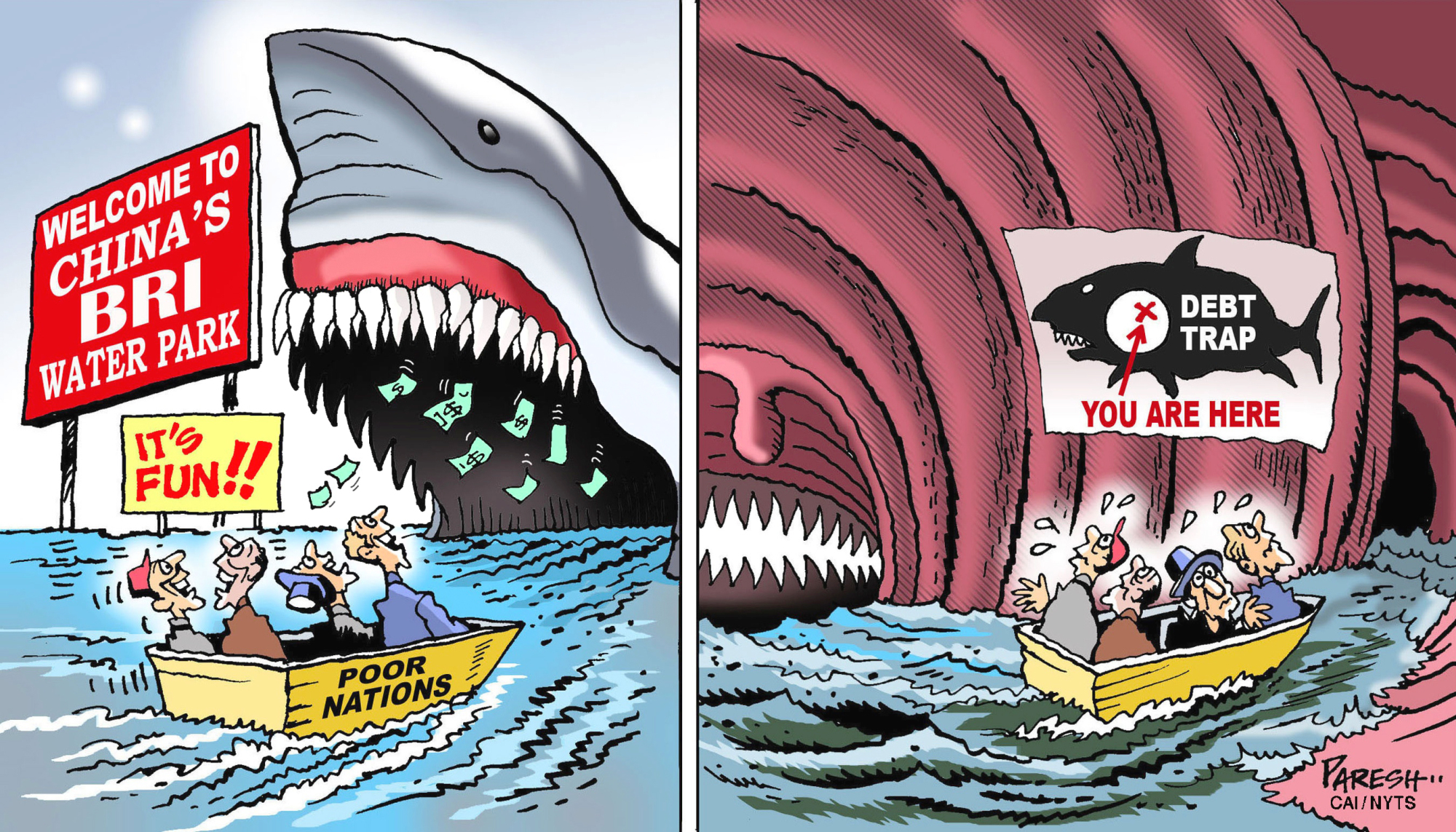
    What is Debt Trap Diplomacy?

    Debt trap diplomacy is a type of economic statecraft in which a country deliberately takes on unsustainable levels of debt in order to further its geopolitical aims. The debtor country then uses the threat of defaulting on its loans as leverage to extract concessions from its creditors. This strategy is often employed by rising powers as a way to quickly build up their military and economic might, at the expense of more established nations.

    The term “debt trap diplomacy” was first coined by Indian economist Jayati Ghosh in 2011, though the phenomenon itself is much older. One of the most famous examples occurred during the Cold War, when the Soviet Union used its status as a major creditor to gain political influence over developing countries in Africa and Latin America. In recent years, China has been accused of using debt traps to expand its influence in Asia and beyond.

    There are several ways that a country can fall into a debt trap. One common scenario is when a nation takes out loans for infrastructure projects that prove to be unviable or fail to generate enough revenue to service the debt. Another possibility is that a government borrows money from abroad only to have those funds siphoned off by corrupt officials.

    Either way, once a country falls into a debt trap it can be very difficult to escape without making significant concessions to creditors. Critics argue that debt trap diplomacy is an unethical way for powerful countries to take advantage of weaker ones. They also warn that this strategy could lead to an increase in global instability if rival nations start competing with each otherto lure indebted countries into their orbit.

    Why Debt is a Trap?

    Credit: www.japantimes.co.jp

    How to Avoid Debt Trap?

    Debt can be a trap, especially if you’re not careful. There are a few key things to remember if you find yourself in debt. Here are some tips to avoid getting into debt or deepening a debt hole:

    1. Create a budget: One of the most important steps in avoiding a debt trap is to create a budget and stick to it. This will help you to track your income and expenses and identify areas where you can cut back on spending.
    2. Live below your means: It’s important to live within your means, which means spending less than you earn. Avoid lifestyle inflation and resist the urge to keep up with others’ spending habits.
    3. Avoid unnecessary expenses: Avoid buying things that you don’t need, especially if you’re using credit to do so. Instead, focus on saving for the things that you really want or need.
    4. Pay off high-interest debt: High-interest debt, such as credit card debt, can quickly spiral out of control. Prioritize paying off this type of debt as quickly as possible to avoid falling into a debt trap.
    5. Use credit responsibly: When using credit, be sure to only borrow what you can afford to pay back and make sure to pay your bills on time. Late fees and interest can add up quickly, making it harder to get out of debt.
    6. Build an emergency fund: Having an emergency fund can help to protect you from falling into a debt trap. By having savings set aside, you can avoid having to rely on credit when unexpected expenses arise.
    7. Avoid impulse buying: Impulse buying can lead to overspending and ultimately falling into debt. Before making a purchase, take a moment to think about whether you really need the item and if it fits into your budget.
    8. Shop around for the best deals: When making a purchase, be sure to shop around for the best deals. This will help you to save money and avoid overspending.
    9. Avoid consolidation loans: Consolidation loans may seem like a good way to get out of debt, but they can actually make the problem worse. Instead, focus on paying off your debts one at a time.
    10. Seek professional help if needed: If you’re struggling to get out of debt, don’t be afraid to seek professional help. There are many organizations and financial advisors that can help you to create a plan to get out of debt and avoid falling into a debt trap in the future.
    1. Avoid using your credit card for cash advances: Cash advances typically come with high interest rates and fees, making it harder to pay off the debt. Instead, use your credit card for purchases and pay off the balance in full each month.
    2. Prioritize saving: Make saving a priority and set aside a certain percentage of your income each month. This will help you to build an emergency fund and have a cushion to fall back on in case of unexpected expenses.
    3. Avoid taking on too much debt: Be mindful of the amount of debt you’re taking on and make sure that you can afford the monthly payments. Taking on too much debt can make it difficult to keep up with payments and can lead to a debt trap.
    4. Avoid cosigner loans: Cosigner loans can put a lot of pressure on both parties involved. If you are unable to make the payments, it will affect your cosigner’s credit as well, it is better to avoid them.
    5. Avoid taking on too much student loan debt: While student loans can help to pay for education, it’s important to borrow only what you need and be aware of the long-term repayment implications.
    6. Avoid predatory lending: Predatory lending practices can trap individuals in a cycle of debt. Be aware of the terms and conditions of any loan you’re considering and avoid any lender that seems to be trying to take advantage of you.
    7. Avoid using debt to invest: using debt to invest in high-risk ventures is not advisable as it can put you in a worse position if the investment doesn’t pan out.
    8. Avoid using debt to pay off debt: using debt to pay off existing debt can lead to a vicious cycle of debt, it’s better to focus on paying off the debt you have and avoid taking on additional debt.
    9. Avoid using debt to finance luxuries: using debt to finance luxuries such as vacations or expensive cars can put you in a difficult financial position, it’s better to save up for them or avoid them altogether.
    10. Avoid procrastinating debt repayment: Don’t put off repaying your debts, the longer you wait the more interest and fees will accumulate, making it harder to pay off. It’s important to address your debts as soon as possible to avoid falling into a debt trap.
    11. Know your spending patterns: Track where you spend your money and how much you spend each month. This will help you identify areas where you can cut back.
    12. Stay away from high-interest debt. If at all possible, try to avoid borrowing money that comes with high-interest rates (like credit cards). This type of debt can quickly get out of control and become difficult to repay.
    13. . Avoid using loans to cover everyday expenses. Loans should only be used for large purchases that you cannot afford upfront (like a car or home).

    How Do You Break a Debt Trap?

    Debt traps can occur when people take on too much debt and then find themselves struggling to repay it. This can happen for a number of reasons, such as losing a job or an unexpected expense. Once someone falls behind on their payments, they may start receiving calls from debt collectors or their creditors may start taking legal action.

    This can all add up to a lot of stress and anxiety, making it even harder to catch up on payments. If you’re stuck in a debt trap, there are a few things you can do to try and break free. First, take a close look at your budget and see where you can cut back on expenses.

    Try to make some extra money by picking up some freelance work or selling unwanted items. Then, use this extra money to make bigger payments towards your debts. You might also want to consider consolidating your debts into one monthly payment with a lower interest rate.

    This can make it easier to stay on top of your payments and get out of debt quicker. Finally, make sure you stay communication with your creditors and let them know what’s going on. They may be willing to work with you if they know you’re trying to get out of debt.

    Breaking out of a debt trap can be difficult, but it’s not impossible. By following these tips, you’ll be one step closer to becoming debt-free!

    Why Should We Avoid Debt?

    Debt is something that can easily become a problem in our lives if we’re not careful. It can be difficult to keep up with payments and the interest can add up quickly, making it hard to get out of debt. Here are a few reasons why you should avoid debt:

    1. High-interest rates: Debt often comes with high-interest rates, making it more expensive to borrow money. For example, credit card debt can have an interest rate of 20% or more.
    2. Paying more than you borrow: With high-interest rates, you may end up paying more in interest than you borrowed in the first place. For example, if you borrow $10,000 at 20% interest, you will end up paying $12,000 over 5 years.
    3. Financial stress: Carrying too much debt can cause financial stress, which can affect your overall well-being. This can lead to anxiety, depression, and even physical health problems.
    4. Limited financial flexibility: When you have a high level of debt, you have less financial flexibility. You may have to put off saving for retirement or a child’s education because you need to make debt payments.
    5. Difficulty getting credit: High levels of debt can make it difficult to get approved for new credit, such as a mortgage or car loan. This can limit your ability to make large purchases in the future.
    6. Damage to credit score: Late or missed payments on debt can damage your credit score, making it harder to get approved for credit or loans in the future.
    7. Difficulty in making ends meet: High levels of debt can make it difficult to make ends meet, as you may have to devote a large portion of your income to debt payments.
    8. Risk of bankruptcy: Carrying too much debt can increase the risk of bankruptcy, which can have long-term consequences on your finances and credit score.
    9. Missed opportunities: High levels of debt can prevent you from taking advantage of opportunities, such as investing in a business or buying a home.
    10. Difficulty in living without debt: A high level of debt can make it difficult to live without debt, as you may have to rely on credit to make ends meet. This can lead to a cycle of debt that is difficult to break.
    1. Difficulty in saving for future: When you have high levels of debt, it can be difficult to save for future financial goals such as retirement or your children’s education.
    2. Difficulty in taking on new opportunities: High levels of debt can limit your ability to take on new opportunities such as starting a business or buying a home.
    3. Risk of losing assets: High levels of debt can increase the risk of losing assets such as a home or car through foreclosure or repossession.
    4. Difficulty in getting a good job: High levels of debt can make it difficult to get a good job as some employers may view you as a financial risk.
    5. Difficulty in getting a good insurance rate: High levels of debt can make it difficult to get a good insurance rate, as some insurance companies view debt as a risk factor.
    6. Difficulty in getting a good rent rate: High levels of debt can make it difficult to get a good rent rate, as some landlords may view debt as a risk factor.
    7. Difficulty in getting a good mortgage rate: High levels of debt can make it difficult to get a good mortgage rate, as some lenders may view debt as a risk factor.
    8. Difficulty in making large purchases: High levels of debt can make it difficult to make large purchases such as a car or home.
    9. Difficulty in getting a good car loan rate: High levels of debt can make it difficult to get a good car loan rate, as some lenders may view debt as a risk factor.
    10. Difficulty in getting a good personal loan rate: High levels of debt can make it difficult to get a good personal loan rate, as some lenders may view debt as a risk factor.


    The minimum payments may seem manageable at first, but as the interest accrues, the balance may only grow larger over time. If you find yourself in this situation, don’t despair – there are options available to help you get back on track financially.

    Conclusion

    Many people view debt as a necessary evil – something that must be taken on in order to purchase a home, car, or education. However, what many people don’t realize is that debt is actually a trap. Once you’re in debt, it’s very difficult to get out.

    The interest payments alone can keep you in a never-ending cycle of payments. Not to mention, if you miss a payment or two, your credit score will take a hit and it will become even harder to get out of debt.