Category: Uncategorized

  • Best Way to Learn About Real Estate

    Best Way to Learn About Real Estate

    The best way to learn about real estate is to study and gain practical experience. By studying real estate principles and investing in properties, you can develop a comprehensive understanding of the industry.

    Additionally, joining real estate networking groups and seeking mentorship from experienced professionals can provide valuable insights and guidance for your real estate education. With dedication, continuous learning, and hands-on experience, you can become well-versed in the intricacies of the real estate market.

    Online Courses And Certifications

    Discover the best way to learn about real estate through online courses and certifications. Gain the knowledge and skills needed to excel in the industry from the comfort of your own home.

    Popular Real Estate Education Platforms:

    • Coursera: Offers a wide range of real estate courses from top universities and institutions. Topics include property management, real estate finance, and investment analysis.
    • Udemy: Provides a variety of online courses created by industry experts, covering topics such as real estate investing, property development, and residential leasing.
    • Khan Academy: Offers free educational resources on a range of subjects, including real estate. Their real estate courses provide a solid foundation in the fundamentals of buying, selling, and investing in properties.
    • Real Estate Express: Designed specifically for aspiring real estate agents, this platform offers state-approved pre-licensing courses and continuing education for professionals in the industry.
    • Zillow Academy: Offers a collection of free courses that cover different aspects of real estate, including mortgage basics, investment strategies, and home buying tips.

    Benefits Of Online Courses:

    • Flexibility: Online courses allow you to learn at your own pace, fitting your studies around your schedule and other commitments.
    • Accessibility: With online courses, you can access course materials from anywhere with an internet connection, eliminating the need for commuting to a physical classroom.
    • Variety of courses: Online platforms offer a wide range of real estate courses, allowing you to choose the topics that align with your interests and career goals.
    • Expert instructors: Many online courses are taught by industry professionals with extensive experience in the real estate field, providing you with valuable insights and practical knowledge.
    • Interactive learning: Online courses often include interactive elements such as quizzes, case studies, and discussion forums, enhancing engagement and ensuring a comprehensive learning experience.

    Accredited Certification Programs:

    • National Association of Realtors (NAR): NAR offers several certification programs, including the Accredited Buyer’s Representative (ABR) and the Seller Representative Specialist (SRS). These certifications signify expertise in specific areas of real estate.
    • Real Estate Institute: Provides a range of specialized certifications such as Certified Residential Specialist (CRS), Certified International Property Specialist (CIPS), and Certified Property Manager (CPM).
    • Appraisal Institute: Offers various professional designations, including the MAI (Member of the Appraisal Institute) and SRA (Senior Residential Appraiser), which are highly regarded in the real estate appraisal industry.
    • International Real Estate Federation (FIABCI): FIABCI offers the Certified International Property Specialist (CIPS) designation, which focuses on global real estate practices and networking opportunities.
    • Institute of Real Estate Management (IREM): IREM grants the Certified Property Manager (CPM) designation, demonstrating expertise in the management of residential and commercial properties.

    Remember, online courses and accredited certifications can provide valuable knowledge and credentials in the dynamic field of real estate. Whether you’re looking to start a career in real estate or enhance your existing knowledge, these platforms and programs offer an accessible and flexible way to learn.

    Best Way to Learn About Real Estate

    Credit: www.keyrealestateresources.com

    Local Real Estate Seminars And Workshops

    Discover the best way to learn about real estate through local seminars and workshops. Gain valuable insights and knowledge from experienced professionals in the industry.

    Finding Local Events:

    • Search online: Look for real estate seminars and workshops in your local area using search engines or event platforms.
    • Join real estate groups: Connect with local real estate groups or associations on social media platforms to stay updated on upcoming events.
    • Network with professionals: Attend local real estate networking events and meet professionals who can provide information about seminars and workshops.
    • Check community bulletin boards: Explore community centers, libraries, and local newspapers for advertisements or flyers about real estate events in your area.

    Benefits Of Attending Seminars And Workshops:

    • Expert knowledge: Gain insights from industry experts who have extensive knowledge and experience in the real estate field.
    • Networking opportunities: Connect with like-minded individuals, including professionals, investors, and potential clients, who can help expand your professional network.
    • Learning practical skills: Acquire practical skills and strategies to effectively navigate the real estate market, analyze deals, negotiate contracts, and manage real estate investments.
    • Stay updated with trends: Stay abreast of emerging trends, market shifts, and new laws and regulations that can impact the real estate industry.
    • Motivation and inspiration: Seminars and workshops often provide a motivational boost, inspiring you to set and achieve ambitious goals in your real estate endeavors.

    Joining Real Estate Investment Clubs

    Joining real estate investment clubs is one of the best ways to gain valuable knowledge about the real estate industry. These clubs offer networking opportunities, educational resources, and expert insights, providing an immersive learning experience for aspiring investors.

    Can be one of the best ways to learn about real estate. These clubs offer a variety of benefits, including networking opportunities and the chance to learn from experienced investors. In this section, we will explore the advantages of joining these clubs in more detail.

    Networking Opportunities:

    • Meeting and connecting with like-minded individuals who share your passion for real estate
    • Building relationships with industry professionals, such as agents, developers, and lenders
    • Access to a network of potential partners for future real estate deals
    • Exchanging knowledge, tips, and insights with fellow club members
    • Attend meetings, workshops, and conferences where you can network with industry experts

    Networking within real estate investment clubs allows you to expand your contacts and grow your professional network. Building relationships with others in the industry can open doors to new opportunities and provide valuable insights that can help you succeed in your real estate endeavors.

    Learning From Experienced Investors:

    • Learning from the experiences and successes of seasoned investors
    • Access to educational resources, such as guest speakers and presentations
    • Getting advice and guidance from those who have already achieved success in real estate
    • Learning about different investment strategies and techniques used by successful investors
    • Gaining insights into market trends, opportunities, and potential risks

    One of the greatest advantages of joining a real estate investment club is the opportunity to learn from experienced investors. These clubs often invite guest speakers who share their expertise and offer valuable insights. By learning from those who have already achieved success in real estate, you can avoid common pitfalls and mistakes while gaining the knowledge and skills needed to make informed investment decisions.

    Benefits Of Joining A Club:

    • Access to exclusive real estate investment opportunities
    • Mentoring and guidance from experienced members
    • Participation in group investment projects
    • Access to resources and tools that can help with your real estate endeavors
    • Opportunities to collaborate and partner with fellow investors

    Joining a real estate investment club provides numerous benefits for both seasoned investors and beginners. By becoming a member, you can gain access to exclusive investment opportunities that may not be available elsewhere. Additionally, these clubs often provide mentoring and guidance, which can be invaluable when starting out in the world of real estate investing.

    The collaboration and partnership opportunities within the club can help you grow your portfolio and achieve your investment goals.

    Joining a real estate investment club offers a wealth of advantages. From networking opportunities to learning from experienced investors, these clubs provide a supportive environment for aspiring and seasoned investors alike. By becoming a member, you can tap into a valuable network, gain insights from successful investors, and access exclusive investment opportunities.

    So, consider joining a real estate investment club on your journey to becoming a successful real estate investor.

    Hands-On Experience Through Internships

    Internships provide valuable hands-on experience in learning about the real estate industry. Gain practical knowledge and insights through immersive opportunities to develop skills and network with professionals.

    Finding Real Estate Internships

    • Search online job boards and internship websites for real estate internship opportunities.
    • Contact local real estate companies, agencies, or brokerages to inquire about internship programs.
    • Check with your college or university career services department for internship listings in the real estate field.

    Gaining Practical Knowledge

    • Internships provide hands-on experience in real estate, allowing you to apply theoretical knowledge learned in the classroom.
    • Learn about property management, marketing, negotiations, sales, and contract drafting during your internship.
    • Get familiar with the day-to-day operations of a real estate business, such as property inspections, client meetings, and paperwork.

    Building A Professional Network

    • Connect with industry professionals and mentors who can guide you in your real estate career.
    • Gain exposure to different roles within the real estate field and learn from experienced professionals.
    • Cultivate relationships with fellow interns, supervisors, and colleagues, as they may become valuable contacts in the future.

    By actively seeking internships in the real estate industry, you can gain hands-on experience, practical knowledge, and build a professional network that will greatly contribute to your success in the field. Embrace the opportunity to learn from experienced professionals, apply your knowledge in real-world scenarios, and establish connections that can open doors for future opportunities.

    Remember, internships are not only a stepping stone to a career in real estate but also a chance to gain invaluable insights and make a lasting impression in the industry.

    Shadowing Experienced Real Estate Professionals

    Learn about real estate by shadowing experienced professionals. Gain firsthand knowledge and practical skills in the industry. Stick to the experts to enhance your understanding of the real estate world.

    Learning From Mentors:

    • One of the best ways to learn about real estate is by shadowing experienced professionals in the field. This provides an opportunity to gain valuable insights and learn from their years of experience. Some benefits of learning from mentors include:
    • Getting firsthand experience: Observing and working alongside experienced real estate professionals allows you to witness real-life scenarios and learn from their actions and decision-making processes.
    • Learning the ropes: Mentors can guide you through the intricacies of the real estate industry, teaching you about important concepts such as market analysis, property valuation, and investment strategies.
    • Networking opportunities: Shadowing a mentor introduces you to their network of industry contacts, which can be valuable for future collaborations or job opportunities.
    • Receiving personalized guidance: Mentors can provide individualized feedback and advice tailored to your specific goals and aspirations in the real estate field.
    • Building confidence: Having a mentor by your side can help boost your confidence as you navigate the real estate industry. Their guidance and support can give you the reassurance and motivation you need to succeed.

    Being Exposed To Real-Life Scenarios:

    • In the world of real estate, theory can only take you so far. Being exposed to real-life scenarios is crucial for a comprehensive understanding of the industry. Here are some reasons why exposure to real-life scenarios is essential:
    • Practical application of knowledge: Real-life scenarios allow you to put your theoretical knowledge into practice. You’ll learn how to apply concepts such as property analysis, negotiation strategies, and market research in real-world situations.
    • Understanding market dynamics: By observing real estate professionals in action, you’ll gain a deeper understanding of market dynamics, trends, and fluctuations. This firsthand experience will help you develop the ability to anticipate market changes and make informed decisions.
    • Learning from mistakes: Witnessing real-life scenarios gives you the opportunity to see both successes and failures. Learning from the mistakes of others can help you avoid costly errors and develop a more informed approach to real estate deals.
    • Adapting to challenges: Real estate deals often come with unexpected challenges. Being exposed to real-life scenarios prepares you to handle these challenges with resilience and adaptability. You’ll learn how to navigate obstacles, think on your feet, and find creative solutions.
    • Gaining practical skills: Real-life scenarios provide a platform to develop practical skills such as property evaluation, market research, and contract negotiation. These skills are invaluable in the real estate industry and can only be honed through hands-on experience.

    Observing Negotiation Tactics:

    • Negotiation is a crucial skill in the real estate industry, and shadowing experienced professionals provides a unique opportunity to observe effective negotiation tactics. Here are some key reasons why observing negotiation tactics is beneficial:
    • Learning from experts: By observing successful negotiators, you’ll gain insights into their strategies, techniques, and communication skills. You’ll learn how to navigate difficult conversations, handle objections, and reach mutually beneficial agreements.
    • Understanding different negotiation styles: Every negotiator has their own unique style. By observing different professionals, you’ll gain exposure to various negotiation styles and approaches. This will help you develop a flexible and adaptable negotiation style of your own.
    • Recognizing non-verbal cues: Negotiation goes beyond words. Observing experienced negotiators allows you to pick up on subtle non-verbal cues such as body language and tone of voice, which can significantly impact the outcome of a negotiation.
    • Practicing active listening: Effective negotiation requires active listening and understanding the needs and motivations of the other party. Through observation, you’ll learn how to actively listen, ask probing questions, and identify underlying interests.
    • Gaining confidence: Negotiation can be intimidating, especially for beginners. Shadowing experienced negotiators helps build your confidence and provides valuable exposure to different negotiation scenarios. With each observation, you’ll become more comfortable and skilled in negotiation techniques.

    By shadowing experienced professionals, you can tap into their expertise, gain practical knowledge, and develop the essential skills needed to thrive in the real estate industry. Learning from mentors, being exposed to real-life scenarios, and observing negotiation tactics are essential components of a well-rounded real estate education.

    Implementing A Self-Study Plan

    Discover the best way to learn about real estate by implementing a self-study plan. Gain knowledge and expertise in the field at your own pace, allowing you to excel in the real estate industry.

    Whether you’re a beginner looking to dive into the world of real estate or a seasoned investor wanting to stay up-to-date on industry trends, implementing a self-study plan can be an effective way to learn about real estate at your own pace.

    With the right strategies and resources, you can gain knowledge and develop skills that will set you up for success in the real estate market. Here are three key steps to help you create and follow a self-study plan:

    Creating A Study Schedule:

    To make the most of your self-study journey in real estate, it’s crucial to establish a study schedule that works for you. By allocating regular dedicated time to learn, you’re more likely to stay focused and progress in your understanding of real estate concepts.

    Consider the following tips when creating your study schedule:

    • Identify your peak focus hours: Determine the time of day when you feel most alert and productive, and schedule your study sessions during these periods.
    • Break it down into manageable chunks: Instead of overwhelming yourself with long study sessions, divide your study time into smaller, more digestible blocks. This approach helps retain information effectively.
    • Be consistent: Consistency is key in any learning endeavor. Aim to study at the same time each day or week to build a routine that becomes a habit.

    Utilizing Real Estate Books And Resources:

    Real estate books and resources serve as valuable companions on your self-study journey. When choosing which materials to include in your plan, consider the following suggestions:

    • Read a variety of books: Explore a diverse range of real estate books authored by experienced professionals in the industry. Look for titles that cover topics like investing, financing, property management, and market analysis.
    • Seek out online courses: The internet provides an abundance of online courses tailored specifically for real estate enthusiasts. Look for reputable platforms offering comprehensive courses that provide in-depth insights and hands-on learning opportunities.
    • Tap into podcasts and webinars: Podcasts and webinars offer a convenient way to learn about real estate while on the go. Explore podcasts hosted by industry experts and listen to webinars that cover current market trends and strategies.

    Setting Goals And Tracking Progress:

    To maximize your learning experience, it’s essential to set specific goals and track your progress along the way. Consider the following steps to ensure you stay on track:

    • Define your learning objectives: Clearly identify what you hope to achieve through your self-study plan. Whether it’s gaining knowledge about a particular aspect of real estate or acquiring skills for investing, setting goals will keep you motivated.
    • Break goals into milestones: Divide your larger goals into smaller, more attainable milestones. This approach helps you celebrate achievements and maintain momentum.
    • Track your progress: Regularly assess your progress by tracking the completion of each milestone. This way, you can identify areas where you excel and areas that require additional focus.
    • Adjust your plan as needed: Monitor your progress and adjust your self-study plan accordingly. Recognize any areas that may need more attention or modification and adapt your schedule and resources accordingly.

    Provides a flexible and effective way to delve into the world of real estate. By creating a study schedule, utilizing books and resources, and setting goals while tracking progress, you’ll be well on your way to becoming knowledgeable and confident in your real estate pursuits.

    So, grab your study materials, set your goals, and embark on a rewarding journey of self-learning in the real estate realm.

    Attending Real Estate Conferences And Expos

    Attending real estate conferences and expos is the best way to gain knowledge and insights about the real estate industry. These events provide opportunities to learn from experts, network with professionals, and stay updated on the latest trends and market developments.

    Is one of the best ways to learn about the industry and stay updated with the latest trends. These events offer a wealth of knowledge, networking opportunities, and insights from experienced professionals. In this section, we will explore the major real estate events and the benefits of attending them.

    Major Real Estate Events:

    • National Association of Realtors Conference and Expo: This annual event brings together real estate professionals from across the country. It features educational sessions, keynote speakers, and an expo showcasing the latest products and services in the industry.
    • Real Estate Connect: This conference is organized by Inman and is known for its innovative approach to real estate education. It focuses on technology, marketing strategies, and industry disruptors.
    • Urban Land Institute Fall Meeting: This event brings together real estate developers, investors, and city planners. It covers a wide range of topics including urban development, sustainability, and real estate trends in different regions.
    • Realcomm: Realcomm is a conference that explores the intersection of commercial real estate and technology. It focuses on topics like smart buildings, cybersecurity, and digital transformation in the industry.

    Benefits Of Attending Conferences:

    Attending real estate conferences and expos offers numerous benefits for industry professionals. Here are some key advantages:

    • Knowledge sharing: Conferences provide an opportunity to learn from industry experts through educational sessions, workshops, and panel discussions. These sessions cover a wide range of topics including market trends, investment strategies, legal updates, and emerging technologies.
    • Networking opportunities: Conferences bring together a diverse group of professionals, including real estate agents, investors, lenders, and service providers. Building connections with like-minded individuals can lead to valuable partnerships, referrals, and mentorship opportunities.
    • Exposure to new ideas and trends: By attending conferences, you can stay updated with the latest trends and innovations in the real estate industry. Keynote speakers and exhibitors often showcase cutting-edge technologies, marketing strategies, and industry best practices.
    • Professional development: Conferences often offer continuing education credits and certifications. Participating in these programs can enhance your professional credentials and help you stay ahead in a competitive industry.
    • Access to industry resources: Conferences typically provide access to industry-specific resources, such as research reports, whitepapers, and case studies. These resources can provide valuable insights and help you make informed decisions in your real estate career.

    Attending real estate conferences and expos is an excellent way to expand your knowledge, network with industry professionals, and stay up to date with the latest industry trends. Make sure to mark these events on your calendar and take full advantage of the learning and networking opportunities they offer.

    Subscribing To Real Estate Podcasts And Blogs

    Discover the most effective way to learn about real estate by subscribing to top real estate podcasts and blogs. Stay informed and gain valuable insights from industry experts in a concise and accessible format.

    Enhance your knowledge of the real estate industry by subscribing to reputable podcasts and blogs. This learning medium allows you to gain valuable insights from industry experts while being accessible and convenient. Get ready to dive into the world of real estate with these resources.

    Reputable Podcasts And Blogs:

    • The BiggerPockets Podcast: This highly regarded podcast features interviews with real estate investors, providing valuable tips and strategies for success in the industry.
    • Real Estate Investing Mastery: Hosted by Joe McCall, this podcast offers practical advice and success stories from real estate investors, helping you navigate the ins and outs of the business.
    • Inman News: A leading online publication for real estate professionals, Inman News covers the latest trends, news, and analysis in the industry, keeping you informed and up to date.
    • The Balance: With a focus on personal finance and investing, The Balance offers a wealth of real estate content, including guides, tips, and market insights.
    • Bigger Pockets Blog: The accompanying blog to the BiggerPockets podcast, this platform provides in-depth articles on various real estate topics, making it an excellent resource for both beginners and experienced investors.

    Insights From Industry Experts:

    • Gain firsthand knowledge and insights from experienced professionals who share their success stories, lessons learned, and strategies for attaining financial independence through real estate investment.
    • Learn about various investment strategies, such as buy and hold, fix and flip, rental properties, and more, directly from experts who have achieved success in those areas.
    • Stay updated on the latest trends, market changes, and investment opportunities through the expertise and analysis provided by industry leaders.

    Accessible And Convenient Learning Medium:

    • Podcasts and blogs provide flexibility in learning, allowing you to listen or read at your own pace, whether you’re commuting, working out, or relaxing at home.
    • These resources are easily accessible through various platforms, such as websites, podcast apps, and social media, making it convenient to consume content on the go.
    • Engage with the community by joining discussion forums, commenting on blogs, and connecting with industry professionals, expanding your network and learning from others’ experiences.

    Is a fantastic way to learn about the industry, gain valuable insights from experts, and stay updated on the latest trends and investment strategies. Take advantage of this accessible and convenient learning medium to boost your knowledge and success in the world of real estate.

    Happy learning!

    Networking With Real Estate Professionals

    One effective method for gaining knowledge about real estate is by networking with professionals in the industry. Connecting with experienced individuals can provide valuable insights and opportunities to learn firsthand about the ins and outs of the real estate market.

    Expanding professional connections:

    • Attend industry events and join local real estate groups to meet and connect with other professionals in the field.
    • Engage in online forums and social media groups dedicated to real estate to interact with like-minded individuals.
    • Participate in networking events specifically targeted towards real estate professionals to build relationships and create opportunities.

    Learning from experienced investors:

    • Seek out mentorship opportunities by connecting with seasoned investors who can offer guidance and insights.
    • Attend seminars and workshops led by successful real estate investors to learn from their experiences.
    • Join real estate investment clubs to share knowledge and learn from others who have already achieved success.

    Gaining insights into market trends and strategies:

    • Engage in conversations with real estate professionals to gain insights into current market trends and strategies.
    • Participate in local real estate meetings and conferences where industry experts present their analyses and predictions.
    • Stay updated on industry news and follow influential real estate professionals on social media to learn about their strategies and approaches.

    Is an invaluable way to expand your professional connections, learn from experienced investors, and gain insights into market trends and strategies. By connecting with like-minded individuals, attending industry events, and participating in networking opportunities, you can broaden your network and create opportunities for success in the real estate industry.

    Remember, building strong relationships and staying informed are key factors in thriving as a real estate professional.

    Frequently Asked Questions For Best Way To Learn About Real Estate

    How Do I Teach Myself Real Estate?

    To teach yourself real estate: 1. Start by researching real estate topics, markets, and laws. 2. Learn from industry experts, attend workshops or online courses. 3. Network with professionals to gain knowledge and insights. 4. Practice by analyzing real estate deals and taking calculated risks.

    What Is The Best Way To Start In Real Estate?

    To start in real estate, begin by researching the market, building knowledge, and networking with professionals.

    What Are The Basics To Know About Real Estate?

    Real estate basics include understanding property ownership, market trends, financing options, and legal procedures.

    How Do Beginners Make Money In Real Estate?

    Beginners can make money in real estate by starting with wholesaling or flipping properties for profit.

    Conclusion

    Learning about real estate can be a fulfilling and lucrative endeavor. By taking the time to educate yourself through online courses, attending webinars, and reading insightful books, you can gain the necessary knowledge and skills to navigate the world of real estate successfully.

    It is important to embrace a proactive approach and continuously stay updated with market trends and changes in regulations. Networking with industry professionals and seeking mentorship can also provide valuable insights and guidance. Remember to apply what you have learned by actively seeking real-life experiences and opportunities.

    Whether you choose to invest in properties or pursue a career as a real estate agent, the best way to learn is by immersing yourself in the industry and being open to ongoing learning. So, start your real estate journey today and watch as your knowledge and expertise grow, opening doors to a rewarding future.


  • How to Become a Real Estate Investor?

    How to Become a Real Estate Investor?

    To become a real estate investor, you need to learn about the market and properties, create a financial plan, and take action on opportunities. In today’s competitive market, being a successful real estate investor requires knowledge, strategic planning, and execution.

    By following these steps, you can pave your path to becoming a successful real estate investor who navigates the market with confidence and achieves long-term financial growth. This article will provide valuable insights, tips, and strategies to help you launch your real estate investment journey.

    Whether you’re a beginner or already have some experience, this guide will help you take your real estate investing skills to the next level.

    Identifying Profitable Real Estate Investment Opportunities

    Discover the secrets to becoming a successful real estate investor by learning how to identify profitable investment opportunities. Maximize your profits with expert tips on finding the right properties and making smart investment decisions.

    Investing in real estate can be a lucrative venture if you know how to identify profitable opportunities. Successfully finding the right properties to invest in requires careful analysis and evaluation. In this section, we will explore three key aspects to consider when identifying profitable real estate investment opportunities: analyzing local market trends, evaluating rental income potential, and considering fix-and-flip opportunities.

    Analyzing Local Market Trends

    To make informed investment decisions, it is crucial to analyze local market trends. Understanding the current and future state of the real estate market in your desired location can help you identify areas with high growth potential. Here are a few factors to consider when analyzing local market trends:

    • Population growth: A growing population can lead to increased demand for housing, which in turn can drive up property values.
    • Job market: Areas with a thriving job market often attract more residents, resulting in a higher demand for rental properties.
    • Infrastructure development: Upcoming infrastructure projects, such as new highways or public transportation expansions, can significantly impact property values in surrounding areas.
    • Neighborhood development: Keep an eye on neighborhoods undergoing revitalization or gentrification, as they often present excellent investment opportunities.

    Evaluating Rental Income Potential

    For investors looking to generate passive income, evaluating the rental income potential of a property is crucial. Here are some factors to consider when assessing a property’s rental income potential:

    • Location: Properties located in desirable neighborhoods with access to amenities and good schools tend to command higher rental prices.
    • Rental market demand: Research the local rental market to gauge the demand for rental properties in your target area.
    • Rental rates: Analyze the current rental rates in the area and compare them to the property’s potential rental income to ensure a favorable return on investment.
    • Property condition: Assess the condition of the property and its amenities, as these can influence the rental income potential.

    Considering Fix-And-Flip Opportunities

    Fix-and-flip opportunities involve purchasing properties in need of repair, renovating them, and selling them at a profit. Here are some key considerations when exploring fix-and-flip opportunities:

    • Purchase price: Look for properties that can be acquired at a discounted price due to their condition or market conditions.
    • Renovation costs: Estimate the cost of repairs and renovations needed to bring the property up to market standards.
    • Potential resale value: Analyze recent sales data in the area to determine the potential resale value of the renovated property.
    • Market conditions: Consider the current real estate market conditions and future projections to ensure a favorable selling environment when you complete the renovations.

    By thoroughly analyzing market trends, evaluating rental income potential, and considering fix-and-flip opportunities, you can uncover profitable real estate investment opportunities. Apply these strategies in combination with thorough research and due diligence to increase your chances of success in the real estate investment market.

    Educating Yourself On Real Estate Investing Fundamentals

    Gain essential knowledge on real estate investing by educating yourself on the fundamentals. Learn how to become a successful real estate investor and make informed decisions to grow your portfolio.

    Understanding Different Investment Strategies

    Real estate investing offers a range of strategies that can help you achieve your financial goals. Here are some key points to consider:

    • Rental Properties: Purchasing properties and renting them out is a popular investment strategy. It allows you to generate monthly income while the property appreciates in value over time.
    • Fix and Flip: This strategy involves buying properties in need of repair, renovating them, and selling them at a higher price. It can be a profitable option if you have the skills or resources to handle the renovations.
    • Real Estate Investment Trusts (REITs): REITs are companies that manage a portfolio of income-generating properties. By investing in REITs, you can own a small portion of various properties without directly managing them.
    • Wholesaling: Wholesaling involves finding motivated sellers and then assigning the contract to another investor for a fee. While it doesn’t require much capital, it requires strong negotiation and marketing skills.

    Understanding these different investment strategies will help you choose the one that aligns with your goals, resources, and preferences.

    Learning About Financing Options

    To become a real estate investor, it’s crucial to be familiar with the various financing options available. Here are some common methods:

    • Conventional Loans: These loans are provided by banks and require a down payment and good credit score. They offer competitive interest rates and terms, but strict qualification criteria.
    • Hard Money Loans: Hard money loans are typically short-term, high-interest loans provided by private investors or companies. They are based on the value of the property rather than the borrower’s creditworthiness.
    • Private Lenders and Partnerships: Connecting with individuals or groups who are willing to provide the necessary funds in exchange for a share of the profits can be an alternative financing option.
    • Self-Directed IRAs: If you have a retirement account, you may be able to use it for real estate investments through self-directed IRAs. This option allows you to benefit from tax advantages while building your real estate portfolio.

    By understanding the various financing options, you can select the one that fits your financial situation and investment strategy.

    Studying Local Real Estate Laws And Regulations

    Before diving into real estate investing, it’s essential to study and understand the local laws and regulations that govern the industry. Here’s why:

    • Property Laws: Familiarize yourself with property laws, such as zoning regulations, property rights, and landlord-tenant laws. This knowledge will help you navigate legal issues that may arise from property ownership or rental activities.
    • Tax Regulations: Real estate investments can have significant tax implications. Understanding tax laws related to property ownership, rental income, and capital gains is crucial for maximizing your profits and staying compliant with the law.
    • Licensing and Permits: Some real estate activities may require specific licenses or permits. Research the requirements in your area to ensure you’re operating legally and avoid potential penalties.
    • Fair Housing Laws: Familiarize yourself with fair housing laws to ensure you adhere to anti-discrimination practices when renting or selling properties. Understanding your responsibilities as a real estate investor will help you maintain a positive reputation in the industry.

    By studying local real estate laws and regulations, you can protect your investment, avoid legal issues, and ensure a successful real estate journey.

    Working With Professionals In The Field

    Gain valuable insights and knowledge about becoming a real estate investor by working with professionals who have expertise in the field. Expand your network and learn from their experiences to enhance your understanding of the industry.

    Being a real estate investor requires collaboration and working with professionals who can assist you in various aspects of the industry. By building relationships with trusted real estate agents, contractors, property managers, and fellow investors, you can leverage their expertise to maximize your investment opportunities.

    Here’s a closer look at how to work effectively with these professionals:

    Finding A Trusted Real Estate Agent

    A reliable real estate agent can be instrumental in helping you find lucrative investment properties. Consider the following tips when looking for a trusted agent:

    • Research local agents with experience in the real estate market: Look for agents who specialize in investment properties and possess a deep understanding of the local market.
    • Seek recommendations from other investors: Reach out to fellow investors and ask for referrals to agents they have successfully worked with.
    • Interview potential agents: During the interview process, ask about their knowledge of investment properties, their track record in assisting investors, and their availability and communication style.
    • Evaluate their network: A well-connected agent can provide access to off-market properties and connect you with other professionals in the industry.

    Building Relationships With Contractors And Property Managers

    Working with skilled contractors and efficient property managers is crucial for the success of your real estate investments. Consider the following when building relationships with contractors and property managers:

    • Seek referrals from trusted sources: Ask other investors, real estate agents, and local associations for recommendations on reliable contractors and property managers.
    • Evaluate their experience and expertise: Look for contractors with a proven track record in handling similar projects. For property managers, ensure they have experience managing rental properties and dealing with tenant issues.
    • Communicate clearly and establish expectations: Clearly outline your project requirements, preferred timelines, and budget with contractors. Set expectations for property managers regarding tenant selection, rent collection, and property maintenance.
    • Regularly assess performance: Continuously monitor the work of contractors and property managers to ensure they are meeting your expectations. Address any issues promptly to maintain a successful partnership.

    Establishing Connections With Other Investors

    Building connections with other real estate investors can provide valuable insights, opportunities for joint ventures, and a supportive network. Consider the following tips for connecting with like-minded investors:

    • Attend real estate investment events and meetups: Participate in local real estate investment clubs or attend industry conferences to meet other investors in your area.
    • Join online real estate investor communities: Engage in online forums, social media groups, and specialized platforms to connect with a broader network of investors.
    • Seek mentorship opportunities: Find experienced investors who are willing to share their knowledge and guide you in your real estate journey.
    • Collaborate on joint ventures: Partner with other investors to pool resources, share expertise, and tackle larger investment opportunities together.

    Working alongside professionals in the real estate industry is essential for success as a real estate investor. By finding a trusted real estate agent, building relationships with contractors and property managers, and establishing connections with other investors, you can leverage their expertise and resources to make informed investment decisions and maximize your profits.

    Exploring Financing Options For Your Investments

    Explore various financing options to kickstart your real estate investment journey. From traditional mortgages to private loans and partnerships, discover the opportunities available to fund your ventures and achieve financial success in the real estate market.

    Real estate investing is an exciting venture that requires a solid financial plan. As you embark on your journey to become a real estate investor, you will need to consider various financing options to fund your investments. Here, we explore three common methods that can help you secure the necessary funds and kick-start your real estate portfolio.

    Traditional Mortgage Loans:

    • Aspiring real estate investors often turn to traditional mortgage loans to finance their investment properties. This option allows you to obtain funds from a bank or lending institution, using the property itself as collateral.
    • Key points to consider for traditional mortgage loans:
    • Lower interest rates compared to other financing options.
    • Longer repayment terms, typically ranging from 15 to 30 years.
    • Requires a good credit score and stable income to qualify.
    • Involves a thorough approval process, including property appraisals and documentation verification.

    Private Lending And Hard Money Loans:

    • Private lending and hard money loans provide alternative financing options for real estate investors, especially those who may not qualify for traditional loans or need quick access to funds.
    • Key points to consider for private lending and hard money loans:
    • Private lenders are individuals or organizations that offer short-term loans for real estate investments.
    • Hard money loans are asset-based loans that use the property as collateral rather than focusing on the borrower’s creditworthiness.
    • These loans often come with higher interest rates and shorter repayment terms, but the approval process is faster and less stringent.
    • Ideal for fix-and-flip projects or instances where a quick financing option is needed.

    Self-Financing And Using Retirement Funds:

    • Some real estate investors opt for self-financing or utilizing their retirement funds to invest in properties.
    • Key points to consider for self-financing and using retirement funds:
    • Self-financing involves using personal savings, liquidating assets, or leveraging home equity to invest in real estate.
    • While this option eliminates the need for third-party financing, it may require significant capital and can limit investment opportunities.
    • Utilizing retirement funds, such as a self-directed IRA, allows investors to use their retirement savings to fund real estate investments. However, strict rules and regulations must be followed to avoid penalties or taxes.

    As you explore financing options for your real estate investments, it’s crucial to carefully evaluate your financial situation, investment goals, and risk tolerance. Each financing method has its own advantages and considerations, so choose the one that aligns with your investment strategy and ensures long-term success.

    Performing In-Depth Property Analysis

    Gain expertise in real estate investing by performing thorough property analysis. Learn how to assess market conditions, evaluate property values, and make informed investment decisions.

    Real estate investing requires carefully analyzing potential properties to determine their suitability and profitability. Performing an in-depth property analysis is crucial to making informed investment decisions. This involves assessing the property’s condition and potential repairs, calculating potential return on investment (ROI) and cash flow, and researching the neighborhood and property market value.

    Let’s dive into each aspect of property analysis:

    Assessing The Property’S Condition And Potential Repairs:

    To ensure you make a sound investment, it’s important to thoroughly evaluate the property’s condition and any potential repairs needed. Consider factors such as:

    • Overall property condition: Take note of any visible issues or areas that may require immediate attention.
    • Structural integrity: Assess the foundation, walls, roof, and other structural elements for any signs of damage or wear.
    • Plumbing and electrical systems: Check for any outdated or faulty systems that may require updating or repair.
    • Cosmetic improvements: Evaluate the property’s appearance and assess whether any cosmetic enhancements are necessary to attract tenants or buyers.

    Calculate Potential Roi And Cash Flow:

    Determining the potential return on investment (ROI) and cash flow is crucial in assessing the profitability of a real estate investment. Consider the following factors:

    • Purchase and financing costs: Calculate the total expenses involved in acquiring the property, including purchase price, closing costs, and financing fees.
    • Operating expenses: Estimate monthly expenses such as property taxes, insurance, maintenance costs, and property management fees.
    • Rental income: Determine the expected monthly rental income based on market rates and occupancy rates.
    • Cash flow analysis: Analyze the potential monthly cash flow by subtracting operating expenses from rental income.
    • ROI calculation: Assess the projected return on investment by considering both the property’s cash flow potential and potential appreciation over time.

    Researching Neighborhood And Property Market Value:

    Understanding the neighborhood and property market is essential for successful real estate investing. Here are some steps to consider:

    • Neighborhood analysis: Evaluate the neighborhood’s desirability, amenities, safety, and access to transportation and schools.
    • Market trends: Research recent sales and rental data in the area to gain insights into market appreciation, vacancy rates, and rental demand.
    • Comparable properties: Compare the property you are considering with similar properties in the area to determine its market value.
    • Future development: Assess any planned infrastructure development or revitalization projects that may impact property values in the future.

    Performing a comprehensive property analysis is vital for making informed investment decisions. By assessing the property’s condition, potential repairs, ROI, cash flow, and researching the neighborhood and property market, you can position yourself for success in real estate investing. Remember, thorough analysis minimizes risks and maximizes potential returns on your investment.

    So, take the time to crunch the numbers and gather all the necessary information before making a final decision.

    Strategies For Effective Negotiation

    Discover effective negotiation strategies for aspiring real estate investors looking to maximize their success in the market. Learn how to skillfully navigate deals, build relationships, and achieve mutually beneficial outcomes in the competitive world of real estate investing.

    To become a successful real estate investor, mastering the art of negotiation is crucial. Your ability to present a strong offer, negotiate purchase price and terms, and overcome objections can make or break a deal. In this section, we will explore effective strategies for negotiation to help you maximize your profits and achieve success in the real estate investment market.

    Presenting A Strong Offer

    When it comes to presenting a strong offer, it’s important to make a compelling case that captures the attention of the seller. Here are some strategies to consider:

    • Conduct thorough market research: Before making an offer, research comparable properties in the area to determine the market value. This will enable you to make an offer that is fair and competitive.
    • Highlight your strengths as a buyer: If you have a strong financial position or the ability to close quickly, emphasize these points to make your offer more appealing.
    • Provide a concise and clear offer: Clearly outline your proposed purchase price, desired closing date, and any contingencies in a well-structured and easy-to-understand offer letter.

    Negotiating Purchase Price And Terms

    Negotiating the purchase price and terms is a critical step in the real estate investment process. Here are some effective strategies to help you secure a favorable deal:

    • Start with a reasonable offer: Begin with an offer that is slightly below the seller’s asking price. This will give you room to negotiate while still maintaining a respectful position.
    • Identify the seller’s motivations: Understanding why the seller is selling can help you tailor your negotiation strategy. If they need to sell quickly, they may be more open to accepting a lower price.
    • Use leverage to your advantage: Highlight any advantages you have as a buyer, such as being pre-approved for financing or the ability to close quickly. This can give you an advantage in negotiating a better price or favorable terms.

    Overcoming Objections And Closing The Deal

    Negotiation isn’t just about the purchase price and terms; it’s also about overcoming objections and successfully closing the deal. Here are some strategies to help you navigate this stage:

    • Listen and address concerns: When objections arise, listen attentively and respond thoughtfully. Addressing the seller’s concerns can help build trust and make the negotiation process smoother.
    • Explore win-win solutions: Look for creative solutions that meet both parties’ needs. For example, offering a higher purchase price in exchange for certain repairs or concessions from the seller.
    • Be prepared to walk away: Sometimes, the best negotiation strategy is knowing when to walk away. If the terms are not favorable or the seller is unwilling to meet your requirements, be willing to walk away and pursue other opportunities.

    Mastering the art of negotiation is essential for real estate investors. By presenting a strong offer, negotiating purchase price and terms, and overcoming objections, you can increase your chances of closing profitable deals. Remember to be prepared, adaptable, and confident in your negotiation skills.

    Successfully Managing Rental Properties

    Learn how to successfully manage rental properties and become a real estate investor with these expert tips and strategies. Discover the key steps to navigating the rental market, maximizing profits, and maintaining long-term success in the real estate industry.

    Becoming a real estate investor can be a lucrative venture, but it also comes with its fair share of challenges. Successfully managing rental properties is a crucial aspect of this type of investment. From selecting and screening tenants to handling maintenance and repairs, there are several key steps you need to take to ensure your rental property is profitable and well-maintained.

    Additionally, maximizing your rental property income is an essential goal for any real estate investor. In this section, we will explore each of these areas in detail to help you become a successful rental property manager.

    Selecting And Screening Tenants:

    Finding reliable and responsible tenants is essential for the success of your rental property. Here are some key points to consider:

    • Begin by creating a comprehensive rental application that asks for essential information, such as employment details, income, rental history, and references.
    • Conduct thorough background and credit checks to assess the potential tenant’s financial situation and their past rental history.
    • Verify employment details and income to ensure that the tenant can afford the rental payments.
    • Check references from previous landlords to gain insights into the tenant’s rental behavior and whether they were responsible and prompt with their payments.
    • Set clear guidelines and criteria for accepting tenants, such as a minimum credit score, income-to-rent ratio, and rental history requirements.

    By following these steps, you can minimize the risk of renting to unreliable tenants and safeguard your rental property investment.

    Handling Maintenance And Repairs:

    Maintaining your rental property and promptly addressing repairs is crucial for keeping tenants satisfied and attracting new ones. Consider the following points:

    • Implement a proactive approach to maintenance by conducting regular inspections and addressing minor issues before they escalate.
    • Build a network of reliable contractors and service providers you can call upon when repairs are needed.
    • Establish a user-friendly method for tenants to report maintenance issues and ensure that their concerns are addressed in a timely manner.
    • Prioritize urgent repairs, such as plumbing issues or safety hazards, to ensure the well-being of your tenants.
    • Keep detailed records of maintenance requests, repairs, and expenses for tax purposes and to track the overall condition of your rental property.

    By taking these steps, you can maintain a well-functioning rental property, provide a positive tenant experience, and preserve the value of your investment.

    Maximizing Rental Property Income:

    As a real estate investor, you want to maximize your rental property income. Here are some strategies to achieve this:

    • Regularly review and adjust your rental rates based on market trends and demand in your area.
    • Evaluate the amenities and features of your rental property, and consider enhancements that can attract higher-paying tenants.
    • Minimize vacancies and turnover by offering lease extensions or incentives for long-term tenants.
    • Explore alternative revenue streams, such as offering additional services like laundry facilities or storage units.
    • Reduce expenses by implementing energy-efficient measures, negotiating favorable contracts with vendors, and staying on top of maintenance to prevent costly repairs.

    These strategies can help you increase your rental property income and optimize the financial returns on your investment.

    By effectively selecting and screening tenants, handling maintenance and repairs promptly, and maximizing your rental property income, you can become a successful real estate investor. Keep these key areas in mind as you manage your rental properties, and you’ll be on your way to achieving long-term success in this lucrative industry.

    Strategies For Selling Or Exiting An Investment Property

    Discover effective strategies for selling or exiting an investment property, empowering you to become a successful real estate investor. Uncover valuable insights and actionable tips to maximize your profits and navigate the ever-changing real estate market with confidence.

    Determining The Right Time To Sell:

    • Explore market conditions: Research market trends, fluctuations, and forecasts to determine whether it’s a seller’s or buyer’s market.
    • Assess your financial goals: Evaluate if selling aligns with your investment goals, such as maximizing profit or reallocating funds.
    • Monitor property performance: Regularly review your investment property’s performance, including rental income, expenses, and appreciation rates.
    • Consider tax implications: Consult with a tax professional to understand any potential tax consequences that may impact your decision.
    • Assess property condition: Analyze the current physical condition of your property and consider the costs of repairs or renovations it may require.
    • Determine opportunity cost: Assess potential alternative investments or opportunities that may provide higher returns than your current property.

    Marketing And Staging Your Property:

    • Engage a real estate agent: Seek professional assistance to market and sell your property effectively.
    • Price competitively: Set a reasonable and competitive price to attract potential buyers.
    • Enhance curb appeal: Improve the exterior of your property to make a positive first impression.
    • Highlight property features: Showcase unique selling points, such as spacious rooms, modern amenities, or desirable neighborhood qualities.
    • Utilize professional photography: Hire a professional photographer to capture high-quality images that showcase your property’s best features.
    • Stage the property: Present the property in its best light by arranging furniture, decor, and creating an inviting atmosphere.
    • Leverage online platforms: Utilize various online listing platforms to reach a wide audience of potential buyers.
    • Implement a targeted marketing strategy: Develop a marketing plan tailored to your target buyers, including online advertisements, social media campaigns, and direct mailings.

    Closing The Sale And Maximizing Profit:

    • Respond promptly to inquiries: Be proactive in addressing potential buyers’ questions or concerns to maintain their interest.
    • Negotiate strategically: Work with your real estate agent to negotiate offers and terms that align with your selling goals.
    • Consider multiple offers: Evaluate multiple offers to identify the best opportunity for maximizing profit.
    • Complete necessary paperwork: Ensure all legal documents, contracts, and disclosures are properly completed and signed.
    • Coordinate inspections: Facilitate necessary inspections for potential buyers and address any issues that may arise.
    • Collaborate with professionals: Engage professionals, such as real estate attorneys or title companies, to guide you through the closing process.
    • Finalize the sale: Prepare for the closing by gathering all required documents and ensuring a smooth transaction.
    • Analyze closing costs: Review all closing costs and fees associated with the sale to ensure they align with your financial expectations.
    • Celebrate your success: Take time to acknowledge the achievement of successfully selling your investment property and reaching your goals.

    Scaling Your Investments And Growing Your Portfolio

    Discover the secrets to becoming a successful real estate investor and take your portfolio to new heights. Learn how to scale your investments and maximize your profits in the ever-growing real estate market.

    If you aspire to become a successful real estate investor, scaling your investments and growing your portfolio are crucial steps towards achieving your financial goals. Diversifying into different property types and markets, partnering with other investors, and considering Real Estate Investment Trusts (REITs) are effective strategies that can help you expand your investment ventures and maximize your returns.

    Diversifying Into Different Property Types And Markets:

    Experienced real estate investors understand the importance of diversification, not only in terms of property types but also in different markets. By diversifying, you can spread your risks and increase your chances of finding profitable opportunities. Consider the following strategies when diversifying your real estate investments:

    • Residential Properties: Investing in residential properties such as single-family homes, duplexes, or apartment buildings can provide a stable income stream through rental payments.
    • Commercial Properties: Expanding into commercial properties such as office spaces, retail centers, or industrial warehouses can offer higher income potential and longer lease terms.
    • Vacation Rentals: Exploring the option of investing in vacation rentals can be a lucrative opportunity, especially in popular tourist destinations. With the rise of platforms like Airbnb, you can tap into the short-term rental market and target vacationers.
    • Geographic Diversity: Investing in properties across different locations can help mitigate the risks associated with localized market fluctuations. Consider properties in both urban and suburban areas, taking into account factors such as population growth, economic stability, and market demand.

    Partnering With Other Investors:

    Collaborating with other investors can be mutually beneficial and enable you to achieve larger-scale investments. Partnering allows you to pool resources, share expertise, and spread risks. Here are some advantages of partnering with other investors:

    • Access to Capital: Joining forces with financially capable partners expands your investment capacity, enabling you to tackle bigger projects and acquire properties that would be beyond your means individually.
    • Knowledge Sharing: Partnering with experienced investors can provide valuable insights and knowledge. By tapping into their expertise, you can enhance your decision-making, identify promising opportunities, and navigate through challenges more effectively.
    • Risk Mitigation: Sharing risks with partners can provide a safety net, especially when incurring large investments. Losses can be mitigated by dividing the financial burden and reducing individual exposure.
    • Network Expansion: Partnering with other investors allows you to access their network of contacts and connections, opening up new opportunities and potential partnerships in the future.

    Considering Real Estate Investment Trusts (Reits):

    Real Estate Investment Trusts, or REITs, offer an alternative way to invest in real estate without directly owning or managing properties. REITs are companies that own, operate, or finance income-generating real estate. Here are some reasons why you might consider investing in REITs:

    • Diversification: REITs provide an opportunity to diversify your real estate investment portfolio by gaining exposure to various property types and locations. With a single investment, you can access a diversified pool of properties, potentially reducing risks.
    • Liquidity: Unlike traditional real estate investments that can require significant time and effort to buy or sell, REITs are publicly traded, offering greater liquidity. This allows you to easily buy and sell shares on major stock exchanges.
    • Passive Income: By investing in REITs, you can earn a share of the rental income and profits generated by the underlying real estate holdings. This provides you with a consistent stream of passive income, similar to dividends from stocks.
    • Professional Management: REITs are managed by professional teams, eliminating the need for direct involvement in property management. This makes it a viable option for investors who prefer a more hands-off approach.

    Scaling your real estate investments and expanding your portfolio requires strategic planning and consideration. Diversifying into different property types and markets, partnering with other investors, and exploring the potential of REITs are effective strategies that can help you achieve your financial goals as a real estate investor.

    Remember to conduct thorough research and seek professional advice to make informed investment decisions.

    How to Become a Real Estate Investor

    Credit: www.mashvisor.com

    Frequently Asked Questions Of How To Become A Real Estate Investor

    How To Invest $5,000 Dollars In Real Estate?

    Investing $5,000 in real estate can be done by researching opportunities, seeking low-cost properties, and utilizing crowdfunding platforms.

    Is Real Estate Investor Hard?

    Real estate investing can be challenging, but with proper knowledge and preparation, it can be rewarding.

    How Do I Become A Small Real Estate Investor?

    To become a small real estate investor, follow these steps: 1. Research the local real estate market. 2. Save up for a down payment or seek financing options. 3. Find properties within your budget and evaluate their potential. 4. Seek guidance from professionals and consider hiring a real estate agent for assistance.

    Is Real Estate Investor A Good Career?

    Yes, real estate investor can be a lucrative career option with potential for high returns.

    Conclusion

    In closing, embarking on a real estate investing journey can be a lucrative and rewarding endeavor. By following the steps outlined in this guide, you can gain the knowledge and confidence necessary to start your own real estate empire. Remember to thoroughly research markets, network with experienced professionals, and take advantage of available resources such as real estate investment courses and mentorship programs.

    Additionally, stay patient and persistent, as success in this field can take time. With determination, a solid understanding of the market, and a willingness to adapt to changing circumstances, you can become a successful real estate investor. So, take the leap, start your education, and become a part of the exciting world of real estate investing because there has never been a better time to get started.

  • Benefits of Universal Pension Scheme in Bangladesh you may not know

    In a progressive move that resonates with the government’s commitment to the well-being of its citizens, Bangladesh has introduced the Universal Pension Scheme (UPS). This groundbreaking initiative marks a significant stride towards securing financial stability and social protection for a diverse range of individuals across the country. As we delve into the intricacies of this comprehensive pension system, it becomes apparent that UPS brings forth a plethora of benefits that hold the potential to transform lives, uplift communities, and contribute to a more secure future for all.

    Benefits of UPS in Bangladesh

    Addressing the Imperative for Social Security: As demographic shifts continue to redefine societies worldwide, the need for a robust social security framework becomes increasingly evident. Bangladesh is no exception to this trend, with an aging population necessitating comprehensive measures to ensure financial stability for its citizens, particularly in their old age. The UPS responds to this imperative by offering a well-structured pension system that caters to the needs of various segments of the population, encompassing individuals engaged in diverse occupations and income levels.

    Demographic Changes and Aging Population: The demographic landscape of Bangladesh is undergoing significant transformations. The average life expectancy has risen to 73 years, reflecting improved socio-economic conditions. However, this increased longevity also highlights the vulnerability of the elderly population, particularly in the absence of an old-age support mechanism. The elderly are often left financially unstable due to reduced earning capacity post-retirement. This situation is further compounded by the prevalence of low-income and informal sectors, where traditional pension options are scarce. The UPS addresses these vulnerabilities, offering a safety net that empowers citizens engaged in various professions to retire with dignity and financial security.

    Inclusivity at the Core: One of the standout features of UPS is its commitment to inclusivity. The system is designed to cover citizens across a wide age range, starting from 18 years old. This inclusivity ensures that individuals from diverse backgrounds and stages of life can access the benefits of the scheme. Moreover, UPS extends its reach beyond national borders, accommodating expatriate Bangladeshis who contribute significantly to the country’s economy. This recognition of the diaspora’s contributions underscores the government’s dedication to safeguarding the interests of all citizens, regardless of their geographic location.

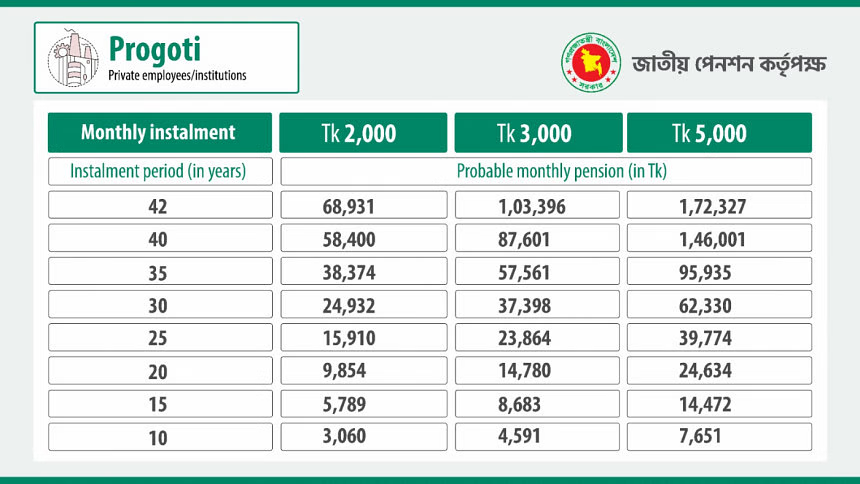
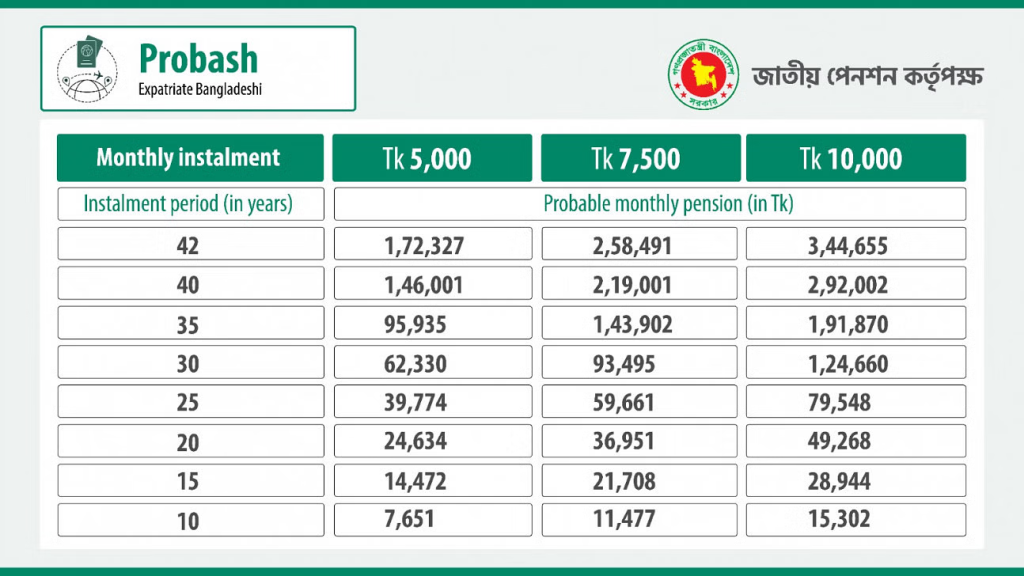
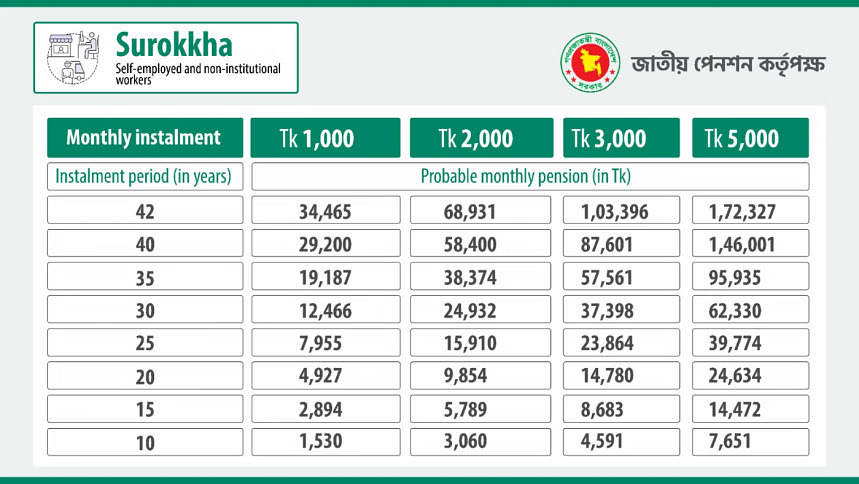
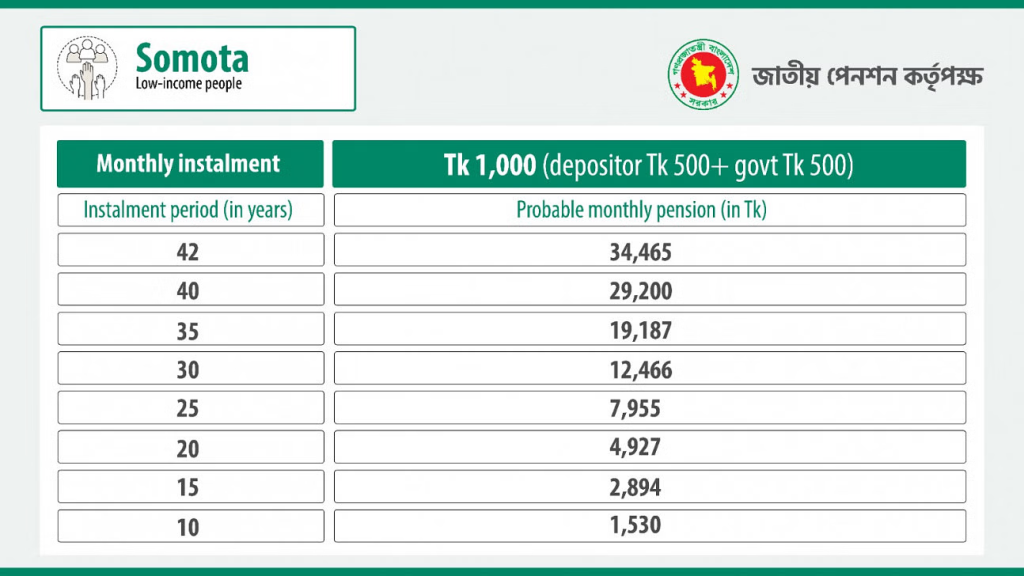
    Tailored Schemes for Diverse Needs: The UPS is not a one-size-fits-all solution. Instead, it offers four distinct pension schemes that cater to the specific requirements of different occupational categories. The Progoti, Probash, Shurokkha, and Samata schemes provide varying levels of monthly pensions, ensuring that individuals from private sectors, expatriates, self-employed individuals, informal sector workers, and even the ultra-poor can find a scheme that suits their needs. This tailored approach emphasizes the government’s commitment to promoting economic well-being across all segments of society.

    Empowerment and Security for the Elderly: The elderly population often faces financial instability due to reduced earning capacity and lack of pension options. The UPS tackles this challenge head-on by offering survivor benefits. In the unfortunate event of a pensioner’s passing before the age of 75, the nominee of the pensioner is entitled to receive a monthly pension for the remaining period. This provision not only supports the pensioner’s dependents but also ensures that their financial contributions do not go to waste.

    Flexibility for Late Entrants: Recognizing that some individuals might join the scheme later in life, the UPS accommodates citizens above the age of 50 under special consideration. These late entrants can still participate in the scheme and, upon meeting certain conditions, receive a lifetime pension. This flexibility acknowledges the diverse circumstances of individuals and ensures that the benefits of the UPS are accessible to as many citizens as possible.

    Tax Benefits and Long-Term Stability: The UPS offers tax benefits that encourage individuals to engage with the scheme as a form of investment. The monthly pension received from the scheme is exempt from income tax, enabling pensioners to fully enjoy their contributions during retirement. Additionally, the individual pension accounts allocated to each participant ensure transparency, accountability, and a sense of ownership, contributing to the long-term stability of the system.

    A Comprehensive Vision Realized: The inauguration of the UPS is not just a symbolic gesture; it signifies the government’s dedication to securing the financial well-being of its citizens across diverse occupations and life stages. This visionary initiative aligns with the government’s commitment to social security, economic stability, and inclusive development. By providing a safety net for the elderly and those engaged in low-income and informal sectors, the UPS addresses pressing socio-economic challenges and paves the way for a more secure and prosperous future.

    As Bangladesh takes its place among nations prioritizing the welfare of their citizens, the Universal Pension Scheme emerges as a beacon of hope, empowerment, and progress. This all-encompassing system has the potential to transform lives, provide financial security, and contribute to the nation’s journey towards becoming an advanced and equitable society. The UPS isn’t just a pension scheme; it’s a testament to the government’s commitment to its people and a powerful step towards a better and more secure future for all.

    Fostering Inter-Generational Solidarity: The introduction of the Universal Pension Scheme in Bangladesh serves as a bridge between generations, promoting inter-generational solidarity. As younger citizens witness the government’s commitment to ensuring a secure future for the elderly, a culture of care and support is nurtured. This scheme not only uplifts the lives of the elderly but also instills a sense of responsibility and empathy among the younger population, fostering a harmonious society where citizens collectively contribute to the well-being of all age groups.

    Reducing Dependence on Family Support: The UPS provides an essential safety net for individuals who may otherwise be dependent on their families for financial support during old age. By offering a reliable source of income post-retirement, the scheme lessens the burden on younger family members, enabling them to pursue their own goals and aspirations without the constant worry of providing for their elderly relatives.

    Enhancing Gender Equality: The UPS plays a significant role in promoting gender equality. Women, particularly those engaged in informal sectors, often face financial vulnerabilities due to the absence of pension options. By extending the benefits of the UPS to women, the government empowers them to retire with dignity and security. This step towards gender inclusivity not only enhances economic equality but also contributes to a more equitable society.

    Stimulating Economic Growth: The UPS holds the potential to stimulate economic growth in Bangladesh. As elderly citizens receive a steady pension, their purchasing power remains intact, contributing to local economies. This increased spending power can boost demand for goods and services, subsequently creating opportunities for businesses to expand and thrive. This virtuous cycle of economic growth and stability benefits individuals, communities, and the nation as a whole.

    Boosting Entrepreneurship: The financial security provided by the UPS can encourage individuals to explore entrepreneurial ventures without the fear of financial instability during retirement. Aspiring entrepreneurs from diverse backgrounds can embark on business ventures, contributing to job creation, innovation, and economic diversification. This, in turn, supports the government’s broader goals of fostering economic development and reducing unemployment.

    Promoting Health and Well-Being: Financial stress during old age can have a negative impact on an individual’s overall health and well-being. The UPS addresses this concern by offering a consistent source of income that alleviates financial worries, allowing pensioners to focus on maintaining their health and enjoying their retirement years. By promoting better health outcomes, the scheme contributes to reducing the burden on the healthcare system.

    Ensuring Peace of Mind: One of the most significant intangible benefits of the UPS is the peace of mind it offers to citizens. Knowing that they have a reliable pension to rely on during their retirement years provides a sense of security and tranquility. This peace of mind extends beyond the pensioner to their families, creating a positive ripple effect that enhances the overall quality of life for all involved.

    Building Trust in the Government: The implementation of the UPS reinforces citizens’ trust in the government’s commitment to their welfare. This groundbreaking initiative showcases the government’s responsiveness to the changing needs of its people and its dedication to ensuring a secure future for all citizens. By delivering on its promises, the government fosters a stronger bond with the population, enhancing overall governance and social cohesion.

    Inspiring Long-Term Planning: The UPS encourages citizens to engage in long-term financial planning. As individuals contribute to their pension accounts, they become more attuned to the importance of saving for their future. This newfound awareness of financial planning can extend beyond the pension scheme, influencing other aspects of individuals’ financial decisions, such as investment and asset management.

    Elevating Bangladesh’s Global Standing: The introduction of the UPS positions Bangladesh as a nation that prioritizes social welfare, economic inclusivity, and progressive policies. This commitment to citizens’ well-being contributes to the nation’s international reputation and can attract foreign investment, partnerships, and collaborations that align with Bangladesh’s dedication to a prosperous and equitable society.

    Incentivizing Non-Resident Bangladeshis (NRBs): The Universal Pension Scheme’s benefits extend even to non-resident Bangladeshis (NRBs). The scheme offers NRB participants an attractive incentive of an additional 2.5% on their contributions if they choose to contribute in foreign currencies. This incentive mirrors the practice in place for remittances through formal channels. By providing this incentive, the government aims to encourage more expatriate Bangladeshis to join the pension scheme. This forward-looking approach not only secures the financial future of expatriates but also augments the inflow of foreign exchange into the country. The scheme, therefore, plays a dual role in ensuring the well-being of expatriates and boosting Bangladesh’s foreign exchange reserves.

    Catalyzing Foreign Exchange Reserves: Expatriate Bangladeshis hold a pivotal role in contributing to the country’s foreign exchange reserves. Through their remittances, they support their families and communities back home. By introducing the Universal Pension Scheme, the government leverages this dynamic to enhance the country’s forex reserves further. Expatriates’ contributions to the scheme, particularly in foreign currencies, bolster the national forex reserves. This strategy aligns with the government’s comprehensive approach to economic stability and reinforces Bangladesh’s resilience in times of global economic fluctuations.

    Flexible Participation for Citizens Above 50: The Universal Pension Scheme addresses the unique needs of citizens above the age of 50 who were initially excluded from pension benefits at the age of 60. Under the new rules, individuals above 50 have an opportunity to participate in the program. While they won’t receive pension benefits at 60 like others, they are eligible for lifelong pensions after contributing for 10 years. This inclusivity acknowledges the diverse circumstances of citizens and ensures that no one is left behind. It underscores the government’s commitment to offering a safety net for individuals at various stages of life, promoting financial security and dignity for all.

    Encouraging Long-Term Planning and Lifelong Pensions: The Universal Pension Scheme encourages citizens to adopt a long-term perspective on their financial well-being. By contributing consistently from the age of 18 to 60, individuals receive a pension that reflects their dedication to securing their future. Those initiating contributions at a later age, such as 30, can still accumulate a significant pension by the time they reach 60. Additionally, the scheme allows individuals who begin contributing at 60 to start receiving pensions at 70. This flexible approach underscores the importance of planning for the long term and rewards individuals for their commitment to financial security.

    Promoting Financial Discipline and Tax Efficiency: The scheme’s provision for an 8% annual interest on contributions acts as an incentive for citizens to save and invest in their future. This disciplined approach to saving fosters financial literacy and responsibility among citizens, instilling a culture of long-term planning. Furthermore, the scheme recognizes the contributions as investments, allowing participants to enjoy tax benefits. Not only do individuals secure their financial future, but they also enjoy tax rebates on their contributions, making the scheme a holistic financial planning tool.

    Incorporating these additional benefits into the Universal Pension Scheme enriches its scope and impact, making it a comprehensive and dynamic initiative that addresses the multifaceted financial needs of Bangladesh’s citizens. As the scheme’s launch approaches, its influence is set to resonate across the nation, empowering individuals, families, and communities to embrace a more secure and prosperous future.

    In conclusion, the Universal Pension Scheme in Bangladesh goes beyond providing mere financial security; it enriches lives, strengthens communities, and paves the way for a more inclusive and harmonious society. By addressing vulnerabilities, empowering individuals, and promoting economic growth, the UPS becomes a catalyst for positive change. As the nation embarks on this transformative journey, the benefits of the UPS ripple through the fabric of society, touching every citizen and contributing to a brighter and more secure future for all.

  • Challenges of Universal Pension Scheme in Bangladesh

    As Bangladesh undergoes economic transformation and demographic changes, the need for a comprehensive social security system becomes increasingly pronounced. The Universal Pension Scheme (UPS) has gained attention as a potential solution to address the financial needs of senior citizens. However, implementing such a scheme is not without its challenges. This study delves into the challenges of UPS in Bangladesh, shedding light on the obstacles that need to be navigated.

    Challenges of UPS in Bangladesh

    The Universal Pension Scheme (UPS) is a government-run pension program that aims to provide financial security for the elderly in Bangladesh. However, there are a number of challenges to the implementation of the UPS, including weak governance, a lack of digitization, and a diverse population.

    Qualitative research methods were employed to delve into the challenges of implementing the UPS. In-depth interviews were conducted with relevant personnel who possess insights into public financial management reforms and social welfare initiatives. Some insights were collected from social media to get opinions from the people. The challenges were categorized into three groups:

    Challenges from Participants and Recipients

    1. Registration and Trust Issues: The challenge of registration and building trust is multifaceted. Bangladesh’s history of administrative complexities and discrepancies in resource distribution has led to skepticism among the population. Many citizens have experienced difficulties accessing benefits from previous welfare programs due to flawed registration processes. Therefore, instilling trust in the new UPS system is paramount. Clear and transparent registration processes, along with effective communication campaigns to inform citizens about the scheme’s benefits and eligibility criteria, are necessary.
    2. Informal Sector Dominance: A significant portion of Bangladesh’s workforce operates in the informal sector, characterized by cash-based transactions and irregular income patterns. Convincing individuals from this sector to commit a portion of their income to a pension scheme can be challenging. The irregular nature of their income might lead them to prioritize immediate needs over long-term savings. To address this challenge, the UPS needs to offer flexible contribution options that align with the income patterns of the informal sector. Moreover, financial literacy campaigns can play a crucial role in educating informal sector workers about the long-term benefits of pension savings.
    3. Private Sector Participation: Encouraging private sector enterprises to contribute to the UPS has proven difficult due to various reasons, including financial constraints and a lack of awareness about the scheme’s advantages. Offering incentives such as tax benefits or government contributions to match those of private enterprises could make participation more attractive. Collaborative efforts between the government and private sector stakeholders are essential to drive participation and ensure a sustainable pension system for employees in the private sector.
    4. Mental Shift on Savings: Changing the mindset of Bangladeshi citizens regarding savings and retirement planning is a significant challenge. Historically, savings have been associated with immediate needs and emergencies rather than long-term security. To overcome this challenge, educational campaigns and workshops should focus on the importance of retirement planning and the benefits of contributing to the UPS. Stories of successful retirees who have benefited from pension schemes can serve as inspiring examples.
    5. Gender and Demographic Diversity: Bangladesh’s demographic landscape is characterized by gender disparities and varied life expectancies. Women tend to outlive men, and their participation in formal employment is lower. Therefore, the UPS must take these disparities into account by tailoring benefits to reflect gender-specific needs. Providing options for flexible retirement ages and addressing the financial needs of single and elderly women can ensure gender equality in social protection schemes.
    6. Addressing Vulnerable Groups: Bangladesh faces the challenge of river erosion and natural calamities that lead to land loss, rendering many individuals landless and vulnerable. Identifying and incorporating these vulnerable groups into the UPS is crucial. Innovative approaches, such as leveraging community-based organizations and local government bodies, can aid in identifying and supporting these marginalized citizens. Customized pension schemes that provide higher benefits for vulnerable groups can ensure their inclusion in the UPS and provide a safety net against the uncertainties they face.

    Navigating these challenges requires a multi-pronged approach that involves collaboration between government agencies, private sector entities, civil society organizations, and international development partners. By addressing these challenges systematically, Bangladesh can work towards the successful implementation of the Universal Pension Scheme and ensure a more secure and dignified retirement for its citizens.

    Institutional and Governance Challenges

    1. Accountability and Transparency: One of the prominent challenges in implementing the UPS in Bangladesh lies in ensuring accountability and transparency in fund management. The country has witnessed instances of mismanagement and corruption in the distribution of welfare benefits. To overcome this challenge, the government needs to establish robust mechanisms for monitoring the flow of funds, ensuring that the allocated resources reach the intended recipients without any leakages or irregularities. Implementing digital platforms for fund management, where beneficiaries can track their contributions and benefits, can enhance transparency and accountability.
    2. Integration with Existing Reforms: Bangladesh has been undergoing various reforms in the public sector, including the adoption of digital platforms for financial management. Ensuring seamless integration between the UPS and these ongoing reforms is crucial. The challenge here is to align the pension scheme’s operational processes with the existing digitalization efforts. This requires careful coordination between different government departments and agencies involved in these reforms to create a unified and effective system.
    3. Efficient Fund Management: Effective management of the pension fund is essential to ensure that contributions are invested prudently and generate reasonable returns. Bangladesh’s banking sector has faced challenges in terms of governance and efficiency. Therefore, it is imperative to establish stringent guidelines for fund investment, appoint experienced fund managers, and regularly monitor their performance. The development of a robust investment strategy and risk management framework will be critical to safeguarding pension funds and maximizing returns.
    4. Digitization Challenges: While Bangladesh has been making strides towards digital transformation in public services, challenges remain. The successful implementation of the UPS hinges on a digitized infrastructure for registration, contribution collection, and benefit distribution. Ensuring that digital platforms are user-friendly, secure, and accessible to all citizens, including those in remote areas, is a significant challenge. Adequate training and support must be provided to both beneficiaries and administrators to effectively utilize the digital system.
    5. Public Perception and Participation: The success of the UPS depends on the public’s perception of the scheme’s benefits and effectiveness. If citizens perceive the pension system as cumbersome or ineffective, it might deter their participation. Establishing a positive image of the UPS requires effective communication campaigns that highlight the scheme’s advantages and address misconceptions. Engaging with citizens, civil society organizations, and community leaders to gain their trust and involvement is crucial for the scheme’s long-term sustainability.


    Religious Challenges of the Universal Pension Scheme (UPS) in Bangladesh:

    The introduction of the Universal Pension Scheme (UPS) in Bangladesh marks a commendable effort towards providing financial security to citizens during their retirement years. However, it’s important to address the religious challenges that arise from the current structure of the scheme, particularly in the context of Islamic principles.

    1. Concerns of Riba (Usury) and Garar: One of the main religious challenges associated with the UPS in Bangladesh is the concern of riba, which refers to usurious transactions involving interest. Islamic finance principles strictly prohibit engaging in transactions that involve riba. The conventional structure of the UPS, which involves citizens depositing money at a fixed rate and receiving additional money in the form of a pension, resembles an interest-based transaction.

    2. Need for Interest-Free Alternative: Given that a significant portion of the population in Bangladesh adheres to Islamic beliefs and principles, there is a genuine need for an interest-free alternative to the current UPS structure. The participation of devout Muslims in a scheme that involves riba would be in conflict with their religious values. To ensure the inclusivity of the scheme and cater to the religious sensitivities of the population, an interest-free alternative is essential.

    3. Islamic Banking Preference: Bangladesh has witnessed the rise of Islamic banking and finance due to the strong preference of many Muslims to avoid engaging in usurious activities. Islamic banks in the country have attracted a substantial customer base, reflecting the demand for financial products and services that adhere to Islamic principles. This trend underscores the importance of considering the religious preferences of citizens when designing financial schemes such as the UPS.

    4. Ensuring Universality: The concept of universality implies that a scheme should be accessible and applicable to a wide range of individuals, regardless of their backgrounds or beliefs. The current structure of the UPS, which raises concerns of riba, might hinder the participation of a significant segment of the population. If a substantial portion of the population refrains from participating due to religious reasons, the scheme might not achieve its intended universal coverage.

    5. Seeking Guidance from Ulama: To address these religious challenges, it’s crucial for the government to seek guidance from learned ulama (Islamic scholars) who specialize in Islamic finance and jurisprudence. These scholars can provide insights and recommendations on how to structure an interest-free pension scheme that aligns with Islamic principles while still achieving the goals of the UPS. Their input would be essential in ensuring that the scheme is widely accepted and embraced by the population.

    6. Importance of Inclusivity: The success of any pension scheme, including the UPS, lies in its ability to encompass a broad spectrum of participants. By offering an interest-free alternative, the government can ensure that the scheme truly reflects the aspirations and values of the majority of the population. This inclusivity not only respects religious beliefs but also strengthens the overall participation and effectiveness of the scheme.

    So, while the introduction of the Universal Pension Scheme in Bangladesh is indeed a commendable initiative, it’s important to acknowledge and address the religious challenges posed by the current structure. By designing an interest-free alternative that adheres to Islamic principles and seeking guidance from Islamic scholars, the government can create a more inclusive and universally accepted pension scheme that caters to the diverse beliefs of the population.

    Addressing these institutional and governance challenges will require a comprehensive strategy that involves collaboration between government bodies, financial institutions, technology experts, and civil society organizations. Learning from both domestic and international best practices can guide the development of effective solutions tailored to Bangladesh’s unique context. By addressing these challenges head-on, Bangladesh can establish a robust and well-governed Universal Pension Scheme that ensures the financial security and dignity of its aging population.

    Conclusion

    Implementing the Universal Pension Scheme (UPS) in Bangladesh presents multifaceted challenges that require careful consideration and comprehensive planning. From ensuring proper registration and trust-building among beneficiaries to addressing issues related to institutional governance and efficient fund management, each challenge requires a tailored approach. Successful implementation hinges on a collaborative effort between various stakeholders, the integration of reform initiatives, and a proactive approach to address the unique demographics and cultural context of Bangladesh. By taking these challenges into account, policymakers and relevant authorities can pave the way for a more secure and dignified retirement for the country’s senior citizens.

  • How to make the UPS successful?

    The recent announcement of the Universal Pension Scheme (UPS) by the Bangladeshi government marks a crucial step towards supporting the elderly population. As the country’s average life expectancy rises to 73 years, the need for an old-age support system becomes increasingly urgent. The implementation of the UPS on August 17, 2023, is promising, but its success hinges on addressing several key factors. Let’s explore how to make the UPS successful in Bangladesh.

    How to make the UPS successful?

    Introducing the Universal Pension Scheme (UPS) in Bangladesh holds great promise to support the growing elderly population. To ensure its success, a strategic approach is crucial, involving careful considerations such as fiscal sustainability, transparent governance, robust institutional frameworks, and effective fund management.

    1. Addressing Financial Constraints: Implementing the Universal Pension Scheme (UPS) faces the challenge of balancing increased government expenditure with limited fiscal space. The government needs to allocate funds for the scheme while managing other financial commitments, including infrastructure projects. A clear plan for funding the UPS, especially in the context of low revenue collection, is essential.

    2. Ensuring Accountability and Good Governance: Considering instances of mismanagement in social safety net programs, accountability and good governance are critical. Transparent mechanisms should be put in place to prevent misappropriation of resources. Rigorous oversight and monitoring mechanisms are needed to ensure that the funds are used for their intended purpose and reach the intended beneficiaries.

    3. Designing a Robust Institutional Framework: Creating a strong institutional and legal framework for the UPS is crucial. Defining the authority and responsibilities of the pension scheme, as well as the operational modalities, is essential for smooth functioning. Establishing a dedicated authority to manage the scheme and ensuring the quality of services provided to beneficiaries are important aspects to consider.

    4. Effective Fund Management: Proper management of the pension fund is a critical factor in the success of the UPS. Learning from successful models in other countries, the fund should be invested in profitable ventures to generate income. However, this requires addressing governance-related challenges within Bangladesh’s banking sector. Institutional reforms and a transparent investment strategy are necessary to ensure a steady income stream for pensioners.

    5. Prioritizing Transparency: Transparency is key to gaining public trust and confidence in the UPS. Clear communication about fund investment, profit distribution, operational costs, and updates should be provided to beneficiaries. Implementing a robust supervision and monitoring system will help prevent wastage and ensure the scheme’s integrity. The use of automated systems can enhance transparency and accessibility for pension account holders.

    6. Inclusive Beneficiary Identification: Creating a comprehensive and accurate database of eligible beneficiaries is essential. To avoid exclusion and ensure equity, the process of identifying and enrolling pensioners should be transparent, fair, and well-documented. Engaging local communities and civil society organizations can help verify and validate beneficiary information.

    7. Adequate Investment Diversification: Diversifying the investment portfolio of the pension fund is crucial to mitigate risks and enhance returns. Instead of relying solely on one type of investment, such as banking, the fund could explore opportunities in various sectors, including stocks, bonds, and real estate. This approach can contribute to sustained growth and stable income for pensioners.

    8. Education and Outreach: Creating awareness among the population about the UPS and its benefits is vital. Educational campaigns, workshops, and information sessions can help citizens understand how the scheme works, the importance of contributing, and the long-term benefits. This outreach can promote voluntary participation and debunk misconceptions.

    9. Technological Integration: Leveraging technology can streamline administrative processes and enhance the scheme’s efficiency. Developing user-friendly digital platforms for registration, contribution tracking, and benefit disbursement can simplify operations and reduce administrative overhead. Ensuring the security of digital systems and providing training for users is essential.

    10. Continuous Review and Adaptation: The UPS should not remain static but evolve over time based on changing demographics, economic conditions, and societal needs. Regular evaluations and adjustments to the scheme’s parameters, investment strategies, and operational procedures are necessary to ensure its relevance and effectiveness in the long run.

    Conclusion,

    The introduction of the Universal Pension Scheme aligns with Bangladesh’s aspirations for socio-economic growth. However, its success depends on meticulous planning and execution. By addressing fiscal challenges, establishing transparent governance practices, designing a robust institutional framework, ensuring effective fund management, learning from global best practices, and embracing technological integration, Bangladesh can create a pension system that supports its aging population while upholding principles of transparency, accountability, and efficiency. The success of the UPS will not only contribute to the welfare of senior citizens but also serve as a milestone on the path toward national development goals.

  • Universal Pension Scheme in Bangladesh: All you need to know

    In a historic move aimed at providing financial security and social protection to a significant portion of the population, It is the launching of the universal pension scheme in Bangladesh today. This groundbreaking initiative, spearheaded by the government, aims to encompass approximately 10 crore people from various socio-economic backgrounds. The pension scheme is poised to address the needs of the elderly and those engaged in low-income and informal sectors, marking a significant step towards ensuring the well-being of the nation’s citizens.

    The journey towards implementing the universal pension system began with the initiation of the late Finance Minister Abul Mal Abdul Muhith in 2015. A concept paper was developed in 2016, and after a hiatus, the concept gained momentum in 2022. On January 31 of the current year, the National Pension Authority was established under the Universal Pension Management Act. Here’s a comprehensive overview of this innovative pension system.

    The Need for a Universal Pension System

    In the face of significant demographic shifts and an aging population, the imperative for a comprehensive social security framework has never been more evident. Bangladesh, like many countries, is witnessing a transformation in its population structure, which underscores the necessity of introducing a robust universal pension system. This imperative arises from the increasing number of elderly citizens and the government’s commitment to ensuring the welfare of its people.

    Demographic Changes and Aging Population

    Over the past few decades, Bangladesh has experienced notable demographic changes characterized by a growing proportion of elderly individuals. The Finance Department of the Ministry of Finance has meticulously studied this trend and predicts a substantial increase in the elderly population over the upcoming years. In 2020, the elderly population stood at 1 crore 2 million, and this number is projected to swell to a staggering 3 crore 10 million by the year 2041. This remarkable demographic shift reflects longer life expectancies and changes in birth rates, creating a scenario where a significant portion of the population is entering their senior years.

    Challenges and Vulnerabilities

    As the aging population expands, a host of challenges and vulnerabilities emerge. Elderly citizens often face financial instability due to reduced earning capacity after retirement. Moreover, many individuals are engaged in low-income and informal sectors, where traditional pension options are often unavailable. The lack of a sustainable social security framework can lead to economic hardships for seniors who lack reliable financial support during their retirement years.

    Empowering the Informal Sector

    Recognizing the demographic changes and the prevalence of low-income and informal sectors, the government acknowledges the need to provide a safety net for its citizens. Many individuals engaged in rickshaw pulling, farming, labor, artisanal work, fishing, weaving, and other informal professions often lack access to pension plans through traditional employment channels. Addressing the financial insecurities faced by these individuals is central to the goal of promoting economic well-being across all segments of society.

    Sustainable and Organized Pension System

    In response to these challenges, the government is introducing a universal pension system. This innovative system aims to create a sustainable and organized framework that caters to the needs of citizens from all walks of life, particularly those engaged in informal and low-income sectors. By offering a comprehensive pension scheme, the government seeks to ensure that elderly individuals can retire with dignity, financial security, and the peace of mind that comes from having a dependable support system in place.

    The introduction of a universal pension system in Bangladesh signifies the government’s commitment to address the evolving needs of its citizens in the face of demographic changes. This forward-looking initiative aims to provide a safety net for individuals engaged in informal sectors and low-income professions, empowering them to enjoy a secure and comfortable retirement. By acknowledging the challenges posed by an aging population and implementing a comprehensive pension system, Bangladesh takes a significant step towards promoting social security, economic stability, and a better quality of life for all its citizens.

    Background and History of UPS in Bangladesh

    The journey towards implementing the Universal Pension Scheme (UPS) in Bangladesh is rooted in the commitment made by the government back in 2008. This commitment was an integral part of the government’s broader vision for social security and elderly welfare. Over the years, the concept of the UPS has evolved to address the challenges posed by a growing elderly population and the need for a well-organized and sustainable social security framework.

    2008: The Commitment and Aspiration

    In 2008, during the general elections, the ruling party articulated its commitment to introduce a universal pension scheme as part of its election manifesto. This marked the first significant step towards recognizing the importance of providing support to the senior citizens of the country. The commitment was made in the backdrop of Bangladesh’s evolving socio-economic landscape, characterized by an increasing average life expectancy and a demographic shift.

    Initiation of the Implementation Process

    The initiative to implement the UPS gained renewed momentum in the subsequent years, as the government recognized the pressing need to address the insecurities faced by the elderly population. While the initial discussions took place in 2015, under the leadership of the late Finance Minister Abul Mal Abdul Muhith, it was during this period that the foundations of the UPS were laid. A team from the Finance Department’s visit to India in 2016 resulted in the development of a concept paper that envisioned a comprehensive pension system.

    2022 and Beyond: Reviving the Vision

    The concept of the UPS resurfaced with greater urgency in 2022, reflecting the growing concerns surrounding the elderly population’s financial security. A new concept paper was drafted by the Finance Department, highlighting the importance of creating an integrated, participatory, and well-structured pension system to protect citizens during their old age.

    Formation of the National Pension Authority

    A crucial milestone was reached when, on January 31, 2023, the National Pension Authority was established under the Universal Pension Management Act. This institutional framework laid the groundwork for the implementation of the pension system, streamlining management and administration.

    Budget Speach (2023): In the budget speech of the current financial year, the Finance Minister reiterated the government’s commitment to introducing a universal pension system. This underscored the alignment of the pension scheme with the government’s broader social security goals.

    Four Schemes for Diverse Needs

    The UPS was thoughtfully designed to cater to the diverse needs of different segments of the population. The migration, progress, protection, and equality schemes were crafted to ensure that various occupational categories and income groups could access the benefits of the pension system.

    Website Launch and Registration (2023): The National Pension Authority’s website, www.upension.gov.bd, was launched to facilitate the registration process for the UPS. This online platform serves as the gateway for individuals to enroll in the pension scheme.

    Implementation and Looking Ahead

    August 17, 2023, is a gigantic day for the people of Bangladesh as UPS starts its implementation journey. The journey towards implementing the UPS in Bangladesh is a testament to the government’s commitment to the welfare of its citizens, particularly the elderly population. The initial promise made in 2008 set the stage for the subsequent evolution of the concept and the creation of an institutional framework. As the scheme takes effect, its success will be measured by its ability to provide financial security to the elderly, realizing the aspiration that was set forth in the government’s commitment more than a decade ago.

    Universal Pension System Inauguration

    In a momentous and visionary step towards ensuring a better life for every citizen, Prime Minister Sheikh Hasina inaugurated Bangladesh’s Universal Pension System through a virtual link from her official residence, Ganabhaban, on Thursday, August 17th, 2023. With the aim of uplifting the lives of citizens above 18 years of age, the inauguration marked a significant milestone in the country’s commitment to social welfare and inclusive development.

    Prime Minister Sheikh Hasina articulated the significance of the universal pension system as a means to uplift the quality of life for every individual across the nation. As she inaugurated the system, she underlined the government’s dedication to creating an environment where all citizens could thrive and prosper. The visionary essence of the initiative lay in its ambition to encompass every individual within its protective embrace.

    With unwavering determination, the Prime Minister announced the launch of four out of the six schemes that constitute the universal pension system: Pragati, Sukhara, Samata, and Pravasi. These initial schemes symbolized the government’s dedication to taking incremental steps towards a comprehensive and all-encompassing system of financial support for citizens. The remaining two schemes are set to be introduced at a later stage, underlining the commitment to phased implementation.

    Prime Minister Sheikh Hasina’s words echoed the legacy of the Father of the Nation, Bangabandhu Sheikh Mujibur Rahman, whose lifelong dedication was focused on ensuring a better life for every citizen. The universal pension system’s launch during a month of mourning added a layer of reverence and dedication to the program. In invoking the memory of Bangabandhu Sheikh Mujibur Rahman and Mother Banga, the Prime Minister emphasized that their visionary spirits would find solace in witnessing the government’s efforts to uplift the lives of the people.

    Acknowledging the uniqueness of the occasion, the Prime Minister expressed her intention to establish the pension scheme exclusively during her party’s rule. This exclusivity was born from a genuine concern that future administrations might not undertake such a monumental program. The Prime Minister’s foresight underlined her understanding of the transformational impact that the universal pension system could bring to the lives of citizens.

    The inaugural program was not confined to national boundaries; it transcended geographical distances to connect with local public representatives, beneficiaries from districts including Gopalganj, Bagerhat, and Rangpur, and the Consulate General of Bangladesh in Jeddah, Saudi Arabia. Through a video conference, these stakeholders joined hands to celebrate the launch of a program that symbolized hope, inclusivity, and progress.

    The occasion was graced by key figures instrumental in the formulation and execution of the universal pension system. Finance Minister AHM Mustafa Kamal and Bangladesh Bank Governor Abdur Rauf Talukdar shared their perspectives, underlining the economic and financial dimensions of the initiative. Senior Secretary of the Finance Division, MoF, contributed her insights, adding a versatile perspective to the event.

    The launch event was skillfully moderated by Tofazzel Hossain Mia, underscoring the importance of effective facilitation in realizing such transformative initiatives. A pivotal moment during the program was the screening of a video documentary on the Universal Pension System. This documentary encapsulated the system’s essence, goals, and journey that led to its inauguration, providing attendees with a comprehensive overview of the initiative.

    Prime Minister Sheikh Hasina, in her closing remarks, expressed profound gratitude to all stakeholders who contributed to the inception of the universal pension system. She singled out former Finance Minister Abul Mal Abdul Muhith and the current Finance Minister for their relentless efforts in making this vision a reality. Their dedication and commitment were essential pillars in the foundation of a program that aspires to touch the lives of millions, uplift communities, and steer the nation towards a brighter and more prosperous future.

    Inaugurating the universal pension system was not just a symbolic gesture; it was a declaration of the government’s unyielding dedication to the welfare of its citizens. It was a step forward in building a society that values and safeguards the well-being of its members, ensuring that every individual, regardless of age, socio-economic background, or location, has the opportunity to lead a life of dignity and security.

    What are the Four Pension Schemes

    Bangladesh’s Universal Pension System is a government-run pension scheme that is open to all citizens of Bangladesh, regardless of their employment status or income level.

    The scheme offers four different packages, each with its own monthly contribution and pension benefits tailored to address the diverse needs of different groups:. The packages are:

    Progoti: This package is for private sector employees and offers a monthly pension of Tk 2,000, Tk 3,000, or Tk 5,000, depending on the monthly contribution.

    Probash: This package is for expatriate Bangladeshis and offers a monthly pension of Tk 5,000, Tk 7,500, or Tk 10,000, depending on the monthly contribution.

    Shurokkha: This package is for the self-employed and informal sector workers and offers a monthly pension of Tk 1,000, Tk 2,000, Tk 3,000, or Tk 5,000, depending on the monthly contribution.

    Samata: This package is for the ultra-poor and offers a monthly pension of Tk 1,000, with the government contributing Tk 500 and the beneficiary contributing Tk 500.

    Administration and Implementation

    The National Pension Authority, operating under the Finance Department, is responsible for managing and implementing the pension system. The authority’s official website, www.upension.gov.bd, was launched to provide essential information and facilitate the registration process for interested individuals. The legal aspects include the following:

    Eligibility and Registration

    To be eligible for the universal pension system, individuals must be above the age of 18 and not employed by the government. National Identity Card (NID) holders can register directly, while expatriates lacking an NID can register using their passport information. The registration process involves selecting one of the four schemes and providing personal, professional, and banking details.

    Pension Features

    The Universal Pension Scheme (UPS) in Bangladesh has been meticulously designed to address the financial security needs of its citizens, particularly those in their old age. This innovative scheme is characterized by several key features that ensure inclusivity, flexibility, and long-term stability:

    1. Inclusive Age Range: The UPS opens its doors to all Bangladeshi citizens aged between 18 and 50 years. This wide age range reflects the government’s commitment to provide pension coverage to a significant portion of the population and cater to individuals at various stages of their lives.

    2. Flexibility for Citizens above 50: While the standard eligibility range is between 18 and 50 years, the UPS also accommodates citizens above the age of 50 under special consideration. These individuals can participate in the scheme and, upon meeting certain conditions, receive a lifetime pension. This provision acknowledges the diversity of situations and ensures a safety net for those entering the scheme later in life.

    3. Inclusion of Expatriate Workers: The UPS goes beyond national borders by allowing Bangladeshi workers employed abroad to be included in the program. This recognition of the contributions made by expatriates highlights the government’s commitment to protecting the interests of its citizens regardless of their geographic location.

    4. Individual Pension Accounts: Each participant in the UPS is allocated a distinct and separate pension account. This individualized approach ensures transparency and accountability, allowing contributors to keep track of their pension contributions and the growth of their funds over time.

    5. Survivor Benefits: The UPS addresses the uncertainty of life by offering survivor benefits. In the unfortunate event of a contributor’s passing before reaching 75 years of age, the nominee of the pensioner is entitled to receive a monthly pension for the remaining period up to the age of 75. This provision assures the well-being of the pensioner’s dependents.

    6. Refund Option: To account for unforeseen circumstances, the scheme provides a safeguard for contributors. If a subscriber passes away at least 10 years before the completion of their subscription period, the deposited money will be returned to their nominee along with accrued profits. This feature guarantees that the funds invested in the scheme do not go to waste.

    7. Tax Benefits: The UPS acknowledges the financial realities of its participants by considering the fixed pension contribution as an investment. This not only encourages savings but also offers potential tax deductions, providing an added incentive for individuals to engage with the scheme. Moreover, the monthly pension received from the scheme is exempt from income tax, ensuring that the pensioners can fully benefit from their contributions during retirement.

    In essence, the Universal Pension Scheme exemplifies the government’s dedication to securing the financial well-being of its citizens throughout their lives. By offering comprehensive coverage, flexibility, and beneficial features, the scheme contributes to the larger goal of ensuring social welfare and protection for all members of society.

    Registration Process

    Step-by-Step Registration Process for the Universal Pension Scheme

    The registration process for the UPS involves multiple steps to ensure accurate and comprehensive enrollment:

    1. Agreement to Eligibility Criteria: The first step requires applicants to certify that they are not employed by any government, semi-government, autonomous, or non-government organization. They must confirm that they are not receiving benefits from any sources other than the public pension scheme or social security program.
    2. Scheme Selection: Applicants then proceed to select the appropriate scheme among the four options: Immigration, Equality, Protection, or Progression. This step allows individuals to choose the scheme that aligns with their occupational category and needs.
    3. Personal Information: The applicant’s National Identity Card (NID) number, photo, Bengali and English names, parent’s names, current and permanent addresses are automatically populated based on the NID provided.
    4. Occupation and Income Details: Applicants enter their annual income and select their occupation from a list of options, including teachers, private employees, small traders, laborers, professionals, and more.
    5. Bank Account Information: Individuals provide their bank account details, including the account number, type (savings or current), routing number, bank name, and branch name. This information ensures the proper deposit of contributions and pension disbursements.
    6. Nominee Information: Applicants enter the nominee’s National Identity Card number, date of birth, mobile number, and relationship with the nominee. In case of multiple nominees, the availability rate is also specified.
    7. Confirmation and Submission: The final step involves reviewing all provided information. If accurate, applicants agree to the terms and conditions and submit the application. The option to download the completed application is also provided.

    FAQs for Universal Pension Scheme in Bangladesh

    What is the Universal Pension Scheme (UPS)?

    Answer: The Universal Pension Scheme is a pioneering initiative launched by the government of Bangladesh to provide financial security and social protection to citizens, aiming to encompass around 10 crore people from diverse socio-economic backgrounds.

    What is the main goal of the UPS?

    Answer: The main goal of the Universal Pension Scheme is to ensure the well-being of citizens, particularly the elderly and those engaged in low-income and informal sectors, by offering a sustainable and organized pension framework.

    How did the journey towards implementing the UPS begin?

    Answer: The journey began with the commitment of the government in 2008, and over time, it evolved into an inclusive and comprehensive system to address the challenges posed by an aging population and the need for social security.

    What are the four pension schemes under the UPS?

    Answer: The four pension schemes are Progoti, Probash, Shurokkha, and Samata. Each scheme is tailored to cater to different categories of individuals, such as private sector employees, expatriate Bangladeshis, self-employed individuals, informal sector workers, and the ultra-poor.

    Who is responsible for the management and implementation of the UPS?

    Answer: The National Pension Authority is responsible for managing and implementing the Universal Pension Scheme.

    What is the eligibility criterion for joining the UPS?

    Answer: Individuals above the age of 18 who are not employed by the government are eligible to join the UPS. Both National Identity Card (NID) holders and expatriates can register.

    What benefits does the UPS offer to individuals above the age of 50?

    Answer: While the standard eligibility range is 18 to 50 years, citizens above the age of 50 can also participate under special consideration and receive a lifetime pension upon meeting certain conditions.

    How is the UPS designed to support expatriate workers?

    Answer: The UPS allows Bangladeshi workers employed abroad to enroll, ensuring that citizens regardless of their geographic location can benefit from the pension scheme.

    What is the registration process for the UPS?

    Answer: The registration process involves confirming eligibility criteria, selecting a scheme, providing personal and occupation details, bank account information, and nominating beneficiaries.

    What are the key features of the UPS that ensure inclusivity and flexibility?

    Answer: The UPS offers an inclusive age range, flexibility for citizens above 50, inclusion of expatriate workers, individual pension accounts, survivor benefits, a refund option, and potential tax benefits to encourage savings and ensure financial security during retirement.

    Conclusion

    Bangladesh’s universal pension system marks a significant milestone in the country’s efforts to provide comprehensive social security and financial stability to its citizens. With distinct schemes catering to different segments of the population and a streamlined registration process, this initiative holds the potential to positively impact the lives of millions, fostering a more secure and prosperous future for all. The launch of this system underscores the government’s commitment to creating an inclusive and resilient social security framework, setting the stage for enhanced quality of life and dignified retirement for its citizens.