Author: MMP

  • Project Finance

    Project Finance

    Everything You Need to Know About Project Finance

    Project finance is a complex and strategic approach to funding large-scale infrastructure and industrial projects. It involves the creation of a financial structure that’s tailored to the specific project, with its revenue-generating potential as the primary source of repayment.

    Project Finance

    Credit: www.linkedin.com

    Project Finance

    Credit: medium.com

    Project Finance vs. Corporate Finance

    When it comes to financing large projects, project finance stands in contrast to corporate finance. Unlike corporate finance, which relies on the overall resources and credit of a company, project finance isolates the finances of a specific project. This approach helps to minimize the risks for the sponsoring company or government, as the project’s funding is separate from the sponsor’s balance sheet.

    Key Players In Project Finance

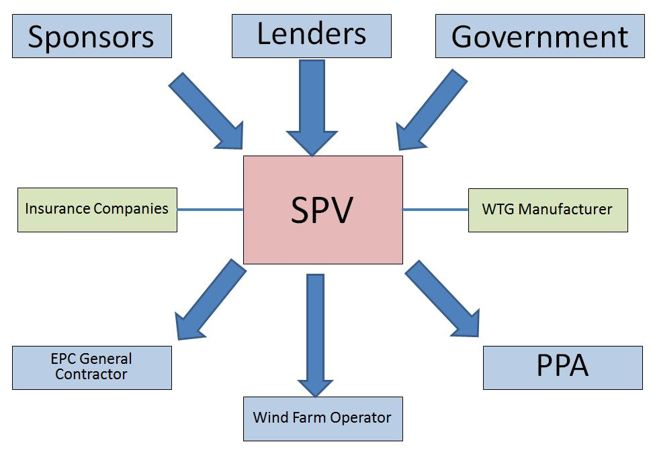
    Several key players are involved in project finance, each with their unique roles and responsibilities:

    Player Role
    Sponsor Initiates and develops the project
    Lenders Provide funding for the project
    Investors Seek returns from the project’s success
    Government May provide support, guarantees, or regulatory approvals

    Understanding Risks in Project Finance

    Project finance involves a careful assessment of risks, as large-scale projects often come with significant uncertainties. Risks can include construction delays, cost overruns, regulatory changes, and market fluctuations. To mitigate these risks, project participants use a variety of financial instruments and strategies, such as sensitivity analysis and insurance coverage.

    Advantages of Project Finance

    Project finance offers several advantages for both sponsors and investors:

    • Risk Allocation: Risks are distributed across various stakeholders, reducing the impact on any single entity.
    • Enhanced Financing: Large projects that may not be feasible under traditional financing arrangements can move forward using project finance.
    • Long-Term Funding: Projects with extended timelines can secure funding without relying on short-term cash flows.
    Challenges in Project Finance

    While project finance offers numerous benefits, it also comes with its own set of challenges:

    1. Complex Structuring: Creating the appropriate financial structure for a project requires extensive expertise and analysis.
    2. Managing Risks: Identifying and mitigating risks is a continuous process that demands a proactive approach.
    3. Regulatory Hurdles: Projects must navigate through various regulatory and legal frameworks, which can add complexity and delays.

    Project Finance In Practice

    Project finance has been used to fund a wide range of projects, including infrastructure development, renewable energy initiatives, and large-scale industrial ventures. Successful examples of project finance can be found in sectors such as transportation, energy, telecommunications, and healthcare.

    Overall, project finance serves as a powerful tool for channeling investments into impactful projects, enabling the realization of large-scale developments that can transform economies and enhance the quality of life for communities around the world.

    Frequently Asked Questions For Project Finance

    Faq 1: What Is Project Finance?

    Project finance refers to the financing method used for large-scale infrastructure or industrial projects. It involves creating a separate legal entity to manage and finance the project, using the project’s cash flow as collateral.

    Faq 2: How Does Project Finance Work?

    Project finance works by securing funding for a specific project based on its cash flow potential. The project’s risks and future revenue streams are thoroughly evaluated by lenders before providing financing. The repayment is usually done through the project’s generated revenues, minimizing the risks for the sponsors.

    Faq 3: What Are The Advantages Of Project Finance?

    Project finance offers several advantages, including limited liability for the project sponsors, as the project entity is separate from their own balance sheets. It allows for higher debt leverage, reducing the equity requirements. Additionally, project finance provides better risk management and longer-term financing options for large-scale projects.


  • Unmasking the Secrets of the Sticky Wage Theory: Unlock Your Earning Potential

    Sticky Wage Theory: Understanding the Concept and Implications

    The Sticky Wage Theory is a concept in economics that explains why wages tend to be resistant to change, even in the face of changing economic conditions. This theory suggests that wages are “sticky” and do not adjust quickly to changes in labor market conditions or economic fluctuations. In this article, we will delve deeper into the Sticky Wage Theory, its implications, and its impact on the economy.

    What is the Sticky Wage Theory?

    The Sticky Wage Theory posits that wages in labor markets do not adjust instantly to changes in supply and demand. Instead, wages tend to be set at a predetermined level for a certain period, resulting in a lag in wage adjustments. This rigidity in wages can be attributed to various factors, including labor contracts, minimum wage laws, social norms, and resistance from both employers and employees to wage changes.


    Unmasking the Secrets of the Sticky Wage Theory: Unlock Your Earning Potential

    Credit: www.entrepreneur.com

    Implications of Sticky Wage Theory

    The Sticky Wage Theory has several implications for the labor market and the broader economy. Let’s explore a few key implications:

    Unemployment

    In an economic downturn, when demand for goods and services declines, firms may need to reduce production and cut costs. Since wages are sticky, firms often find it difficult to lower wages to align with the decreasing demand. As a result, firms resort to reducing their workforce to maintain profitability, leading to higher unemployment. The slow adjustment of wages exacerbates the impact of economic downturns on employment levels.

    Inflation

    Sticky wages can also contribute to inflationary pressures in the economy. During periods of economic growth, high demand for labor can push wages to rise. However, sticky wages prevent wages from adjusting downwards during economic downturns, leading to upward pressure on prices. This is because firms facing higher labor costs are likely to pass on the cost to consumers in the form of higher prices for goods and services.

    Wage Rigidity And Productivity

    One of the consequences of wage stickiness is that it can hinder workers’ responsiveness to changes in productivity. If wages do not adjust quickly to changes in productivity levels, it can create a disconnect between worker compensation and their contribution to output. This, in turn, may dampen workers’ incentives to increase their productivity, ultimately impeding overall economic growth.

    Nominal Wage Rigidity

    The concept of nominal wage rigidity is closely related to the Sticky Wage Theory. Nominal wage rigidity refers to the phenomenon where wages do not adjust even with changes in the general level of prices. This rigidity can result in real wage fluctuations, where workers’ purchasing power is affected by changes in the cost of living. Nominal wage rigidity can have significant implications for income distribution and workers’ standard of living.

    Unmasking the Secrets of the Sticky Wage Theory: Unlock Your Earning Potential

    Credit: marvelcinematicuniverse.fandom.com

    Conclusion

    The Sticky Wage Theory highlights the challenges associated with wage adjustments in response to changes in labor market conditions or economic downturns. Its implications include higher unemployment, inflationary pressures, and reduced responsiveness to changes in productivity. Recognizing and understanding the concept of sticky wages is crucial in formulating appropriate labor market policies and ensuring sustainable economic growth.

  • Neutrality Of Money: Empowering the Financial World

    Neutrality Of Money: Empowering the Financial World

    Neutrality Of Money – Explained and Analyzed

    In the world of economics, the concept of neutrality of money holds great significance. Money, as we know, is a medium of exchange and a store of value. But what does neutrality of money really mean? In this article, we will dive deep into the concept and analyze its implications.

    Understanding Neutrality of Money

    Neutrality of money, in simple terms, refers to the idea that changes in the supply of money do not affect real economic variables in the long run. This means that an increase in the money supply will lead to a proportional increase in prices, without having any long-term impact on output, productivity, or employment. Similarly, a decrease in the money supply will cause deflationary pressures but will not alter the structure of the economy.

    This concept has its roots in the Quantity Theory of Money, which states that the quantity of money multiplied by its velocity of circulation is equal to the price level multiplied by real output. According to this theory, changes in the money supply only affect nominal variables, such as prices, wages, and exchange rates, while leaving the real variables, such as real GDP and employment, unaffected.

    Neutrality Of Money: Empowering the Financial World

    Credit: www.apple.com

    Analyzing the Implications

    Neutrality of money has both theoretical and practical implications for economists, policymakers, and businesses. Let’s take a closer look at some of the key implications:

    1. Long-run Effects

    From a theoretical perspective, neutrality of money implies that monetary policy only has short-term effects on the economy. In the long run, changes in the money supply are expected to be offset by corresponding adjustments in prices and wages. Therefore, central banks should be cautious in using monetary policy as a tool to influence economic growth and stability, as its impact may be temporary.

    2. Inflation And Deflation

    Neutrality of money suggests that changes in the money supply directly impact the overall price level. An increase in the money supply leads to inflation, while a decrease in the money supply results in deflation. This concept helps economists better understand the relationship between money supply and price levels, allowing central banks to formulate appropriate monetary policy measures to maintain price stability.

    3. The Fisher Effect

    Neutrality of money is closely related to the Fisher Effect, which states that changes in the nominal interest rate are equal to changes in the real interest rate plus expected inflation. As money is considered neutral in the long run, changes in the money supply are expected to be fully reflected in changes in the price level, leading to corresponding adjustments in interest rates.

    4. Investment And Capital Formation

    Another implication of neutrality of money is its impact on investment and capital formation. Since changes in the money supply do not affect real variables, such as output and productivity, the neutrality of money suggests that monetary policy should not be relied upon to stimulate long-term investment. Instead, policies that focus on improving productivity, promoting innovation, and reducing structural barriers are vital for sustainable economic growth.


    Neutrality Of Money: Empowering the Financial World

    Credit: www.amazon.com

    Conclusion

    Neutrality of money is a concept rooted in economic theory, stating that changes in the money supply have no long-term impact on real economic variables. While monetary policy can influence short-term outcomes, its effects are expected to be neutralized over time. By understanding and analyzing the implications of neutrality of money, economists, policymakers, and businesses can make informed decisions to promote stable and sustainable economic growth.

  • Gold Standard

    The Gold Standard: A Reliable Measure of Value

    In the realm of economics, the gold standard has long been regarded as a benchmark for measuring the value of currencies. The history of the gold standard can be traced back to ancient times when gold and other precious metals were widely recognized as symbols of wealth and power. In more recent times, the gold standard has played a crucial role in shaping the global economy.

    What is the Gold Standard?

    The gold standard is a monetary system in which the value of a country’s currency is directly linked to a fixed quantity of gold. Under this system, the currency can be exchanged for gold at a predetermined rate. This ensures that the value of the currency remains stable and provides a reliable store of value.

    A Brief History

    The gold standard became popular in the 19th century when countries started to adopt it as a means to stabilize their economies and facilitate international trade. The United Kingdom was the first to officially implement the gold standard in 1821, and other countries soon followed suit.

    During the late 19th and early 20th centuries, the gold standard reached its peak. The stability and predictability it provided made it an attractive option for countries looking to build confidence in their currencies and encourage economic growth.

    However, the gold standard faced its fair share of challenges. The onset of World War I led to the suspension of the gold standard in many countries as governments needed to print more money to fund war efforts. After the war, attempts were made to restore the gold standard, but it ultimately collapsed during the Great Depression in the 1930s.

    Advantages of the Gold Standard

    1. Stability: One of the key advantages of the gold standard is that it provides stability to the economy. With a fixed exchange rate, fluctuations in the value of currencies are minimized, reducing uncertainty and promoting economic growth.

    2. Limited Inflation: Under the gold standard, the supply of money is limited by the availability of gold. This helps to prevent excessive inflation, as governments cannot simply print more money without backing it up with gold reserves.

    3. International Trade: The gold standard facilitated international trade by creating a common benchmark for currencies. This made it easier for countries to establish exchange rates and conduct business across borders.

    Disadvantages of the Gold Standard

    1. Limited Monetary Policy: One of the main criticisms of the gold standard is that it restricts a country’s ability to implement monetary policy. With a fixed exchange rate, governments have limited flexibility to adjust interest rates and stimulate economic growth.

    2. Economic Constraints: The gold standard requires countries to maintain sufficient gold reserves to back their currencies. This can pose challenges, especially for smaller economies or those with limited access to gold reserves.

    3. Economic Shocks: The gold standard can amplify the impact of economic shocks. In times of crisis, such as a financial downturn or a sudden increase in the demand for gold, countries may face difficulties in maintaining the stability of their currencies.

    The Gold Standard Today

    While the gold standard is no longer used by any major economy, its influence can still be felt in modern monetary systems. Most countries now operate on a fiat currency system, where government-issued money is not backed by a physical commodity like gold.

    However, gold continues to be viewed as a valuable hedge against inflation and economic uncertainty. Many investors and individuals choose to hold onto gold as a safe haven asset, especially in times of economic volatility.

    In conclusion, the gold standard played a significant role in shaping the global economy and establishing a measure of value. While it no longer serves as the basis for modern monetary systems, its legacy continues to be acknowledged. The stability it provided, along with its advantages and disadvantages, have contributed to our understanding of how currencies function and the importance of maintaining a reliable measure of value.

    Frequently Asked Questions Of Gold Standard

    Q: What Is The Gold Standard?

    A: The Gold Standard refers to a monetary system where the value of a currency is fixed to a specific amount of gold.

    Q: Why Was The Gold Standard Important?

    A: The Gold Standard provided stability to economies, ensuring that currencies maintain their value and preventing excessive inflation.

    Q: Is The Gold Standard Still Used Today?

    A: No, the Gold Standard was largely abandoned in the 20th century as countries shifted to fiat currencies that are not backed by gold.

    Q: What Are The Advantages Of The Gold Standard?

    A: The Gold Standard can limit government’s ability to manipulate currency, promote fiscal discipline, and provide a trusted store of value.

  • Hurdle Rate

    Hurdle Rate

    Understanding Hurdle Rate in Investment: A Complete Guide

    In the world of finance and investment, the term “hurdle rate” is commonly used to evaluate the potential profitability of an investment opportunity. In this comprehensive guide, we will delve into the concept of hurdle rate, its significance, calculation methods, and its relevance in making sound investment decisions.

    What is Hurdle Rate?

    The hurdle rate, also known as the minimum acceptable rate of return (MARR), is the minimum rate of return that an investment must generate to be considered viable. It represents the opportunity cost of investing in a particular project or opportunity, taking into account the level of risk associated with it.

    Hurdle Rate

    Credit: www.investopedia.com

    Significance of Hurdle Rate

    Establishing a hurdle rate is crucial for businesses and investors as it serves as a benchmark for assessing the attractiveness of potential investments. By comparing the expected return of an investment opportunity with the hurdle rate, decision-makers can determine whether the investment is worth pursuing.

    Calculating Hurdle Rate

    There are various methods to calculate the hurdle rate, such as the risk-free rate of return, the equity market premium, and the beta of the investment. These factors are combined using formulas like the Capital Asset Pricing Model (CAPM) to arrive at the hurdle rate that reflects the specific risk profile of the investment.

    Application of Hurdle Rate in Investment Decisions

    When evaluating potential investments, the hurdle rate acts as a filtering mechanism to prioritize opportunities with the highest likelihood of delivering returns that exceed the cost of capital. This ensures that resources are allocated to projects with the best potential for creating value.

    Hurdle Rate

    Credit: www.youtube.com

    Hurdle Rate and Risk Management

    Hurdle rates are aligned with the risk tolerance and investment objectives of the company or investor, serving as an essential tool for risk management. By setting a hurdle rate commensurate with the perceived risk, decision-makers can make informed choices regarding the allocation of resources.

    Hurdle Rate and Project Evaluation

    In project evaluation, the hurdle rate aids in determining the feasibility of a project by comparing its expected returns with the minimum required rate of return. Projects that fail to exceed the hurdle rate may be deemed unviable and not pursued, helping to avoid potentially unprofitable ventures.

    The Impact of Hurdle Rate on Investment Portfolio

    For portfolio managers and investors, the hurdle rate influences the selection of assets within the portfolio. Investments that do not meet the hurdle rate may be excluded, while those exceeding the hurdle rate are considered for inclusion, aligning the portfolio with the desired risk-return profile.

    Adapting the Hurdle Rate for Different Investments

    Different types of investments carry varying levels of risk, and as such, the hurdle rate should be adjusted to reflect this diversity. Higher-risk investments may necessitate a higher hurdle rate to compensate for the increased likelihood of lower returns or potential losses.

    Frequently Asked Questions On Hurdle Rate

    Faq 1: What Is A Hurdle Rate In Finance?

    A hurdle rate in finance is the minimum rate of return that an investment must achieve to be considered acceptable or profitable.

    Faq 2: How Is The Hurdle Rate Calculated?

    The hurdle rate is typically calculated by considering factors such as the risk-free rate, market risk premium, and specific risk factors related to the investment project.

    Faq 3: Why Is The Hurdle Rate Important?

    The hurdle rate is important because it helps investors and businesses evaluate the potential return and risk associated with an investment. It also assists in decision-making by determining whether an investment project meets the required rate of return.

    Conclusion

    In conclusion, the hurdle rate is a fundamental concept in investment decision-making, guiding the allocation of resources, risk management, and the evaluation of investment opportunities. Understanding and applying the hurdle rate empowers businesses and investors to make well-informed and strategic investment decisions, ultimately contributing to long-term financial success.

  • What Is Terminal Growth Rate?: Unveiling the Power of Sustainable Expansion

    What Is Terminal Growth Rate?: Unveiling the Power of Sustainable Expansion

    Terminal Growth Rate is a financial concept used in valuation methodologies to estimate the perpetual growth rate of a company’s free cash flow. It represents the expected rate at which a company is projected to grow indefinitely into the future.

    Understanding Terminal Growth Rate

    In finance, predicting the future cash flows of a company is a fundamental aspect of valuation. However, the challenge lies in forecasting these cash flows beyond a certain period of time. This is where the concept of Terminal Growth Rate becomes valuable.

    The Terminal Growth Rate is commonly used in the Discounted Cash Flow (DCF) analysis, a popular valuation method used by investors to estimate the intrinsic value of a company. It assumes that a company’s free cash flow will grow at a stable rate in perpetuity after a certain period, known as the terminal period.

    Calculating Terminal Growth Rate

    There are multiple approaches to determining the Terminal Growth Rate. One common method is to use historical data and industry benchmarks to estimate the long-term growth potential of the company. Analysts often consider factors such as industry growth rates, market conditions, competitive advantage, and market saturation.

    Another approach involves using the Gordon Growth Model, also known as the Dividend Discount Model. This model assumes that a company’s dividends (or free cash flows) will continue to grow at a constant rate indefinitely. By utilizing this model, along with the required rate of return, analysts can calculate the Terminal Growth Rate.

    ApproachAdvantagesDisadvantages
    Historical data and industry benchmarks
    • Uses actual data and industry trends
    • Provides a realistic estimate
    • Relies heavily on past performance
    • Does not account for changes in the future
    Gordon Growth Model
    • Simple and easy to use
    • Considers the required rate of return
    • Assumes constant growth rate indefinitely
    • May not be suitable for all companies

    Risks and Limitations

    While Terminal Growth Rate is a useful tool in valuation, it is important to understand its limitations. Forecasting long-term growth rates carries inherent risks and uncertainties. Assumptions made about the future can be influenced by various factors, such as changes in economic conditions, industry dynamics, or company-specific risks.

    Moreover, it is crucial to consider the reasonableness of the estimated Terminal Growth Rate. Excessively high growth rates can result in unrealistically high valuations, while overly conservative rates may undervalue the company.

    Incorporating Terminal Growth Rate in Valuation

    When using the DCF analysis, the Terminal Growth Rate is applied to the cash flows beyond the projected period to calculate the company’s perpetuity value. This value is then discounted back to the present value using an appropriate discount rate, such as the Weighted Average Cost of Capital (WACC).

    It is essential to review and adjust the Terminal Growth Rate periodically to account for changes in the company’s performance, industry conditions, and macroeconomic factors. Regular updates to the assumptions and valuations ensure greater accuracy in evaluating a company’s long-term prospects.

    Conclusion

    Terminal Growth Rate is a crucial component in valuation methodologies that helps estimate the perpetual growth rate of a company’s future cash flows. By considering historical data, industry benchmarks, and utilizing models like the Gordon Growth Model, analysts can make reasonable assumptions about a company’s long-term growth potential. However, it is important to be mindful of the risks and limitations associated with forecasting and periodically update these assumptions for a more accurate valuation.